
Long before cranes and computers, civilizations moved 80-ton stones, built structures surviving 4,500 years, and created water systems still functioning today. These engineering triumphs weren’t just impressive—many confound modern experts struggling to explain how they were achieved with bronze-age technology.
1. The Great Pyramid’s Astronomical Precision Defies Random Chance
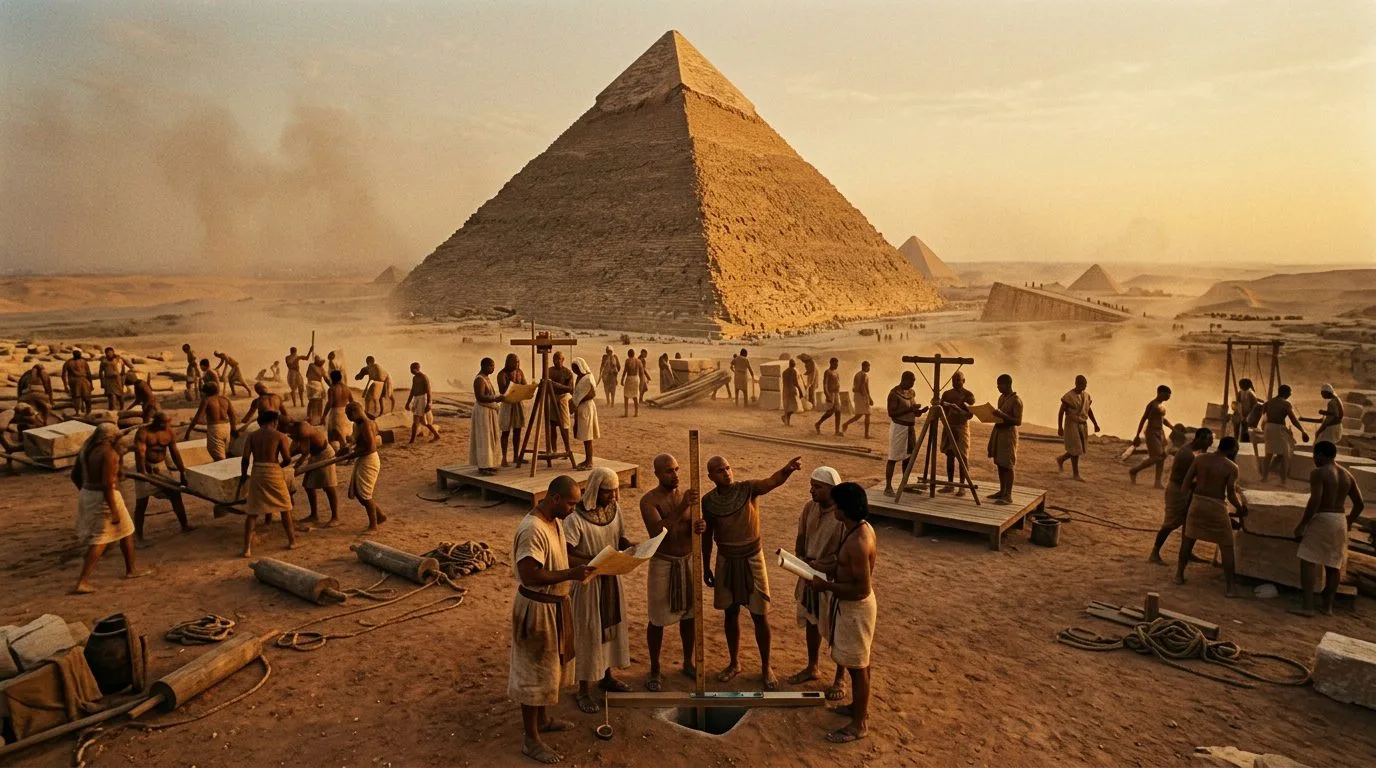
Ancient stones align with stars above.
The Great Pyramid of Khufu at Giza, completed around 2560 BCE, aligns to true north with an accuracy of 3/60th of a single degree. This precision required astronomical observations and mathematical calculations that scholars once believed impossible for the period. The structure’s four sides face the cardinal directions so exactly that modern surveyors using GPS technology struggle to match the accuracy. Each base side measures 230.4 meters with a variance of less than 58 millimeters. The pyramid’s height of 146.5 meters relates to its base perimeter in a ratio approximating pi, though Egyptians officially had no concept of this mathematical constant. Modern engineers cannot explain how workers achieved this precision without telescopes, compasses, or even iron tools.
Source: britannica.com
2. Babylon’s Hanging Gardens Required Water Engineering Beyond Its Era
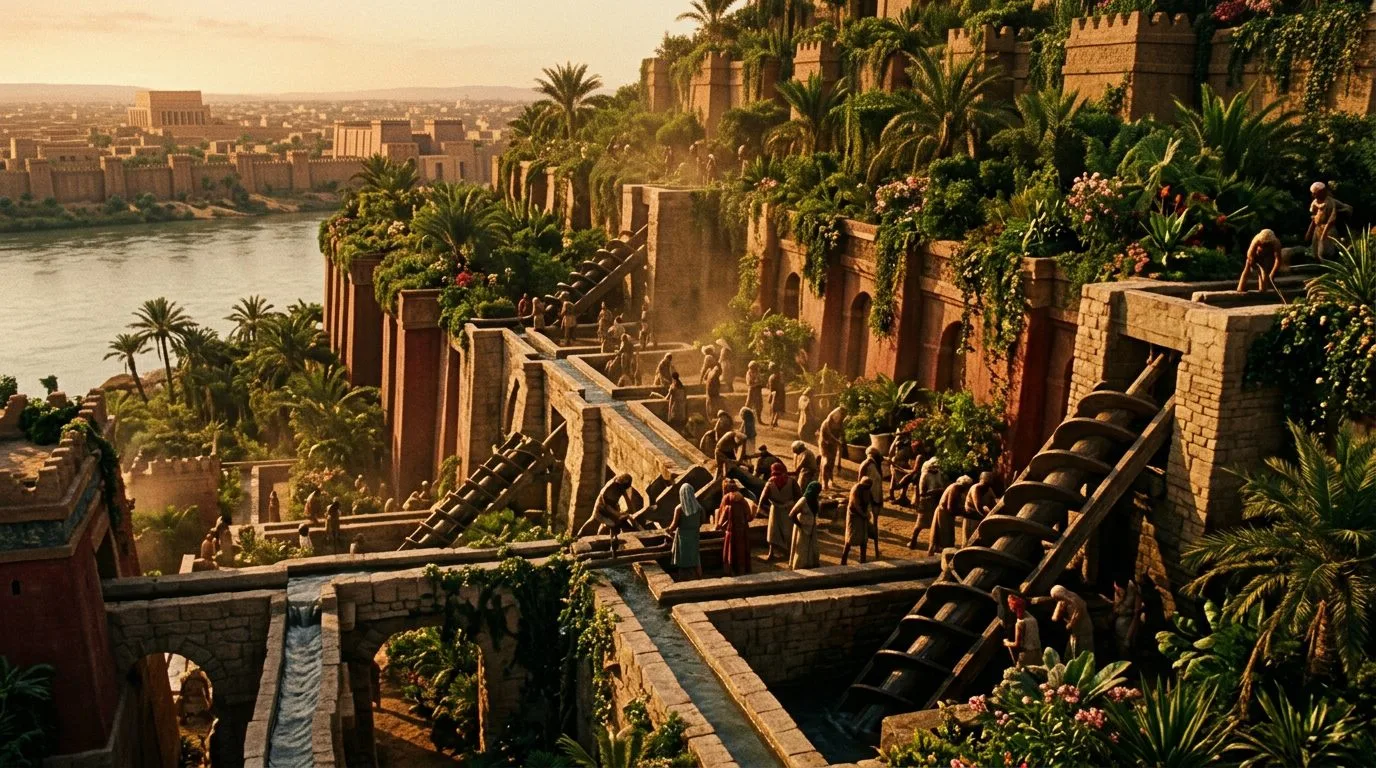
Ancient water systems pumped life to legendary
The Hanging Gardens of Babylon, constructed around 600 BCE under Nebuchadnezzar II, required pumping thousands of gallons of water daily to terraces reaching 75 feet high. Ancient texts describe a chain pump system and screw mechanisms that lifted Euphrates River water against gravity before such technology was supposedly invented. The garden’s irrigation channels incorporated bitumen waterproofing and lead sheeting to prevent seepage through multiple terrace levels. Engineers estimate the system needed to deliver 8,000 gallons per day to sustain the described vegetation in Mesopotamia’s arid climate. Modern reconstruction attempts have failed to replicate the described scale using period-appropriate materials and methods, leading some scholars to question whether the gardens existed as described or utilized lost engineering knowledge.
Source: britannica.com
3. Egyptian Obelisks Traveled 800 Miles Without Breaking
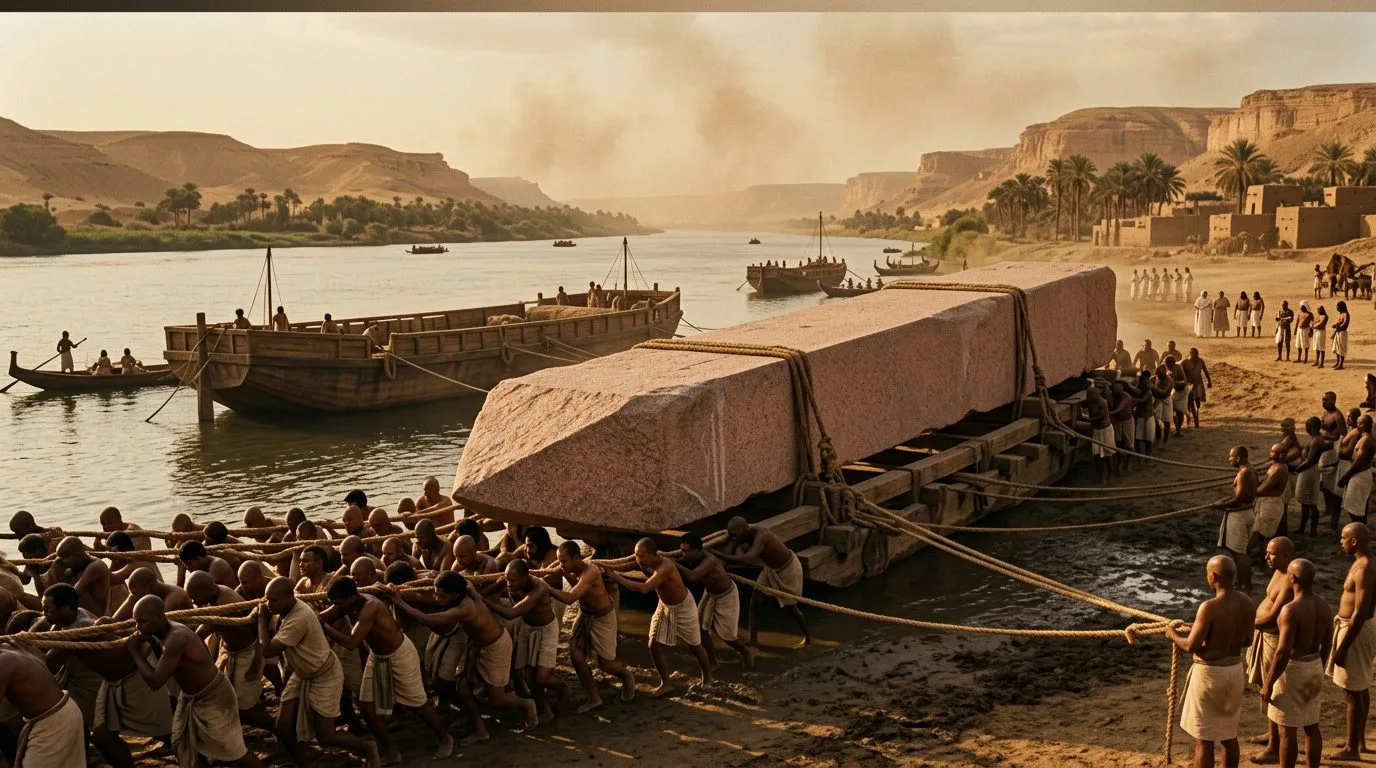
Ancient stones crossed deserts intact.
Egyptian engineers transported single-piece granite obelisks weighing up to 455 tons from Aswan quarries to temple sites 800 kilometers away, beginning around 2500 BCE. The Lateran Obelisk, erected by Thutmose III circa 1450 BCE, stands 32 meters tall and was carved from a single stone block without modern diamond tools or explosives. Workers somehow moved these monuments on Nile barges, though calculations show a barge carrying the Lateran Obelisk would have required a draft depth exceeding the river’s historical average. Raising obelisks vertically without cracking them demanded precise weight distribution and controlled lowering into position. Experimental archaeology attempts using hypothetical sand ramps and wooden rollers have successfully moved small obelisks but cannot scale to the largest examples without modern reinforcements.
Source: smithsonianmag.com
4. Assyrian Palaces Rose on Marshland Through Unknown Stabilization
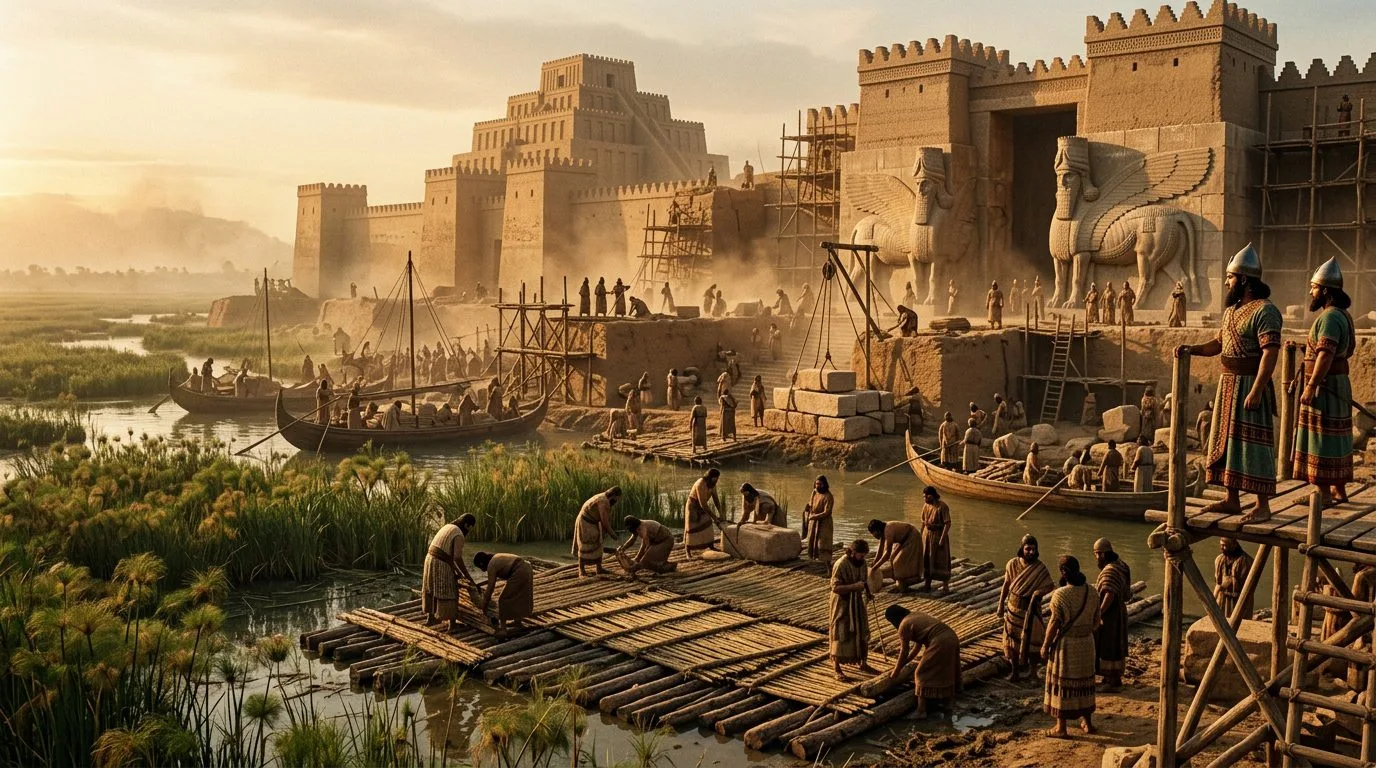
Ancient builders stabilized marshes to create
The Assyrian palace at Nimrud, built by Ashurnasirpal II around 879 BCE, stands on foundations covering 25,000 square meters atop naturally unstable marshy ground. Excavations reveal a complex foundation system using limestone blocks, bitumen waterproofing, and crushed stone drainage layers extending 4 meters deep. The palace supported walls 10 meters high and massive stone lamassu guardian statues weighing 30 tons each. Engineers created an artificial platform that has remained stable for nearly 3,000 years despite seasonal flooding and earthquakes. Modern analysis shows the foundation distributes weight through a grid pattern that anticipates principles not formally documented until Roman engineering treatises seven centuries later. The techniques allowed Assyrians to build monumental architecture in locations where contemporary civilizations could only construct modest structures.
Source: britannica.com
5. Ancient Egyptian Concrete Outlasted Modern Formulas
Durable Roman concrete secrets revealed by
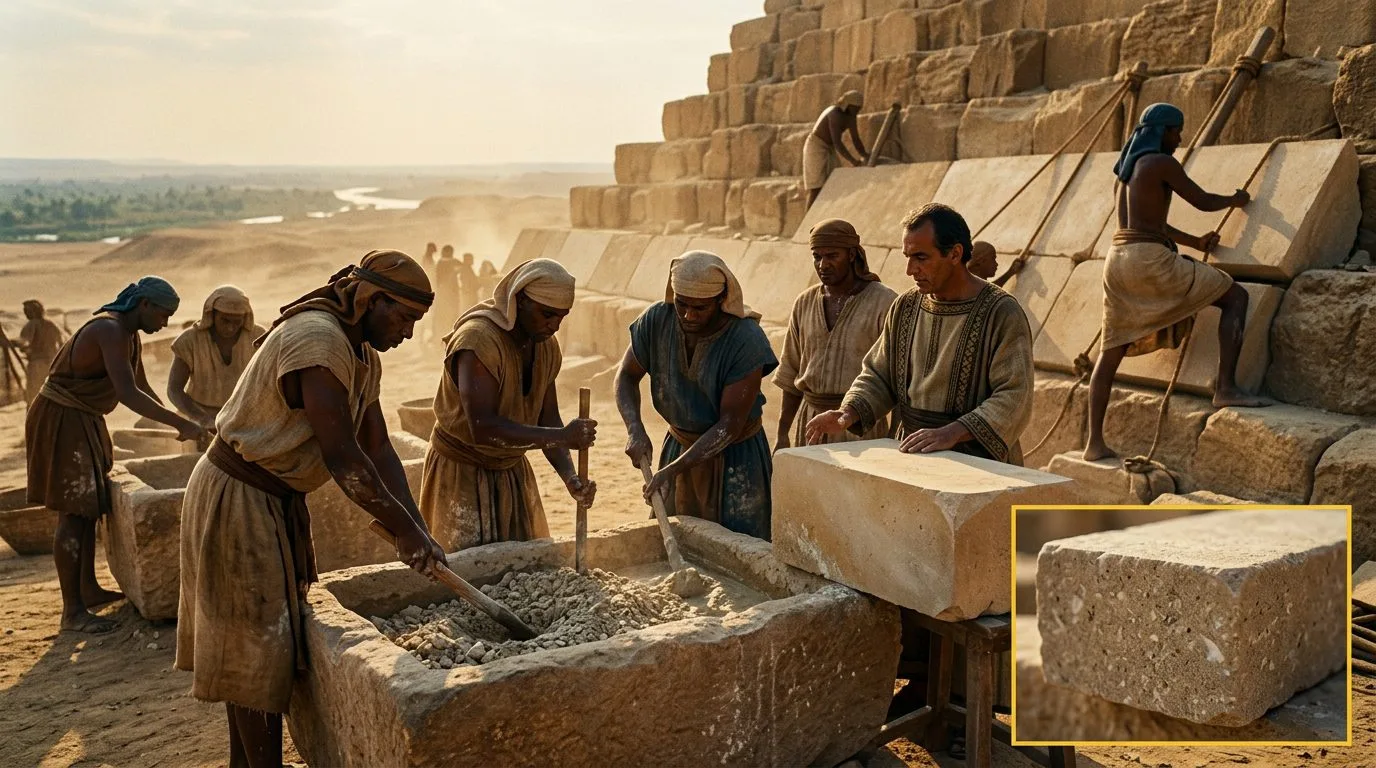
Chemical analysis of pyramid casing stones reveals Egyptians created a synthetic limestone concrete around 2600 BCE using crushed limestone, natron salt, and lime that has outlasted modern Portland cement. Geopolymer researchers found these blocks contain mineral compounds impossible in natural limestone but consistent with a molding process. The Pyramid of Djoser‘s complex contains concrete blocks exhibiting air bubbles and organic hair fibers used as reinforcement 4,600 years ago. This material achieved compressive strength exceeding 60 megapascals while remaining lighter than solid stone, explaining how workers could position blocks with such precision. French scientist Joseph Davidovits proposed the geopolymer theory in the mid-twentieth century, but mainstream Egyptology largely rejected the findings. The concrete theory would explain why no quarry marks or tool scratches appear on many casing stones and how workers achieved perfectly uniform dimensions.
Source: smithsonianmag.com
6. Babylonian Glazed Bricks Required Industrial-Scale Quality Control
Ancient Babylon’s brick factories maintained
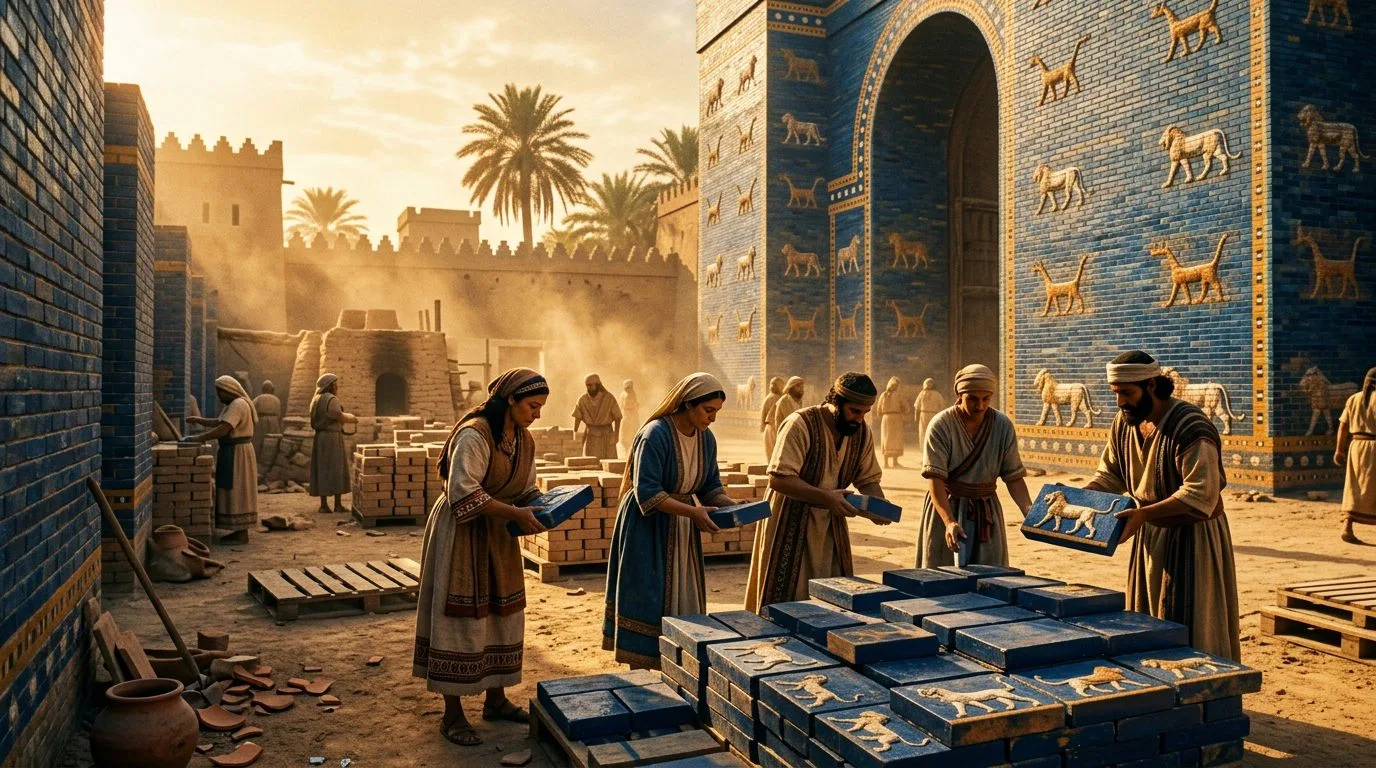
The Ishtar Gate of Babylon, completed around 575 BCE, incorporated over 100,000 glazed bricks fired at precisely 1,000 degrees Celsius with consistent cobalt blue and iron-based yellow pigments. Each brick required three separate firings to achieve the brilliant lapis lazuli color and weatherproof glaze that remains vibrant after 2,600 years. Nebuchadnezzar II’s craftsmen produced bricks with dimensional tolerances within 2 millimeters across tens of thousands of units, suggesting quality control systems matching modern manufacturing standards. The gate’s 120 reliefs of dragons and bulls demanded 600 specially molded brick shapes that interlocked perfectly. Experimental recreations show maintaining consistent kiln temperatures across such production volumes exceeded the capabilities of ancient fuel sources and draft control, yet archaeological evidence confirms uniform results.
Source: britannica.com
7. Karnak’s Stone Roof Beams Span Impossible Distances
Karnak’s Stone Roof Beams Span Impossible
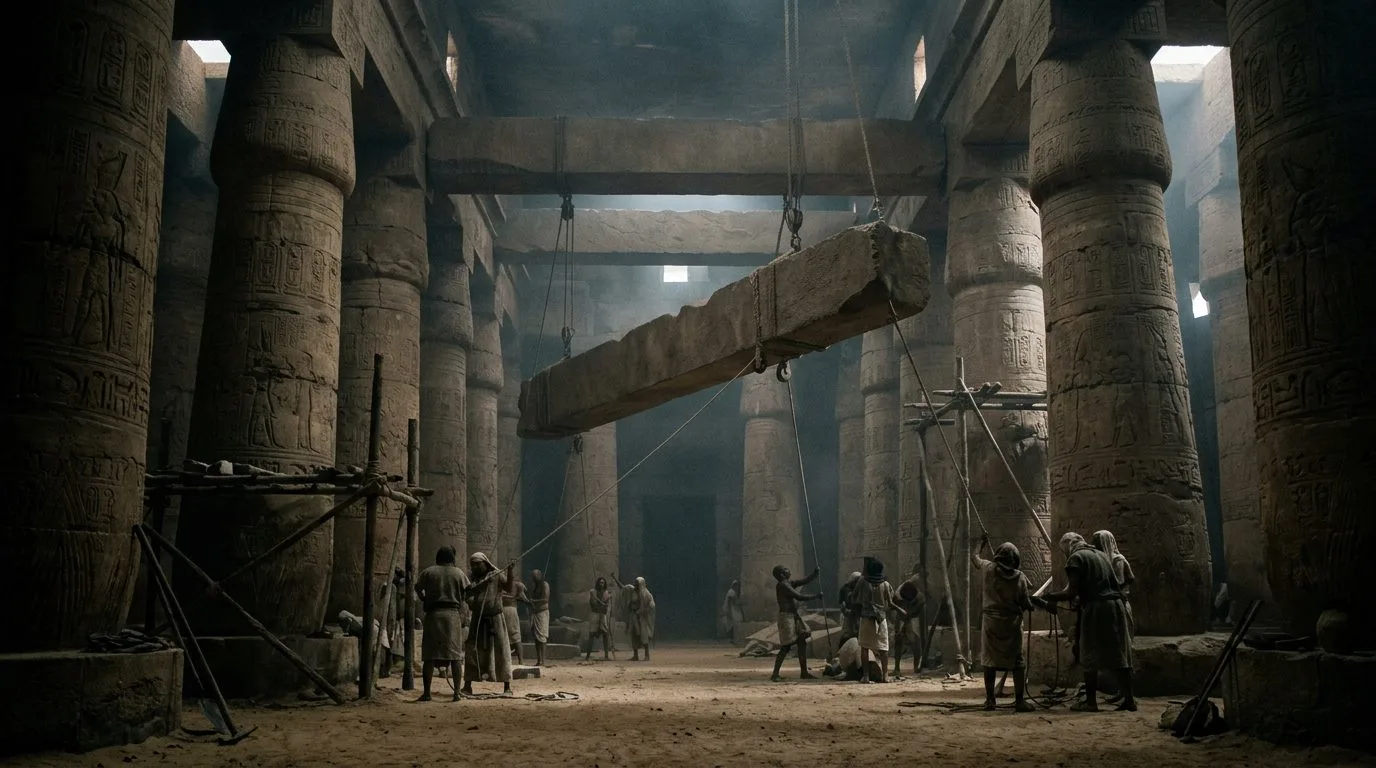
The Hypostyle Hall at Karnak Temple, constructed around 1290 BCE under Seti I, features sandstone roof beams spanning 9.8 meters between columns while supporting additional stone layers above. Each beam weighs approximately 70 tons and required lifting 24 meters to installation height without cracking the relatively brittle sandstone. The hall contains 134 such beams covering 5,000 square meters of roofed space. Modern structural analysis shows sandstone’s tensile strength should fracture under these spans, yet the beams have survived 3,300 years including earthquakes. Engineers suspect Egyptians selected specific sandstone layers with natural fiber reinforcement or applied unknown treatments that enhanced material properties. Contemporary experimental archaeology has not successfully replicated the beam installation process at scale, and the lifting mechanism remains theoretical.
Source: britannica.com
8. Mesopotamian Ziggurats Featured Self-Draining Foundations
Ancient ziggurats with advanced drainage systems.
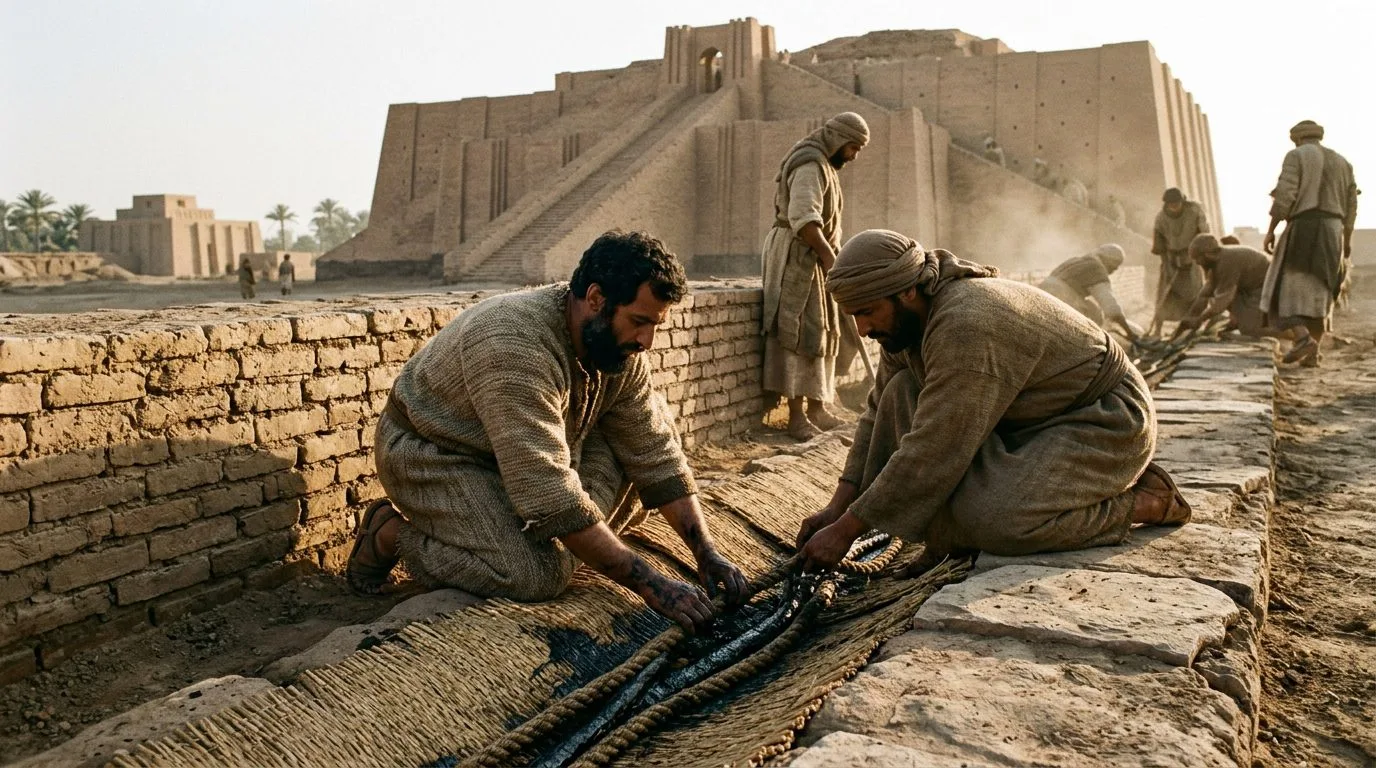
The Great Ziggurat of Ur, built around 2100 BCE by King Ur-Nammu, incorporated a drainage system using rope-wrapped bitumen pipes and woven reed mats that prevented water damage for 4,000 years. The structure’s core contains alternating layers of sun-dried brick and waterproof bitumen creating weep holes that channel moisture outward before it compromises structural integrity. Engineers installed drainage channels at 3-meter intervals throughout the 64-meter base, directing water through the 30-meter-tall stepped pyramid to ground level. The system functioned without pumps or external power, using gravity and calculated angles to maintain dry conditions in Mesopotamia’s humid climate. Modern reconstructions of the Ur ziggurat incorporated steel reinforcement because engineers could not achieve equivalent stability using only period materials and the understood drainage principles.
Source: britannica.com
9. Copper Tools Somehow Cut Through Granite
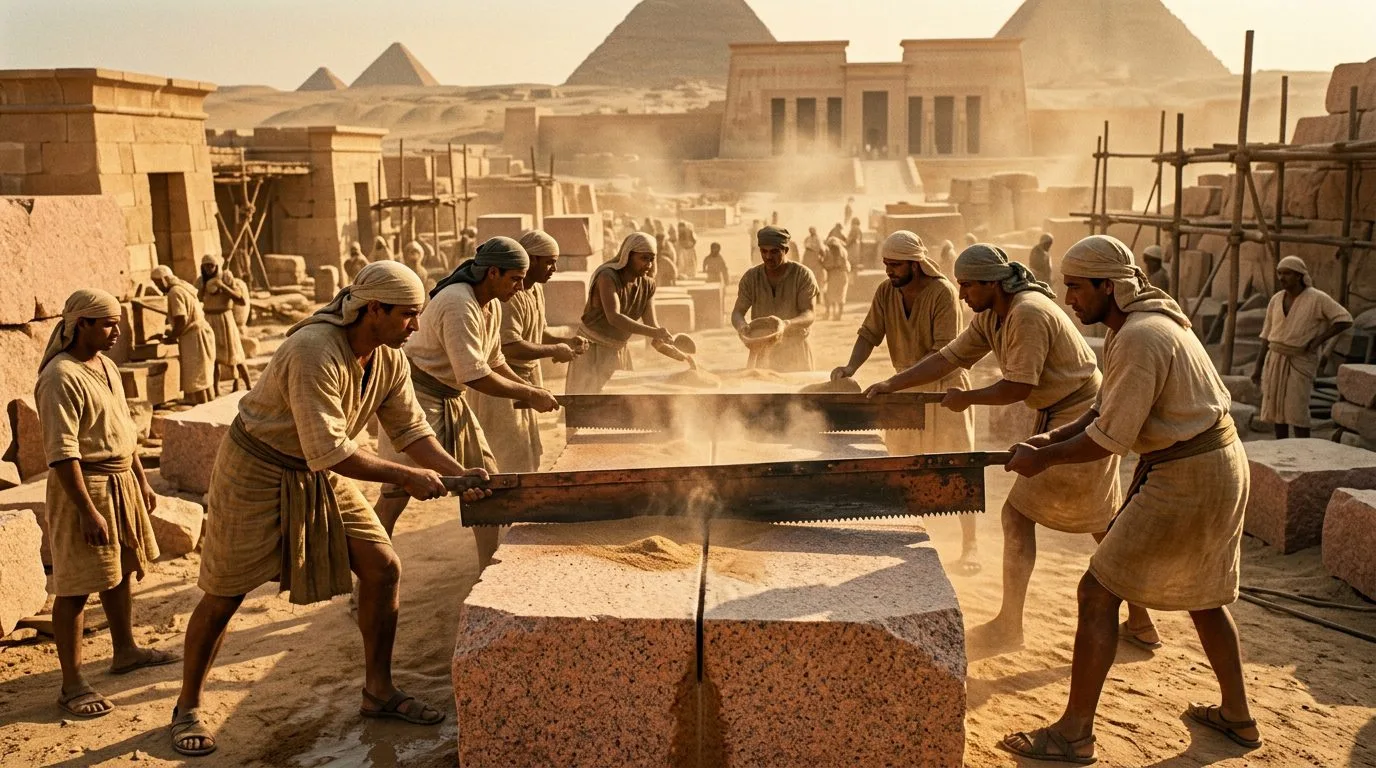
Copper Tools Somehow Cut Through Granite
Egyptian craftsmen working around 2500 BCE cut granite with copper tools despite granite’s Mohs hardness of 6-7 exceeding copper’s rating of 3.5. Archaeological sites contain copper saws with quartz sand embedded in the blade marks, suggesting abrasive cutting rather than direct metal-to-stone contact. The Aswan quarries show drill holes 12 centimeters in diameter penetrating 100 centimeters into solid granite, with spiral grooves indicating a drilling speed impossible for manual copper tools. Egyptologist Denys Stocks demonstrated in the late twentieth century that copper tools with quartz abrasive could cut granite, but his methods achieved rates fifty times slower than the speed required for documented construction timelines. The unfinished obelisk at Aswan displays cutting patterns suggesting simultaneous work by hundreds of laborers, yet the coordination required exceeds demonstrated organizational capabilities.
Source: smithsonianmag.com
10. Bronze Casting Techniques Produced Impossible Hollow Sculptures
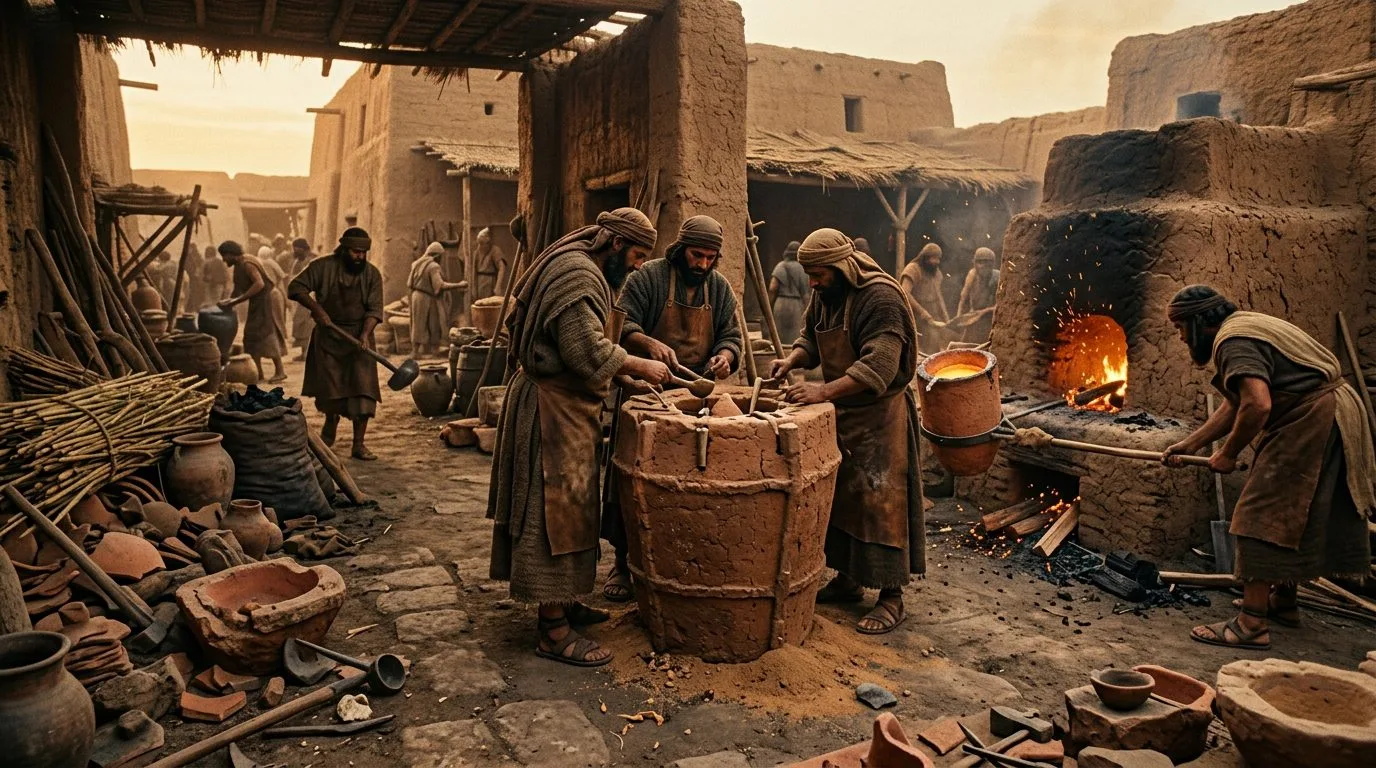
Ancient artisans mastered hollow bronze casting.
Ancient Near Eastern metallurgists created hollow bronze sculptures like the Akkadian Mask of Sargon around 2300 BCE using lost-wax casting with wall thickness varying only 2-3 millimeters across complex facial features. The technique required pouring molten bronze at precisely 1,085 degrees Celsius into ceramic molds while controlling cooling rates to prevent cracking in sections as thin as 4 millimeters. The mask weighs 5.4 kilograms despite being 90% hollow, demonstrating weight distribution calculations that modern foundries struggle to replicate without computer modeling. Metallurgical analysis reveals the bronze alloy contains 12% tin with trace arsenic, creating mechanical properties superior to standard modern bronze formulas. Experimental archaeologists have produced small hollow bronzes using reconstructed methods, but cannot achieve the size and detail complexity of artifacts like the 180-centimeter-tall bronze statue of King Napirasu from Susa circa 1340 BCE.
Source: britannica.com
Did You Know?
Did you know the copper tools ancient Egyptians used to cut granite should have been physically impossible to work? Copper’s softness rating of 3.5 on the Mohs scale means it cannot scratch granite rated at 6-7, yet quarry sites show unmistakable copper tool marks penetrating meters into solid stone. Even more baffling: modern attempts to replicate these feats using reconstructed ancient methods achieve cutting speeds fifty times slower than required to meet historical construction timelines, suggesting either lost techniques or organizational capabilities we’ve drastically underestimated.