
In 216 BCE, Hannibal’s army annihilated a Roman force twice its size at Cannae—not through superior numbers, but through tactical brilliance and innovative military organization. Throughout history, necessity has been the mother of invention, and nowhere is this truer than on the battlefield. From the stirrup that revolutionized cavalry warfare to the longbow that leveled social hierarchies, military innovations didn’t just change how wars were fought; they transformed entire civilizations and often led to unexpected peacetime benefits. The composite bow turned nomadic tribes into continental threats. The Greek phalanx created the concept of citizen-soldiers fighting shoulder to shoulder. Damascus steel became legendary for its unmatched strength, while medieval plate armor evolved into an engineering marvel that could stop arrows and deflect sword strikes. These ancient military innovations weren’t merely weapons or tactics—they were game-changers that shifted the balance of power, toppled empires, and sometimes emerged from the most unexpected places. A simple metal loop for a rider’s foot transformed cavalry from skirmishers into devastating shock troops. Gunpowder weapons demolished the feudal system by making knights obsolete. Even logistics—the unglamorous art of moving supplies—decided more battles than any sword. Join us as we explore ten military innovations that didn’t just win battles—they rewrote the rules of warfare and left indelible marks on human civilization.
1. The composite bow: Range and Power Combined
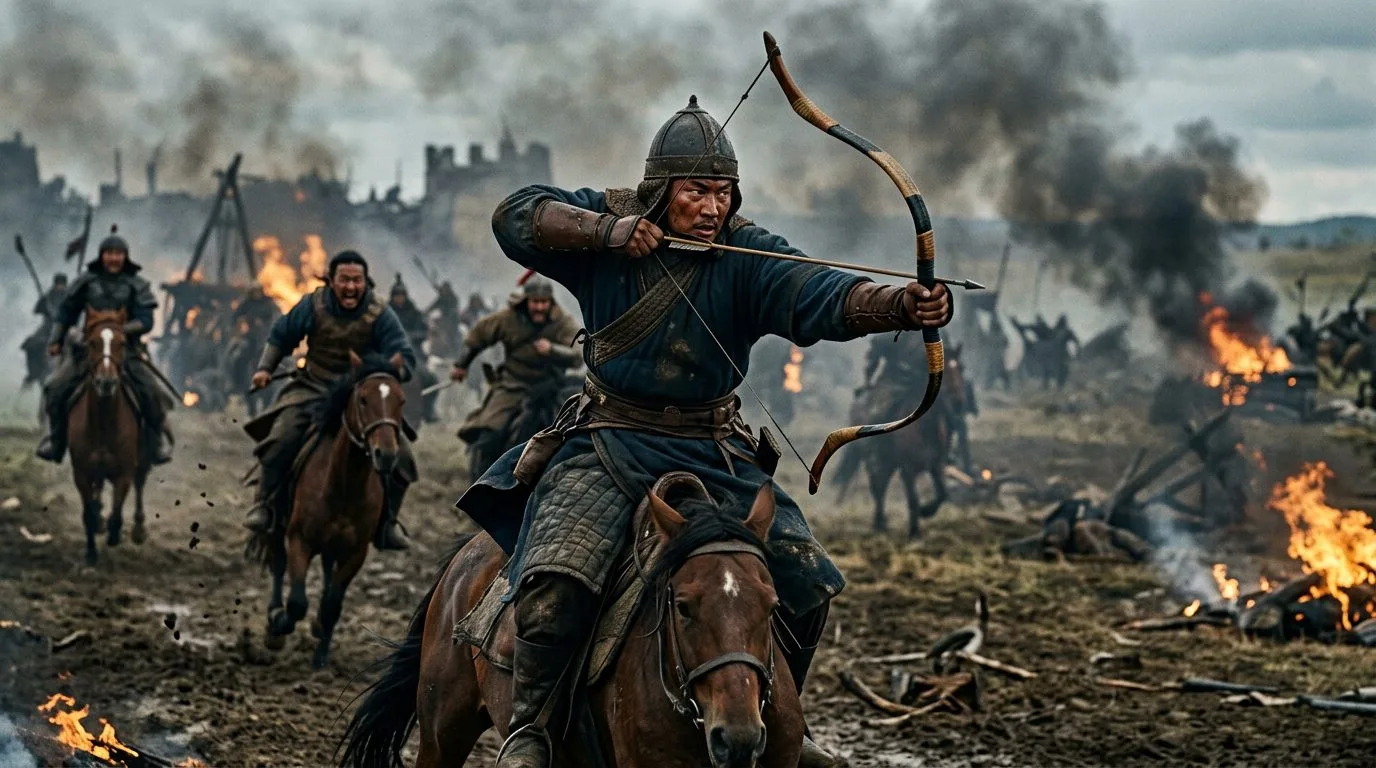
The composite bow: Range and Power Combined
When Mongol warriors fired arrows accurately from 350 yards away while galloping at full speed, they wielded a weapon perfected over millennia: the composite bow. Unlike simple wooden bows, composites combined wood, horn, sinew, and animal glue into a recurved design that generated twice the power of longbows while being half the size. The Scythians pioneered this technology around 800 BCE, but the Huns, Mongols, and Turkic peoples perfected it into a devastating military tool. Construction took up to a year, with craftsmen layering horn on the belly for compression strength and sinew on the back for tension, bound together by a wooden core. The distinctive recurve shape stored more energy with each draw.
When Möngke Khan tested captured European crossbows against Mongol composites in 1251 CE, the composites outranged them by 100 yards.
2. Greek phalanx Formation: Strength in Unity
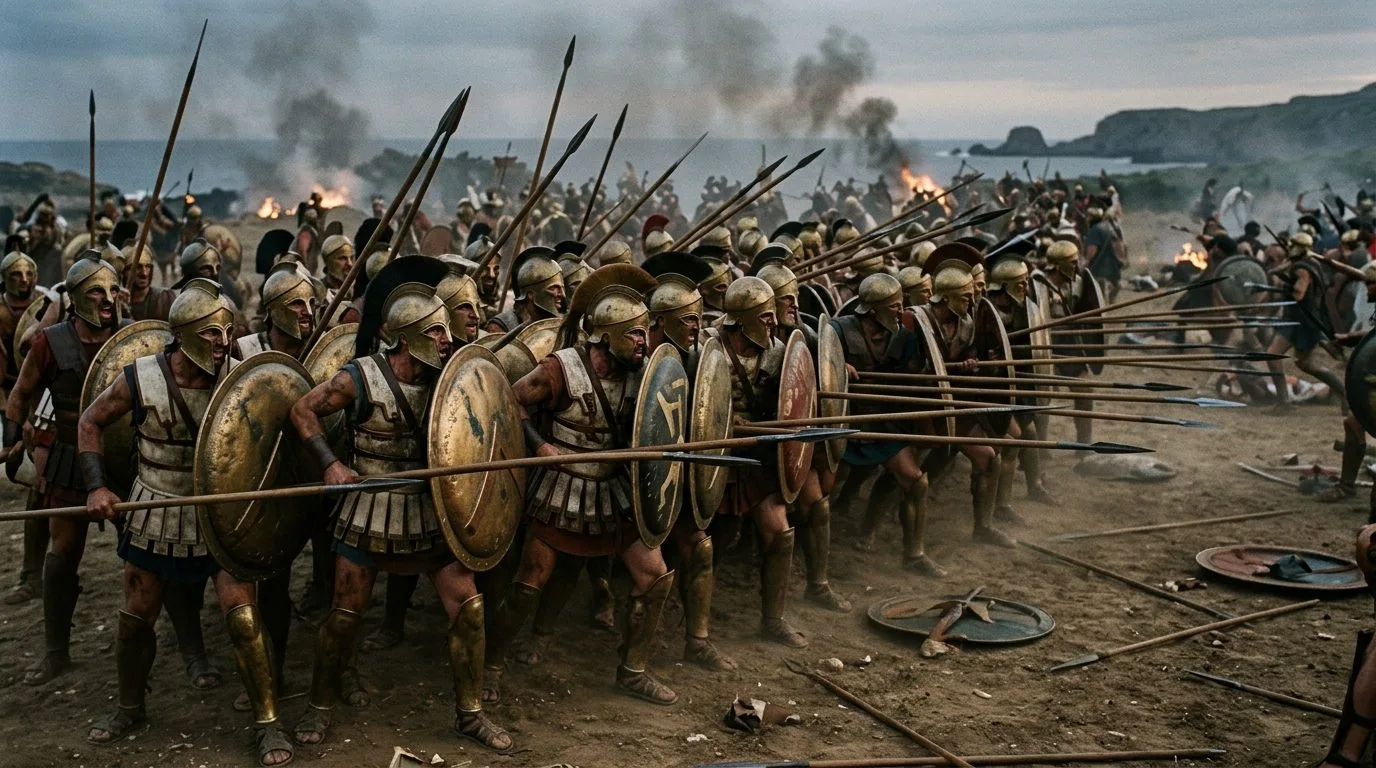
Greek phalanx Formation: Strength in Unity
The Battle of Marathon in 490 BCE saw roughly 10,000 Greek hoplites defeat a Persian force twice their size using the phalanx—one of history’s most influential military formations. This innovation transformed warfare from individual combat into coordinated group action where discipline trumped heroics.
Each hoplite carried an aspis (bronze shield) weighing 15 pounds and measuring three feet across. The revolutionary aspect was how soldiers used it: each man’s shield protected not just himself, but the warrior to his left, creating an overlapping wall of bronze. Standing packed tightly in 16 rows, rear ranks could physically push those in front forward. Armed with eight-foot spears (dory) held overhand, the phalanx created a bristling hedge of bronze points extending beyond the shield wall.
3. The Stirrup: Transforming Cavalry Warfare
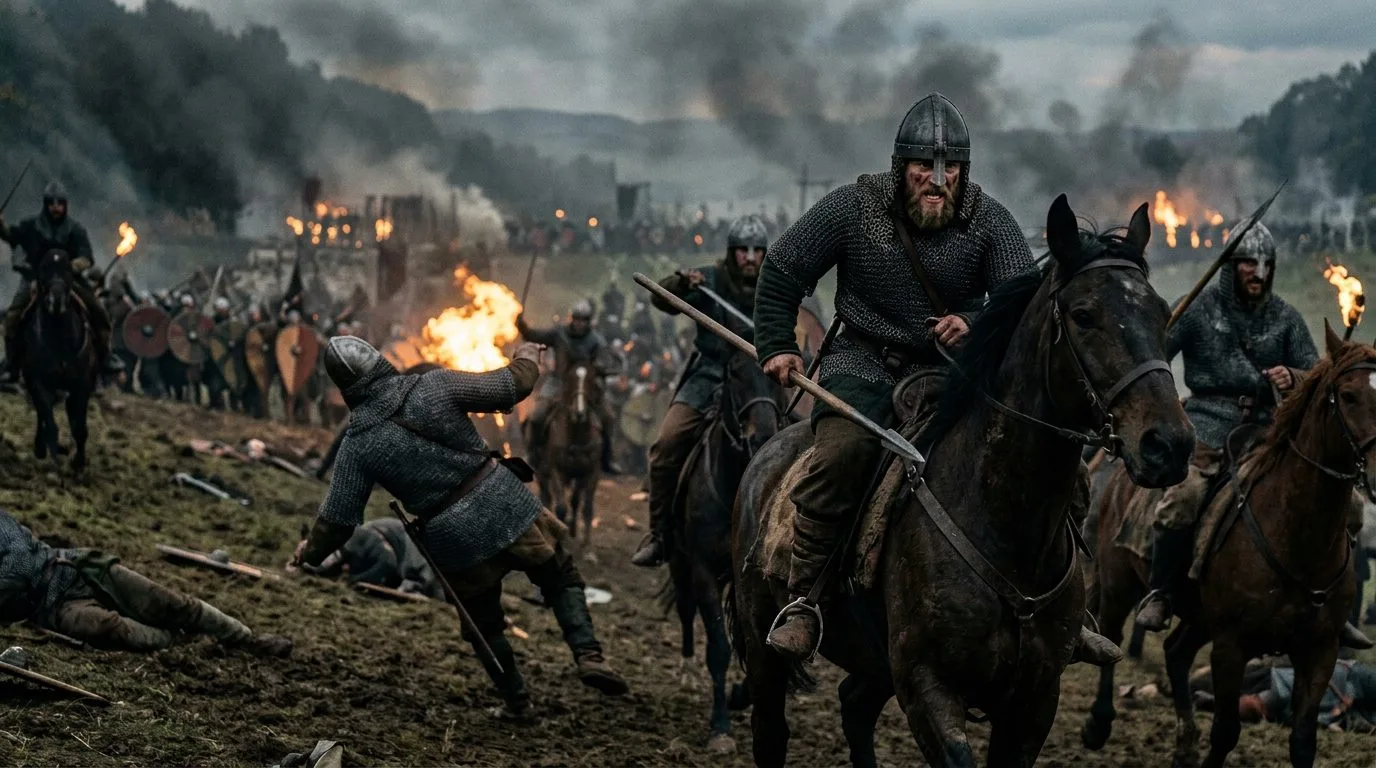
The Stirrup: Transforming Cavalry Warfare
A simple metal loop revolutionized warfare so completely that some historians credit it with creating the feudal system itself. Before stirrups emerged in China around 300 CE, cavalry served primarily as mobile skirmishers and scouts. The stirrup changed everything by giving riders a stable platform to brace against, transforming horses into weapons. Paired stirrups appeared during the Northern Wei Dynasty around 477 CE and reached Europe by the 8th century.
With stirrups, a cavalryman could shoot arrows, swing a sword, and most importantly, couch a lance and charge without being knocked backward by impact. By the 8th century, Frankish armies adopted stirrups and transformed into the mounted knights who would dominate European battlefields for 700 years.
Effective cavalry required extensive training, expensive horses, and heavy armor—investments only wealthy landowners could afford.
4. Damascus steel: The Science of Superior Blades
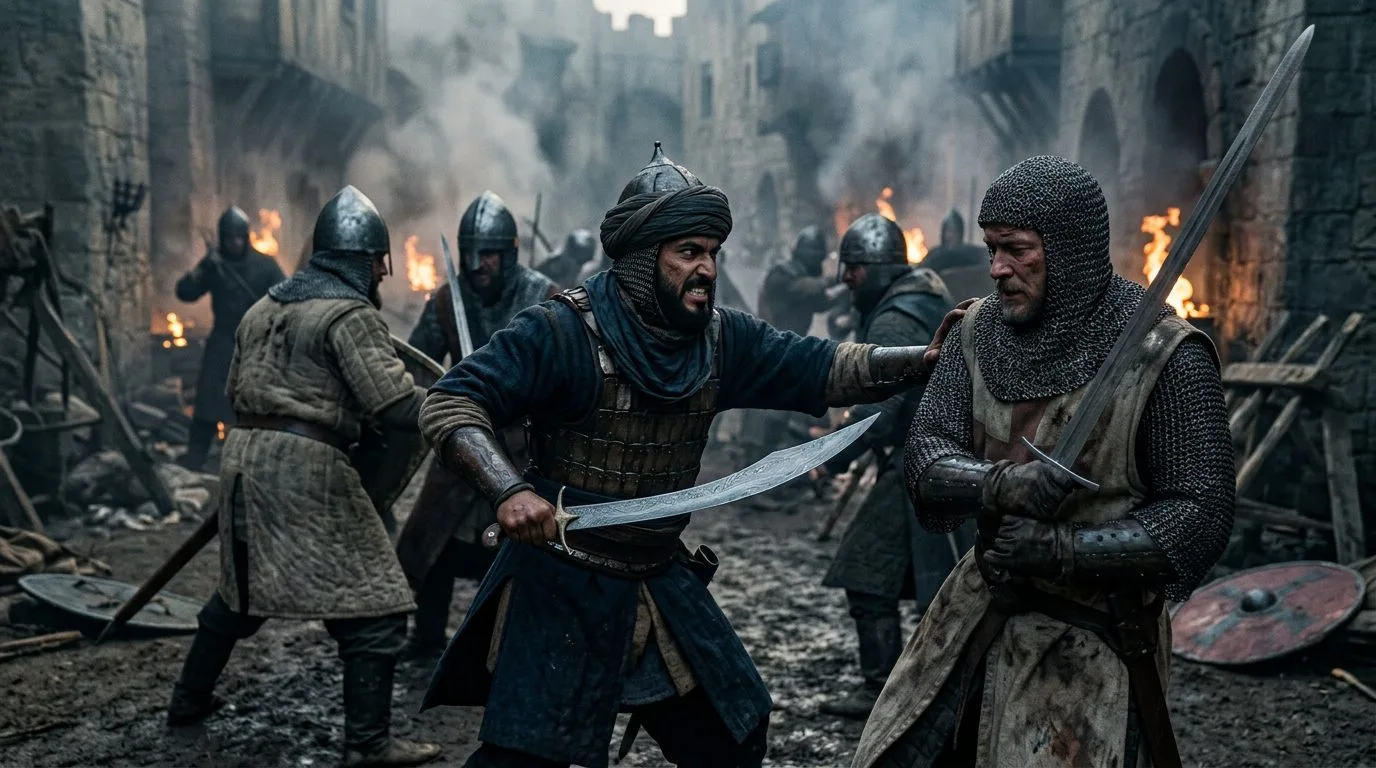
Damascus steel: The Science of Superior Blades
Damascus steel blades could slice through silk or cleave European swords—or so legends claimed. While medieval marketing exaggerated, Damascus steel genuinely possessed remarkable properties that scientists only recently understood. Forged between 300 CE and 1700 CE in the Middle East and India, these blades featured distinctive watering patterns and combined hardness with flexibility. The steel originated from wootz, high-carbon steel produced in southern India and Sri Lanka through a crucible process that created carbon nanotubes and cementite nanowires—though medieval smiths didn’t understand the chemistry, only that certain ore from specific mines produced superior results.
Syrian and Persian smiths in Damascus imported these ingots and forged them at precise temperatures between 1,600 and 1,800 degrees Fahrenheit.
5. Medieval plate armor: Engineering Meets Protection
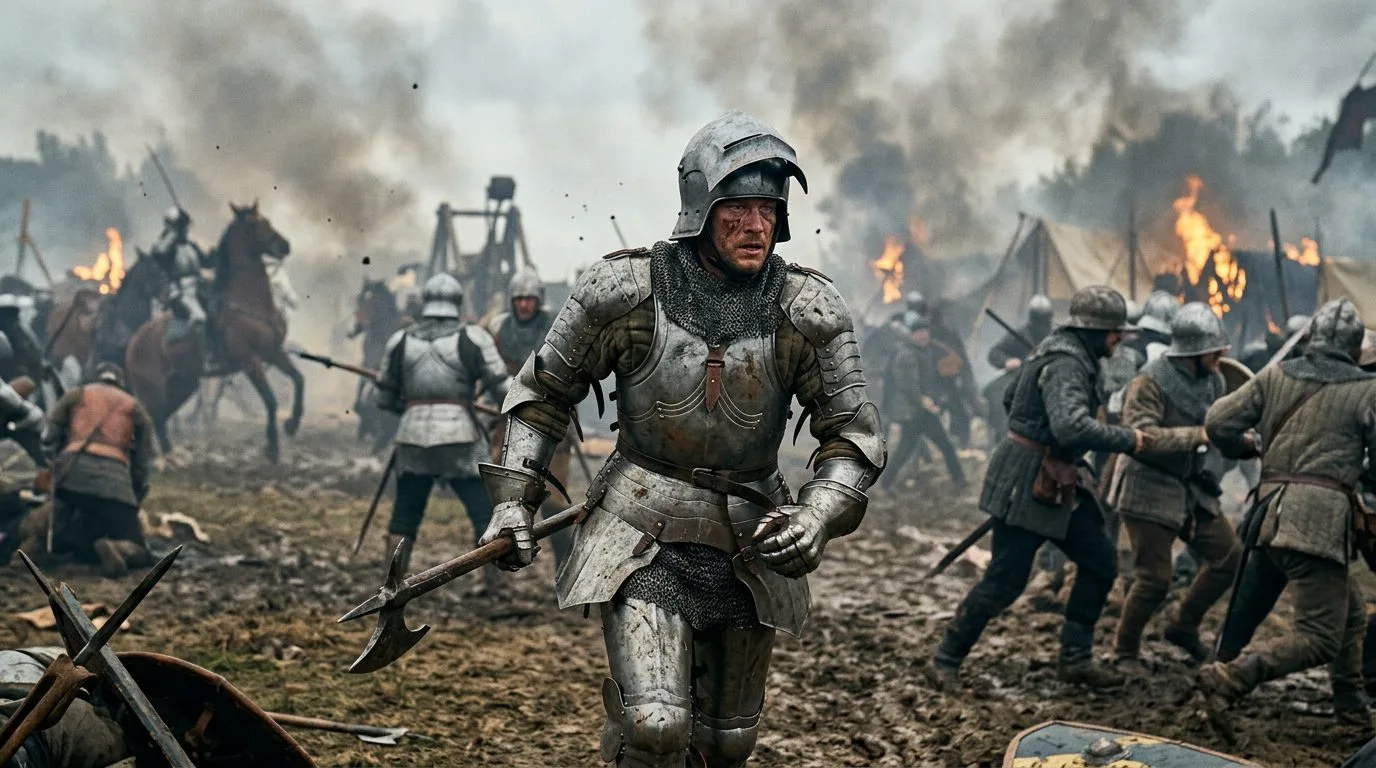
A fully armored knight in 15th-century plate armor could survive sword strikes, arrows, and early firearms while remaining mobile enough to mount a horse, fight for hours, and even perform acrobatics. Modern tests dispel myths about immobile warriors—knights could do cartwheels and climb ladders.
Plate armor peaked between 1420 and 1560 CE, representing the height of metallurgical and biomechanical engineering. Milan and Augsburg became the armor capitals of Europe, producing suits costing about 100 florins—several years’ wages for a skilled craftsman. Master armorers like Lorenz Helmschmied created articulated joints at shoulders, elbows, knees, and hips using carefully shaped, overlapping plates for full mobility without gaps.
The engineering was deliberate: curved surfaces deflected strikes rather than absorbing them.
6. The Longbow: Democracy on the Battlefield
The Longbow: Democracy on the Battlefield
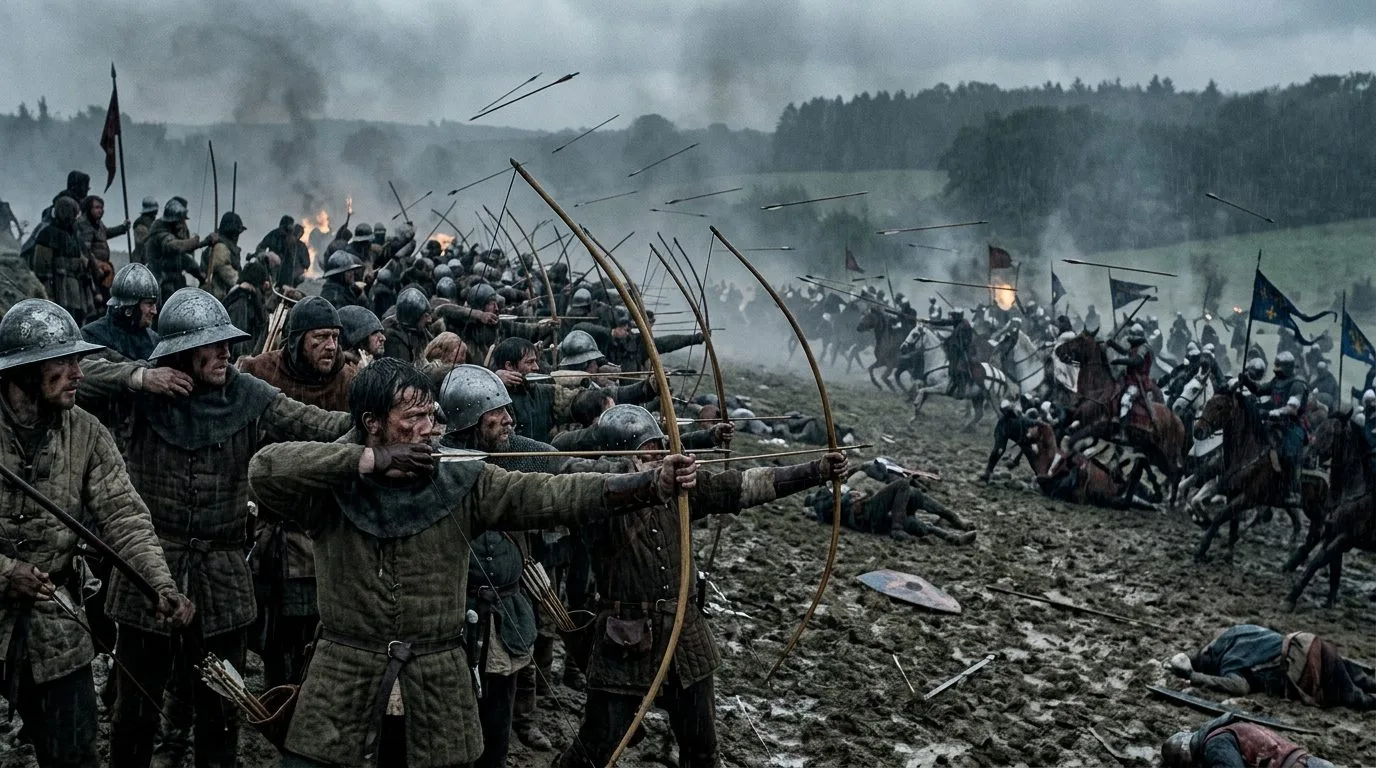
When English archers slaughtered French knights at Crécy in 1346, they were demolishing feudalism’s military foundation with a weapon that cost pennies to produce. The six-foot longbow could drive arrows through chain mail at 200 yards and penetrate plate armor at close range. What made it revolutionary wasn’t just power, but who wielded it: common peasants, not nobles.
Edward I recognized the longbow’s potential after fighting Welsh archers in 1282 and mandated archery practice for all able-bodied men on Sundays. This created tens of thousands of skilled archers trained from childhood. Excavations of the Mary Rose revealed archer skeletons with enlarged left arms and deformed shoulders from years of drawing massive bows.
At Agincourt in 1415, approximately 7,000 English archers faced 20,000 to 30,000 French knights.
7. gunpowder Weapons: The Great Equalizer
gunpowder Weapons: The Great Equalizer
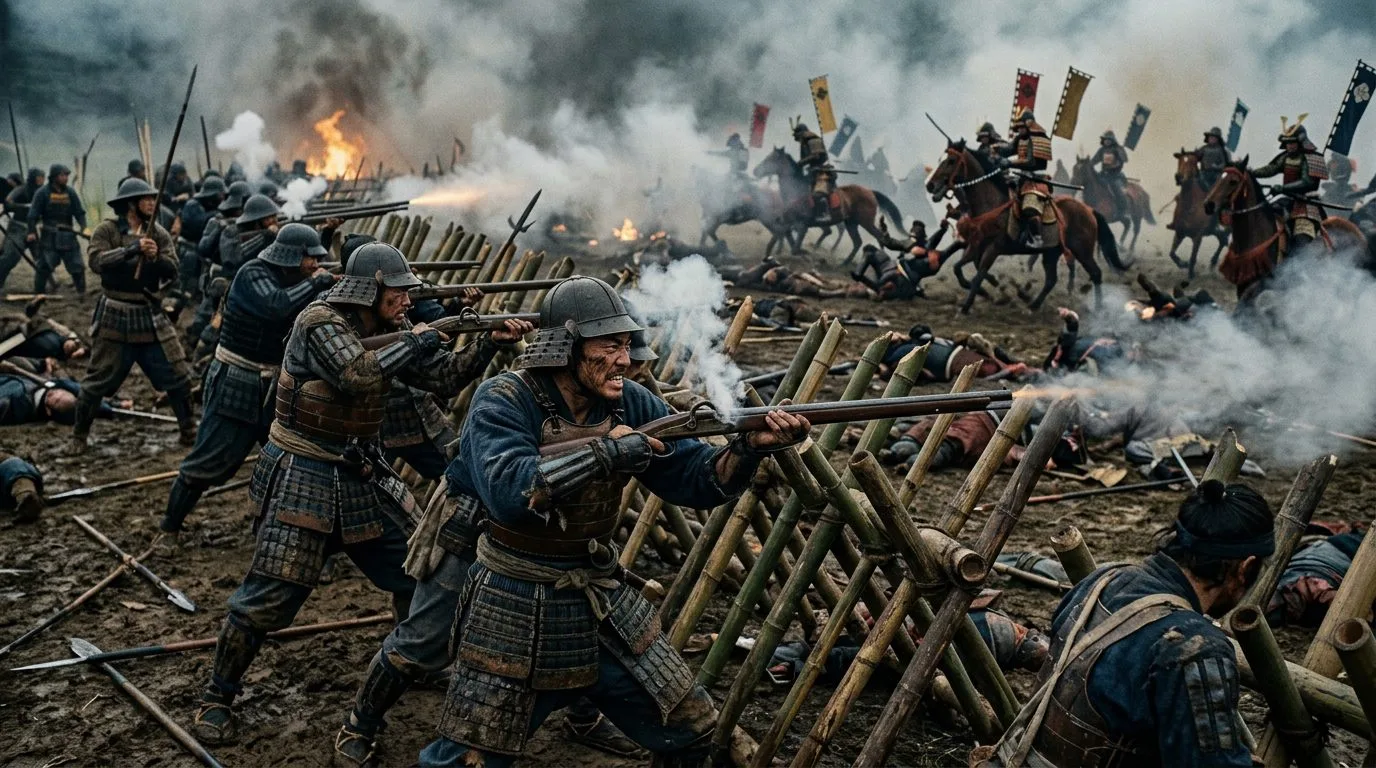
The Battle of Nagashino in 1575 CE showcased 3,000 Japanese arquebusiers defeating samurai cavalry, a scene replayed globally as gunpowder weapons dismantled traditional military hierarchies. Chinese alchemists discovered gunpowder around 850 CE while seeking immortality elixirs, creating a mixture of saltpeter, charcoal, and sulfur instead. Early Chinese fire lances appeared by 1132 CE, followed by true guns with metal barrels by 1288 CE. The technology spread westward through Mongol conquests and Islamic trade routes, reaching Europe by the early 14th century. The first confirmed European battle use occurred at Crécy in 1346 CE, though early bombards were primarily psychological weapons.
The real revolution wasn’t just guns, but their implications. A peasant with three weeks of musket training could kill a heavily armored knight who’d trained since childhood.
8. Naval Innovations: triremes and Maritime Dominance
Naval Innovations: triremes and Maritime Dominance
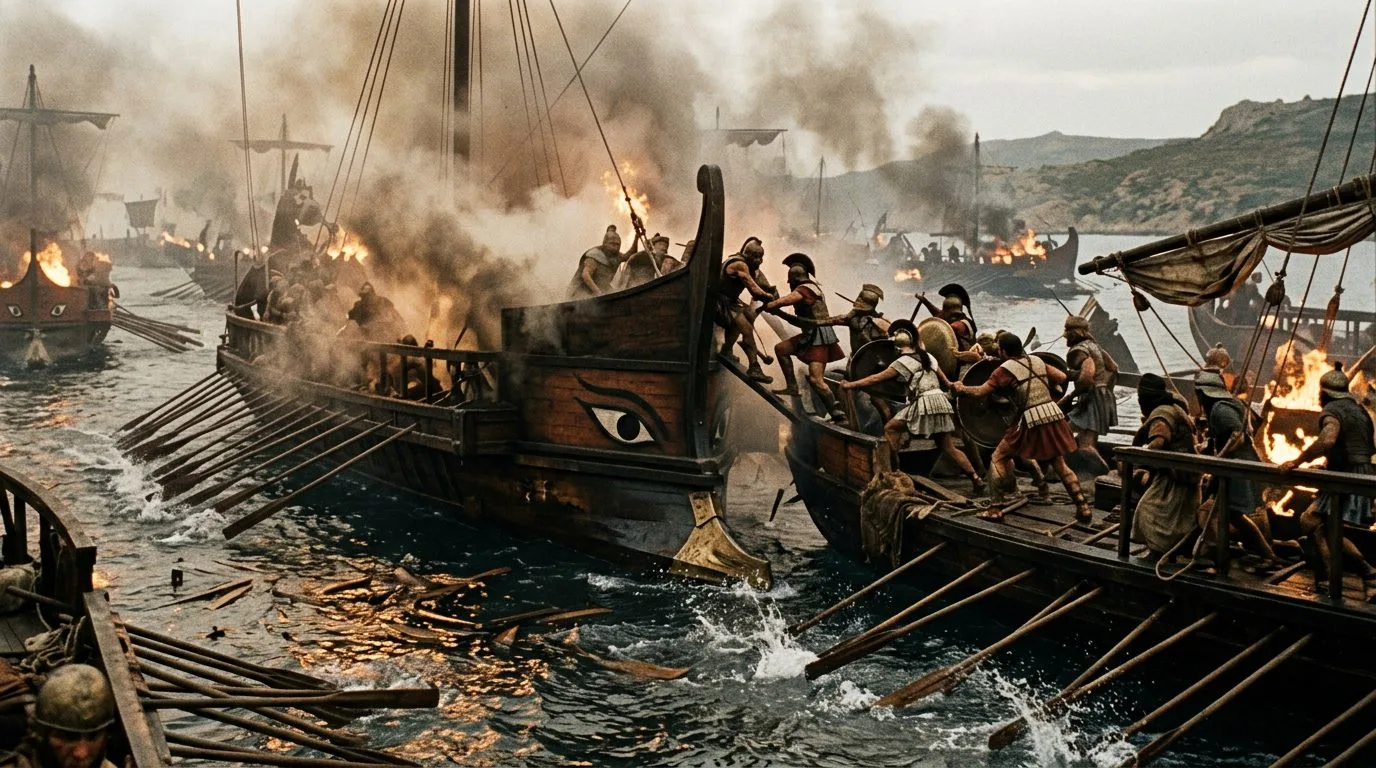
When 371 Greek triremes smashed the Persian fleet at Salamis in 480 BCE, they proved that naval innovation could decide civilizations’ fates. The trireme—a sleek warship powered by 170 rowers in three tiers—revolutionized warfare through speed and maneuverability. Unlike earlier ships used as floating platforms, triremes became weapons themselves, with bronze-sheathed rams that could punch through enemy hulls in minutes.
Athenian shipwrights perfected the design around 500 BCE, creating 120-foot vessels only 18 feet wide—a 7:1 ratio maximizing speed. These warships reached 9 knots and could turn within their own length, crucial for the diekplous maneuver where triremes rowed through enemy lines then wheeled to ram vulnerable sterns. At Salamis, Themistocles lured the Persian fleet into narrow straits where larger Persian vessels couldn’t maneuver.
9. Siege Warfare Technology: Castles and Catapults
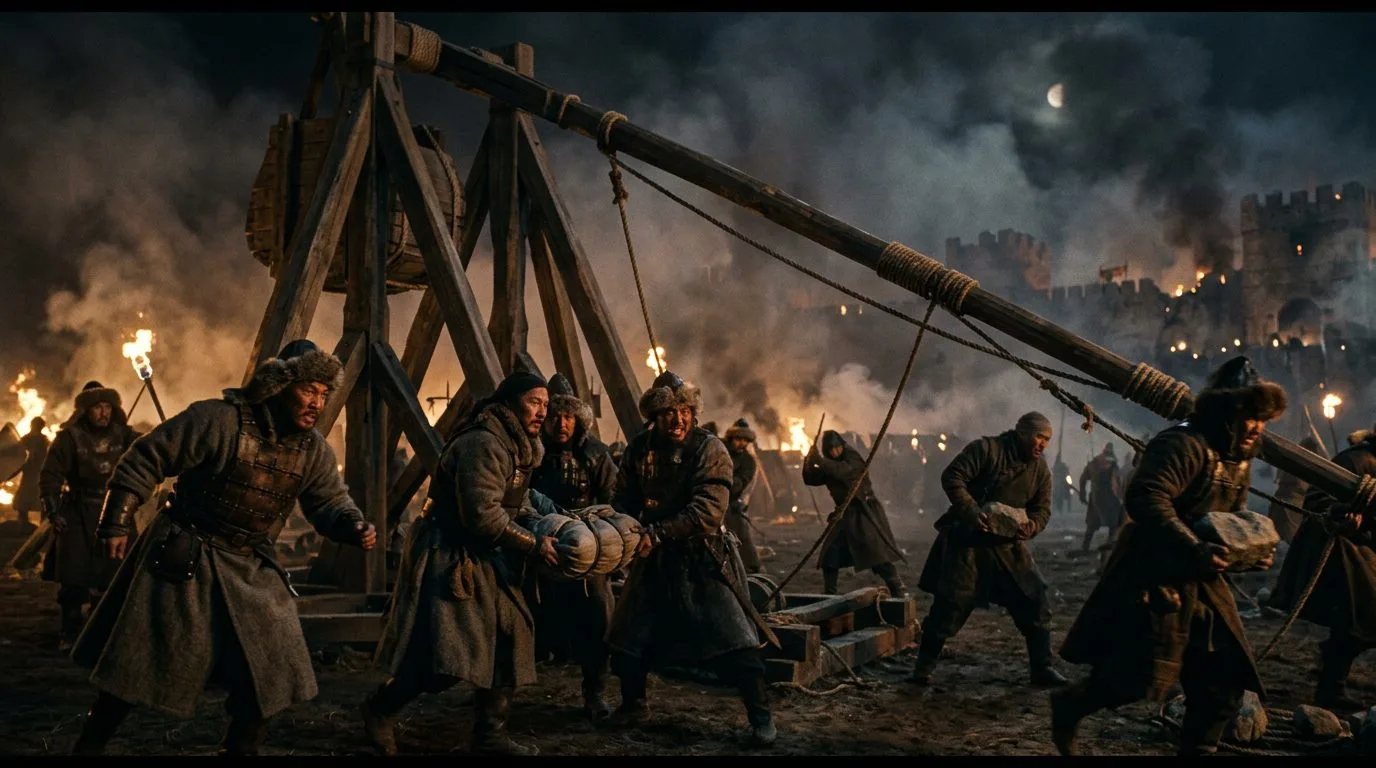
Siege Warfare Technology: Castles and Catapults
When Mongol engineers hurled diseased corpses over the walls of Caffa in 1346 CE using **trebuchet**s, they may have launched the Black Death into Europe through history’s first documented biological warfare. Siege technology evolved into a brutal competition between fortification and destruction, shaping medieval warfare for centuries.
The ancient Assyrians pioneered siege warfare around 850 BCE with battering rams and siege towers, but medieval engineers elevated it to a science. The trebuchet, perfected around 1200 CE, could hurl 300-pound stones over 300 yards using counterweight physics. At the Siege of Acre in 1291 CE, Mamluk trebuchets numbered in the dozens, bombarding Crusader walls until sections collapsed.
Castle architects responded with innovations that made fortifications nearly impregnable.
10. Military Logistics: The Unsung Hero of Conquest
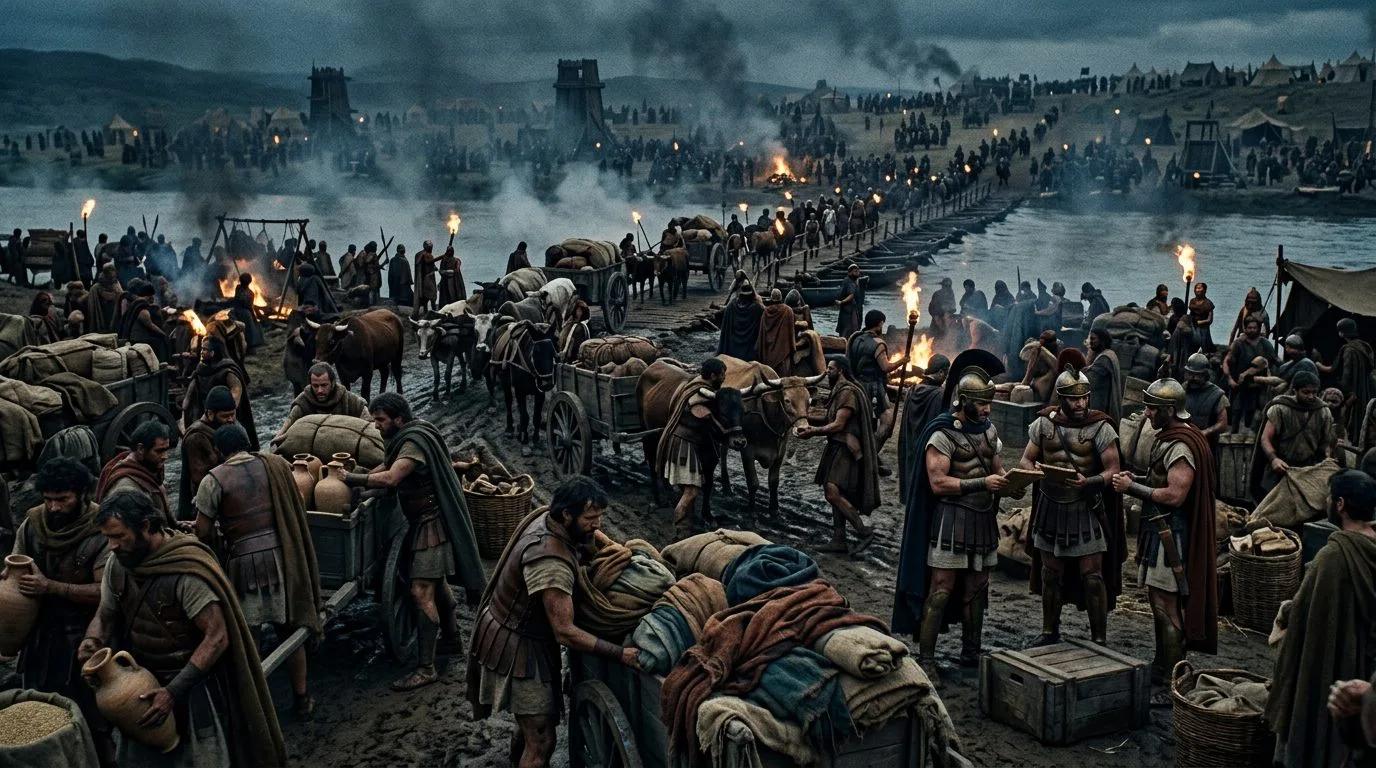
Military Logistics: The Unsung Hero of Conquest
Alexander the Great conquered an empire from Greece to India (334-323 BCE) not through superior weapons, but revolutionary logistics that kept 47,000 soldiers fed and moving across 11,000 miles. While historians celebrate brilliant tactics, the unglamorous science of supplies often decided campaigns more than any sword.
The Roman legion succeeded through logistical mastery. Each legionary carried 60 pounds of equipment including tools for building fortified camps nightly. Romans constructed 16,000 miles of military roads by 200 CE, enabling rapid troop movements and supply transport. At the siege of Alesia in 52 BCE, Julius Caesar’s forces built 25 miles of fortifications in weeks while feeding 60,000 soldiers besieging 80,000 Gauls and defending against 240,000 reinforcements.
Did You Know?
From the composite bow’s elegant engineering to the mundane miracle of effective supply chains, military innovations throughout history remind us that warfare drives technological advancement—often with unexpected consequences. The stirrup created feudalism. The longbow empowered commoners. Gunpowder demolished social hierarchies that had endured for centuries. These ancient military innovations didn’t merely change how armies fought; they restructured entire societies, shifted economic systems, and occasionally advanced human knowledge in ways that benefited peace as much as war. The same metallurgical knowledge that created Damascus steel eventually produced better agricultural tools. Roman military roads became trade routes. The organizational principles perfecting medieval logistics evolved into modern supply chain management. Today’s military innovations—from GPS to the internet—follow this same pattern, developed for warfare but transforming civilian life. As we examine these ten innovations, a pattern emerges: the most successful military advantages weren’t always the most powerful weapons, but rather the technologies and tactics that aligned military capability with broader social, economic, and political forces. The phalanx succeeded because it matched Greek democratic ideals. Plate armor flourished when economic systems could support specialized craftsmen. Understanding how military innovations changed warfare helps us appreciate how deeply war and society have always been intertwined—and perhaps offers perspective on how today’s military technologies might reshape our world in ways we’re only beginning to imagine.