
When we think of ancient philosophy, names like Plato, Aristotle, and Socrates dominate our mental landscape. But what if I told you that Socrates himself credited a woman with teaching him everything he knew about love? Or that the greatest mathematical mind in Alexandria was a female scholar brutally murdered for her brilliance? Hidden in the shadows of history are brilliant women thinkers whose revolutionary ideas challenged conventions, shaped entire schools of thought, and influenced the greatest minds of their eras—only to be erased from the historical record by centuries of bias.
These weren’t quiet scholars confined to domestic spaces. They commanded lecture halls packed with hundreds of students, debated in public forums, authored influential texts, and forced their male contemporaries to reconsider everything they thought they knew about gender and intellect. Some lived as they pleased, challenging every social convention. Others wielded political power that shaped empires. Yet their names have been deliberately omitted from philosophy textbooks for over two millennia.
What you’re about to discover are ten extraordinary women philosophers whose contributions were so significant that even deliberate historical erasure couldn’t completely destroy their legacies. From the priestess who taught Pythagoras his core beliefs to the Cynic philosopher who lived homeless by choice to prove her principles, these women refused to be silenced. Their stories reveal not just individual brilliance, but a systematic pattern of intellectual achievement that patriarchal societies worked hard to suppress.
1. Hypatia of Alexandria: The Mathematician Murdered for Her Mind
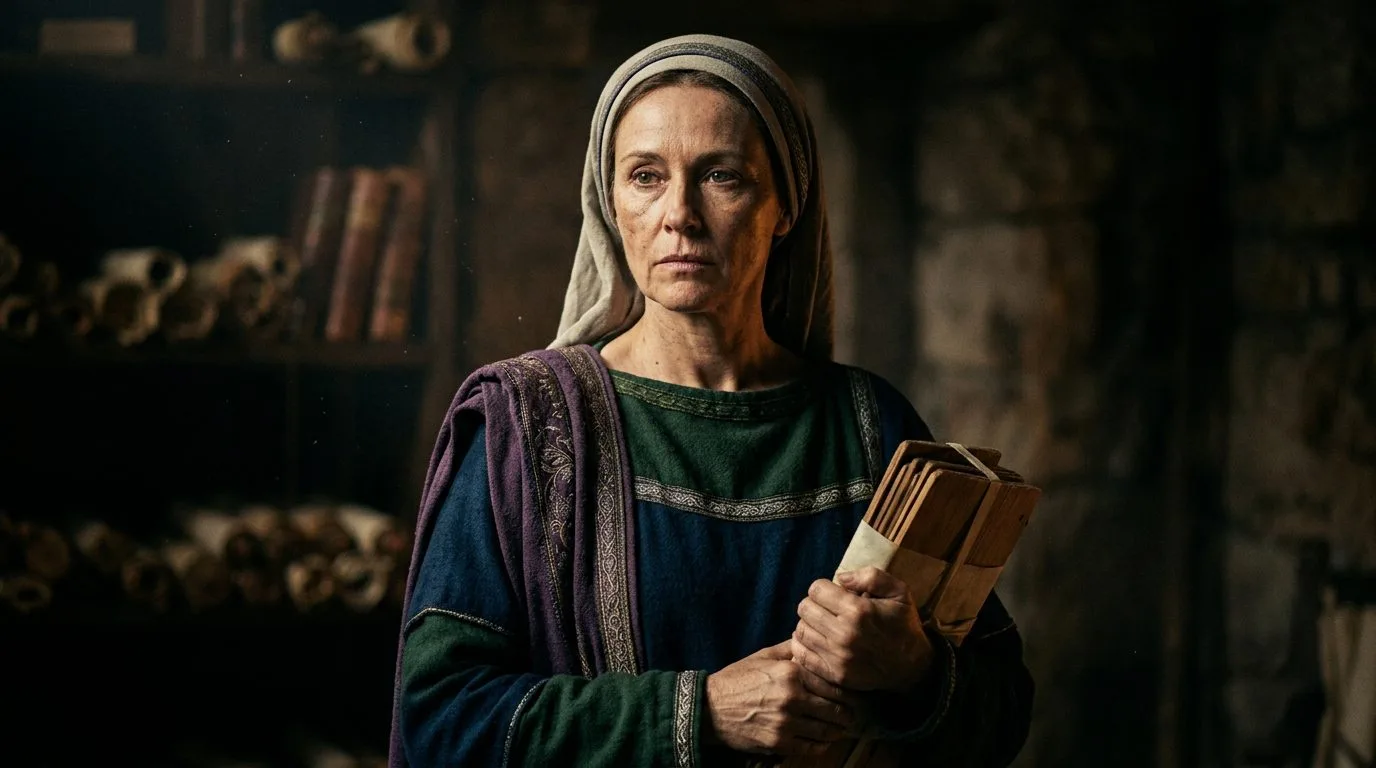
Hypatia of Alexandria
On a March morning in 415 CE, a mob of Christian zealots murdered Hypatia in the streets of Alexandria—one of history’s most brutal acts of anti-intellectual violence. At approximately 60 years old, she was the Roman Empire’s most celebrated mathematician, astronomer, and philosopher.
Hypatia headed the Neoplatonist school in Alexandria, where she lectured on mathematics, astronomy, and philosophy to packed audiences of Christians, pagans, and foreigners. She wrote advanced commentaries on classical mathematical works and perfected the astrolabe, an astronomical instrument essential for navigation.
What made her dangerous wasn’t just her paganism in an increasingly Christian city. She wielded political power as advisor to the Roman prefect Orestes, and her public lectures drew larger crowds than church sermons.
2. Diotima of Mantinea: Socrates’s Mysterious Teacher on Love
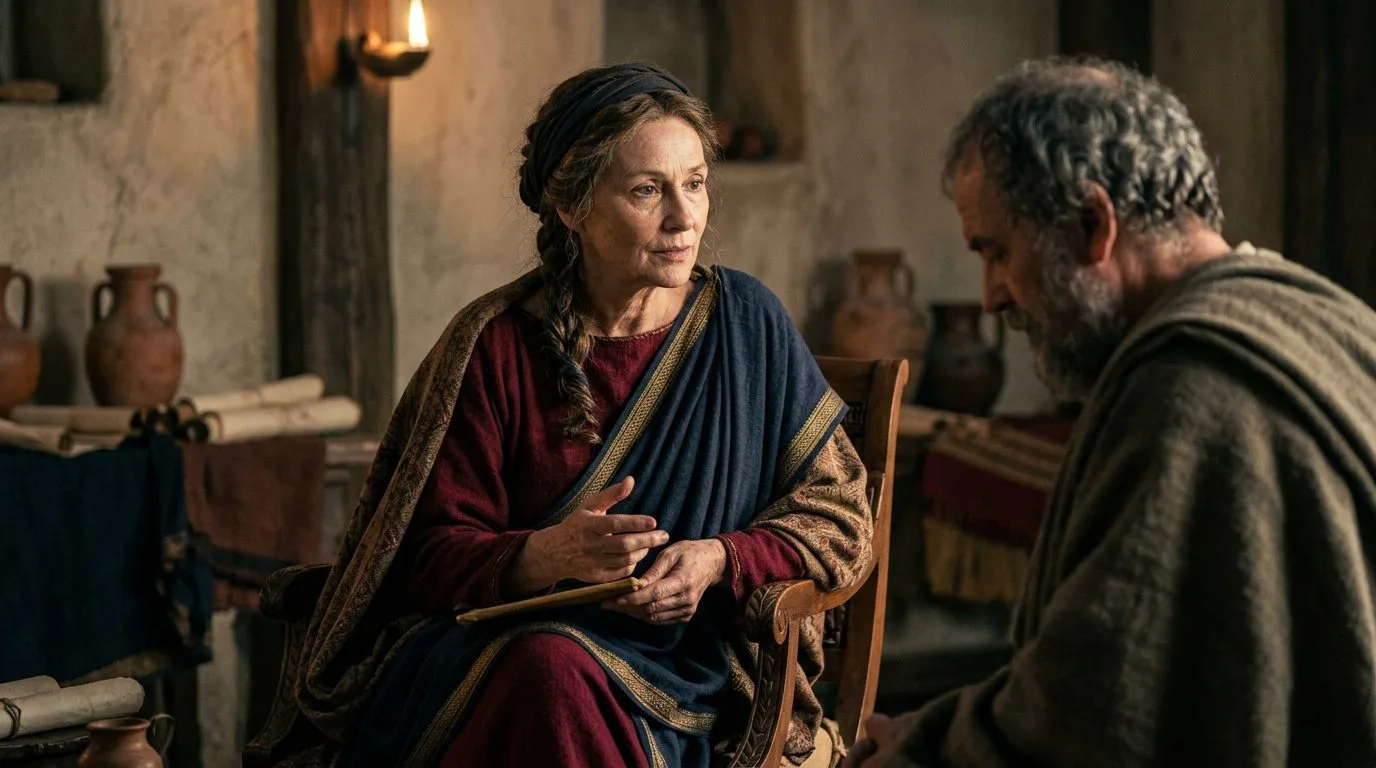
Diotima of Mantinea
Everything we think we know about Socrates’s philosophy of love came from a woman named Diotima—yet historians still debate whether she actually existed. In Plato’s Symposium (written around 385 BCE), Socrates credits Diotima, a priestess from Mantinea, with teaching him “the art of love” and developing the famous “Ladder of Love” that shaped Western philosophy for two millennia. According to the account, Diotima visited Athens around 440 BCE and performed rituals that delayed a plague for ten years. She taught young Socrates that love isn’t mere desire for beautiful things but a progression: from loving beautiful bodies, to beautiful souls, to beautiful ideas, and finally to Beauty itself—the eternal Form central to Plato’s philosophy.
What makes Diotima remarkable is that Plato presents her as intellectually superior to Socrates.
3. Aspasia of Miletus: The Rhetoric Master Who Shaped Athenian Politics
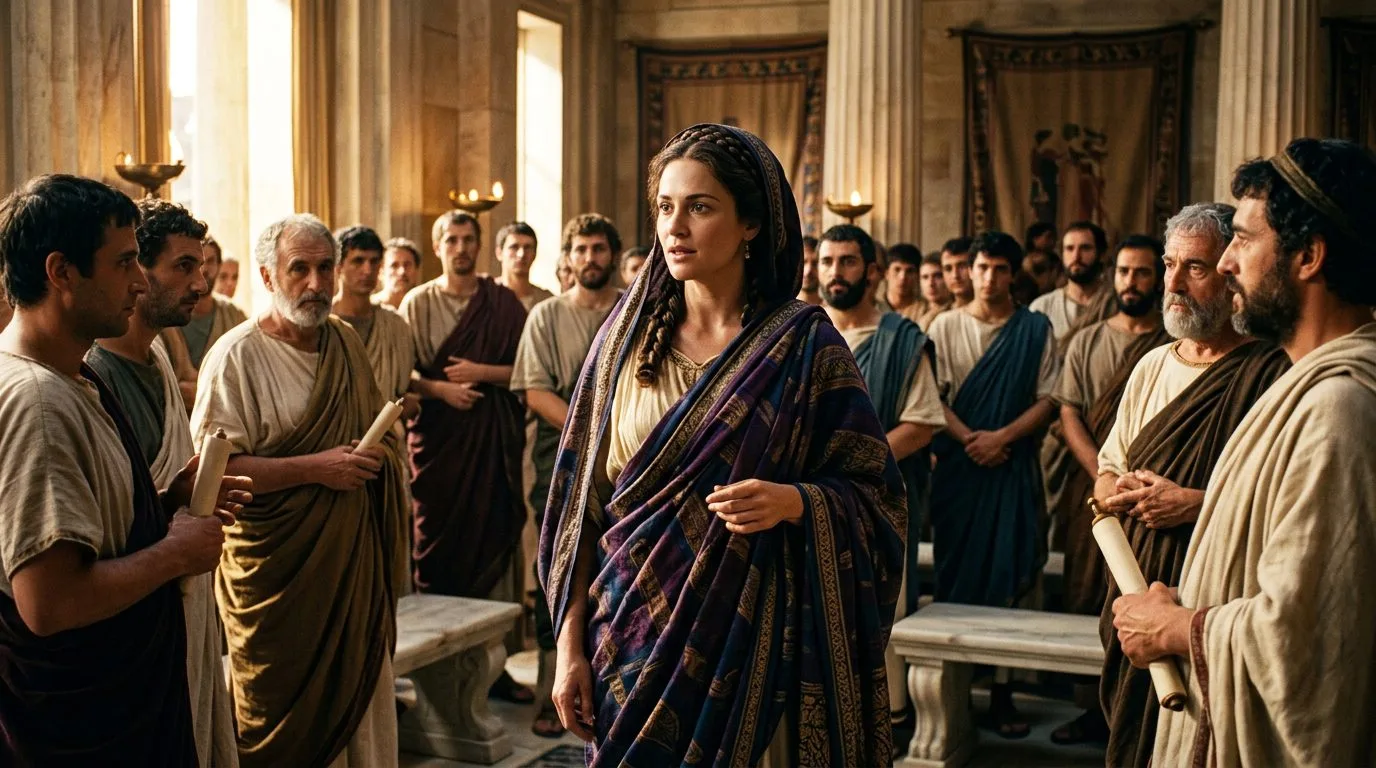
Aspasia of Miletus
Aspasia of Miletus arrived in Athens around 450 BCE and did something radical: she opened a school teaching rhetoric and philosophy to the city’s most powerful men, including Pericles, Athens’s greatest statesman. This defied every convention—women couldn’t participate in public life, own property, or receive formal education.
Aspasia’s home became an intellectual salon where philosophers and politicians gathered. Socrates attended her lectures and acknowledged learning rhetoric from her. Plutarch claimed Pericles’s famous Funeral Oration—which defined Athenian democracy—was written or heavily influenced by Aspasia. Their partnership was technically illegal since she was a foreigner, yet Pericles defied enormous political pressure to keep her.
When critics attacked Pericles, they targeted Aspasia, putting her on trial for impiety.
4. Arete of Cyrene: The Hedonist Who Taught for 35 Years
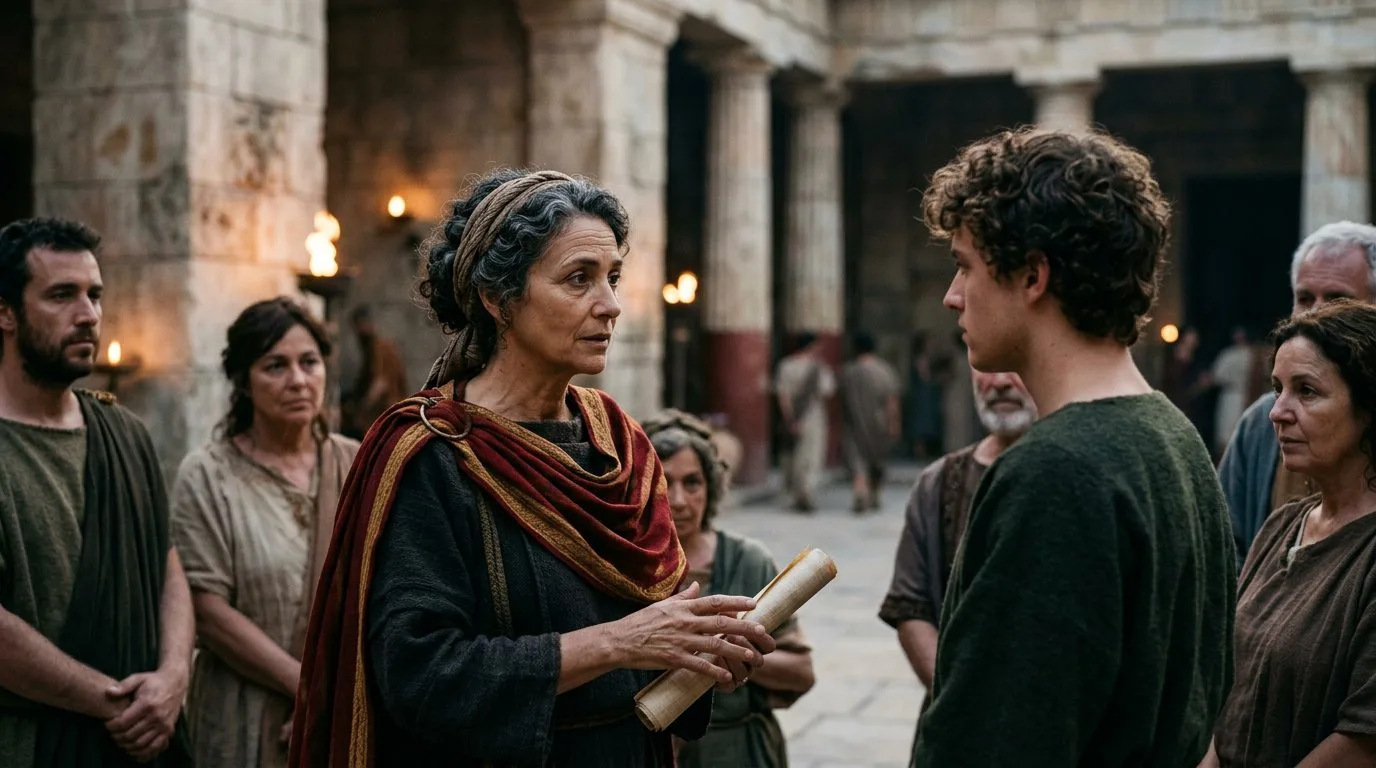
Arete of Cyrene
Arete of Cyrene inherited her father Aristippus’s philosophical school around 340 BCE and led it for 35 years while raising her son to become a philosopher. The Cyrenaic school taught that pleasure was the highest good, and Arete apparently surpassed her father in reputation. Ancient sources credit her with writing at least 40 books, though none survive. She taught natural and moral philosophy to over 100 students in an era when most women couldn’t read.
The Greek biographer Diogenes Laërtius records that she was called “the light of Hellas” and was consulted on public matters by political leaders. Her contemporaries praised her mastery of dialectic and her ability to defend hedonistic philosophy against Stoic critics.
5. Hipparchia of Maroneia: The Philosopher Who Lived Homeless by Choice
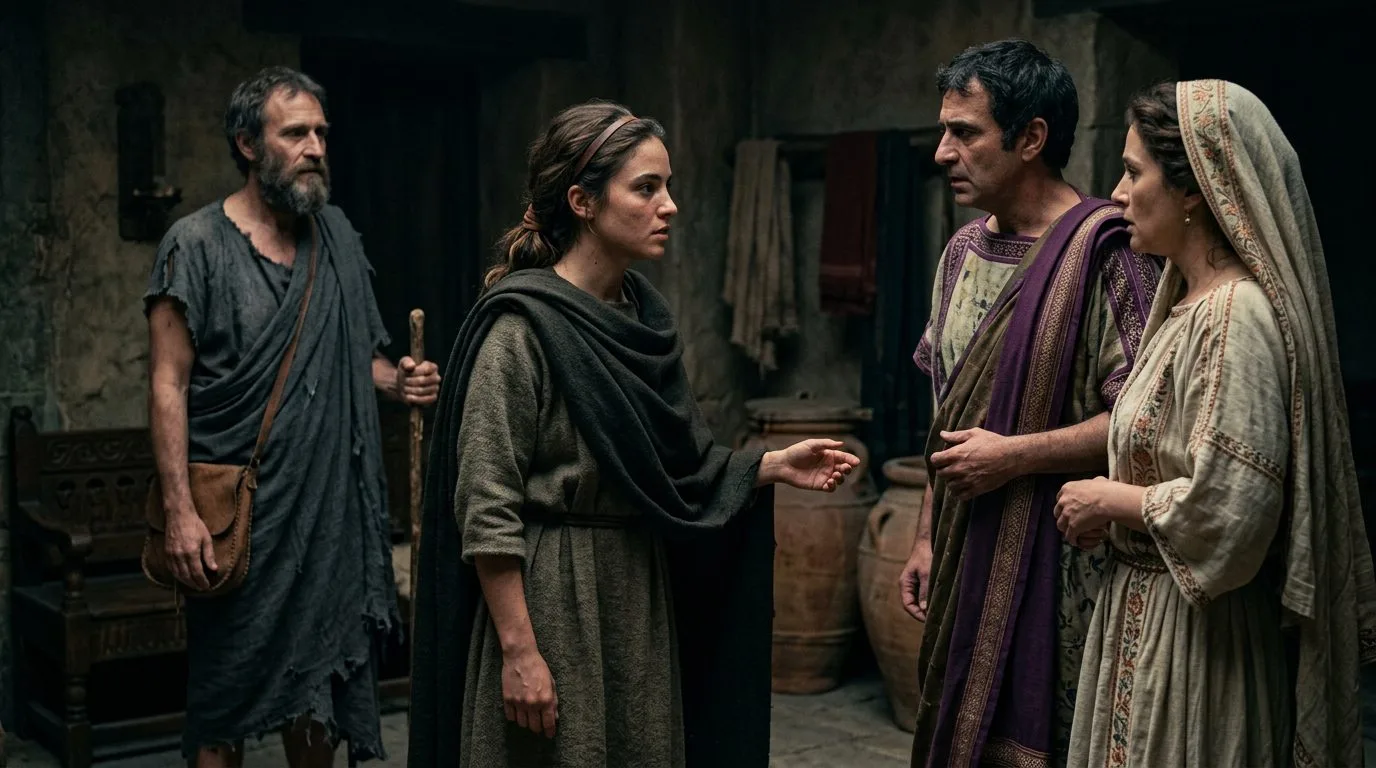
Hipparchia of Maroneia
Hipparchia of Maroneia walked away from wealth around 325 BCE to marry Cynic philosopher Crates and live homeless in Athens. When her parents tried stopping her, she threatened suicide and proceeded to shock Greek society by living her philosophical principles—rejecting possessions, conventions, and shame. She wore men’s clothing, slept in public spaces, and debated philosophy in the marketplace, behavior that scandalized even conservative Greeks.
Ancient sources record Hipparchia defeating philosopher Theodorus in public debate. When he pulled her cloak insulting her, she remained composed and quoted Homer.
6. Themistoclea: The Priestess Who Taught Pythagoras
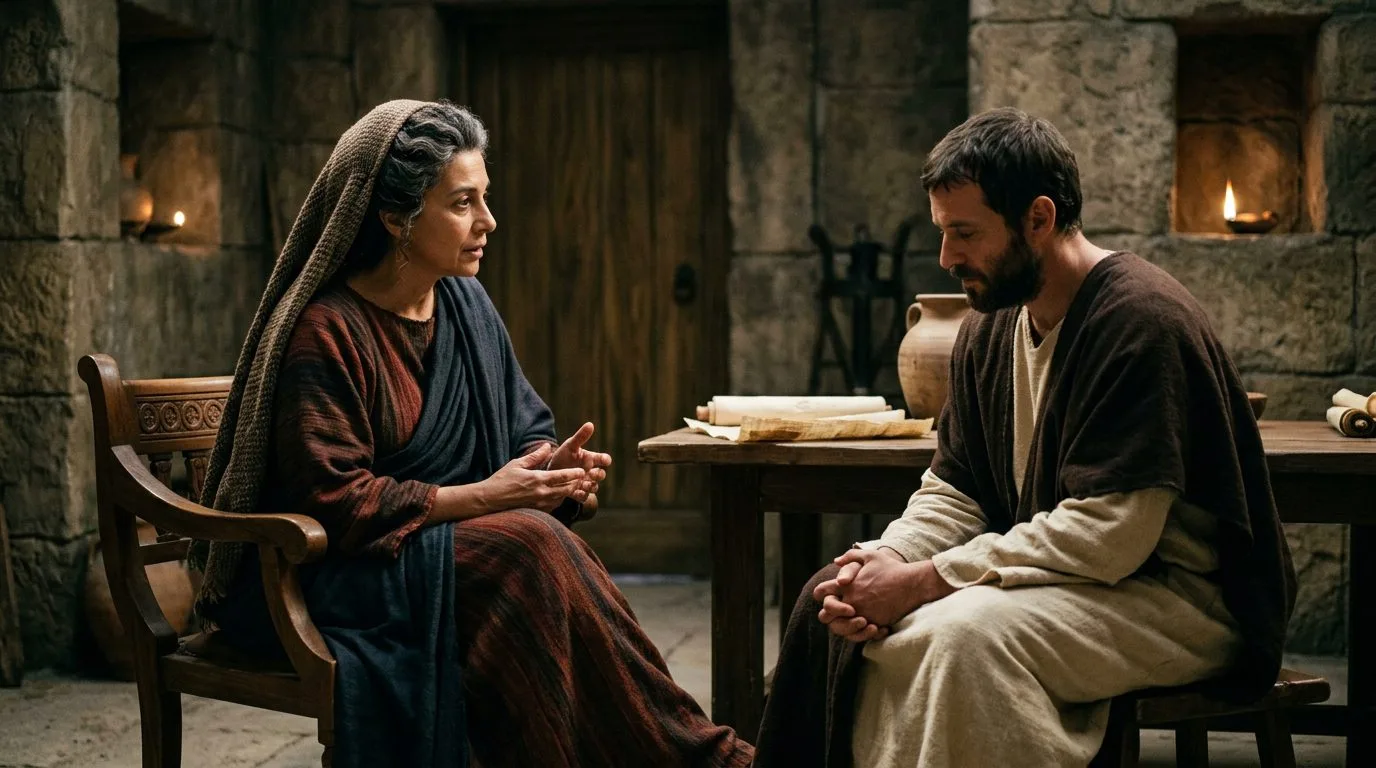
Themistoclea: The Priestess Who Taught Pythagoras
Before founding his school around 530 BCE, Pythagoras studied under Themistoclea, a priestess at Delphi who taught him the ethical principles central to Pythagorean philosophy. Yet she remains largely unknown outside academic circles.
Ancient sources, including biographer Porphyry (3rd century CE), confirm Pythagoras learned his moral doctrines from Themistoclea. She wasn’t merely religious but a systematic thinker who developed ideas about harmony, proportion, and the soul’s relationship to the cosmos—concepts Pythagoras later applied to mathematics and natural philosophy.
Delphic priestesses served as Apollo’s oracle, delivering prophecies that shaped Greek politics. But Delphi’s priests also maintained wisdom schools teaching philosophy, astronomy, and mathematics.
7. Sosipatra of Ephesus: The Mystic Who Commanded Hundreds of Students
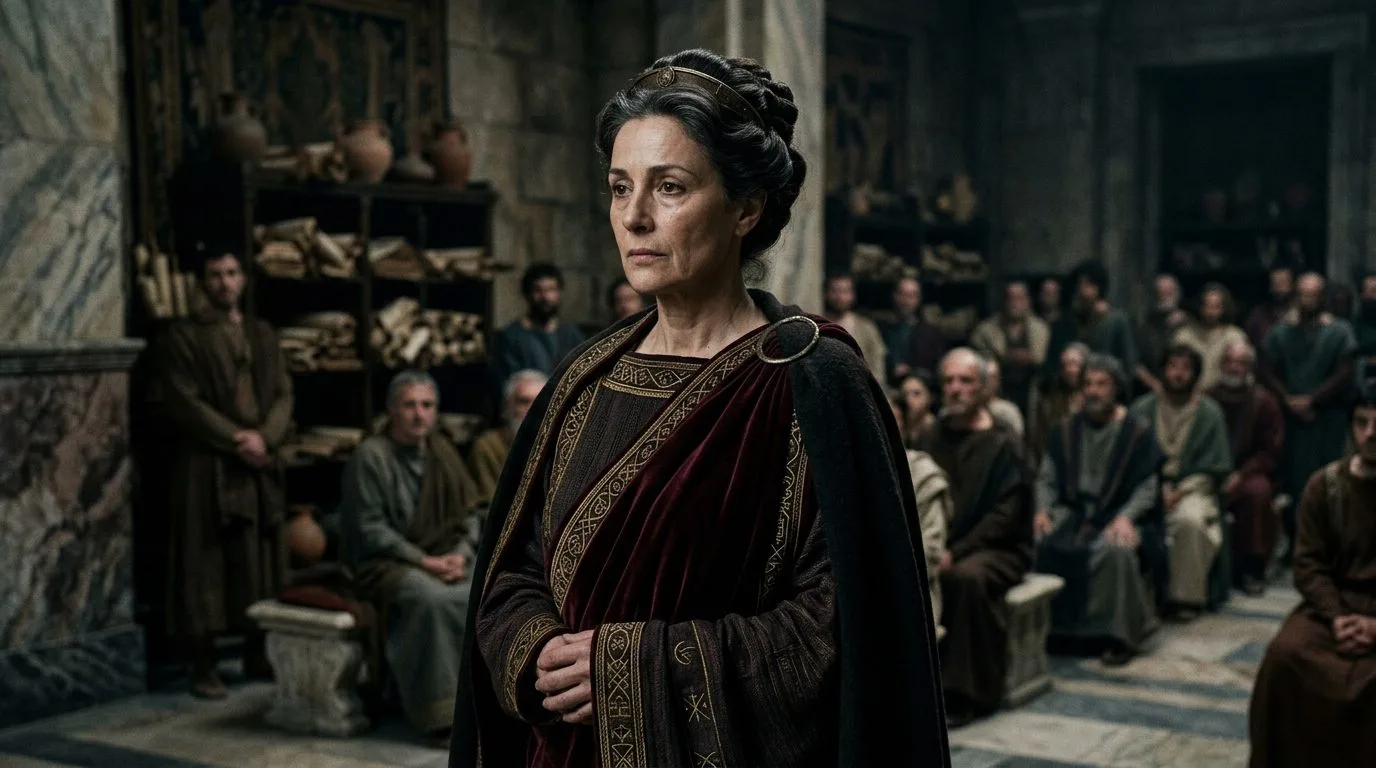
Sosipatra of Ephesus
Sosipatra of Ephesus was raised by mysterious strangers around 325 CE who taught her philosophy and mysticism, according to philosopher Eunapius. She became one of the 4th century’s most celebrated Neoplatonist philosophers, blending rigorous teaching with prophetic visions. After her husband Eustathius of Cappadocia died, she established a school in Pergamum around 360 CE that attracted more students than any other philosopher in the city.
Sosipatra lectured on Plato’s dialogues through a Neoplatonist lens, interpreting reality as emanating from a single transcendent source. What set her apart was integrating philosophical reasoning with mystical experience—she claimed visions revealed distant events and hidden truths, which her students accepted rather than dismissed. This combination of logic and intuition represented a distinctly female approach to Neoplatonism.
8. Aesara of Lucania: The Pythagorean Who Theorized Human Nature
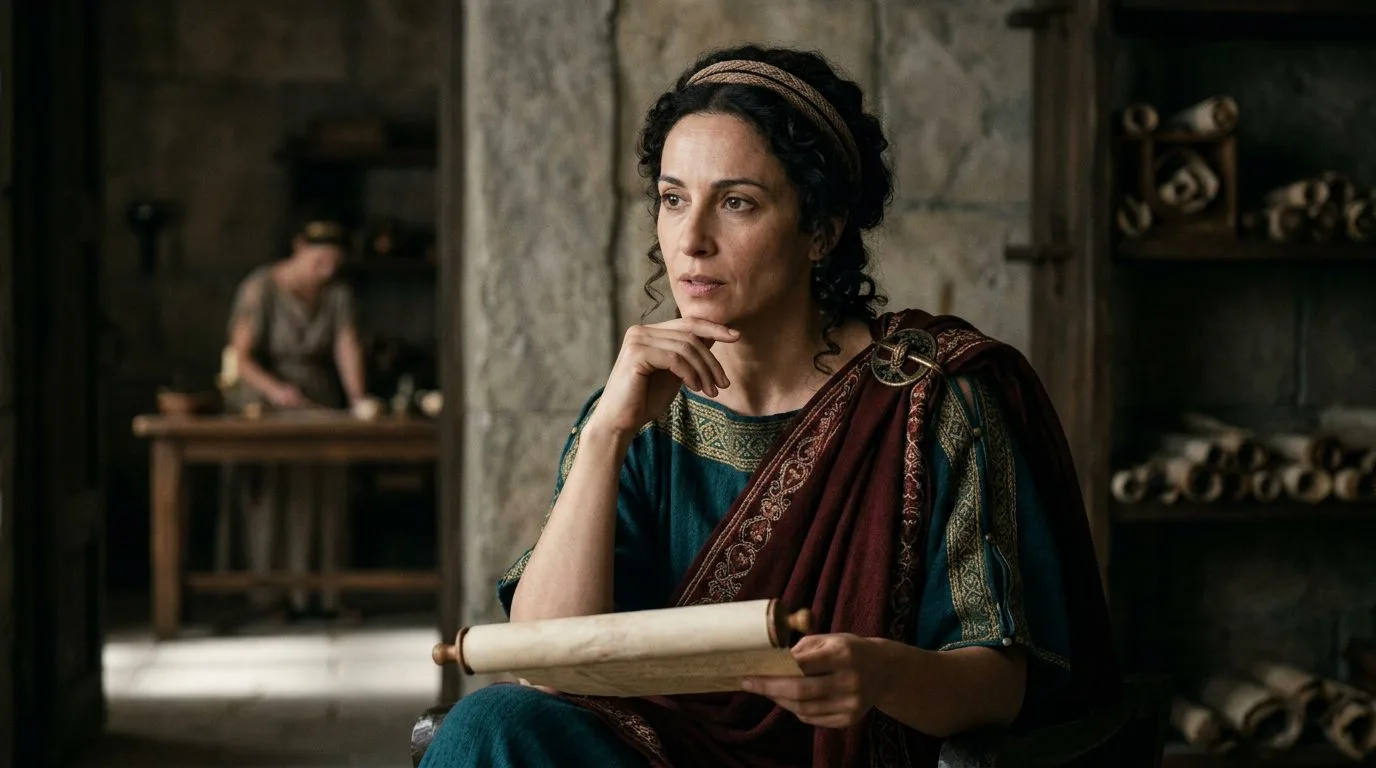
Aesara of Lucania
Aesara of Lucania wrote “On Human Nature” between the 4th and 3rd centuries BCE, making her one of the earliest female philosophers whose actual words partially survive. Her Pythagorean approach to ethics argued that the soul contains three parts—mind, spirited element, and desire—that must balance in proper proportion, like musical harmony. Rather than relying on divine revelation, Aesara grounded morality in empirical self-examination, writing that “through philosophy, we can observe the nature of the soul and discover justice therein.” This naturalistic approach anticipated later Stoic philosophy.
Aesara came from Pythagorean communities in southern Italy, where women participated more fully in philosophical life than in Athens. The Pythagoreans believed in intellectual equality and educated both sexes in mathematics, music theory, and natural philosophy.
9. Aristoclea: The Delphic Teacher of Philosophical Wisdom
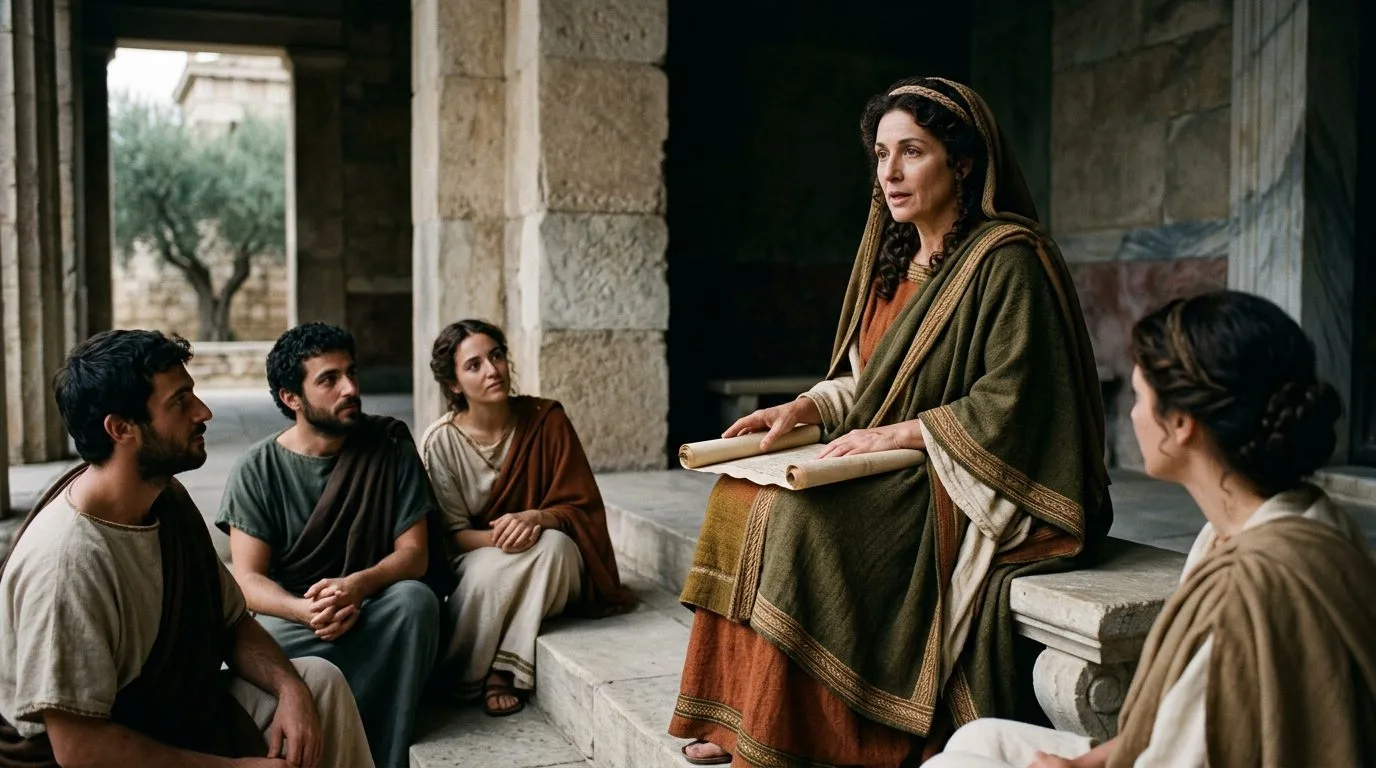
Aristoclea
Aristoclea served as a priestess at Delphi around the 6th century BCE and taught philosophy to influential students, including possibly Pythagoras himself or as his sister. Ancient sources sometimes confuse her with Themistoclea, but multiple references confirm a female philosopher at Delphi who shaped Pythagorean thought on mathematics, harmony, and the soul.
Delphi functioned as an educational hub, not merely an oracle site. Priestesses like Aristoclea elaborated on the famous Delphic maxims—”Know thyself” and “Nothing in excess”—developing philosophical frameworks that visitors spread throughout Greece. The Pythagorean tradition explicitly valued female teachers, making Aristoclea’s existence historically plausible.
Yet later Greek and Roman writers found female philosophers so anomalous that they distorted or erased their contributions.
10. Ptolemais of Cyrene: The Music Theorist Who Challenged Aristotle
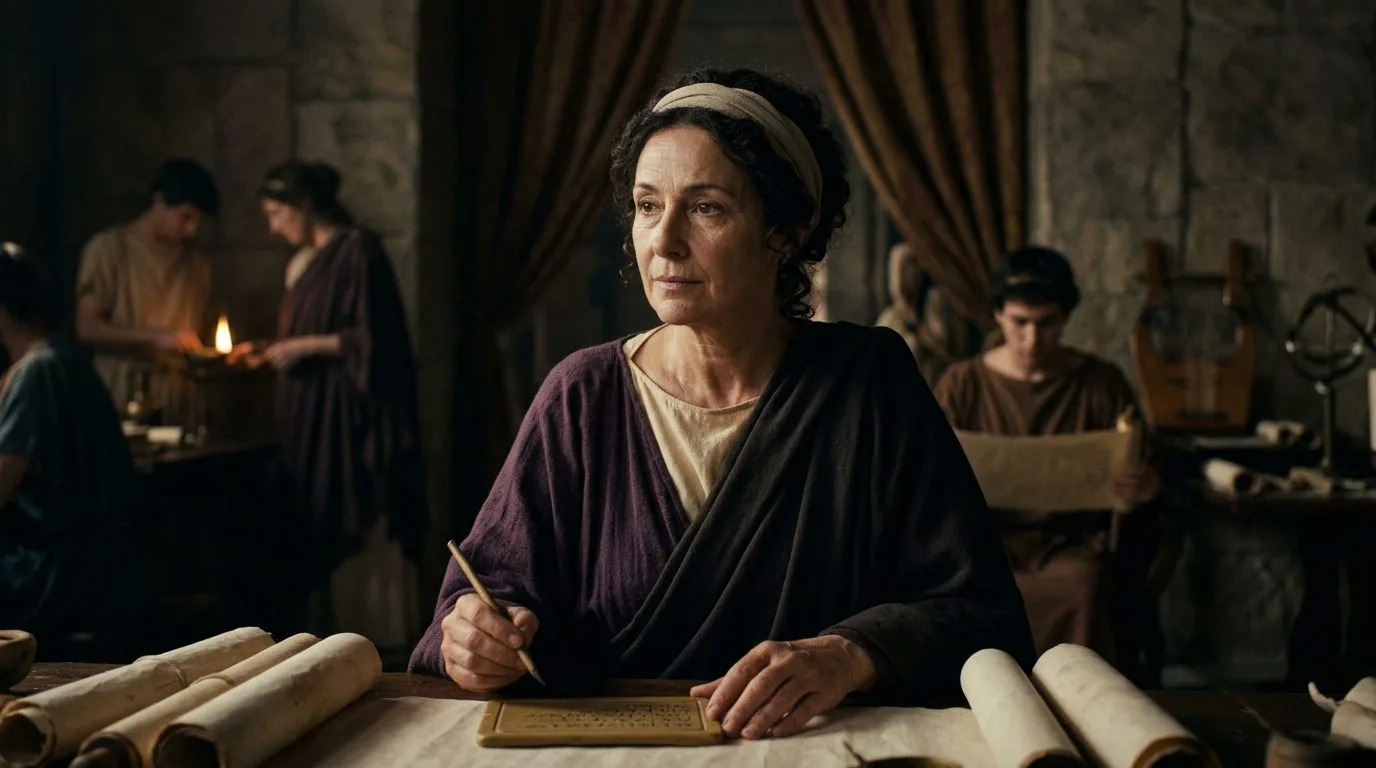
Ptolemais of Cyrene
Ptolemais of Cyrene wrote sophisticated treatises on music theory and Pythagorean philosophy during the 3rd century BCE, directly challenging Aristotle’s views on sound and harmony. Though her complete works are lost, substantial fragments preserved by 2nd-century CE theorist Porphyry reveal a rigorous thinker who combined empirical observation with mathematical analysis.
Ptolemais defended the Pythagorean position that music theory must ground itself in mathematical ratios, arguing against the Aristoxenian school’s reliance on trained perception alone. But she went further, developing sophisticated arguments about how reason and perception must work together to understand musical harmony.
Her surviving fragments demonstrate advanced knowledge of mathematics, acoustics, and philosophy.
Did You Know?
These ten women represent only a fraction of the female philosophers whose names barely survived history’s systematic erasure. For every Hypatia whose story we can partially reconstruct, dozens of brilliant women left no trace beyond a name in an ancient list or a passing reference in a male philosopher’s work. The pattern is unmistakable: women who achieved intellectual prominence in the ancient world faced not just contemporary resistance but deliberate historical suppression.
What makes these stories particularly relevant today is recognizing that the erasure continues. Philosophy departments still teach “the history of philosophy” as though it were exclusively male, perpetuating the fiction that women simply weren’t thinking deeply about fundamental questions. The reality is that women were there—teaching, writing, debating, and developing original theories—but their contributions were attributed to male students, dismissed as insignificant, or simply deleted from the record.
Recovering these lost philosophers isn’t just about correcting historical injustice, though that matters profoundly. It’s about recognizing that half of humanity’s intellectual potential was suppressed for millennia, and understanding that suppression helps us see how much brilliance we might be overlooking today. When Hipparchia asked why she shouldn’t spend her time on philosophy instead of weaving, she posed a question that still demands an answer: what extraordinary insights have we lost by silencing half of all potential thinkers?