
In the early 20th century, British archaeologist Howard Carter discovered a peculiar detail while excavating the mortuary temple of Hatshepsut: someone had systematically chiseled away her image from nearly every surface. This wasn’t vandalism—it was an ancient campaign to erase one of history’s most successful female rulers from memory. Yet despite such efforts, the stories of brilliant women who commanded ancient empires have survived millennia, carved into stone, pressed into clay tablets, and preserved in the writings of ancient historians.
Long before modern history began recording their names, these remarkable women ruled over some of the ancient world’s most powerful civilizations. From the sun-drenched banks of the Nile to the fertile plains of Mesopotamia, they proved that wisdom, strategic genius, and political acumen knew no gender. They built monuments that still stand today, commanded vast armies, negotiated with foreign powers, and governed millions with intelligence and grace. Some ruled in their own right as pharaohs and queens, while others wielded power as regents and high priestesses—but all left indelible marks on history.
What makes these ancient women rulers particularly fascinating is how they navigated patriarchal societies that offered them no template for female leadership. They had to invent their own paths to power, often adopting masculine titles, forming strategic alliances, or claiming divine authority. Their stories reveal not just individual brilliance, but the universal truth that exceptional leadership has always transcended the limitations society tries to impose. Here are ten extraordinary women who commanded ancient empires and changed the course of history.
1. Hatshepsut Built Egypt’s Greatest Monument While Ruling as King
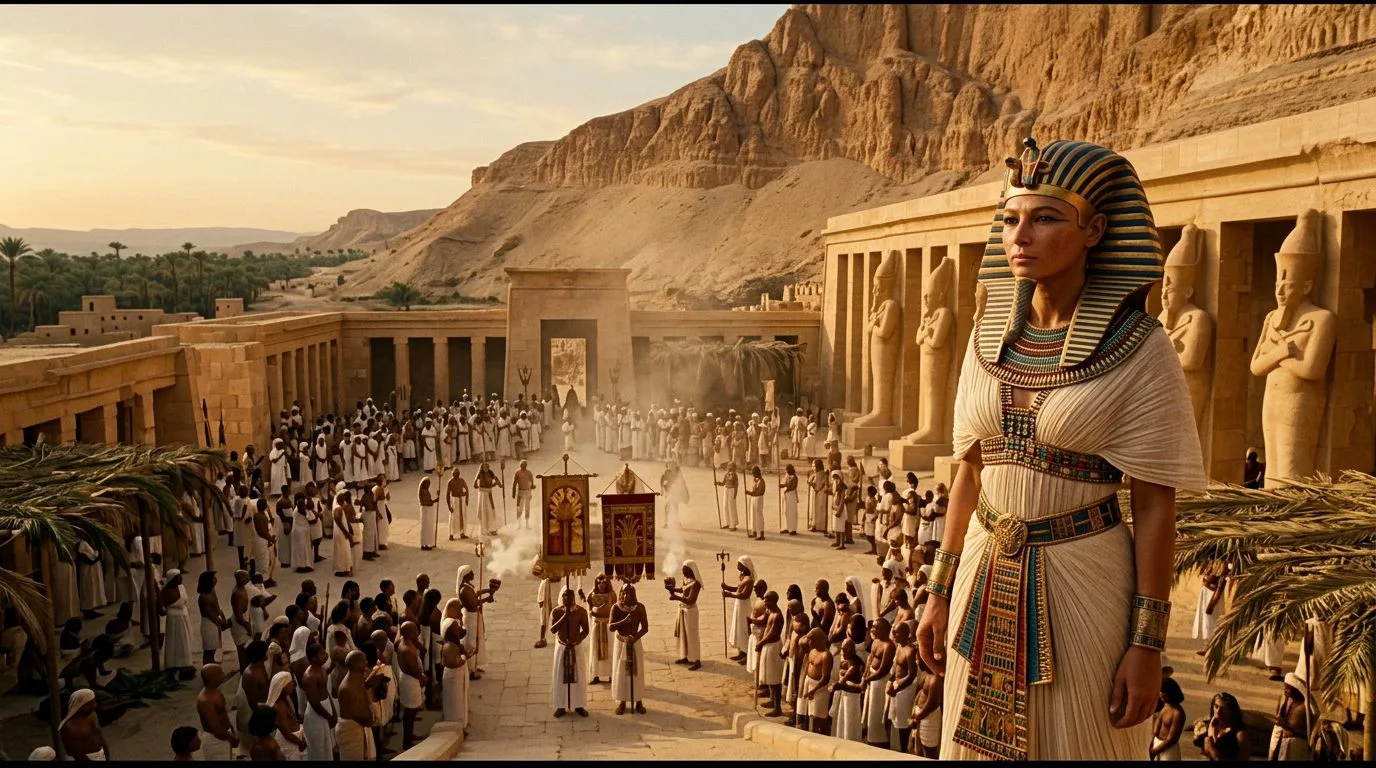
Hatshepsut’s mortuary temple at Deir el-Bahari.
When Thutmose II died around 1479 BCE, his young heir needed a regent—his widow, Hatshepsut. Within seven years, she crowned herself pharaoh and ruled Egypt for over two decades as one of its greatest monarchs. She transformed herself into a king, wearing the false beard and masculine regalia tradition demanded.
Hatshepsut’s reign brought unprecedented prosperity. She commissioned over one hundred building projects, with her masterpiece being the magnificent mortuary temple at Deir el-Bahri, a three-tiered architectural marvel still dominating the Theban landscape. The temple records her greatest triumph: a trading expedition to the Land of Punt around 1470 BCE that brought back myrrh trees, ebony, ivory, gold, and exotic animals, enriching Egypt’s treasury.
During her 22-year reign, Hatshepsut maintained peace, expanded trade networks, and left Egypt wealthier and more stable.
2. Cleopatra VII Spoke Nine Languages and Nearly Conquered Rome
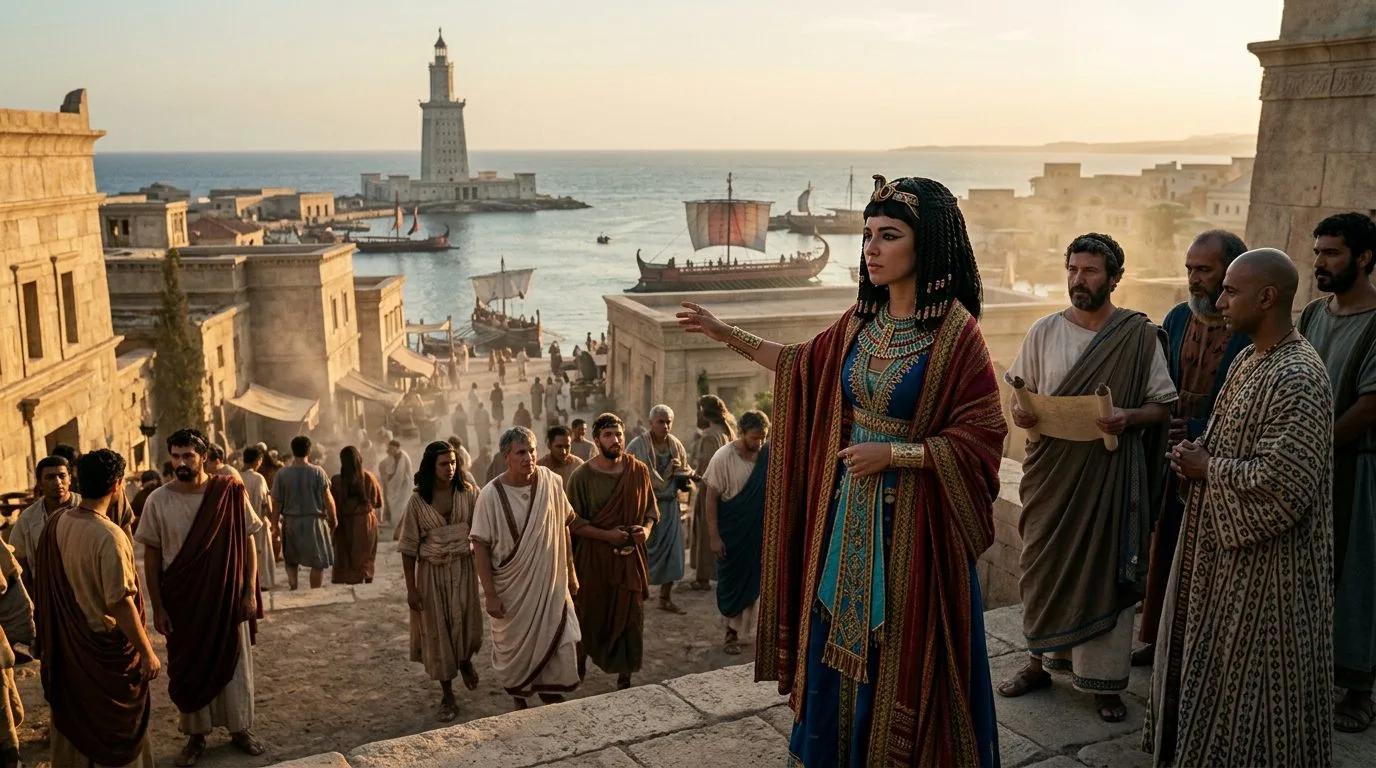
Cleopatra VII Spoke Nine Languages and Nearly Conquered Rome
When Cleopatra VII took Egypt’s throne in 51 BCE at eighteen, she inherited a bankrupt, unstable kingdom threatened by Rome. This brilliant strategist transformed Egypt into a power that nearly changed Western civilization. Unlike her Ptolemaic predecessors who ruled for 300 years without learning Egyptian, Cleopatra mastered at least nine languages and became the first to speak to her subjects in their native tongue.
Her education encompassed mathematics, philosophy, astronomy, and oratory. She forged strategic alliances that kept Egypt independent when other Mediterranean kingdoms fell to Rome. Her relationship with Julius Caesar was a calculated political partnership—he acknowledged their son Caesarion and supported Egyptian interests. After Caesar’s assassination in 44 BCE, she brilliantly pivoted to ally with Mark Antony and built a naval fleet of over 200 ships.
3. Nefertiti Wielded Pharaonic Power Alongside Akhenaten
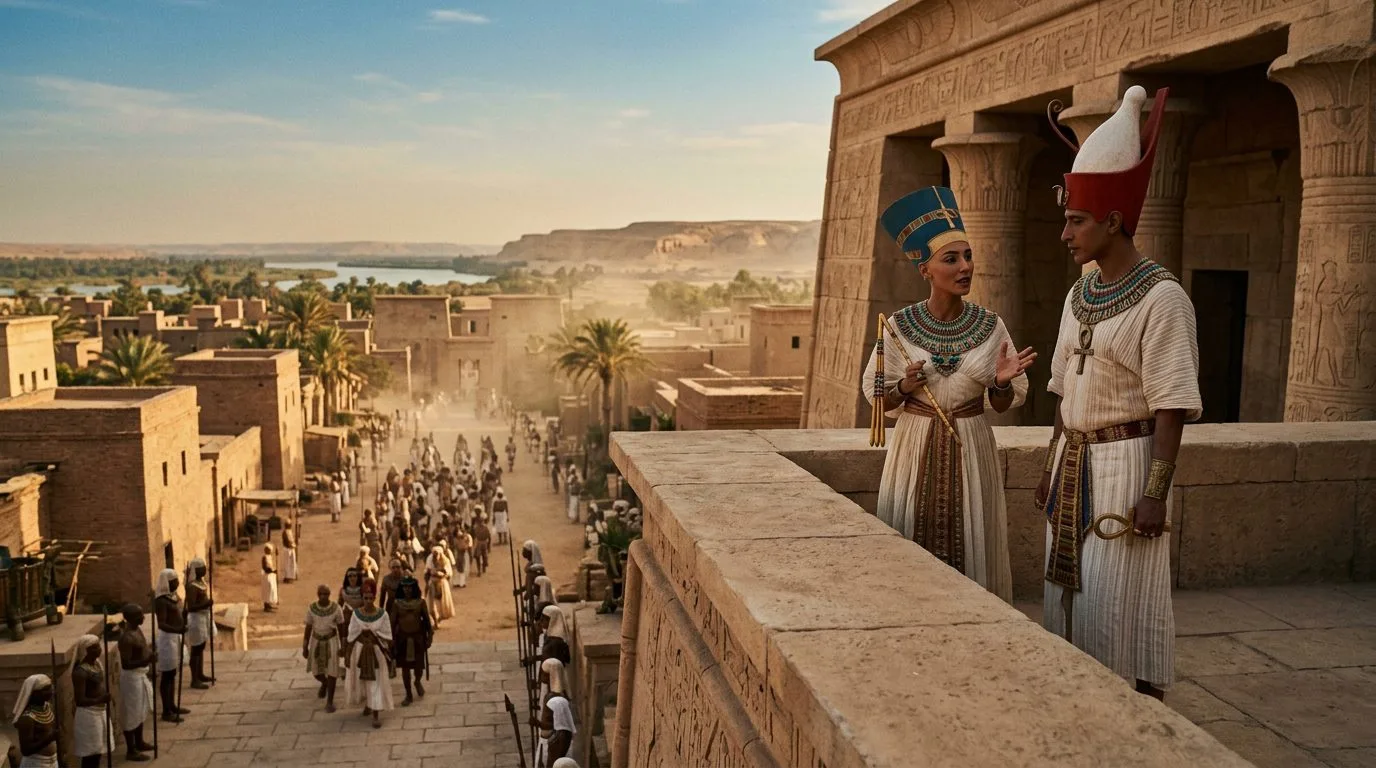
Nefertiti’s reign as Egypt’s co-ruler.
The famous limestone bust shows only a fraction of Nefertiti’s true power. As Great Royal Wife of Pharaoh Akhenaten (ruling Egypt circa 1353-1336 BCE), she appeared in official art performing rituals reserved for pharaohs alone—smiting enemies, wearing the pharaonic crown, and making offerings to gods. This suggests she held co-ruling status rather than merely supporting her husband.
Nefertiti’s influence was particularly evident in Akhenaten’s revolutionary religious transformation. When he moved Egypt’s capital to Amarna around 1346 BCE and declared the sun disc Aten as supreme deity, creating the world’s first monotheistic religion, Nefertiti served as high priestess and co-architect. Temple reliefs show her presiding over ceremonies with considerable theological authority.
4. Enheduanna Wrote Humanity’s First Signed Poetry 4,300 Years Ago
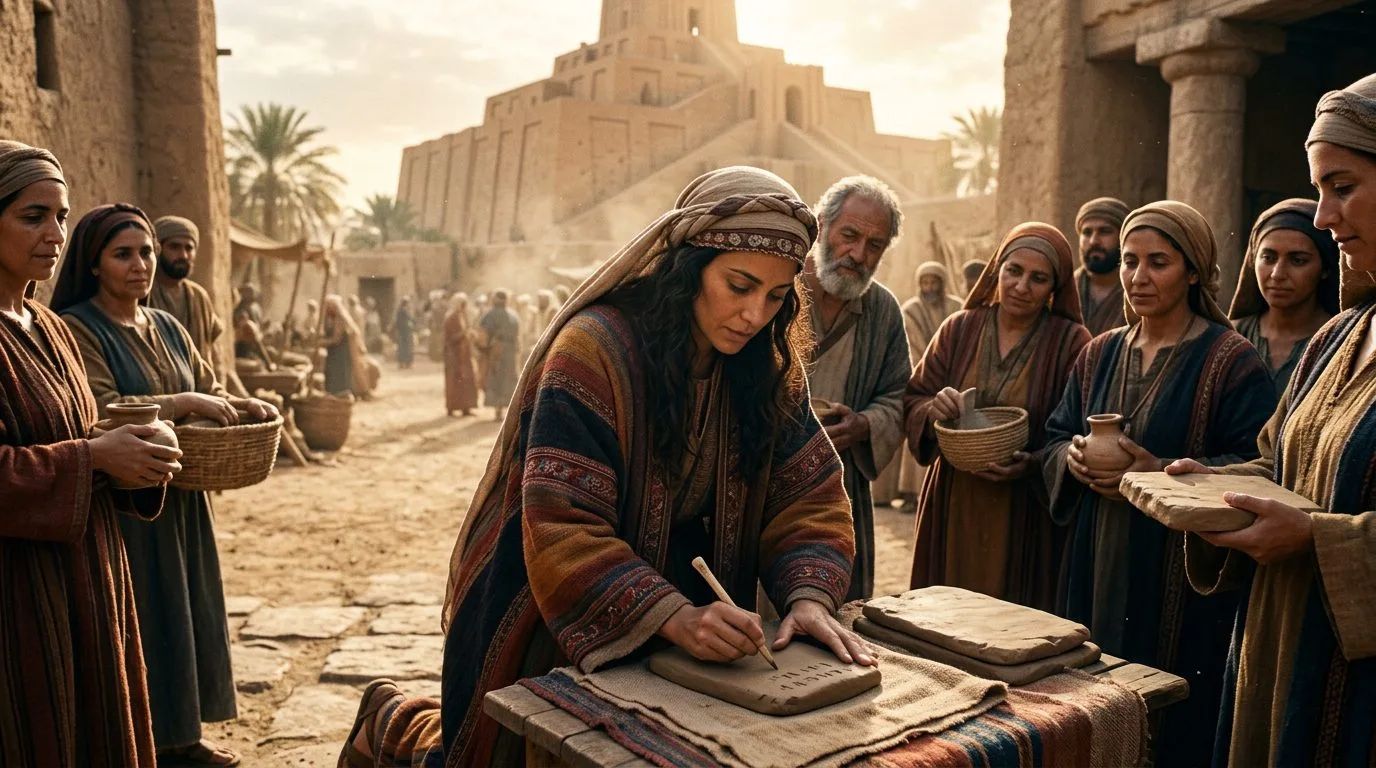
Enheduanna Wrote Humanity’s First Signed Poetry 4
Ure>
In the 23rd century BCE, Enheduanna revolutionized literature by becoming humanity’s first known author to sign her name to her work. As high priestess of the moon god Nanna at Ur and daughter of Sargon of Akkad, she composed sophisticated hymns and poetry that were discovered on cuneiform tablets in the early 20th century.
Her most famous work, “The Exaltation of Inanna,” comprises 153 lines of passionate poetry dedicated to the goddess of love and war. Written around 2300 BCE, this hymn blends devotional fervor with political savvy. When exiled from Ur during a political uprising, Enheduanna used her literary talent to appeal to Inanna for help—and the poem worked, restoring her to power.
Beyond poetry, Enheduanna was a religious and political powerhouse who served as high priestess for over 40 years.
5. Queen Puabi Was Buried With 74 Attendants in Ur’s Royal Cemetery
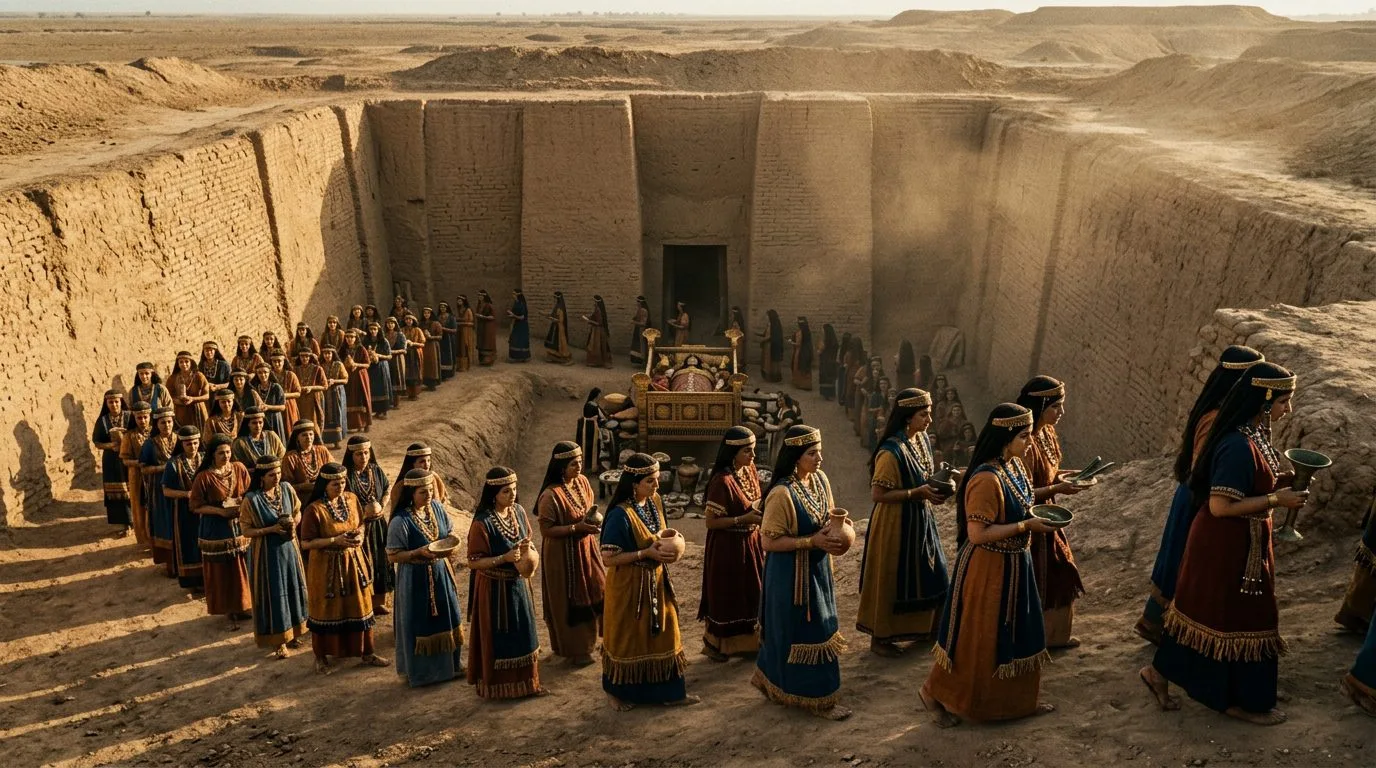
Ancient ritual sacrifice at Ur’s royal tomb.
When British archaeologist Leonard Woolley excavated the Royal Cemetery of Ur in the early 20th century, he discovered the undisturbed tomb of Queen Puabi, who died around 2450 BCE. Unlike most ancient royal burials that had been plundered, Puabi’s tomb contained its original treasures—revealing a queen whose wealth rivaled any king’s. Her body wore a headdress of gold, lapis lazuli, and carnelian weighing several pounds, with delicately crafted golden leaves and flowers. The tomb held over 6,500 precious stone beads, gold vessels, a golden cup bearing her name, and a lyre decorated with a gold and lapis lazuli bull’s head.
Most strikingly, 74 people—court attendants, musicians, and soldiers—were buried with her, apparently voluntarily, dressed in their finest clothes in organized rows.
6. Nitocris Allegedly Avenged Her Brother’s Murder With Engineering Genius
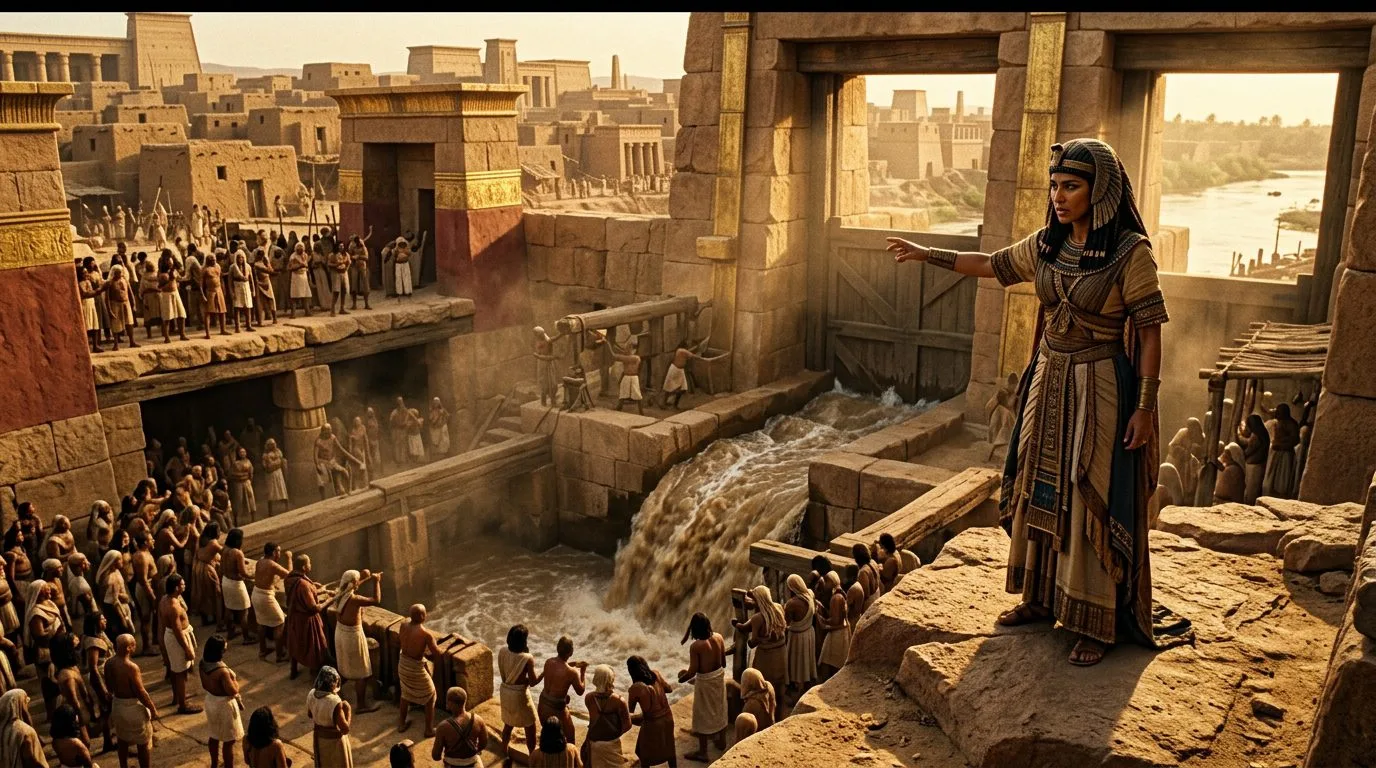
Nitocris’s revenge dam flooded the conspirators.
Ancient historians Herodotus and Manetho recorded Nitocris, who ruled Egypt around 2184 BCE during the 6th Dynasty. According to legend, she avenged her murdered brother by inviting his killers to a banquet in an underground chamber, then flooding it through channels connected to the Nile. While this dramatic tale remains unverified, Nitocris was a genuine historical figure. Manetho credited her with building the Third Pyramid at Giza—though modern archaeology attributes it to Menkaure centuries earlier, suggesting her reputation was so powerful that later generations attributed major achievements to her.
Egyptologist Kim Ryholt identified Nitocris with a 6th Dynasty ruler named Neitiqerty Siptah, whose name means “Neith is Excellent,” who ruled approximately two years around 2150 BCE during the First Intermediate Period’s collapse.
7. Sammuramat Ruled Assyria and Became a Legend as Semiramis
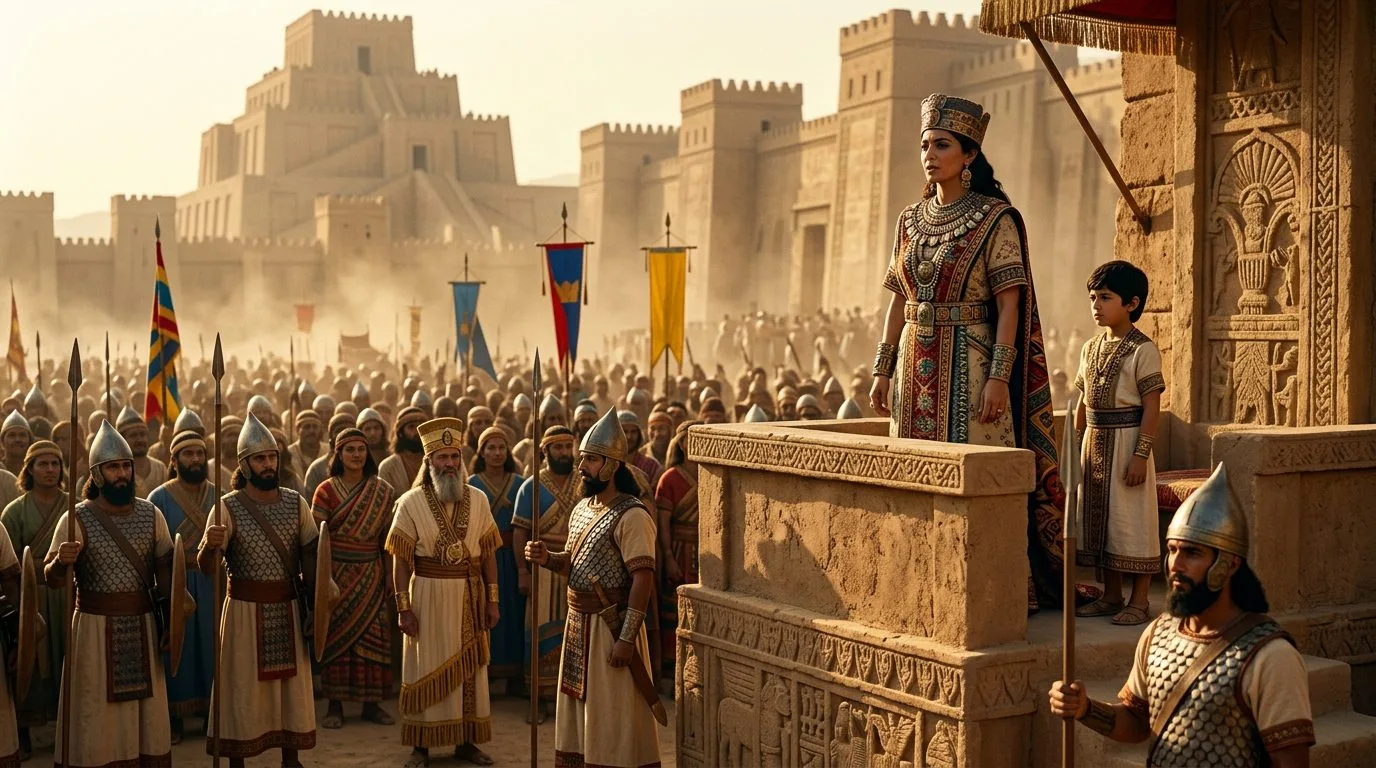
Sammuramat Ruled Assyria and Became a Legend as Semiramis
When Assyrian King Shamshi-Adad V died in 811 BCE, his widow Sammuramat became regent for her young son Adad-nirari III and ruled for five years—an unprecedented role for an Assyrian queen. Royal inscriptions placed her name alongside her son in positions typically reserved for reigning monarchs, honoring her extraordinary authority.
Sammuramat ruled during a critical period when Assyria faced threats from Urartu and needed to maintain control over vast territories from the Mediterranean to the Persian Gulf. She led military campaigns, negotiated with foreign powers, and kept the empire stable. Archaeological evidence shows construction and military expeditions continued uninterrupted, proving her rule was both accepted and effective.
8. Nefertari Was Called ‘The One for Whom the Sun Shines’
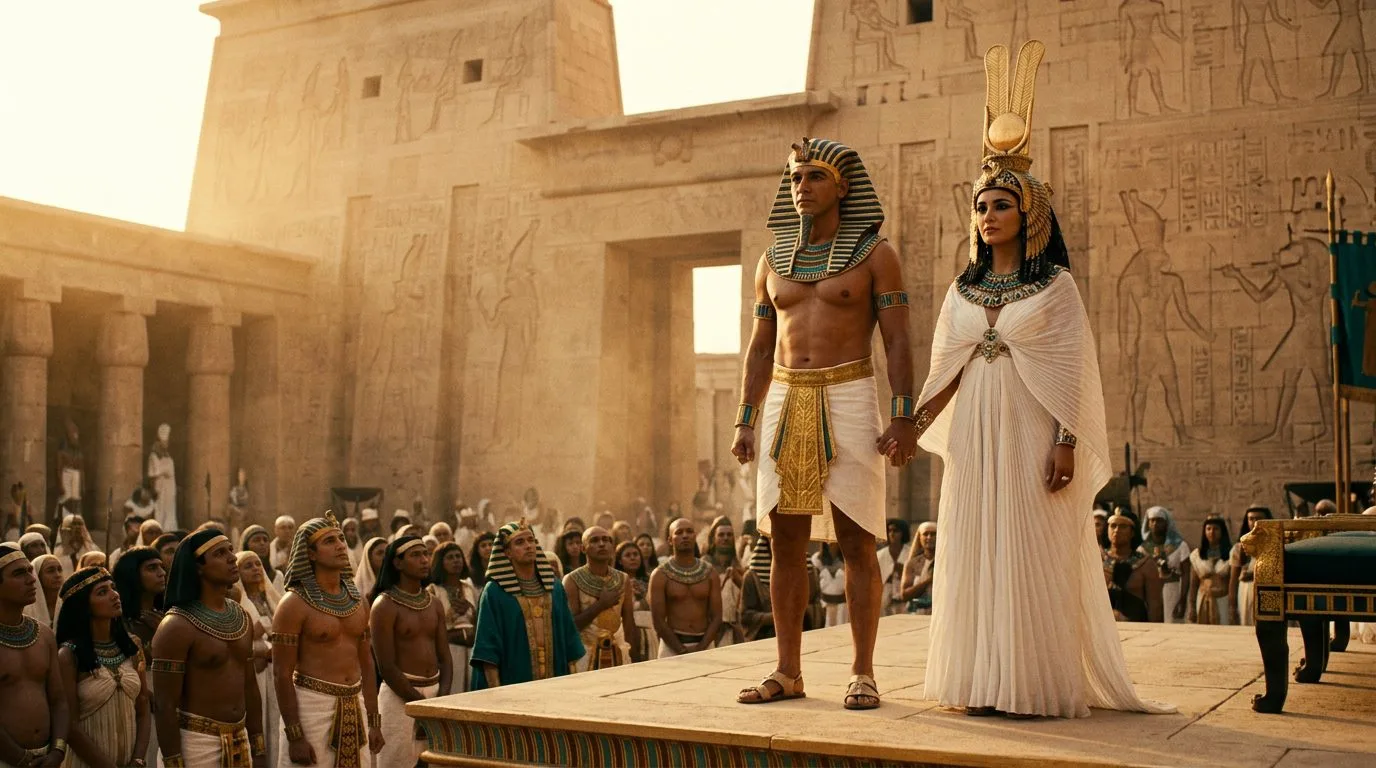
Portrait of Nefertari, wife of Ramesses II.
Ramesses II, who ruled Egypt from 1279 to 1213 BCE, had over 100 children with multiple wives—but Nefertari, his Great Royal Wife, held his heart above all others. At Abu Simbel around 1264 BCE, Ramesses built two massive temples: one for himself and the gods, and remarkably, one for Nefertari with statues equal in size to the pharaoh’s—an unprecedented honor. The temple bears an inscription: “The one for whom the sun shines.” Inside, artwork depicts Nefertari receiving divine authority from goddesses Isis and Hathor, imagery reserved for those with genuine political power.
Her tomb in the Valley of the Queens contains some of ancient Egypt’s most beautiful artwork—vivid paintings showing her journey through the afterlife. Built after her death around 1255 BCE, its cost and excellence show Ramesses spared no expense honoring her memory.
9. Sobekneferu Became Pharaoh When Egypt’s Dynasty Faced Extinction
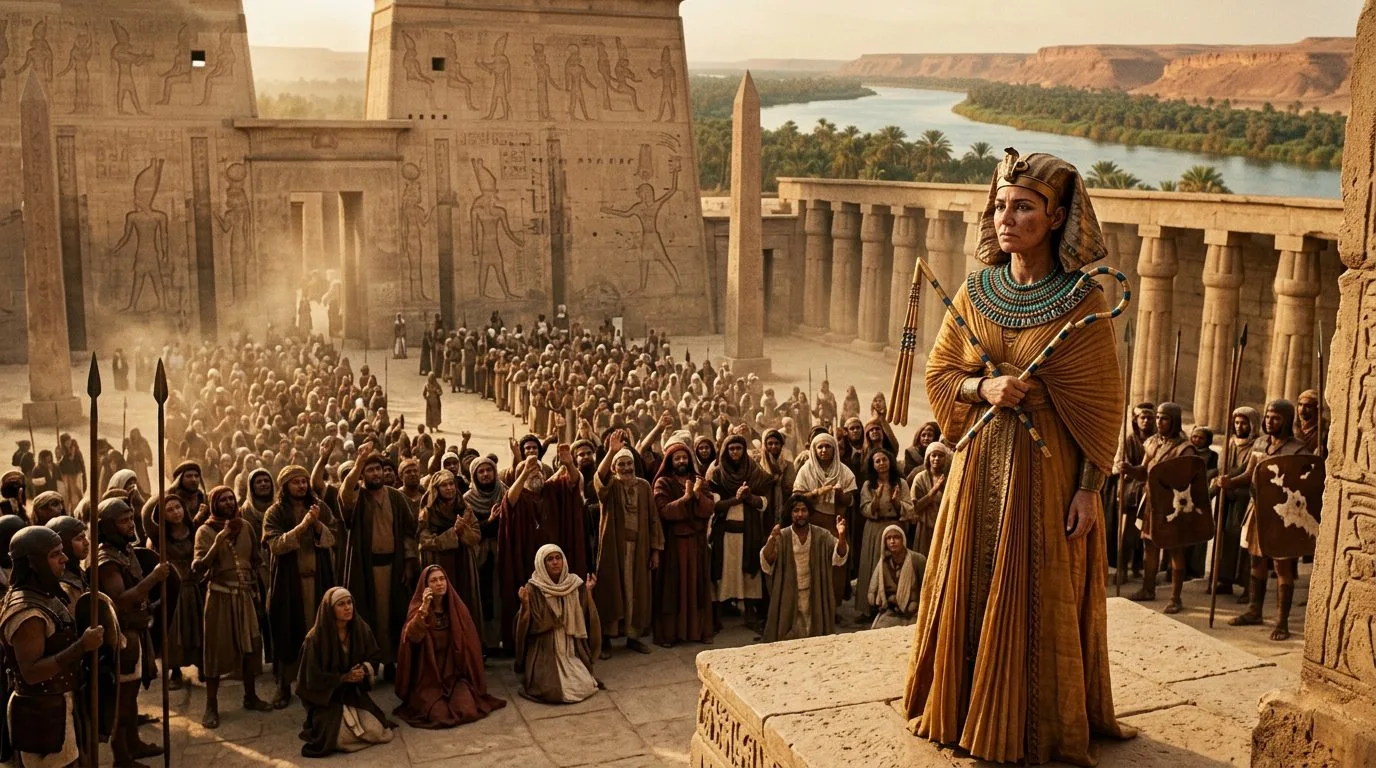
Sobekneferu Became Pharaoh When Egypt’s Dynasty Faced Extinction
When Amenemhat IV died around 1807 BCE without a male heir, Egypt’s 12th Dynasty faced extinction. His sister or daughter, Sobekneferu, became pharaoh—not as regent, but as the fully legitimate ruler. She was the first confirmed female pharaoh to rule in her own right, nearly 400 years before Hatshepsut.
Sobekneferu’s four-year reign left significant archaeological evidence. The Turin Canon records her as the final 12th Dynasty ruler. Statues show her wearing both feminine dress and masculine pharaonic regalia, balancing gender expectations with political authority. Unlike later female pharaohs, she blended feminine and masculine elements in her imagery. Her name meant “The Beauties of Sobek,” honoring the crocodile god of power and military might.
She completed her father’s pyramid complex at Hawara and initiated building projects demonstrating royal authority.
10. Kubaba Rose From Tavern Keeper to Found a Royal Dynasty
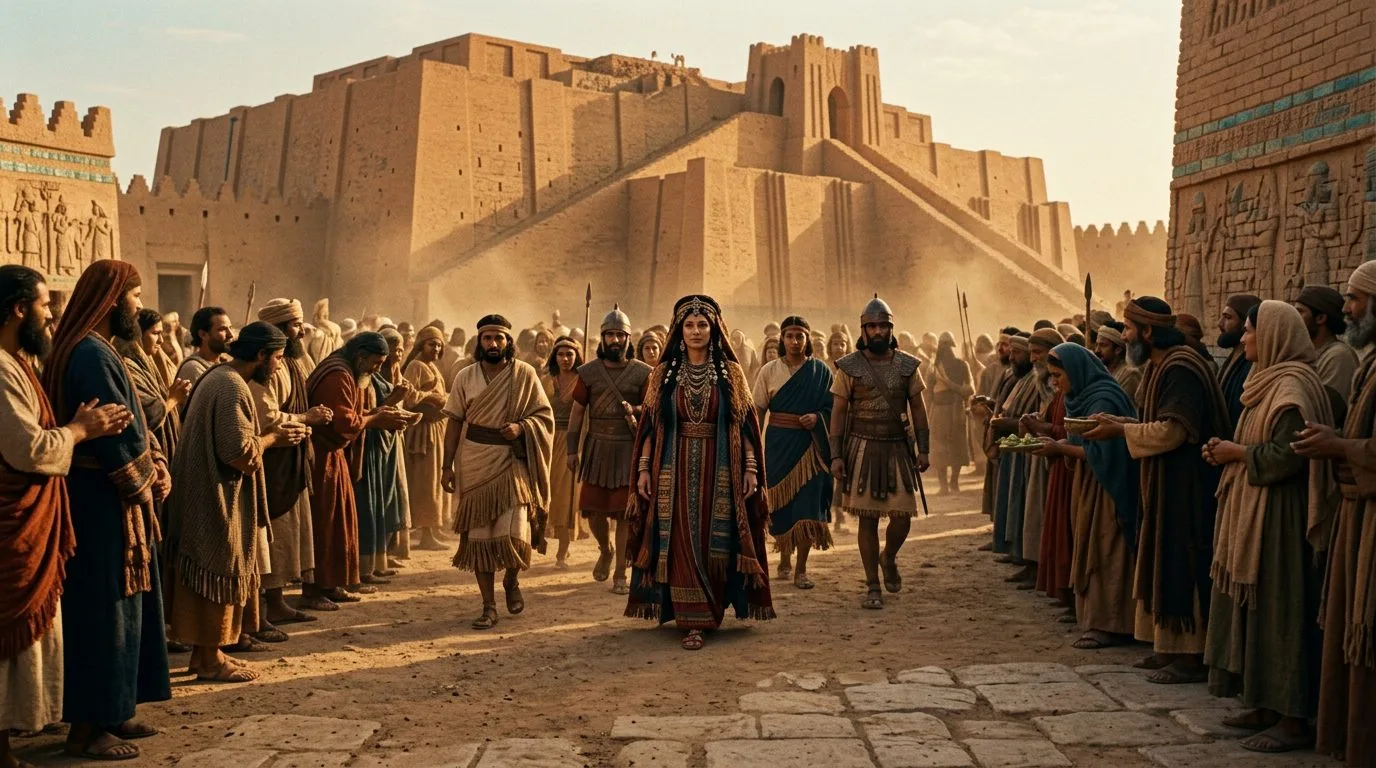
Kubaba: From Tavern Keeper to Dynastic Founder
The Sumerian King List records how Kubaba, a tavern keeper, seized control of the city-state of Kish around 2500 BCE and founded a dynasty. This simple entry documents one of history’s most remarkable ascensions to power: a woman from one of Sumerian society’s lowest occupations somehow became king.
Kubaba’s existence is confirmed by multiple sources, making her the earliest reliably documented female ruler in human history. The Weld-Blundell Prism names her explicitly as “lugal” (king), using the masculine title rather than the feminine “nin,” indicating she ruled with full sovereign authority. The legendary hundred-year reign attributed to her likely represents 20 to 30 years in reality—still exceptional for the turbulent Early Dynastic period. Her success in “making firm the foundations” suggests she brought political stability to Kish after chaos.
Did You Know?
These ten extraordinary women ruled during humanity’s earliest civilizations, yet their accomplishments rival those of any modern leader. They commanded armies, built architectural wonders, wrote literature that survived millennia, conducted international diplomacy, and governed millions of subjects with intelligence and authority. What makes their achievements particularly remarkable is that they succeeded in societies that offered no roadmap for female power—they had to invent their own paths to leadership, often adopting masculine symbols while maintaining their identities as women.
The legacy of these ancient women rulers extends far beyond their lifetimes. Hatshepsut’s architectural achievements still dominate the Egyptian landscape. Enheduanna’s poetry established literary traditions that influenced writing for thousands of years. Cleopatra’s diplomatic strategies nearly changed the course of Western civilization. Even when later generations tried to erase them—chiseling their names from monuments or transforming their histories into myths—these women’s accomplishments proved too substantial to disappear completely.
Today, archaeologists continue discovering evidence of powerful women in ancient civilizations, suggesting that female rulers may have been more common than traditional histories acknowledged. Each new discovery reminds us that leadership, intelligence, and political genius have never been limited by gender—they’ve only been limited by who gets to write the history books. These brilliant women commanded ancient empires not despite being women, but because they possessed the vision, courage, and strategic thinking that defines great rulers across all eras of human history.