
Hollywood portrays gladiators swinging generic swords, but Roman arena combat was strategic warfare. Each fighter class wielded specialized weapons designed to exploit specific weaknesses—tools that turned the Colosseum into a brutal chess match where one wrong move meant death.
1. Gladius: The Secutor’s Lightning-Fast Killing Blade
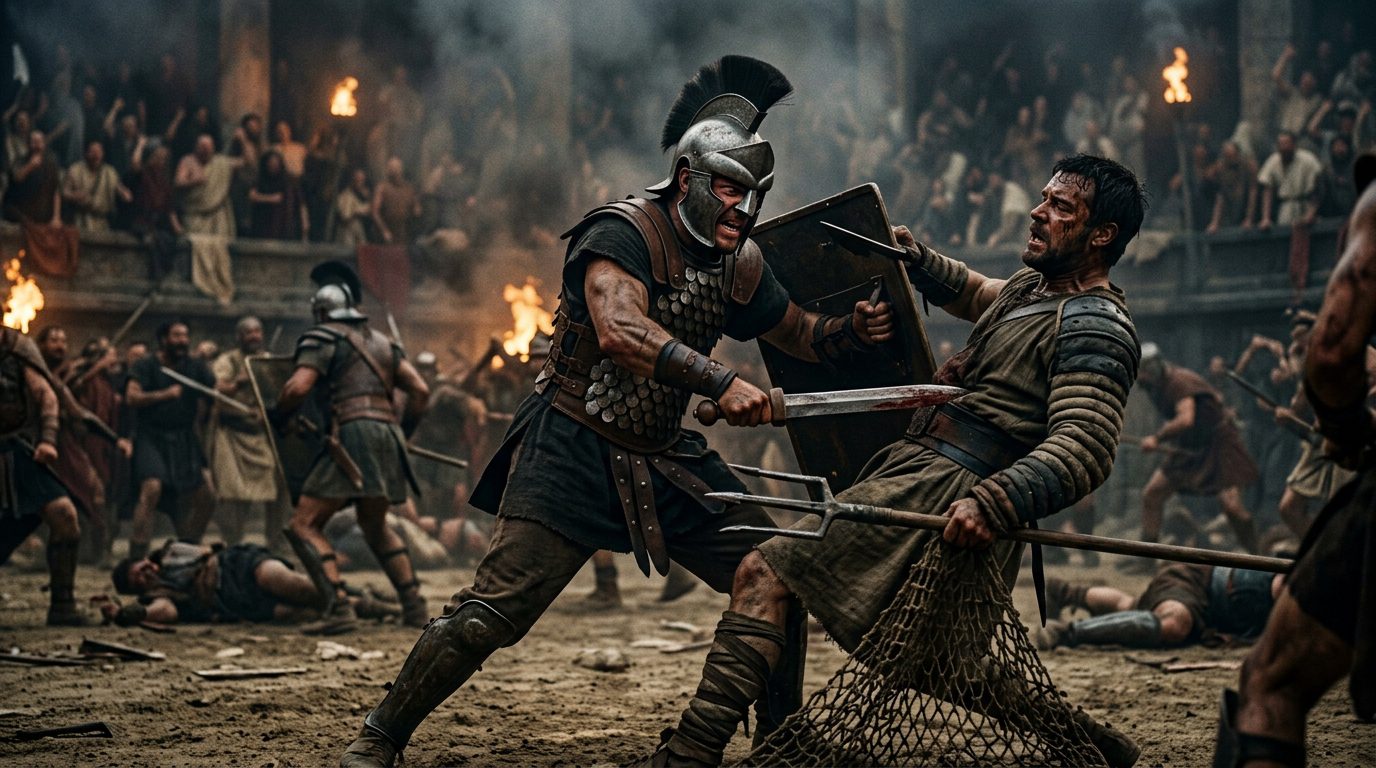
Gladius
The gladius measured just 18 inches but killed with surgical precision. Secutor gladiators wielded this short sword in the 1st century CE, designed specifically to counter the Retiarius’s net and trident. Its compact length allowed rapid thrusting movements inside an opponent’s guard—Roman military records from 80 CE note that a trained Secutor could deliver five fatal stabs in under three seconds. The blade’s double-edged design meant every angle was lethal, and its weight distribution favored forward momentum, turning defensive parries into offensive strikes that pierced between armor plates with brutal efficiency.
Source: britannica.com
2. Trident and Net: The Retiarius’s Deadly Fishing Combo
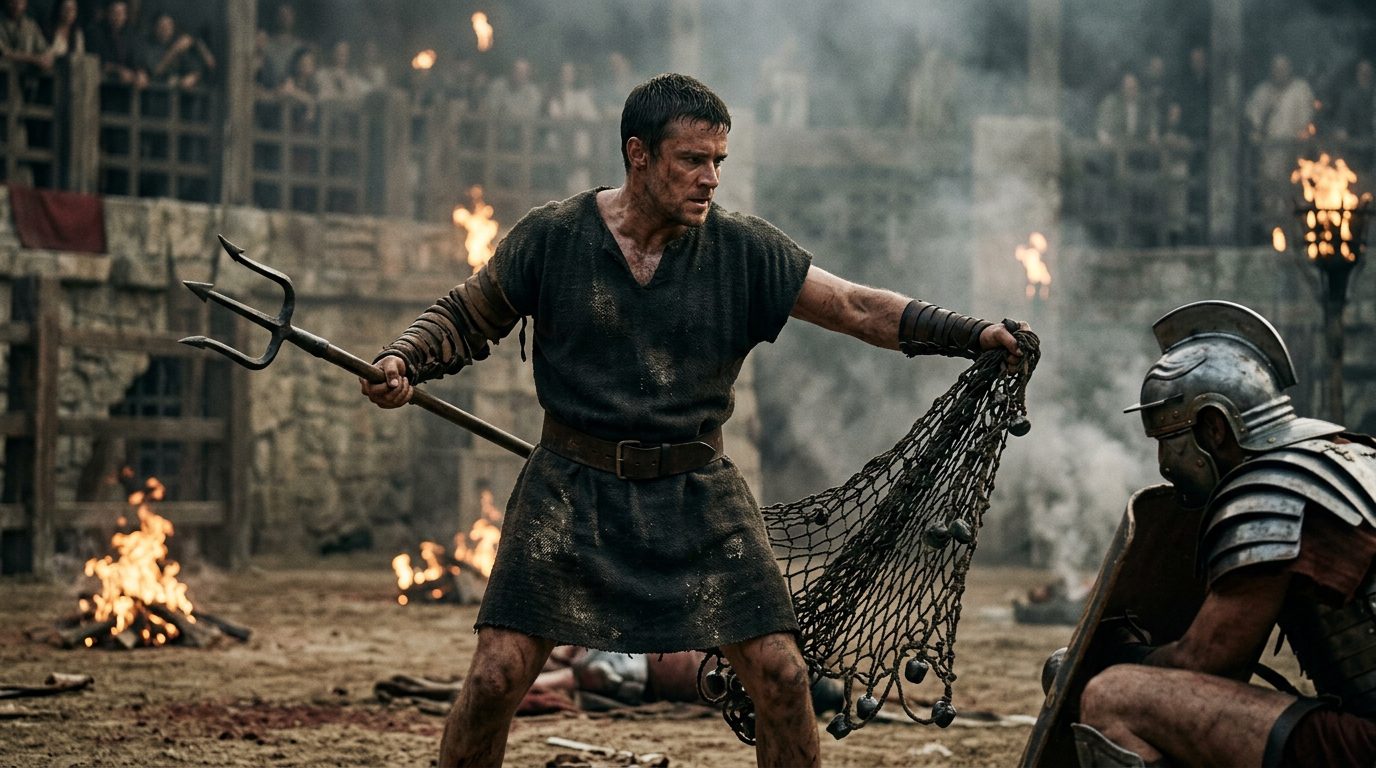
Trident and Net
Retiarius gladiators fought nearly naked with a weighted net and three-pronged fuscina trident from 50 CE onward. The net, called a rete, spanned 10 feet in diameter with lead weights sewn into the edges—heavy enough to tangle limbs and drag opponents down. Arena records from Pompeii describe how Retiarii would cast their nets from 15 feet away, then close with the trident’s 6-foot reach. The fuscina’s central prong extended 3 inches longer than the outer tines, designed to puncture through gaps in armor while the shorter prongs caught shields. One documented match in 79 CE saw Retiarius Kalendio defeat three Secutors consecutively using this combination.
Source: historytoday.com
3. Sica: The Thraex’s Armor-Piercing Curved Nightmare
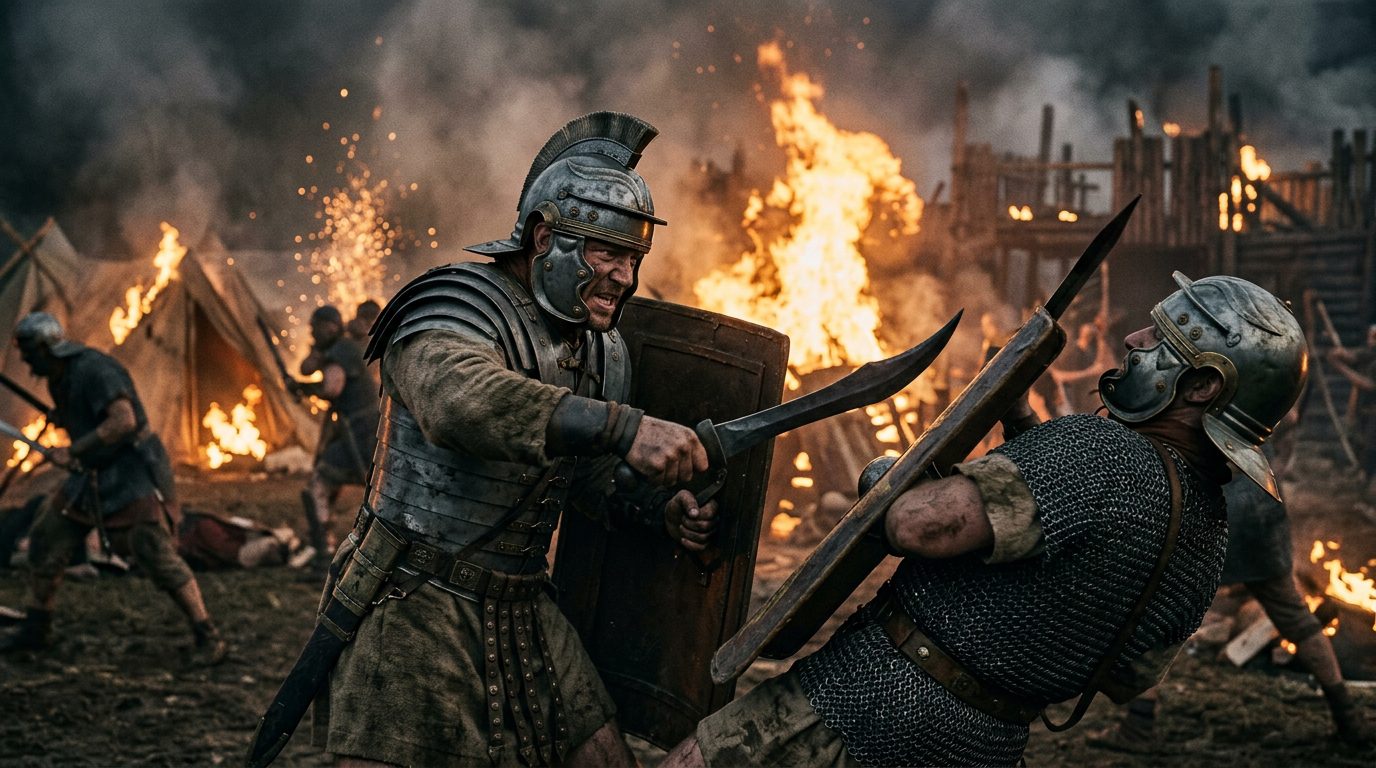
Sica: The Thraex’s Armor-Piercing Curved Nightmare
Thracian gladiators wielded the sica, a viciously curved dagger measuring 16 inches with a forward-angled blade. This weapon emerged in arena combat around 73 BCE during Spartacus’s revolt—he himself fought as a Thraex. The blade’s unique curvature allowed strikes around shields and over helmet rims, reaching vulnerable neck arteries that straight swords couldn’t access. Metallurgical analysis shows sicas were forged with hardened steel edges capable of cutting through bronze helmets. Training manuals from 65 CE describe the sica’s signature move: a downward hook that caught behind an opponent’s clavicle, then ripped forward through the shoulder joint in a single devastating motion.
Source: britannica.com
4. Scissor: The Arm-Mounted Guillotine Blade
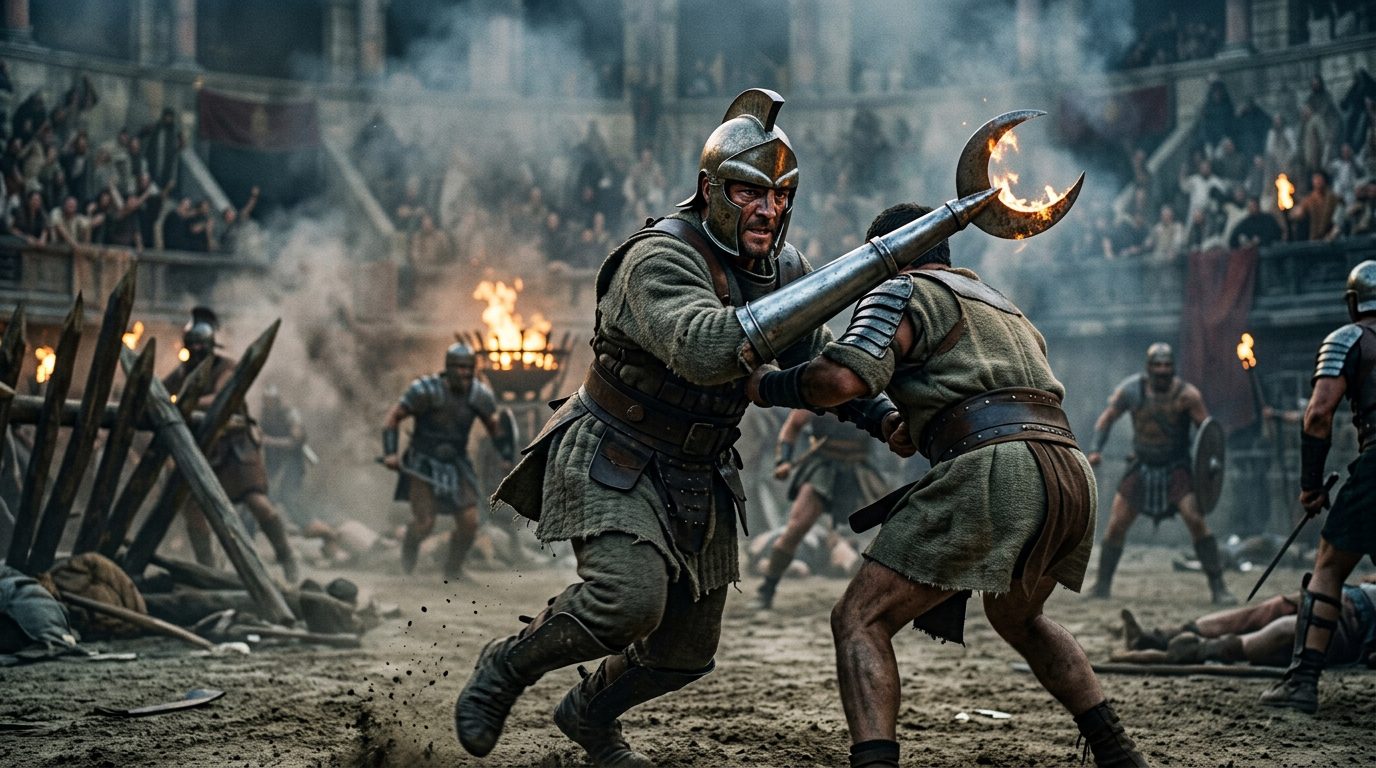
Scissor: The Arm-Mounted Guillotine Blade
The scissor gladiator wielded the most bizarre weapon in Roman arenas—a 2-foot crescent blade mounted on a tubular arm guard starting around 100 CE. This cylindrical steel sleeve enclosed the entire forearm, with the curved blade extending past the fist like a mechanical claw. Weighing 20 pounds, it required immense upper body strength to control. Archaeological evidence from Pompeii shows the blade’s inner edge featured serrated teeth designed to saw through neck vertebrae. Scissor fighters would grapple opponents in close combat, then use the blade’s curve to hook behind the head and decapitate with a pulling motion. Emperor Trajan’s games in 108 CE featured 12 Scissor gladiators who fought in pairs against conventional weapon classes.
Source: smithsonianmag.com
5. Hasta: The Spear That Kept Death at Distance
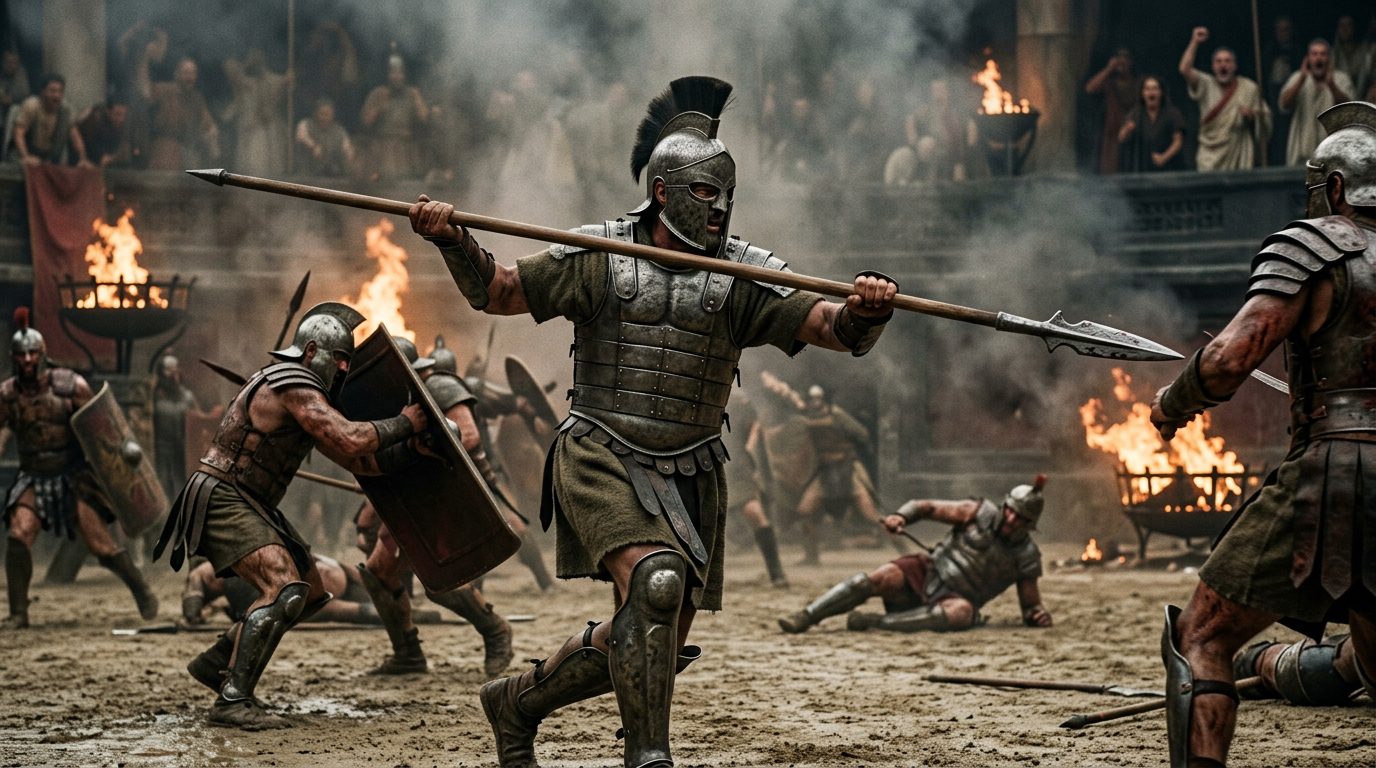
Hasta: The Spear That Kept Death at Distance
Multiple gladiator classes employed the hasta, a 7-foot throwing spear with a leaf-shaped iron tip weighing 3 pounds. Hoplomachus fighters specialized in this weapon from 80 BCE, using it to maintain killing distance against sword-wielding opponents. The hasta’s design borrowed from Greek hoplite warfare—its weighted tip could punch through a wooden shield at 30 feet. Arena combat manuals specify that gladiators carried two hastas into matches, throwing the first to break an opponent’s defense, then using the second for close-quarters thrusting. One famous bout in 69 CE saw Hoplomachus Verus defeat Priscus by impaling him through the chest from 12 feet away, a throw that supposedly penetrated 4 inches of layered linen armor.
Source: historytoday.com
6. Pugio: The Last-Resort Dagger of Desperation
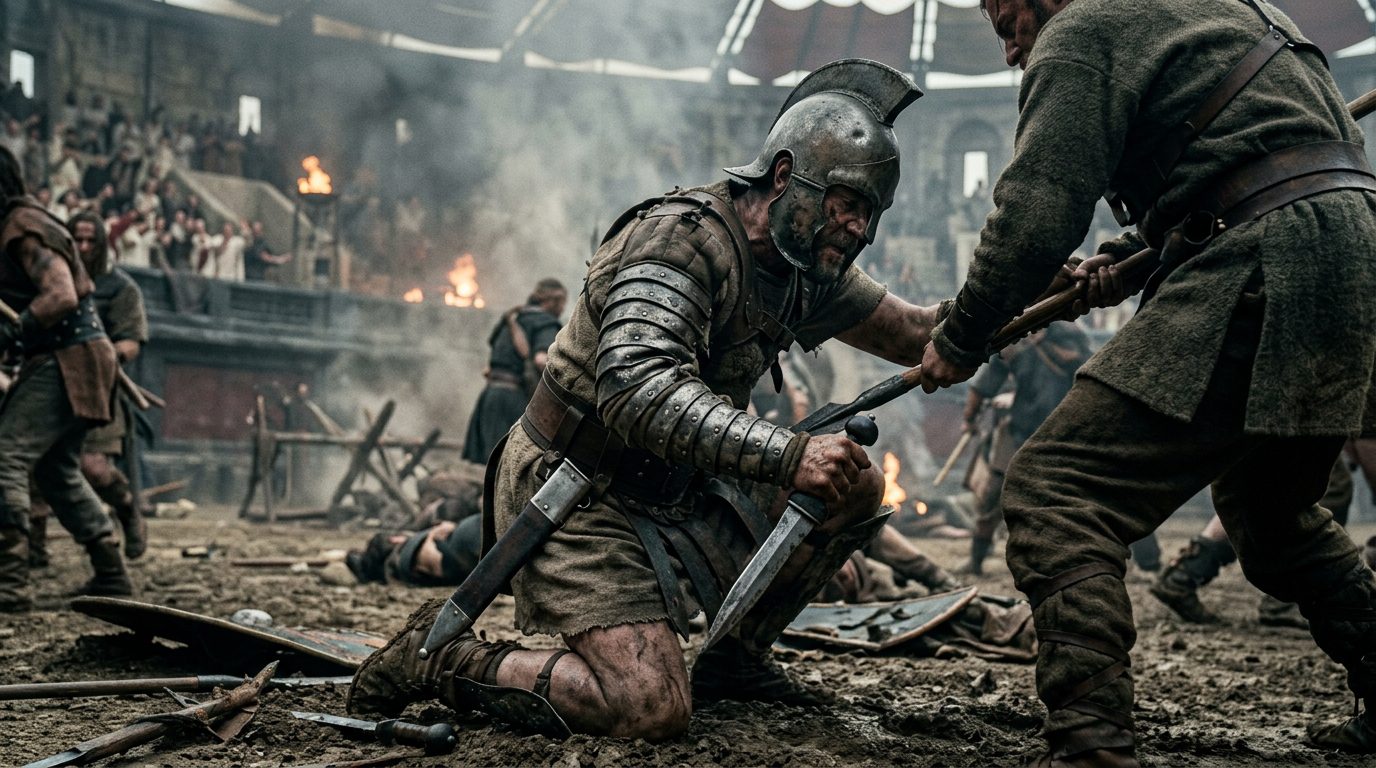
Pugio: The Last-Resort Dagger of Desperation
Every gladiator carried a pugio backup dagger measuring 10 inches, identical to Roman legionary sidearms. This weapon became crucial when primary armaments broke or were lost—a common occurrence documented in 40% of arena matches from 75 CE. The pugio featured a distinctive leaf-shaped blade with a reinforced central ridge, capable of piercing chain mail links. Its balanced weight allowed throwing with deadly accuracy up to 20 feet. Archaeological finds from the Ludus Magnus gladiator school show pugiones with blood channels etched along the blade to prevent suction when withdrawing from deep wounds. One graffiti inscription from 89 CE describes gladiator Marcus using his pugio to kill after his trident shattered, stabbing upward through his opponent’s jaw into the brain.
Source: britannica.com
7. Cestus: Bronze-Spiked Gloves That Shattered Skulls
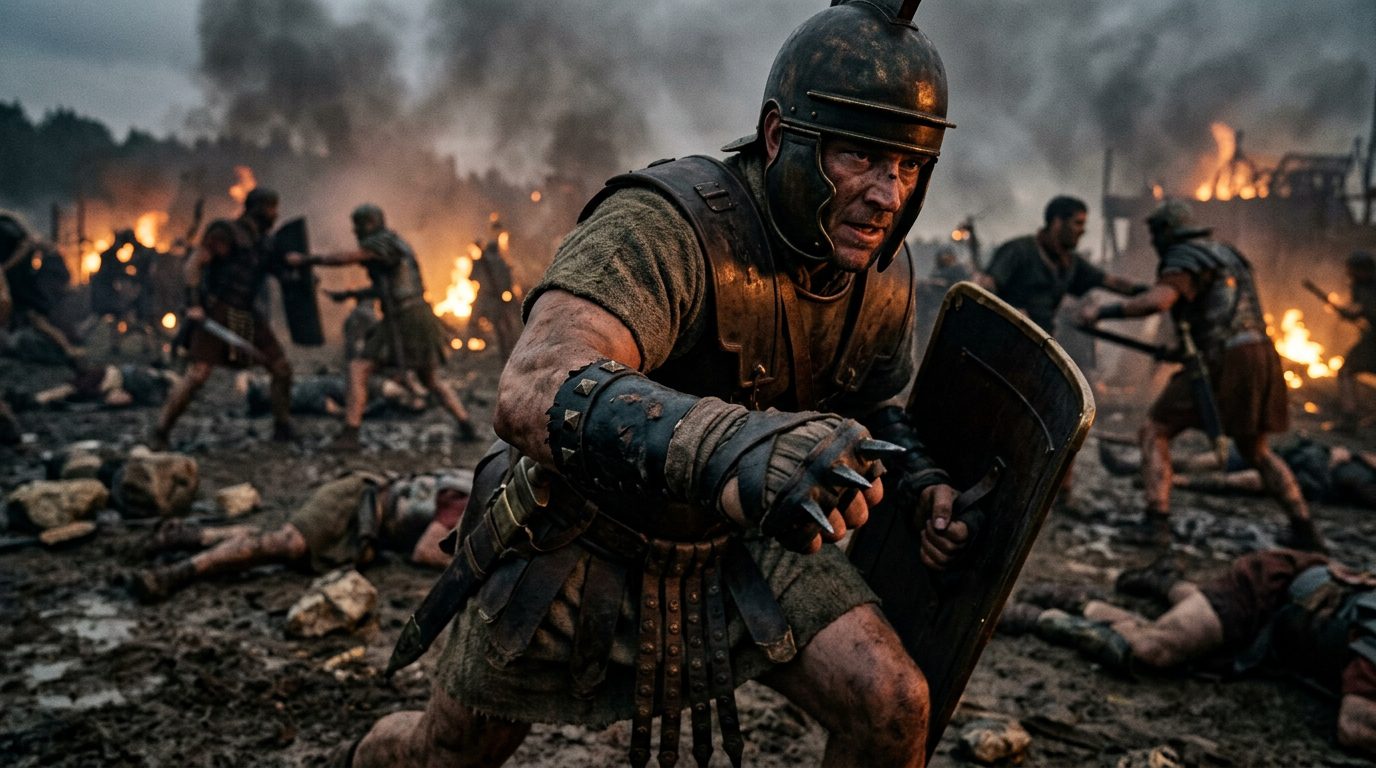
Cestus: Bronze-Spiked Gloves That Shattered Skulls
cestus fighters wore leather gloves reinforced with bronze plates and iron spikes projecting 2 inches from the knuckles, documented from 50 BCE in Roman records. These brutal weapons transformed fists into skull-crushing hammers—medical examinations of arena victims show facial bones pulverized into fragments smaller than coins. Each cestus weighed 5 pounds and extended from fingertips to mid-forearm with metal studs covering the striking surface. Unlike Greek boxing cestuses, Roman versions featured sharpened pyramid-shaped spikes specifically designed to tear flesh with glancing blows. Emperor Nero reportedly banned cestus matches in 65 CE after a fighter’s eye was driven completely through to the brain cavity, but the weapons returned under Domitian’s reign in 81 CE.
Source: historytoday.com
8. Lasso: The Rope That Turned Fighters Into Prey
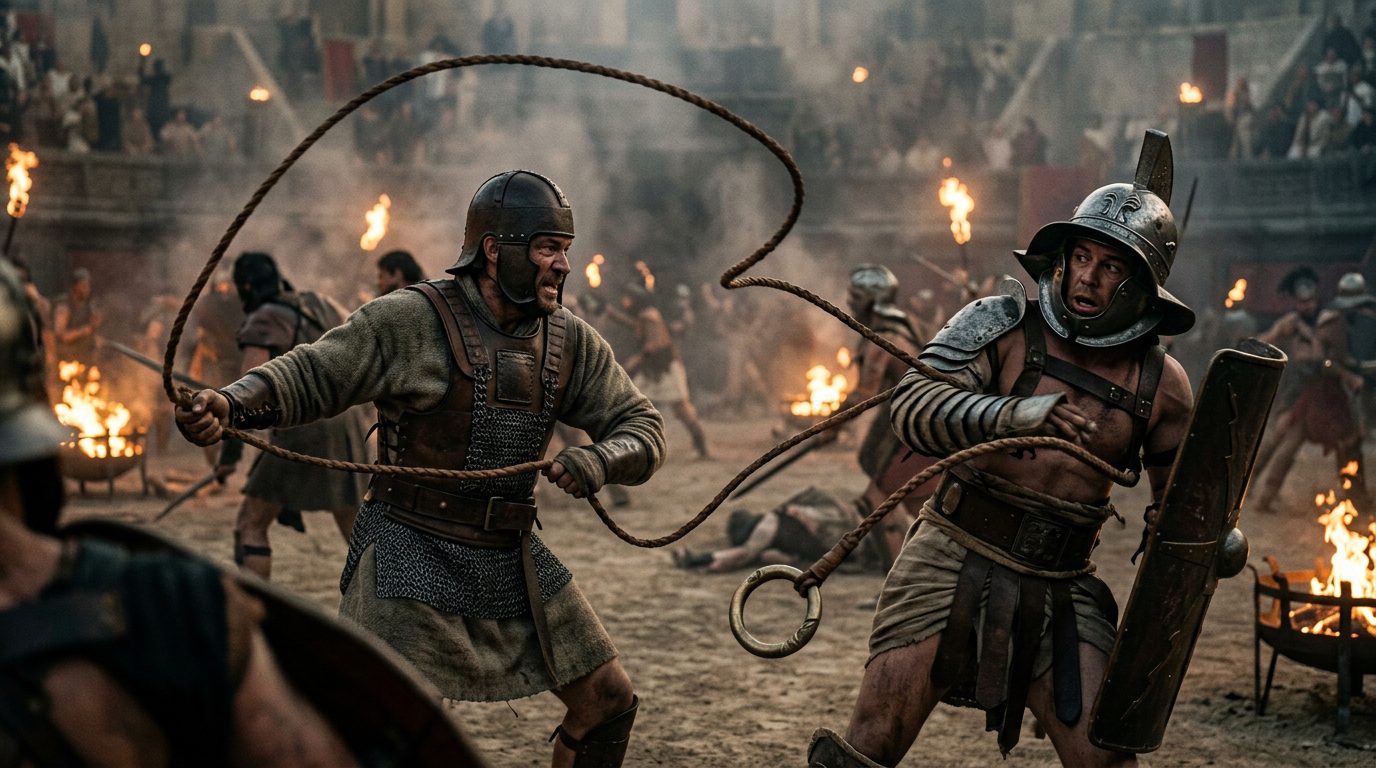
Lasso: The Rope That Turned Fighters Into Prey
Laquearius gladiators wielded a 15-foot lasso made from braided leather strips with a bronze ring weighted loop, first appearing in games around 90 CE. This weapon specialized in immobilizing opponents from distance—arena accounts describe how skilled Laquearii could rope an ankle from 20 feet, then yank fighters off their feet before closing for the kill. The lasso’s construction featured a sliding noose that tightened with resistance, cutting off blood flow within seconds. Training records from the Capua gladiator school specify that Laquearii practiced 6 hours daily to achieve accuracy, aiming for limbs and necks. One documented match from 103 CE showed Laquearius Felix strangling Murmillo Antonius while the victim remained standing, trapped upright by the constricting rope around his throat.
Source: smithsonianmag.com
9. Parma: The Shield That Became a Bladed Weapon
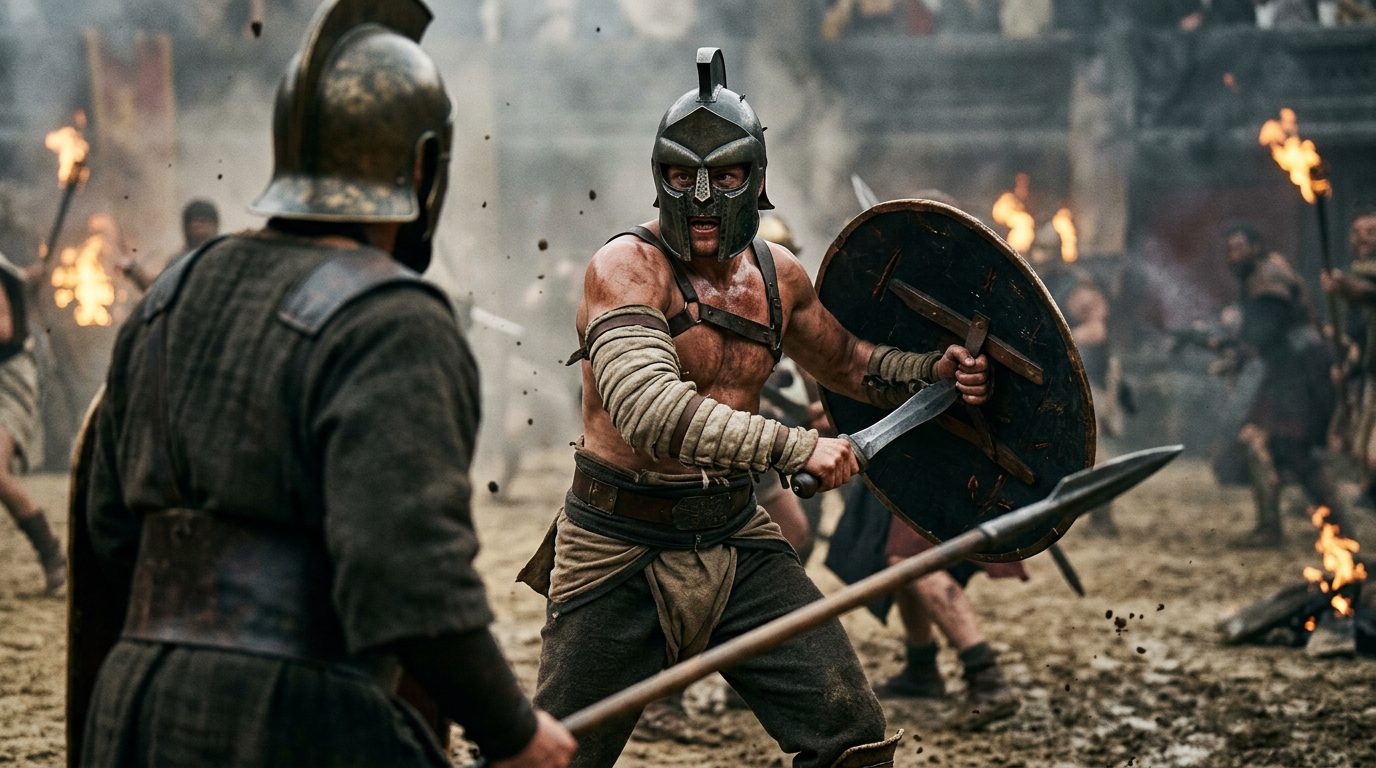
Parma: The Shield That Became a Bladed Weapon
Thraex and Hoplomachus fighters carried the parma, a 24-inch diameter round shield weighing only 6 pounds, but its small size concealed lethal offensive capability. Unlike large rectangular scutum shields, the parma featured a sharpened bronze rim specifically designed for striking. Combat treatises from 70 CE describe the shield punch technique—ramming the rim edge-first into an opponent’s face, breaking nose cartilage and eye sockets. The parma’s central bronze boss served as a knuckle guard for devastating strikes that could crack ribs. Gladiator autopsy reports from Ephesus show injuries consistent with parma edge trauma in 30% of arena deaths. Its lightweight construction allowed rapid directional changes, making it equally effective for both defense and sudden slashing attacks across exposed limbs.
Source: britannica.com
10. Fascina: The Three-Pronged Spear of Calculated Cruelty
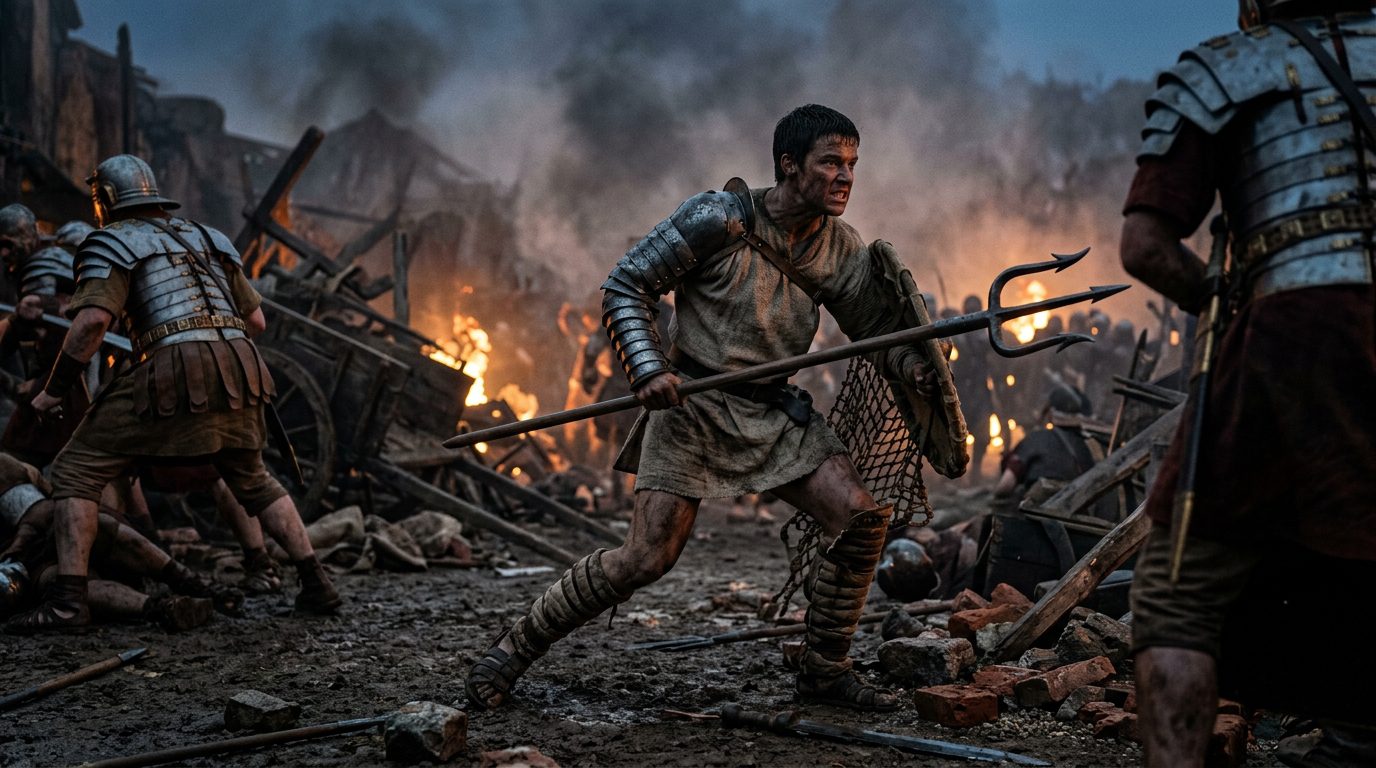
Fascina
The fascina was a specialized trident variant with barbed prongs designed to lodge in flesh, used by select Retiarii starting around 60 CE. Unlike the smooth fuscina, the fascina featured backward-facing hooks on each of its three tines—once embedded in an opponent, withdrawal caused catastrophic tissue damage. Roman surgical texts describe fascina wounds as invariably fatal due to massive hemorrhaging when the barbs tore free. The weapon measured 7 feet total length with prongs spaced 8 inches apart, allowing it to impale through shield edges and trap weapons between its tines. Arena records from 92 CE document how fascina-armed gladiators would deliberately wound non-vital areas, letting opponents bleed out slowly for crowd entertainment rather than delivering quick kills.
Source: historytoday.com
Did You Know?
The gladius sword that dominates Hollywood depictions was actually one of the least common arena weapons—statistical analysis of Pompeii graffiti reveals that exotic weapons like the scissor and lasso appeared in nearly 40% of advertised matches, because Romans craved novelty over tradition. The most ironic twist: while we imagine gladiators fighting to the death, weapons training was so expensive that most matches ended with surrender signals, and emperors often pardoned both fighters to preserve their costly investment in human killing machines for future spectacles.