
Long before standardized testing, Imperial China created the world’s first merit-based bureaucracy through brutal examinations. For 1,300 years, peasants’ sons competed with nobles’ children to master Confucian classics and govern the world’s largest empire through intellectual prowess alone.
1. The Sui Dynasty’s Revolutionary Unification Exam of 605 CE
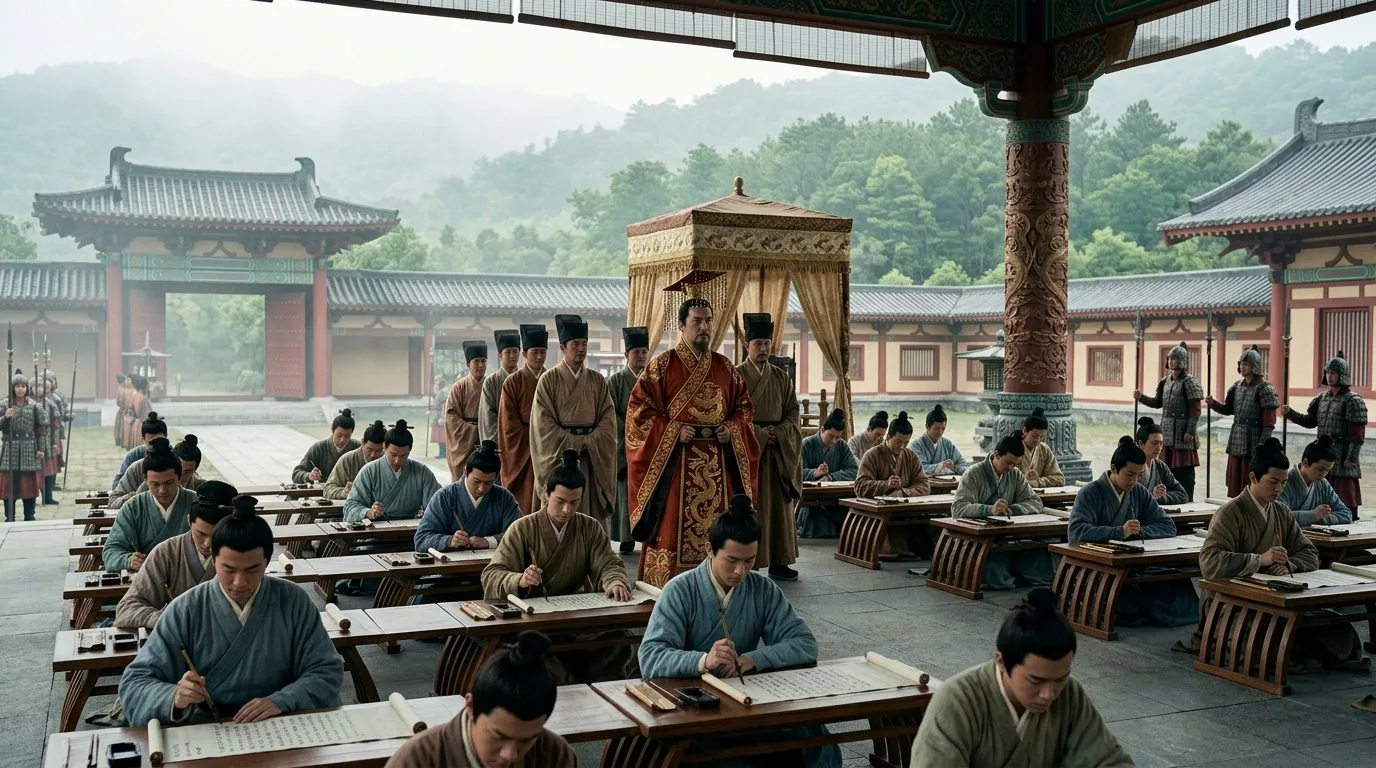
Meritocratic exam system transformed Chinese
Emperor Wen of Sui abolished inherited aristocratic privilege in 605 CE by establishing the first standardized civil service examination. Previously, government positions passed from father to son among noble families who had dominated Chinese politics for 400 years. The new system required all candidates to demonstrate knowledge of Confucian texts regardless of birth status. Within a single generation, 30 percent of officials came from non-aristocratic backgrounds. This radical meritocracy survived dynastic collapses and foreign invasions for thirteen centuries, making it history’s longest-running examination system.
Source: britannica.com
2. Tang Dynasty’s Three-Tier System Perfected Elite Selection
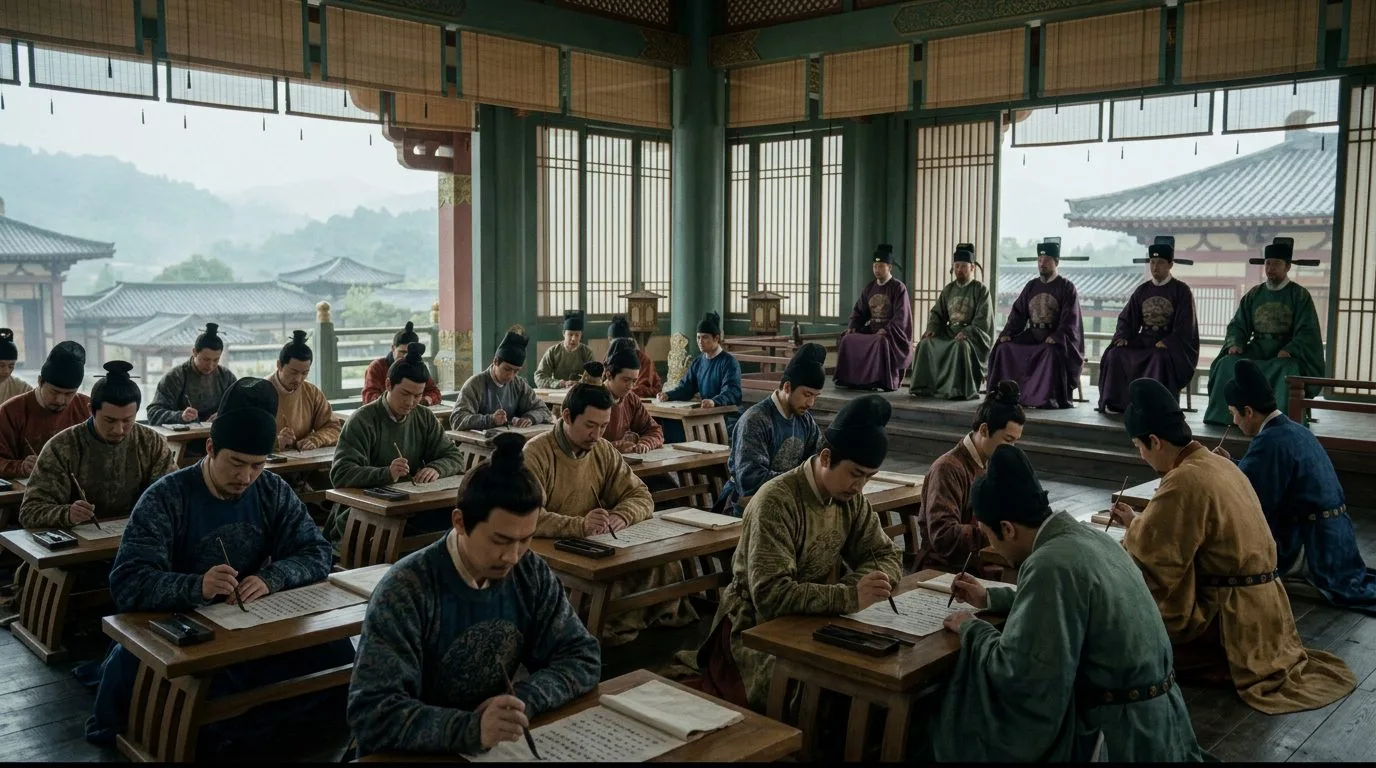
Merit-based exams elevated talent across
The Tang Dynasty transformed examinations into a sophisticated hierarchy after 618 CE with three distinct levels. The jinshi degree required mastery of poetry composition and became the most prestigious path to power—only 6,000 candidates passed in 300 years. The mingjing degree tested classical memorization and produced mid-level administrators. The xiucai degree certified basic literacy for local officials. Emperor Taizong personally interviewed jinshi graduates in 622 CE, establishing a tradition where rulers met their future ministers. This stratification created clear career trajectories that motivated millions to study.
Source: britannica.com
3. Song Dynasty Expansion Made Exams the Sole Route to Office
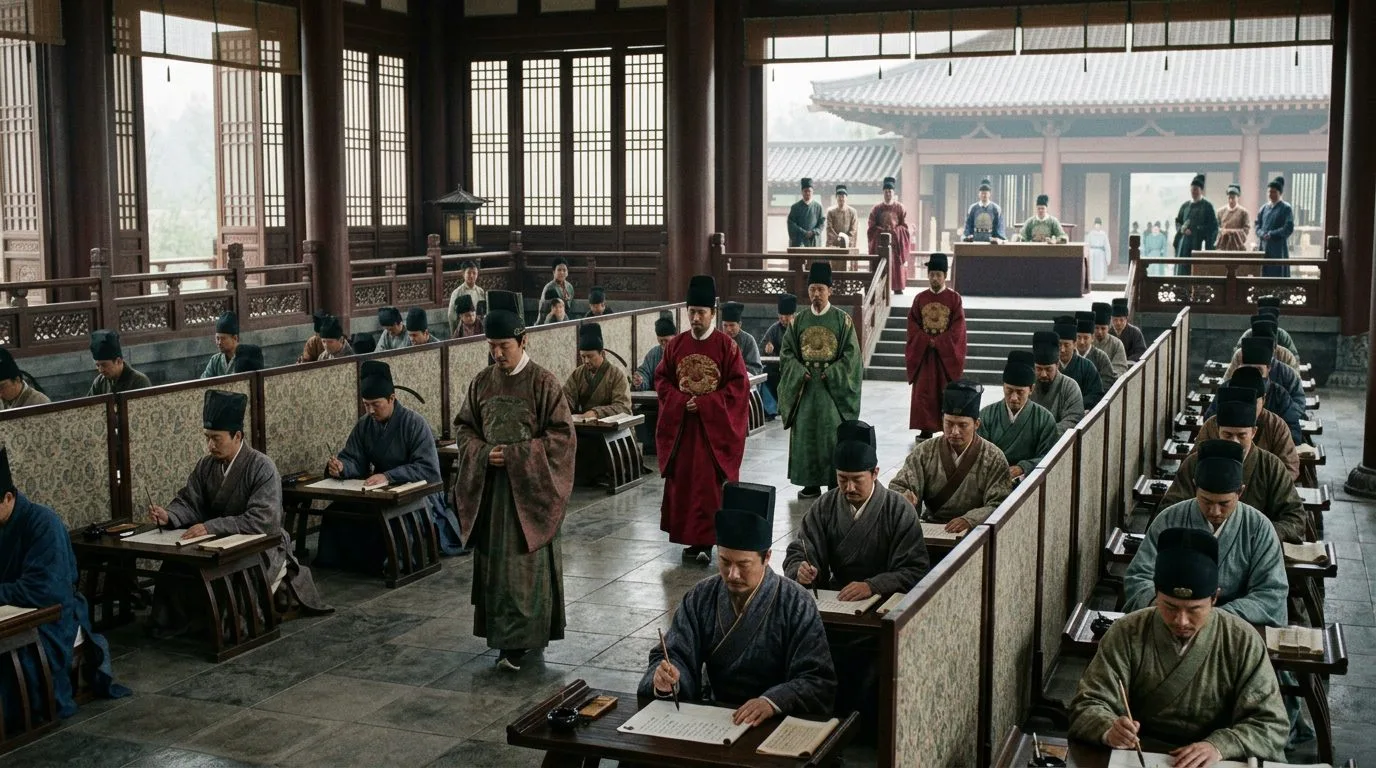
Merit-based civil service exams became the path
Emperor Taizu eliminated alternative paths to government service in 973 CE, making examination success the only legitimate route to bureaucratic power. The number of examination candidates exploded from 30,000 annually to over 400,000 by the early 11th century. Song reformer Wang Anshi restructured the curriculum in 1067 CE to emphasize practical governance over pure memorization. The government printed standardized textbooks and distributed them throughout the empire for the first time. This democratization created unprecedented social mobility—one study found that 57 percent of Song officials came from families with no prior government service.
Source: britannica.com
4. Ming Dynasty’s Eight-Legged Essay Strangled Creativity
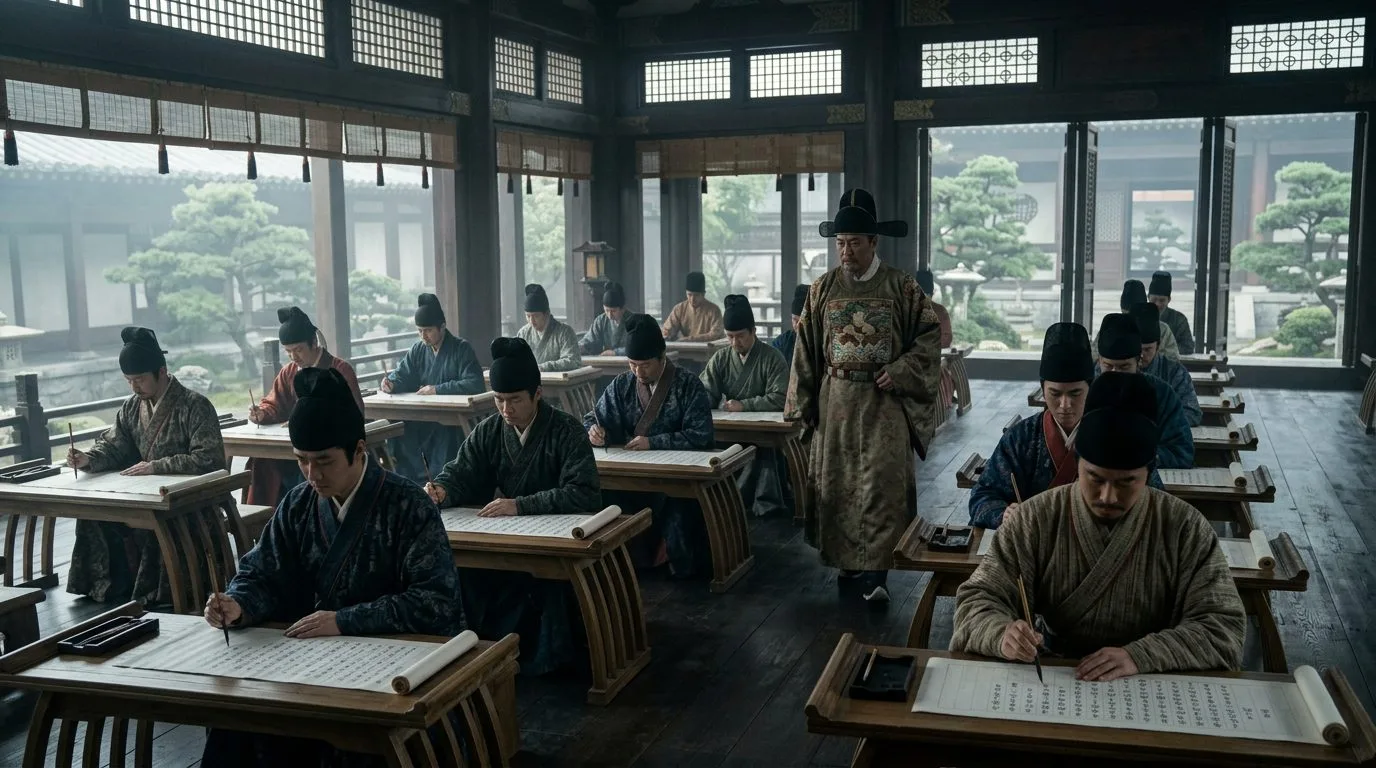
Rigid literary format stifled original thought.
The Hongwu Emperor imposed the infamous ‘Eight-Legged Essay’ format in 1384 CE, requiring responses follow eight rigid structural sections. Each essay had exactly four pairs of parallel clauses with prescribed lengths and tonal patterns. Candidates could only quote from the Four Books commentary by Zhu Xi approved in 1313 CE. The format killed original thinking—one critic noted that 10,000 essays on the same question became virtually identical. Yet this standardization served political purposes by ensuring officials shared uniform ideological training. The format remained mandatory for over five centuries until the early 20th century.
Source: britannica.com
5. Qing Dynasty’s Quota System Balanced Manchu-Chinese Tensions
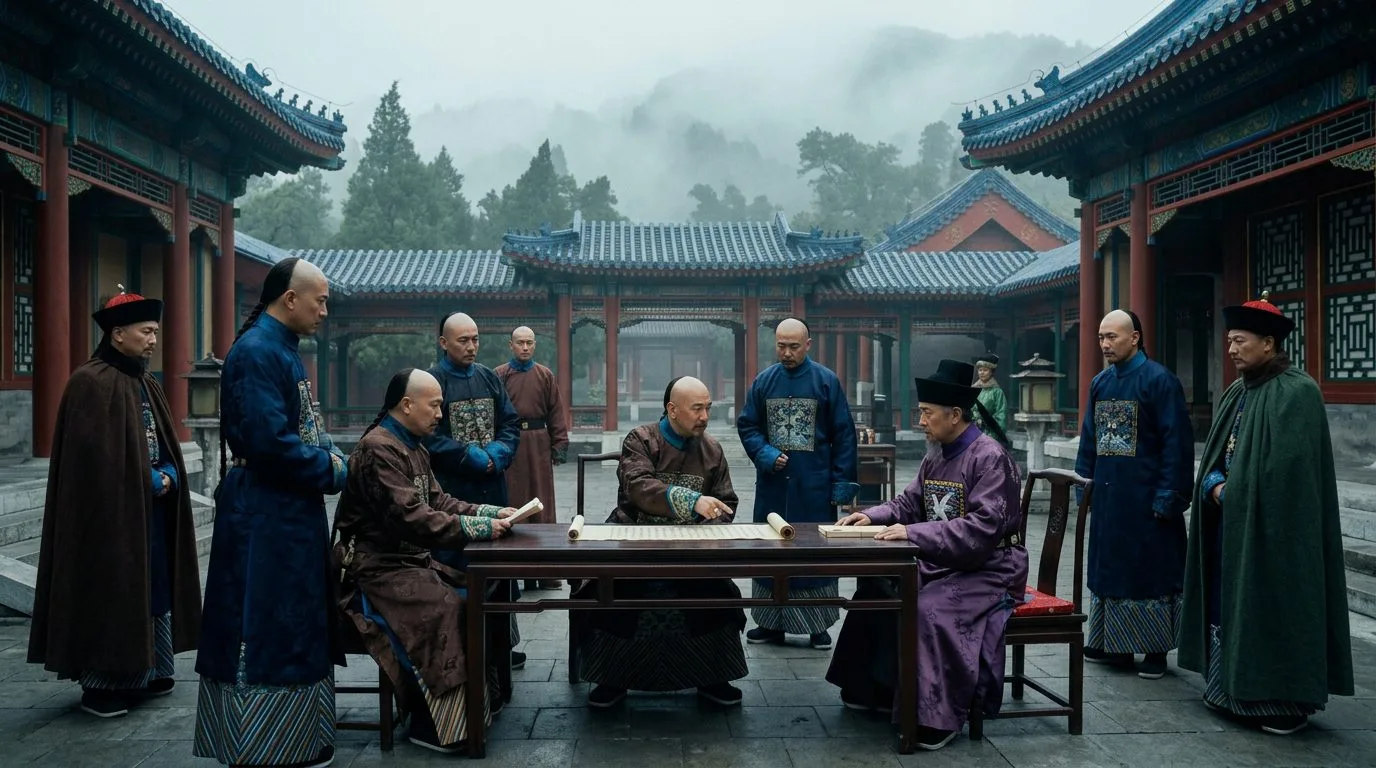
Manchu officials and Chinese scholars in court.
When Manchu conquerors established the Qing Dynasty in 1644 CE, they faced governing a Han Chinese population 100 times larger. The Kangxi Emperor instituted ethnic quotas in 1678 CE: separate examination tracks for Manchus, Mongols, and Han Chinese with reserved positions for each group. Manchus received 40 percent of capital positions despite comprising only 2 percent of the population. However, Han Chinese still dominated provincial posts through superior examination performance. This compromise prevented ethnic conflict while maintaining Manchu political control for over two and a half centuries.
Source: britannica.com
6. Provincial Xiangshi Examinations in Fortress-Like Compounds
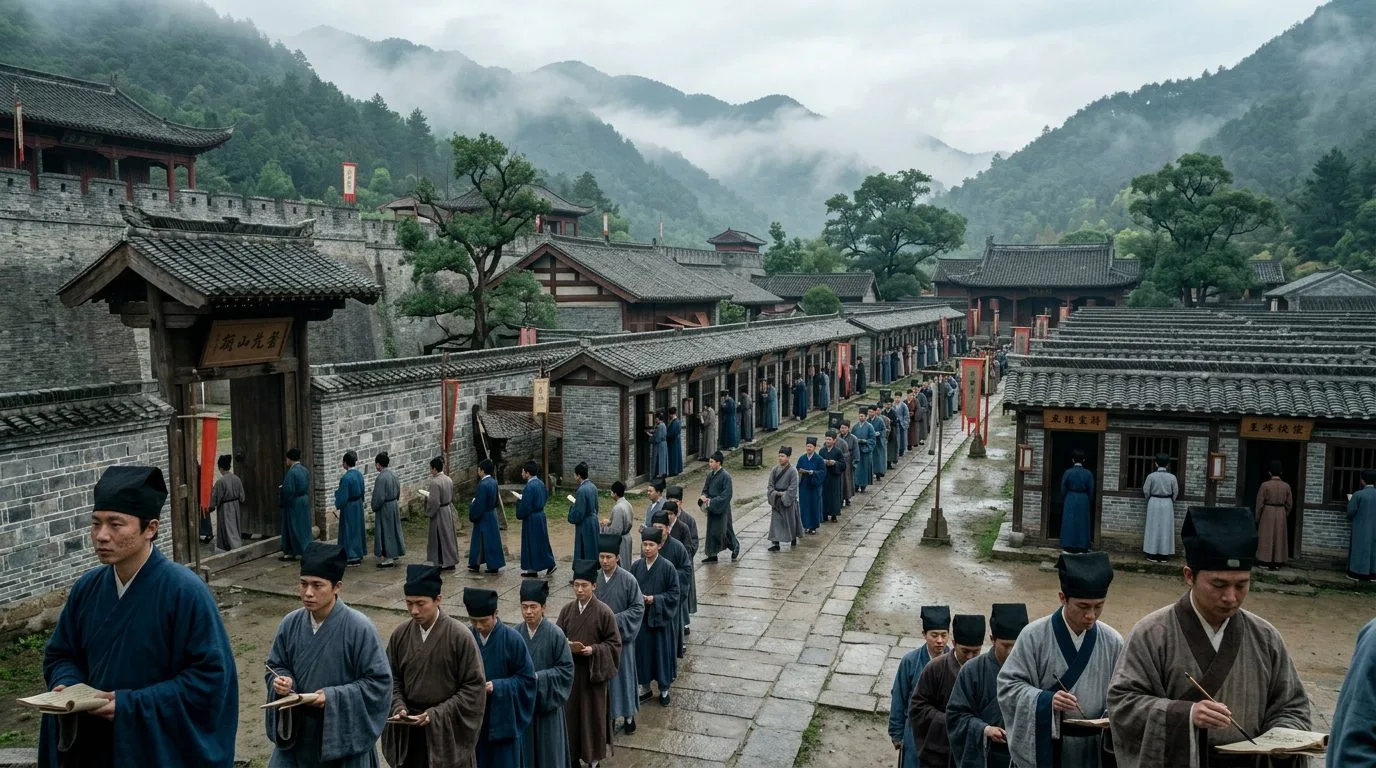
Candidates gather for provincial exams in
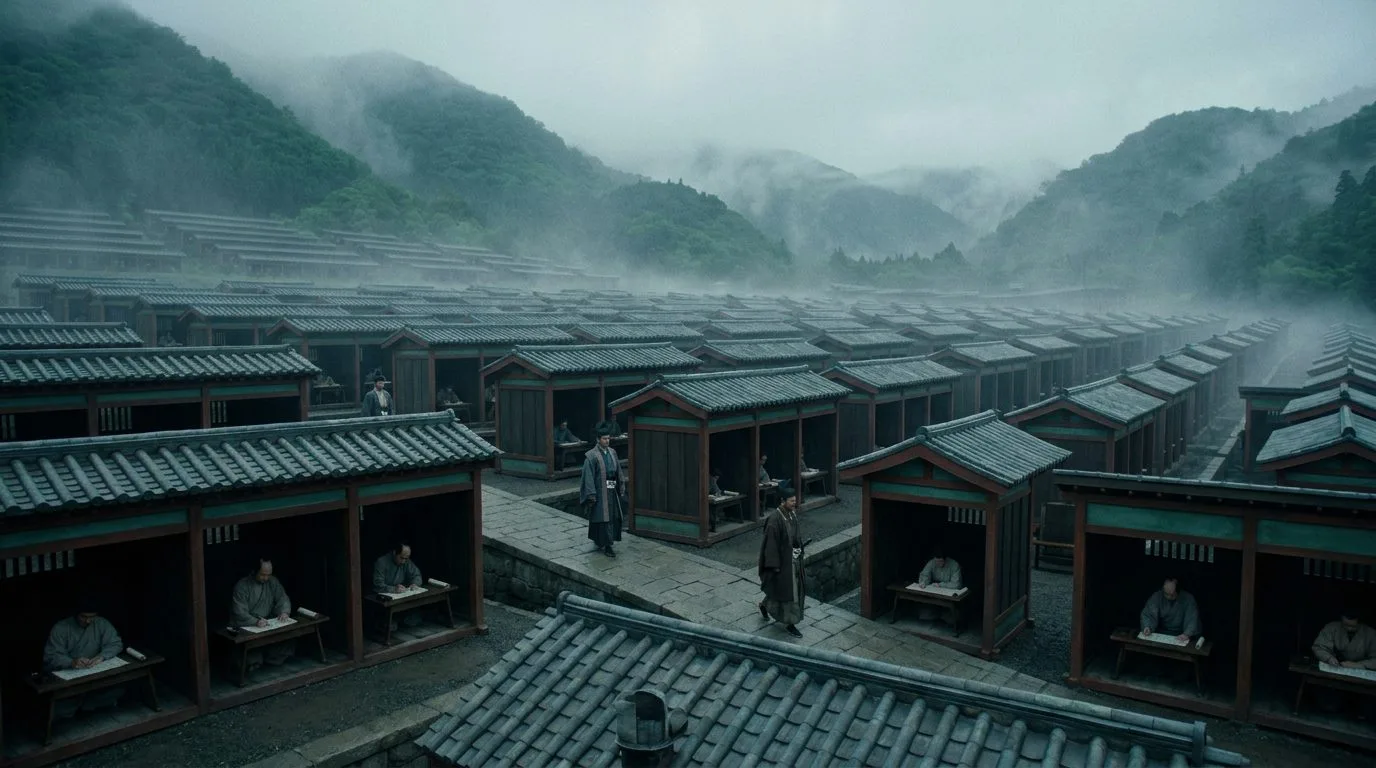
The xiangshi provincial examinations occurred every three years in massive walled compounds holding up to 20,000 candidates simultaneously. The Jiangnan examination compound in Nanjing contained 20,644 individual cells arranged in rows, each measuring 4 feet wide by 3 feet deep. Candidates remained locked in these cells for three separate sessions, each lasting three days and two nights beginning in the late 15th century. They brought their own food, brushes, and bedding. Guards patrolled walls 15 feet high to prevent communication. Only 1 to 5 percent of xiangshi candidates passed to the next level.
Source: britannica.com
7. Palace Examinations Before the Emperor Himself
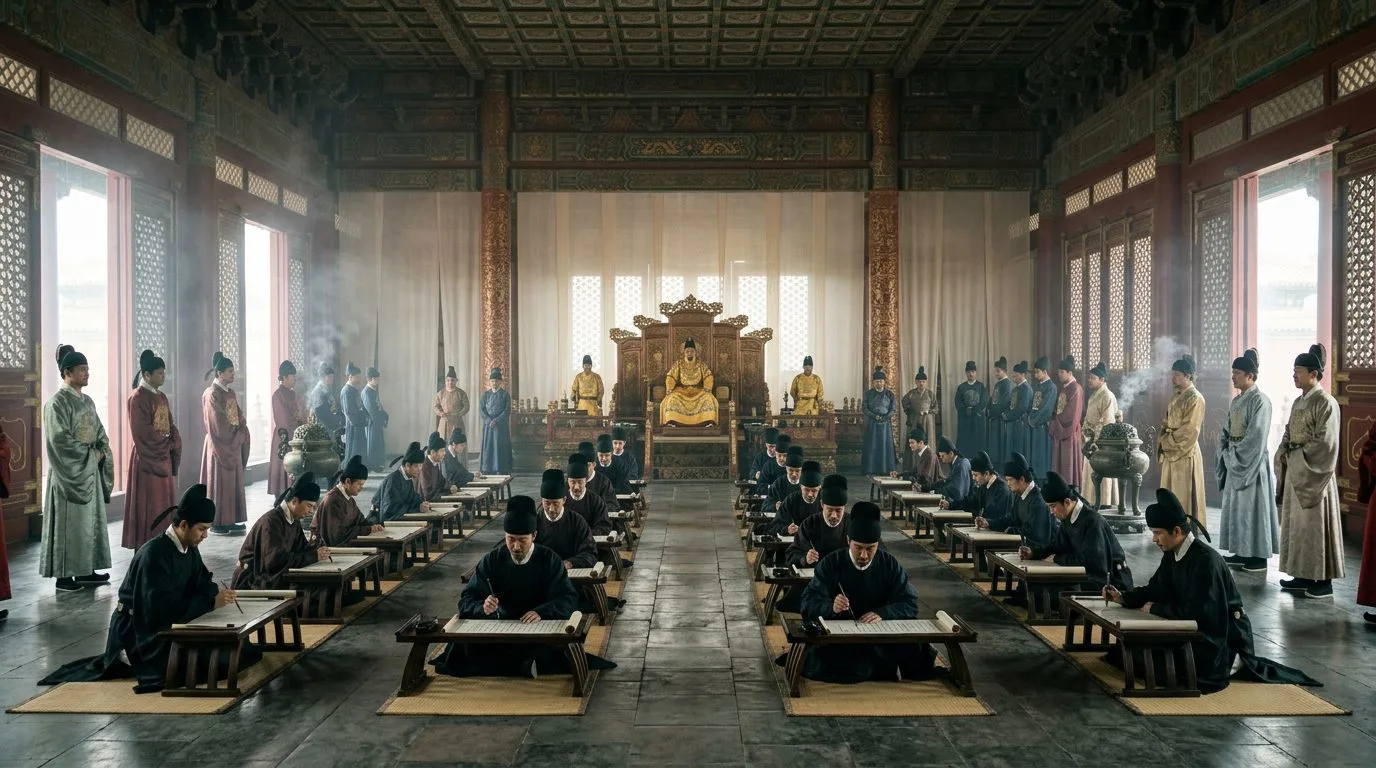
Palace Examinations Before the Emperor Himself
The dianshi palace examination represented the final test, conducted personally by the emperor in Beijing’s Forbidden City starting in 1371 CE. Candidates knelt before the throne in the Hall of Supreme Harmony while completing policy essays under imperial scrutiny. The emperor reviewed all papers and determined final rankings—the top three graduates (zhuangyuan, bangyan, tanhua) received immediate high office. In the early 15th century, the Yongle Emperor personally interviewed the top candidate for six hours on flood control strategies. This direct contact between ruler and future administrators created personal loyalty bonds strengthening imperial authority.
Source: britannica.com
8. Grueling Questions on the Four Books and Five Classics
Scholar examines ancient Confucian texts.
Examination questions demanded complete mastery of 431,286 characters across nine canonical texts. The Four Books (Great Learning, Doctrine of the Mean, Analects, Mencius) and Five Classics (Poetry, Documents, Rites, Changes, Spring and Autumn Annals) formed the core curriculum from 1313 CE onward. A typical question from the late 16th century asked candidates to write 700-character essays explaining Confucius’s statement on filial piety while incorporating three specific historical precedents. Candidates memorized texts verbatim—the average successful candidate had studied for 15 years before passing.
Source: britannica.com
9. Extreme Anti-Cheating Measures and Body Searches
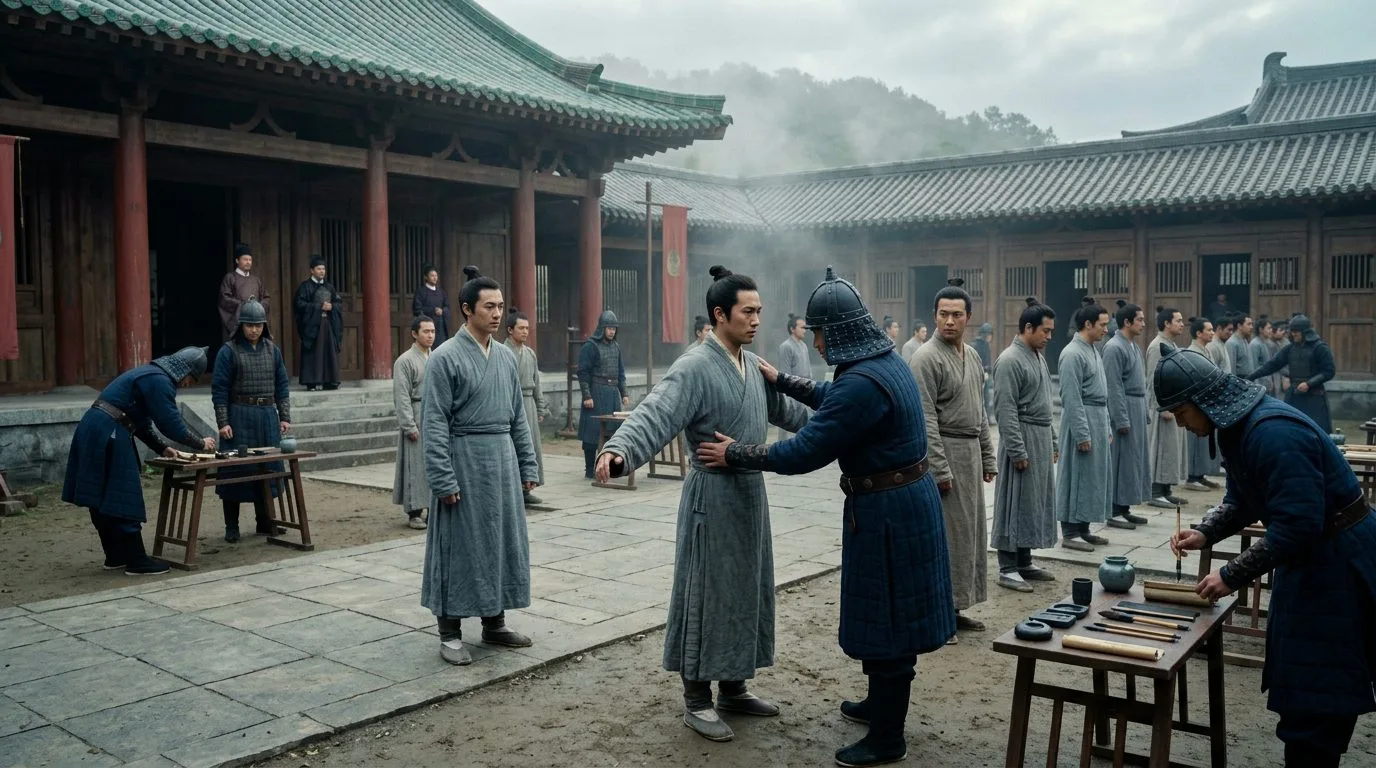
Extreme Anti-Cheating Measures and Body Searches
Guards stripped candidates naked and searched body cavities for hidden texts after a mid-15th century cheating scandal exposed bribery networks. Candidates wore standardized thin robes without pockets during examinations. In the early 18th century, authorities discovered a candidate had bribed copyists to memorize his essay style and write answers for him using invisible ink. The punishment for cheating included beating with bamboo rods, permanent examination bans, and exile to frontier regions. Despite precautions, one mid-19th century investigation found that 78 candidates in Shuntian province had purchased examination answers, leading to 23 executions.
Source: smithsonianmag.com
10. The System’s Influence Spread Across East Asia
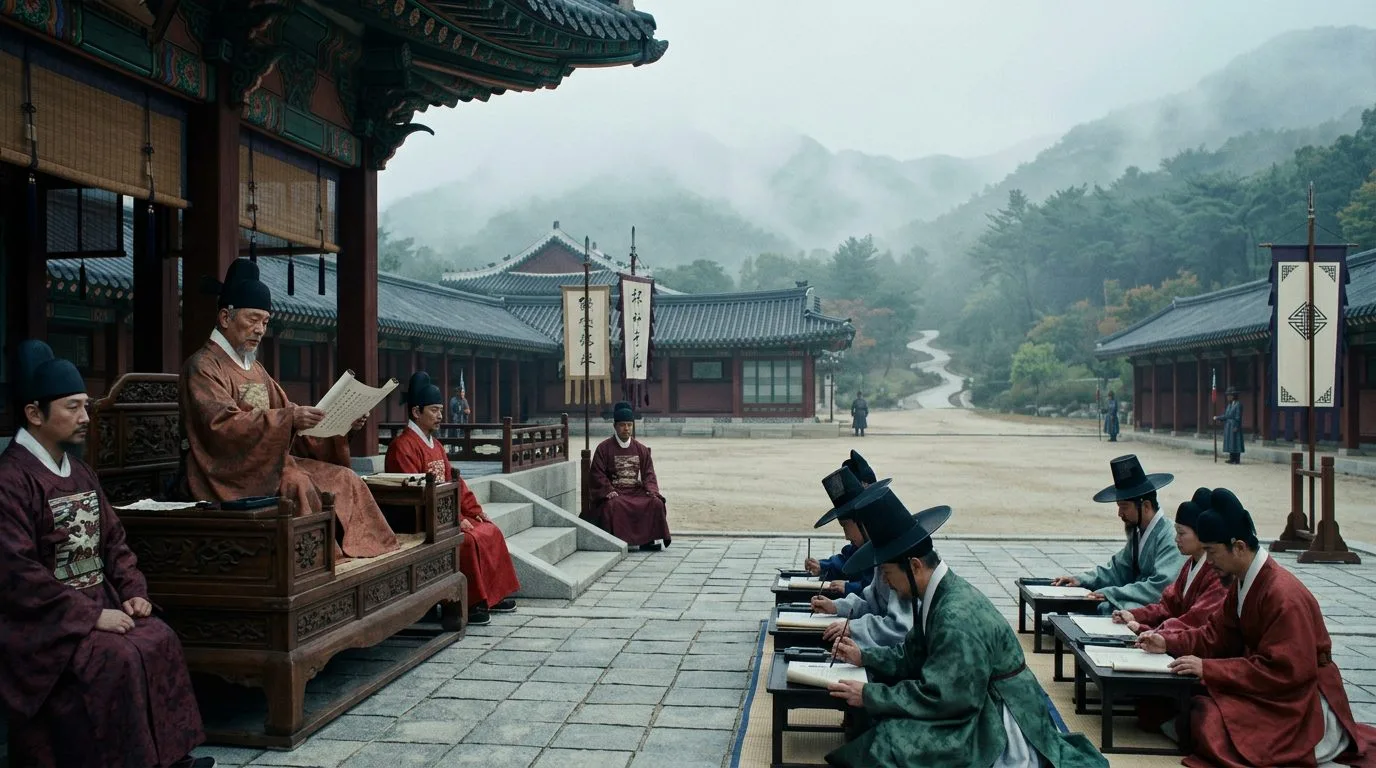
The System’s Influence Spread Across East Asia
Korea adopted Chinese-style examinations in 958 CE under the Gwageo system, which lasted until the late 19th century. Vietnam implemented the examination system in 1075 CE, continuing for 800 years and producing the famous Temple of Literature in Hanoi honoring successful candidates. Japan experimented with examinations during the 8th century CE but abandoned them in favor of hereditary bureaucracy by 900 CE. Even after China abolished examinations in the early 20th century, Korea and Vietnam maintained modified versions. The concept influenced modern civil service exams worldwide—Britain’s Imperial Civil Service examinations established in the mid-19th century explicitly borrowed from the Chinese model.
Source: britannica.com
Did You Know?
Did you know the world’s youngest zhuangyuan (top examination graduate) was only 18 years old when he achieved the highest score in the early 15th century—yet spent the next 40 years in bureaucratic obscurity because the emperor disliked his arrogance? Meanwhile, the oldest successful candidate passed at age 72 after failing the exams 46 consecutive times, proving that persistence sometimes trumped brilliance in Imperial China’s ultimate meritocracy.