
A 2,600-year-old Greek poem describes physical symptoms of love—racing heart, trembling, loss of speech—that modern scientists confirmed match actual physiological responses. These ten verses prove ancient hearts beat just like ours.
1. Sappho’s Fragment 31 Diagnosed Love as Physical Illness
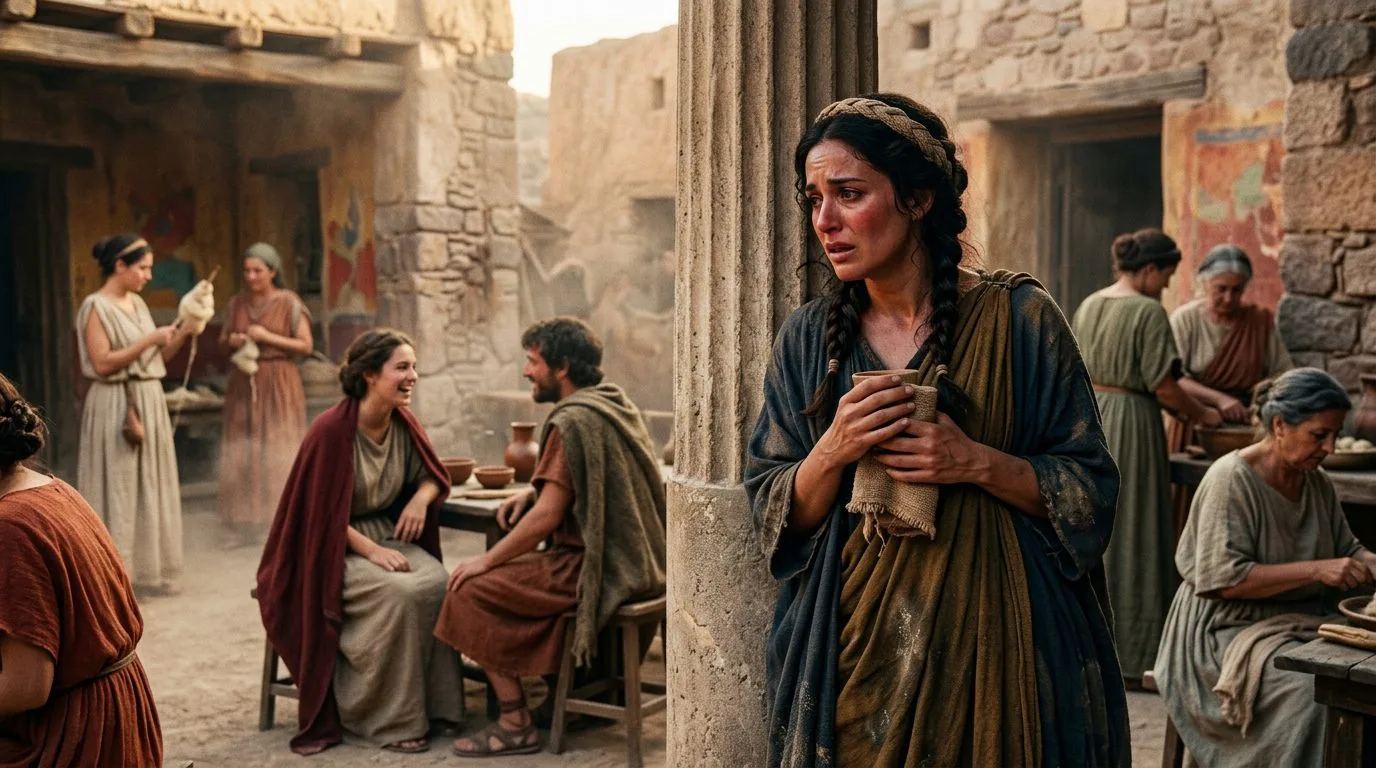
Ancient poet describes love’s bodily symptoms.
Written around 600 BCE on the Greek island of Lesbos, Sappho‘s Fragment 31 reads like a medical case study of romantic obsession. The poetess describes seeing her beloved talking with another person and experiencing symptoms we’d recognize today: ‘my tongue breaks, thin fire runs beneath my skin.’ This 16-line poem survived because the Roman writer Longinus quoted it in the 1st century CE as the perfect example of combining multiple emotions. Sappho lists exactly four physical symptoms—speechlessness, fever, deafness, and trembling—creating Western literature’s first clinical description of lovesickness. Her influence was so profound that by the 4th century BCE, Plato called her ‘the tenth Muse.’
Source: britannica.com
2. The Song of Songs Was Too Erotic for Some Ancient Rabbis

Ancient debates over passionate biblical poetry
Composed around 300 BCE, the Song of Songs sparked fierce debate among Jewish scholars about whether it belonged in sacred scripture at all. The text contains 117 verses of explicit love poetry with zero mention of God, describing breasts like ‘twin fawns’ and a lover’s body as ‘a tower of ivory.’ Rabbi Akiva declared in 90 CE that anyone who sang it in taverns forfeited their place in the world to come. Yet he also proclaimed ‘the whole world is not worth the day on which the Song of Songs was given to Israel.’ The poem’s dialogue structure—alternating between male and female voices—was revolutionary for ancient literature. King Solomon traditionally received credit as author, though linguistic evidence suggests multiple anonymous poets contributed.
Source: britannica.com
3. Egyptian Papyrus Captured a Woman’s Voice 3,300 Years Ago
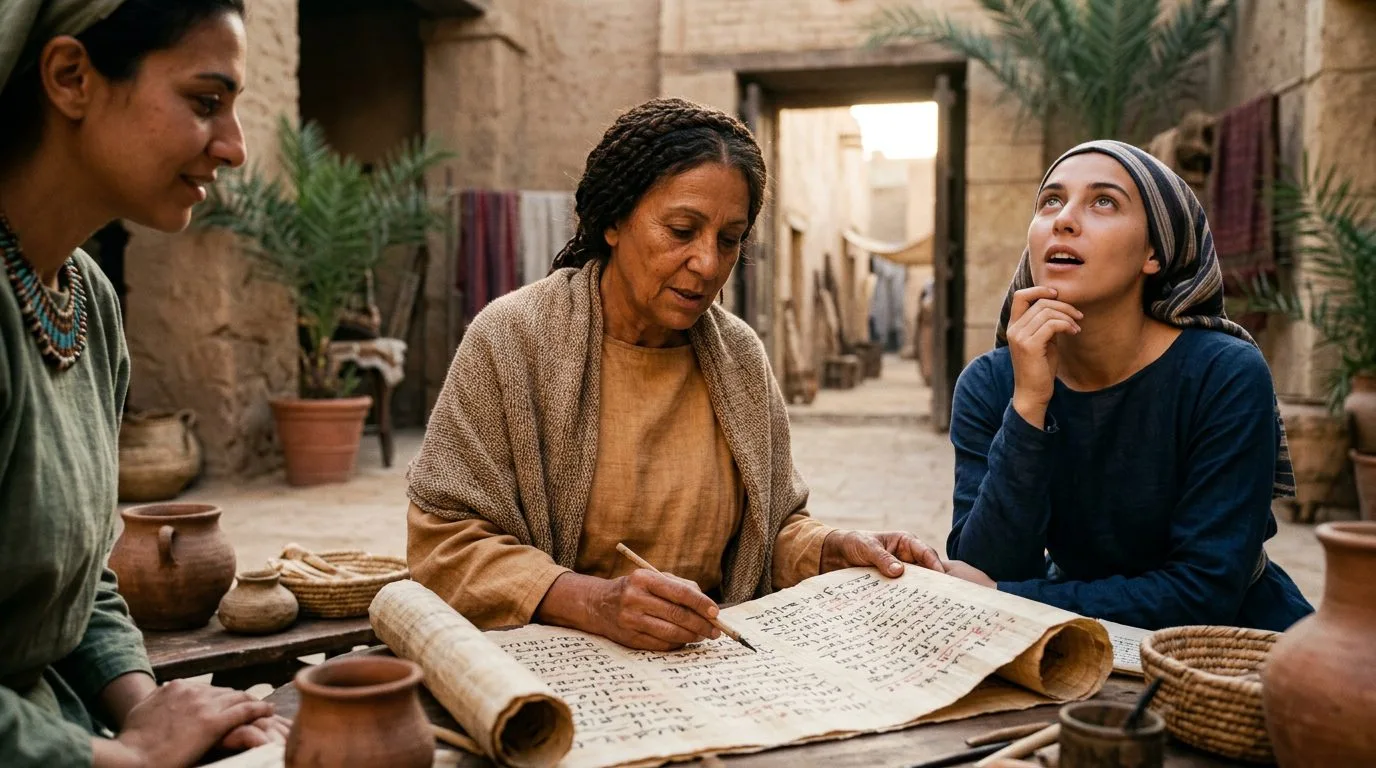
Egyptian Papyrus Captured a Woman’s Voice 3
Preserved in the Turin Papyrus and dated between 1300-1100 BCE, these Egyptian love songs give rare voice to female desire in ancient literature. One poem begins ‘My heart thought of my love of you when half my hair was braided’ and describes a woman so distracted by passion she can’t finish dressing. The collection contains 48 stanzas across seven groups of poems, with women speaking in approximately half the verses. Egyptian poets used nature metaphors extensively—lovers compared to sycamore trees, lotus flowers, and wild geese—centuries before similar imagery appeared in Greek and Roman poetry. The songs were likely performed at banquets with musical accompaniment on the lyre. These verses predate Homer‘s epics by roughly 500 years.
Source: britannica.com
4. Catullus Begged for Thousands of Kisses in Explicit Mathematics
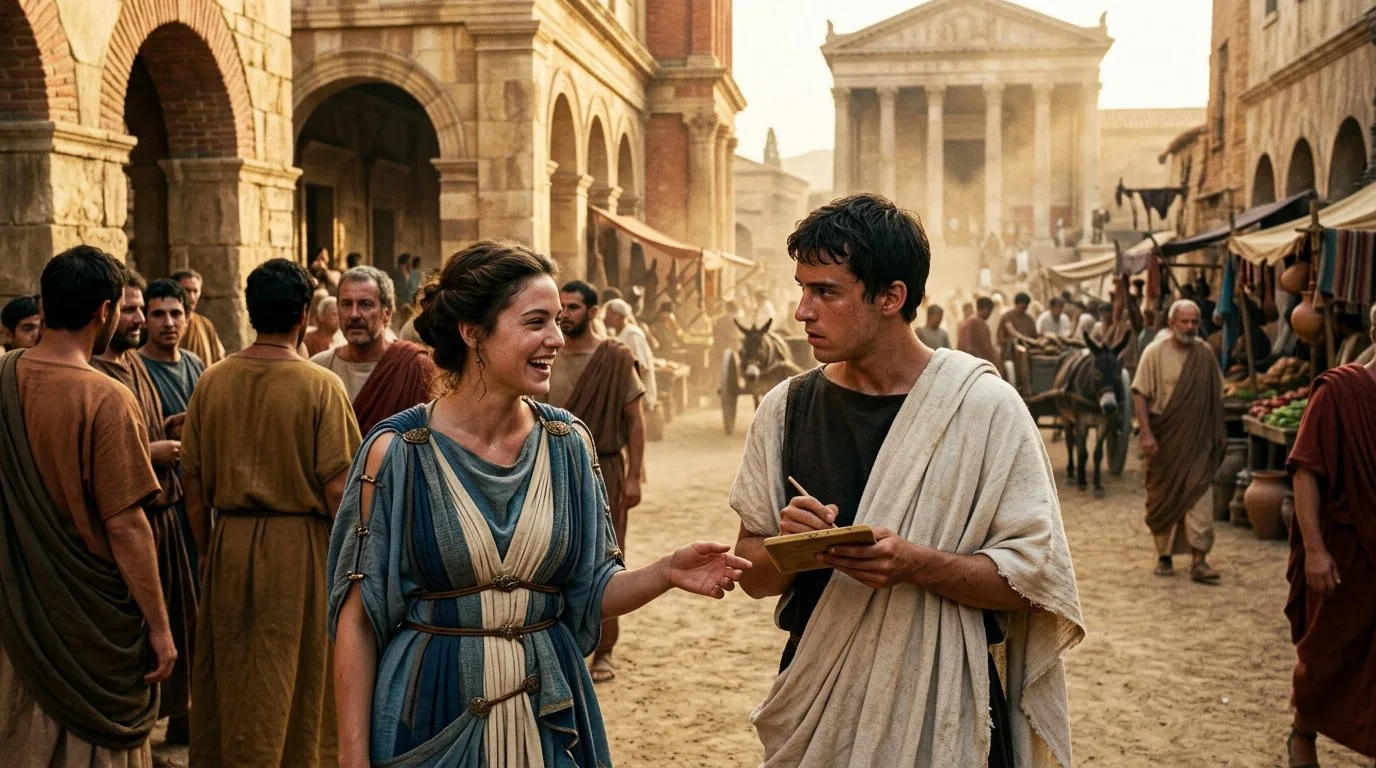
Ancient poet’s passionate kiss equation.
Written around 50 BCE, Catullus 5 opens with ‘Vivamus mea Lesbia, atque amemus’ (Let us live, my Lesbia, and let us love) before making a precise demand: ‘da mi basia mille’—give me a thousand kisses. The Roman poet then escalates, requesting another hundred, then another thousand, reaching several thousand kisses total in just 13 lines. Catullus addressed his poems to ‘Lesbia,’ likely Clodia Metelli, a married aristocrat whose affair with the poet scandalized 1st-century BCE Rome. His innovation was combining high literary style with raw emotion and colloquial language—even obscenity—which influenced poets for 2,000 years. The kiss-counting technique became so famous that Renaissance poets directly imitated it. Catullus died at approximately age 30.
Source: britannica.com
5. The Tale of Genji Used Poetry as Medieval Japanese Courtship
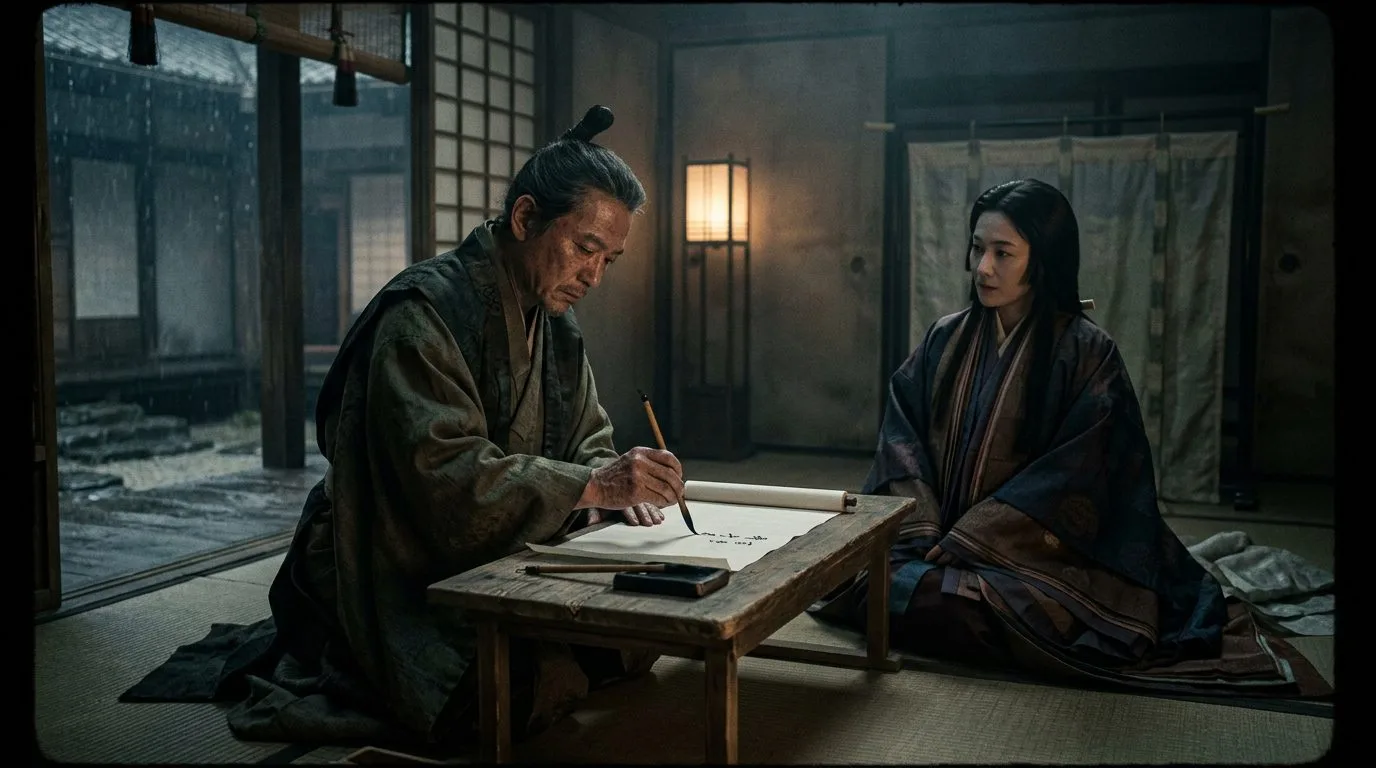
The Tale of Genji Used Poetry as Medieval
Written by Murasaki Shikibu around 1010 CE, The Tale of Genji contains nearly 800 poems exchanged between lovers as the primary method of courtship in Heian period Japan. Aristocrats judged potential partners entirely by the quality of their poetry and calligraphy—a poorly chosen word could end a relationship before it began. The novel’s opening poetry exchange occurs in Chapter 2, where Genji sends a five-line waka poem and anxiously awaits the response. Each poem had to reference the seasons, demonstrate knowledge of Chinese classics, and contain exactly 31 syllables in a 5-7-5-7-7 pattern. Murasaki Shikibu herself served as lady-in-waiting to Empress Shōshi and wrote from direct observation of court life. Her work is considered the world’s first psychological novel.
Source: britannica.com
6. Rumi Claimed Love Made Him Literate in a Single Moment

Rumi discovered love transformed him instantly.
Composed in Konya around 1244 CE, Rumi‘s poem declares ‘The minute I heard my first love story, I started looking for you, not knowing how blind that was. Lovers don’t finally meet somewhere. They’re in each other all along.’ The Persian mystic wrote these lines after meeting Shams of Tabriz, a wandering dervish whose arrival transformed Rumi from a conventional religious teacher into history’s bestselling poet. Their intense spiritual friendship lasted only 16 months before Shams mysteriously disappeared in 1248 CE, possibly murdered by Rumi’s jealous students. This loss triggered an outpouring of 3,000 ghazals and 2,000 quatrains. Rumi’s Masnavi contains approximately 27,000 verses, making it one of the longest mystical poems ever written. His tomb in Konya remains Turkey’s most-visited pilgrimage site.
Source: britannica.com
7. Tamil Sangam Poets Categorized Love Into Five Precise Landscapes

Ancient Tamil poets mapped love across five lands.
Created between 300 BCE and 300 CE in southern India, Tamil Sangam poetry developed an intricate system linking emotional states to specific landscapes. Kurinji (mountains) represented pre-marital love and union, while mullai (forests) symbolized patient waiting and marital harmony. The Ainkurunuru collection contains 500 short poems, each exactly five lines long, written by 100 different poets including several women. Poet Auvaiyar, writing around 200 BCE, became so renowned that later Tamil literature credited her with supernatural longevity spanning multiple centuries. These poems use the akam (interior) convention—never naming the lovers directly but describing emotions through external natural imagery. The Tolkappiyam grammar text, dated to 300 BCE, codified these five landscapes into a sophisticated literary theory predating similar Western developments by over 1,000 years.
Source: britannica.com
8. Li Bai Declared Friendship Deeper Than a 1,000-Foot Pool

Li Bai Declared Friendship Deeper Than a 1
Written around 750 CE, Li Bai‘s poem ‘To Wang Lun’ declares ‘The Peach Blossom Pool is a thousand feet deep, yet not as deep as Wang Lun’s love for me.’ The Tang Dynasty poet composed these lines when his friend Wang Lun walked miles to bid him farewell, demonstrating that ancient Chinese poetry celebrated passionate friendship with the same intensity as romantic love. Li Bai wrote approximately 1,000 poems during his lifetime, with 400 surviving today. Emperor Xuanzong personally summoned him to court in 742 CE, but Li Bai’s love of wine—he allegedly drowned while drunkenly trying to embrace the moon’s reflection—cut short his official career. His poetry influenced Japanese, Korean, and Vietnamese literature for over 12 centuries. Modern Chinese schoolchildren still memorize his verses.
Source: britannica.com
9. Troubadours Invented Courtly Love That Worshipped Unavailable Women
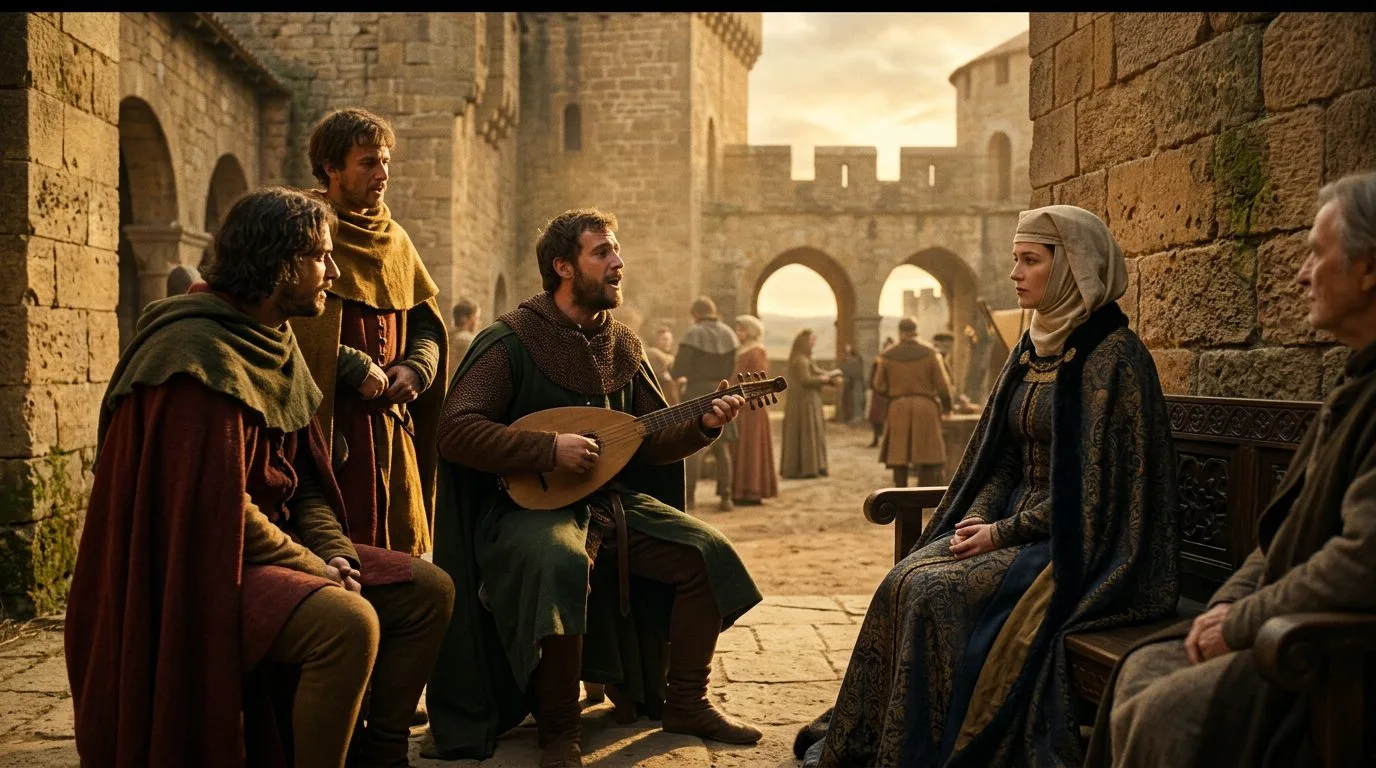
Medieval troubadours celebrating distant love.
Emerging in Aquitaine around 1100 CE, troubadour cansos established fin’amor (refined love)—a revolutionary concept where knights pledged devotion to married noblewomen they could never possess. William IX, Duke of Aquitaine, wrote the earliest surviving troubadour poems in 1090 CE, describing love as joyful suffering and sweet pain. The canso form required exactly five or six stanzas with identical rhyme schemes, creating technical challenges poets delighted in solving. Countess Beatritz de Dia, active around 1175 CE, was the only female troubadour whose music survived alongside her lyrics. These poets performed at courts across southern France, composing in Occitan language and accompanying themselves on vielles (medieval fiddles). Their invention of romantic love as spiritual ennobling—rather than mere physical desire—fundamentally altered European literature. Over 2,500 troubadour poems survived.
Source: britannica.com
10. Ovid’s Love Manual Got Him Exiled to the Black Sea
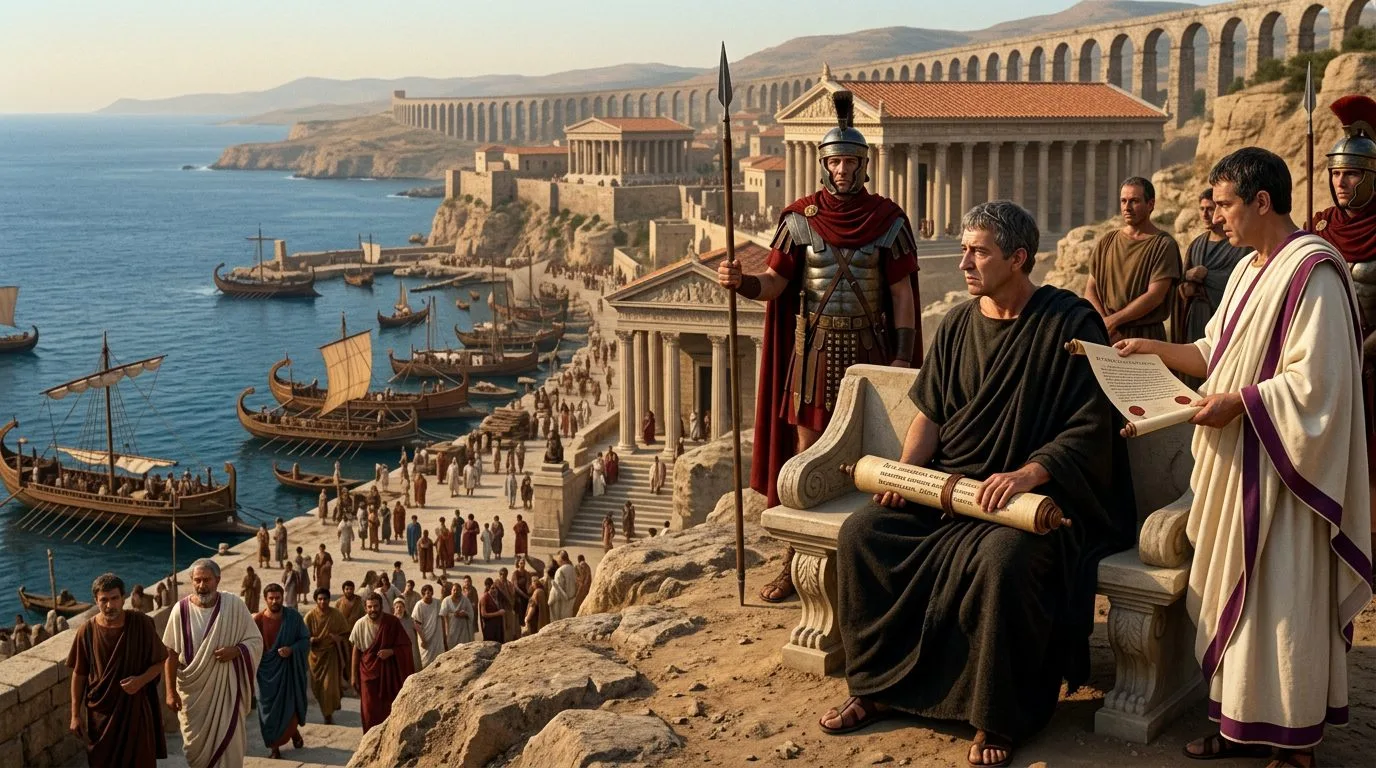
Ovid’s Love Manual Got Him Exiled to the Black Sea
Published around 16 BCE, Ovid‘s Amores presented 49 poems teaching Romans how to find, seduce, and maintain love affairs with scandalous practicality. Book 1, Poem 5 describes an afternoon encounter in such vivid detail that it shocked even jaded Roman readers. Emperor Augustus banished Ovid to Tomis (modern Romania) in 8 CE, citing the poet’s ‘carmen et error’ (a poem and a mistake)—likely referring to the Amores and possibly knowledge of the emperor’s daughter’s adultery. Ovid spent his final nine years writing mournful poems begging for recall, but Augustus never relented. The exile died around 17 CE without seeing Rome again. His earlier work, the Ars Amatoria (Art of Love), contained 2,800 lines of explicit romantic instruction divided into three books. These poems influenced European love literature more than any other Roman source, inspiring medieval, Renaissance, and modern writers.
Source: britannica.com
Did You Know?
The Egyptian love song about a distracted woman with half-braided hair was discovered in 1822 CE written on the back of an administrative tax document—ancient bureaucrats recycled expensive papyrus, inadvertently preserving passion alongside receipts. Even more surprising: Sappho’s Fragment 31 survived only because a 1st-century CE literary critic used it as a grammar example, meaning Western literature’s most influential love poem exists today thanks to an ancient writing teacher’s lesson plan.