
For centuries, Venice’s glassmakers held a stranglehold on Europe’s luxury market through state-enforced secrecy, island isolation, and threats of execution. When a master glassmaker fled Murano, assassins followed. These weren’t just trade secrets—they were formulas worth kingdoms.
1. Cristallo: The Formula That Made Glass Disappear

Cristallo: The Formula That Made Glass Disappear
In 1450, Angelo Barovier perfected cristallo—glass so clear it seemed invisible. Using Levantine soda ash and precise purification of quartz pebbles from the Ticino River, Venetian masters created transparency that wouldn’t be matched until lead crystal appeared in England 200 years later. The secret involved crushing the quartz 40 times and aging the mixture for specific lunar cycles. A single cristallo goblet cost more than a year’s wages for a skilled craftsman. The formula’s exact proportions died when the last Barovier masters refused to record them in writing, fearing industrial espionage.
Source: britannica.com
2. Calcedonio’s Marble Magic Nobody Could Copy
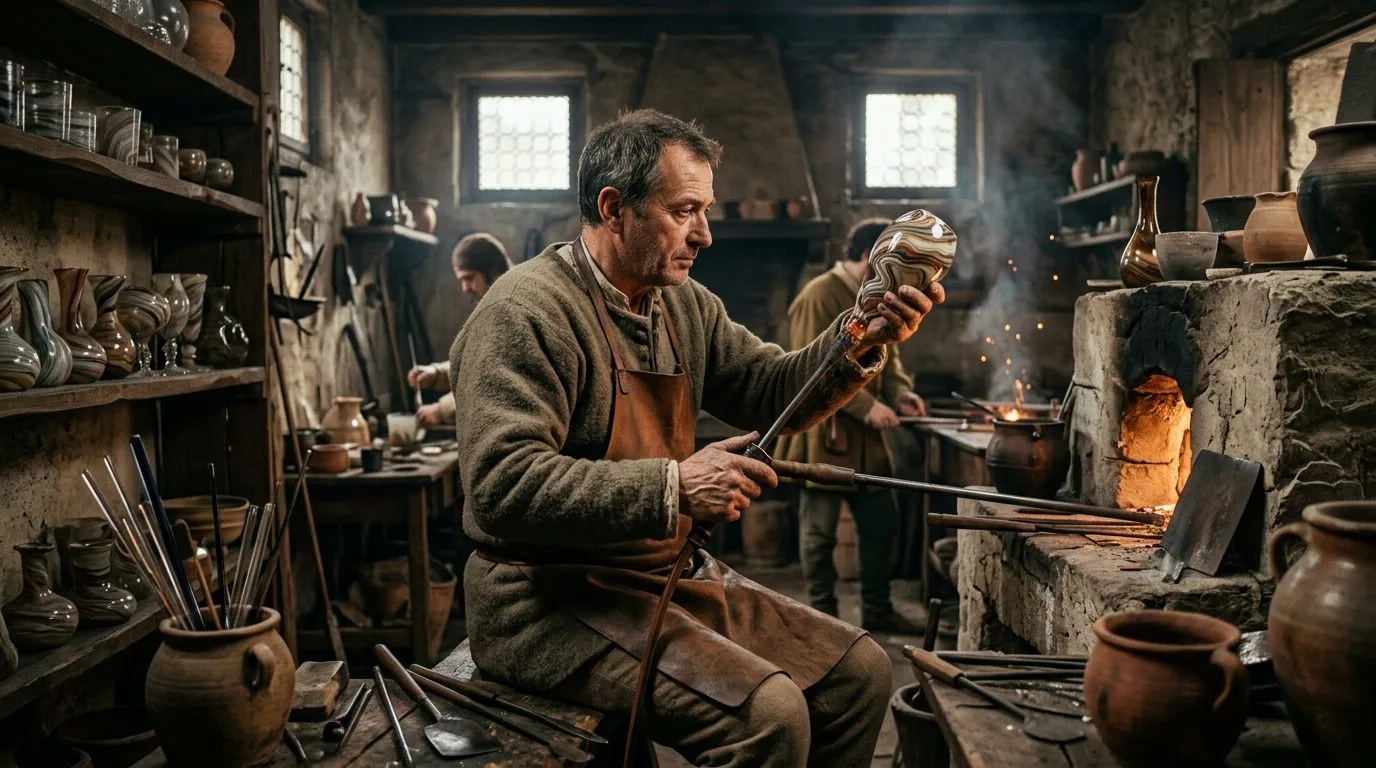
Calcedonio’s Marble Magic Nobody Could Copy
calcedonio glass mimicked precious agate and chalcedony stones so perfectly that collectors couldn’t distinguish them from genuine minerals. Created around 1460, the technique required layering metallic oxides—copper, cobalt, manganese—while the glass remained at exactly 1,050 degrees Celsius. Masters swirled these layers using iron rods in patterns that seemed random but followed geometric principles they never documented. Only 19 authenticated calcedonio pieces survive today. The Venetian Senate declared the formula a state secret in 1487, punishable by death to reveal. Modern analysis shows trace elements scientists still cannot identify.
Source: smithsonianmag.com
3. Aventurine’s Copper Sparkle Worth Its Weight in Gold
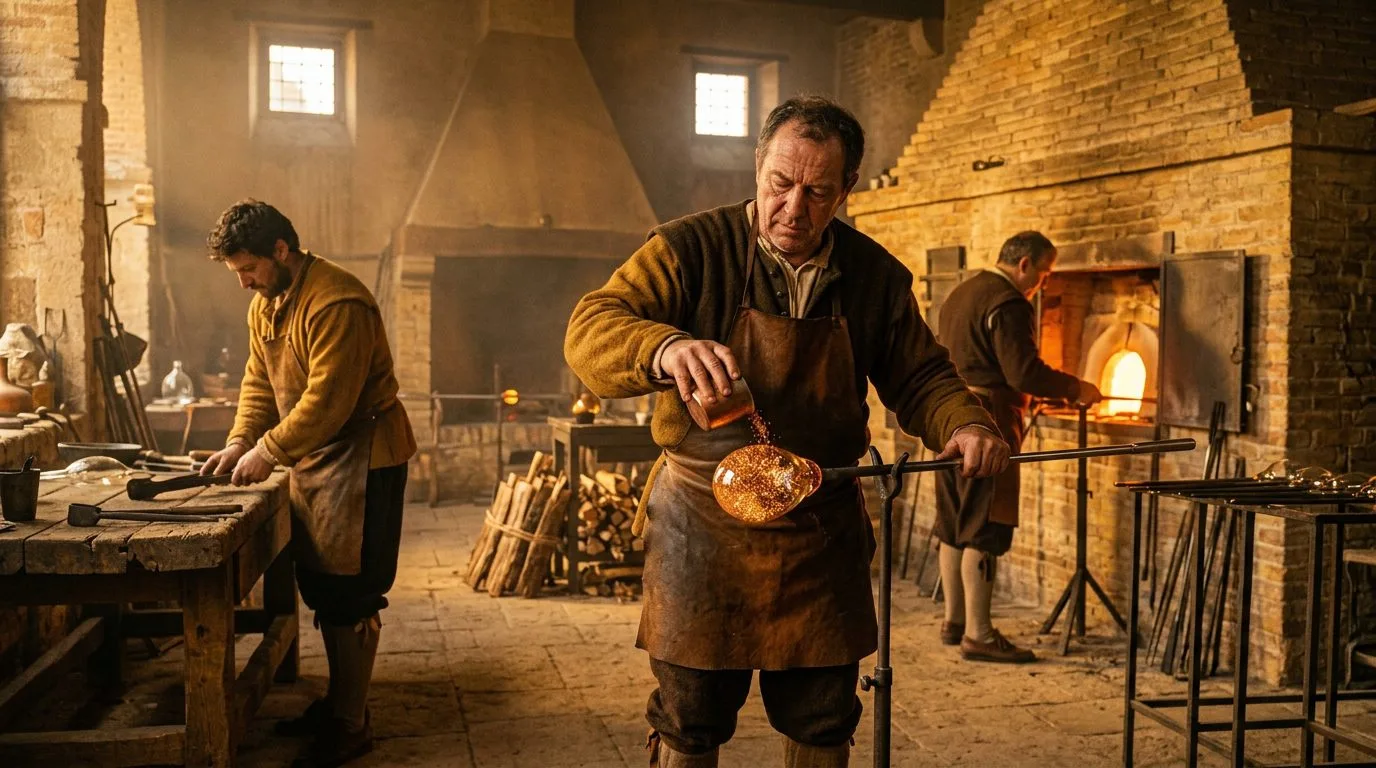
Aventurine’s glittering copper flecks shine
aventurine glass contained thousands of suspended copper crystals that sparkled like embedded stars. Discovered accidentally around 1620 when copper filings fell into molten glass, the controlled production required maintaining the batch at precisely 1,100 degrees for 12 hours while adding copper oxide in three separate stages. The timing had to be exact—30 seconds too early and the crystals dissolved; too late and they clumped. A Murano guild master named Miotti perfected it but never wrote down the cooling schedule. His descendants lost the technique by 1700. Modern reproductions lack the uniform crystal distribution Venetian pieces display.
Source: history.com
4. Lattimo: The Porcelain Impersonator That Fooled Royalty
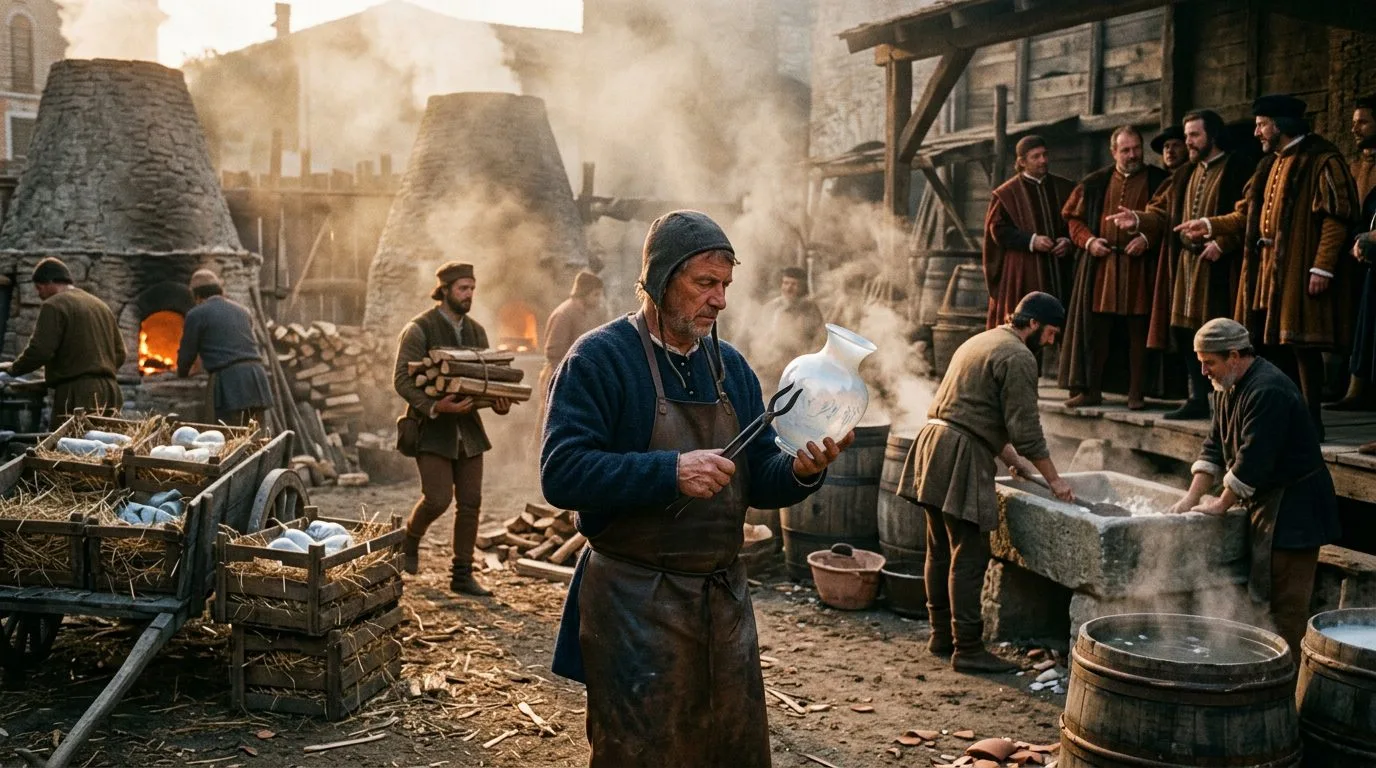
Lattimo
lattimo created opaque white glass indistinguishable from Chinese porcelain—which sold for astronomical prices in 15th-century Europe. Venetian masters achieved it by adding bone ash and tin oxide in ratios they encoded in family crests rather than recipe books. The 1540 inventory of Francesco de’ Medici listed lattimo vessels valued at 400 ducats each, equivalent to a palazzo. The crucial secret involved a three-stage firing process with temperature variations of only 15 degrees between stages. One surviving guild document mentions “ashes of the white stone from Vicenza” that modern chemists cannot definitively identify. The formula effectively vanished by 1650.
Source: britannica.com
5. Filigrana’s Twisted Canes That Defied Physics
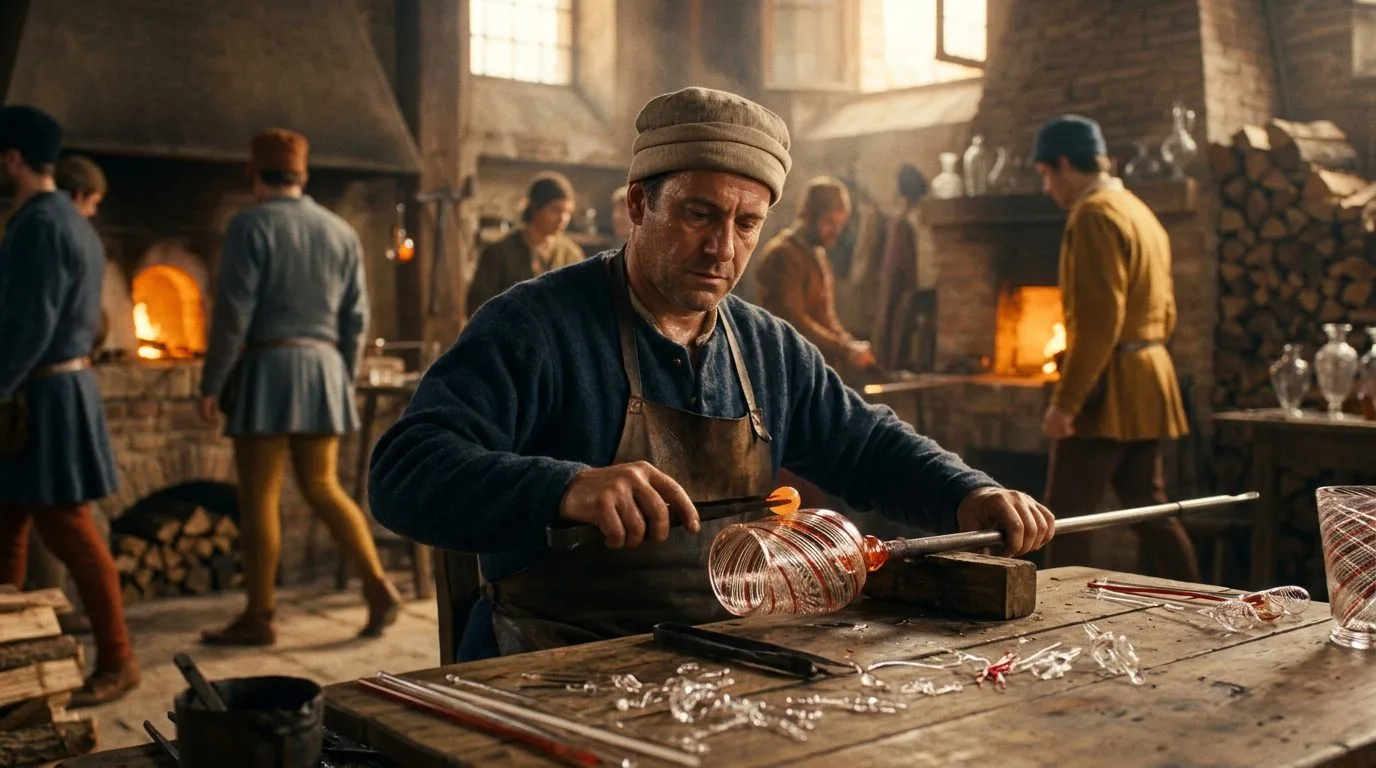
Filigrana’s Twisted Canes That Defied Physics
filigrana wove hair-thin glass threads into impossibly complex spiral patterns inside vessel walls. Developed around 1527, the process required pulling molten glass canes to exactly 2 millimeters diameter, cooling them to a precise temperature, then reheating and twisting 12 canes simultaneously at identical rotation speeds. Masters used their pulse rate to time rotations—60 beats per revolution. A single goblet contained canes totaling 8 meters in length. The technique demanded three glassblowers working in perfect synchronization without verbal communication, using only hand signals that apprentices learned over 15 years. These coordination methods were never written down and died with the guild system’s collapse.
Source: smithsonianmag.com
6. Enamel Pigments That Time Cannot Fade
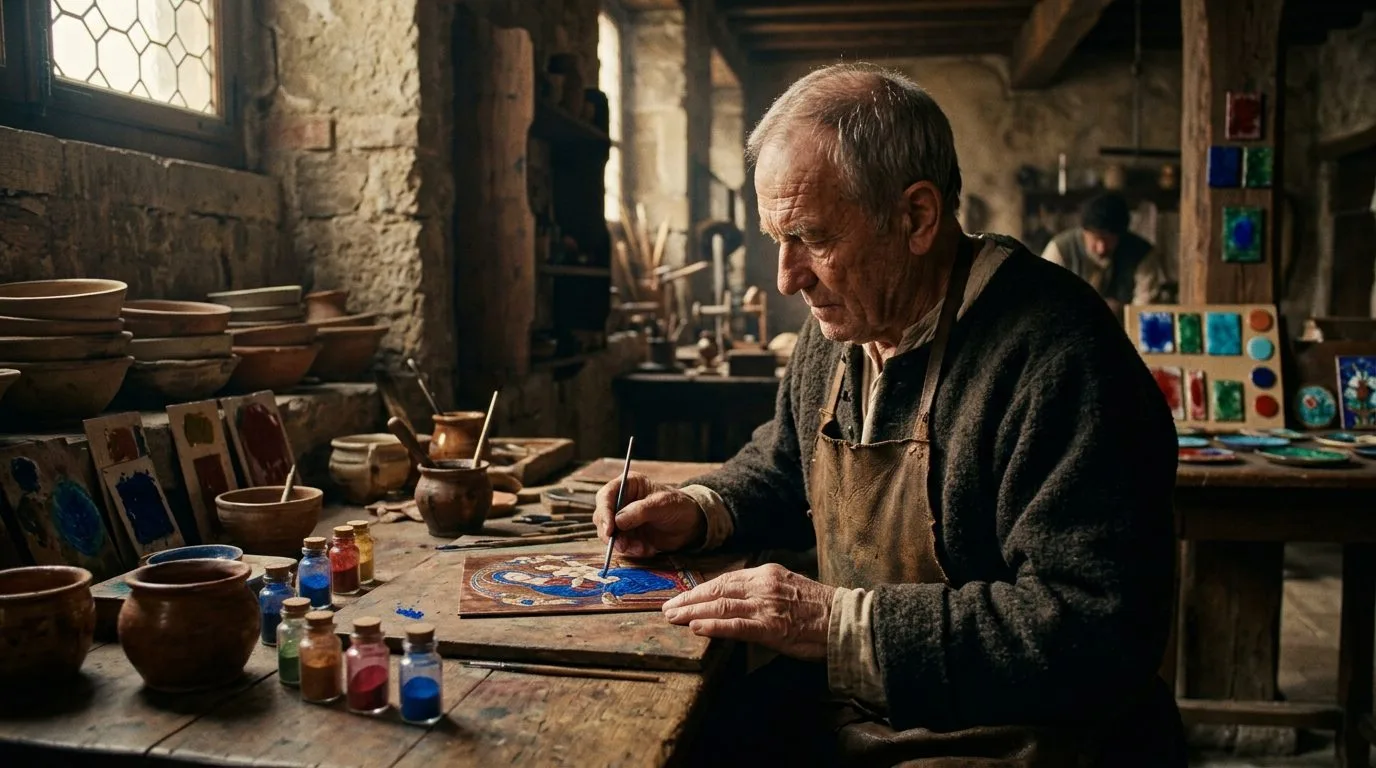
Enamel Pigments That Time Cannot Fade
Venetian enamel colors from the 1470s remain as vivid today as when applied, while other Renaissance enamels have deteriorated. The secret involved grinding metallic compounds with specific Adriatic sea sand that contained microscopic organisms—diatoms—whose silica structures bonded permanently with glass. Masters used 23 different pigment formulas, each requiring different grinding times ranging from 4 to 40 hours. A blue enamel recipe from the Barovier workshop mentions “powder from the eastern islands” that historians believe was lapis lazuli mixed with an unknown binding agent. The last master enameler, Osvaldo Brussa, died in 1683 without recording his workshop measurements.
Source: history.com
7. Mirror Silvering That Sparked International Espionage
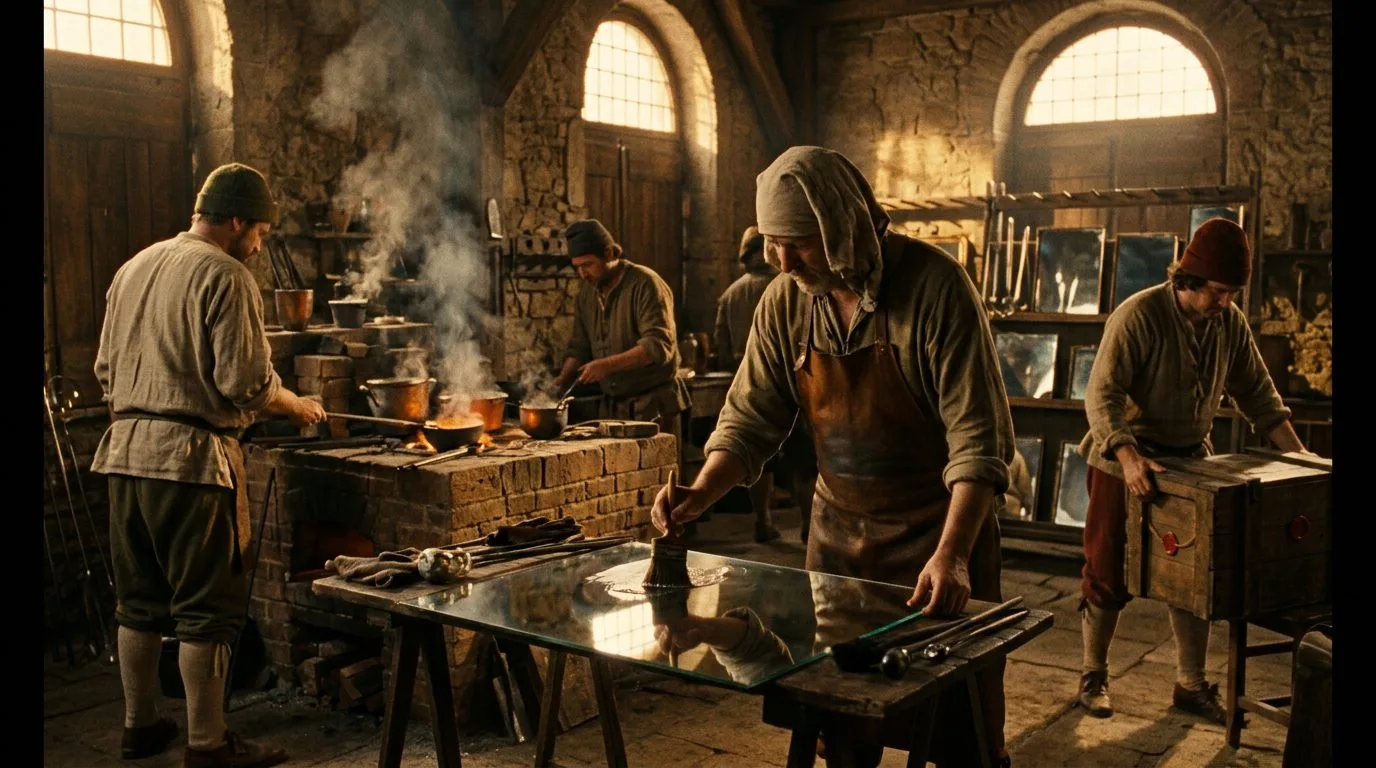
Cold War race for reflective coatings technology.
Venice monopolized mirror production for 150 years using a silvering technique so secret that France’s finance minister Jean-Baptiste Colbert sent industrial spies to Murano in 1665. The process involved mercury amalgamation with silver at temperatures that had to fluctuate in a specific pattern over 6 days. Venetian mirrors achieved 97% reflectivity compared to 40% for polished metal. A single large mirror sold for the price of a warship. When three Murano masters defected to Paris in 1666, the Venetian Council of Ten sent assassins who poisoned two of them. The survivors couldn’t replicate the process without the specific “black earth” additive from Murano’s lagoon—later identified as a unique sulfur compound that no longer exists in nature.
Source: britannica.com
8. Furnace Temperature Control Without Thermometers
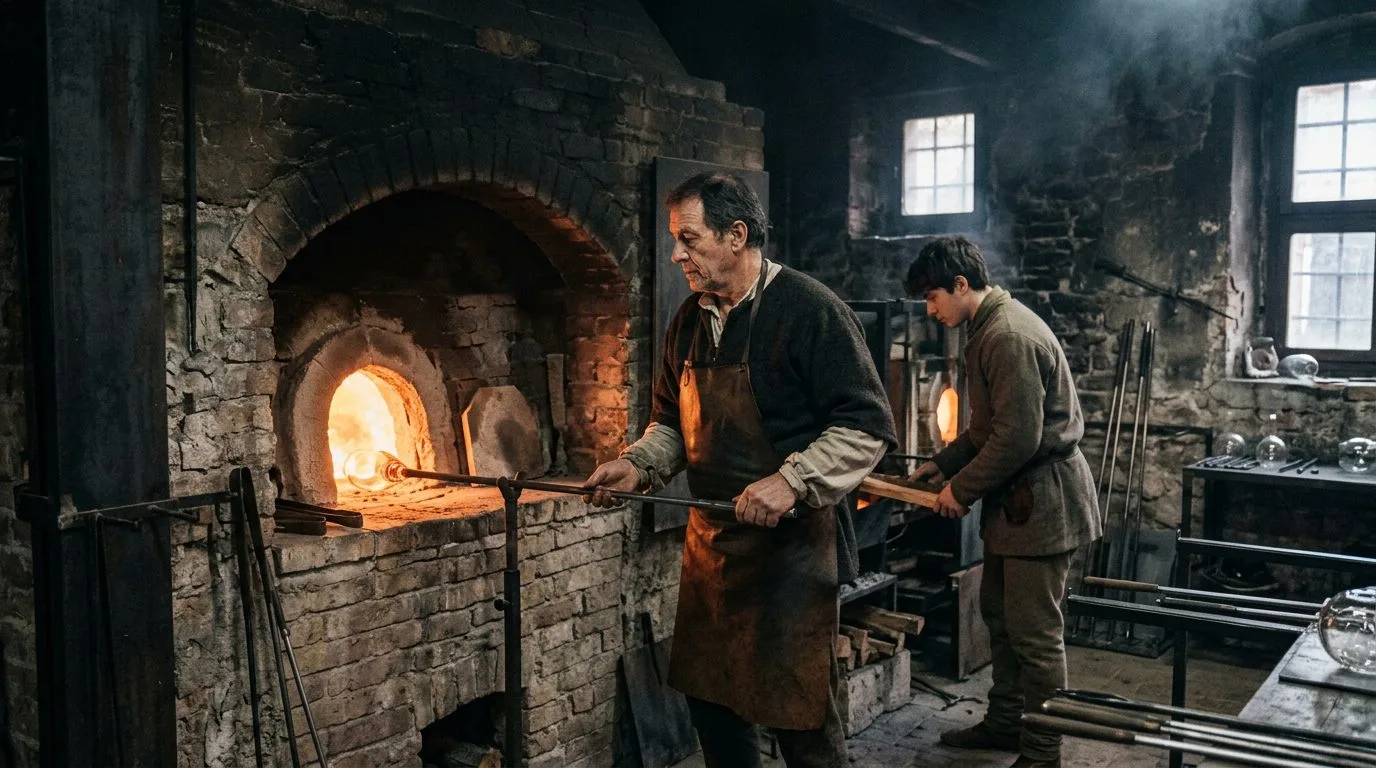
Furnace Temperature Control Without Thermometers
Murano masters maintained furnace temperatures within 10-degree ranges for days without any measuring instruments. They achieved this through a system of 17 distinct glass color samples kept in every workshop—each melted at a specific temperature between 800 and 1,400 degrees Celsius. By dropping a test rod into the furnace and comparing its color to the samples, masters could adjust air flow through underground bellows channels that were unique to each workshop’s architecture. These channels incorporated Adriatic tidal flows to regulate oxygen intake automatically. A 1564 guild document describes how masters identified furnace temperature by the sound of bubbles in the molten glass—they could distinguish 8 different bubble frequencies. This acoustic method vanished when furnace designs changed in the 1700s.
Source: smithsonianmag.com
9. Guild Apprenticeship: The Seven-Year Silence
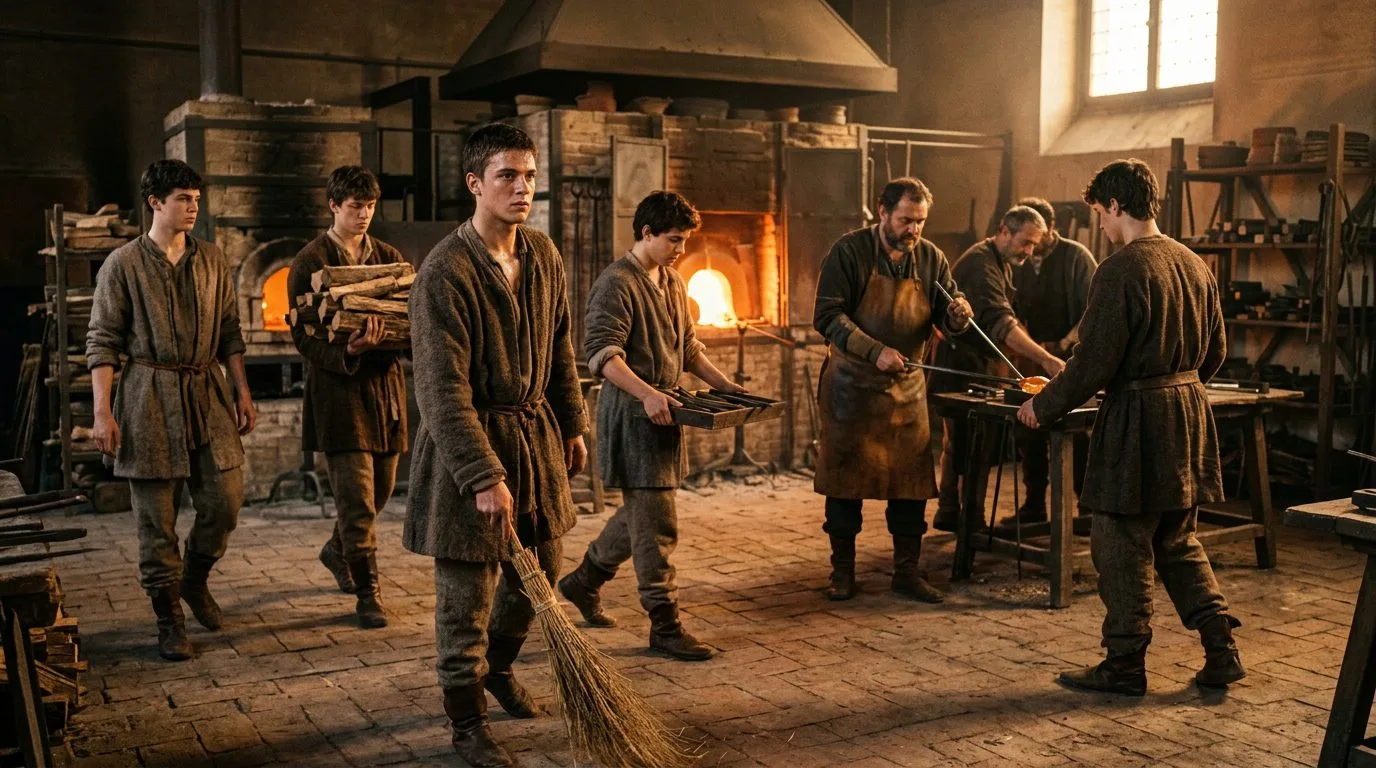
Guild Apprenticeship: The Seven-Year Silence
Murano apprentices spent their first 7 years performing menial tasks without being allowed to touch molten glass or ask questions about techniques. They learned by observation alone, forbidden to take notes or speak during demonstrations. The Guild of Glassmakers imposed fines of 100 ducats—a fortune—for teaching family members outside approved bloodlines. In 1602, the guild expelled master Antonio Miotto for teaching his nephew without council approval. Apprentices swore blood oaths witnessed by clergy, and guild records show that between 1490 and 1550, 14 apprentices disappeared under suspicious circumstances after attempting to share knowledge. This suppression meant that subtle techniques requiring verbal explanation were never transmitted, creating permanent knowledge gaps even within guild families.
Source: history.com
10. Export Laws Enforced by Execution and Bounty Hunters
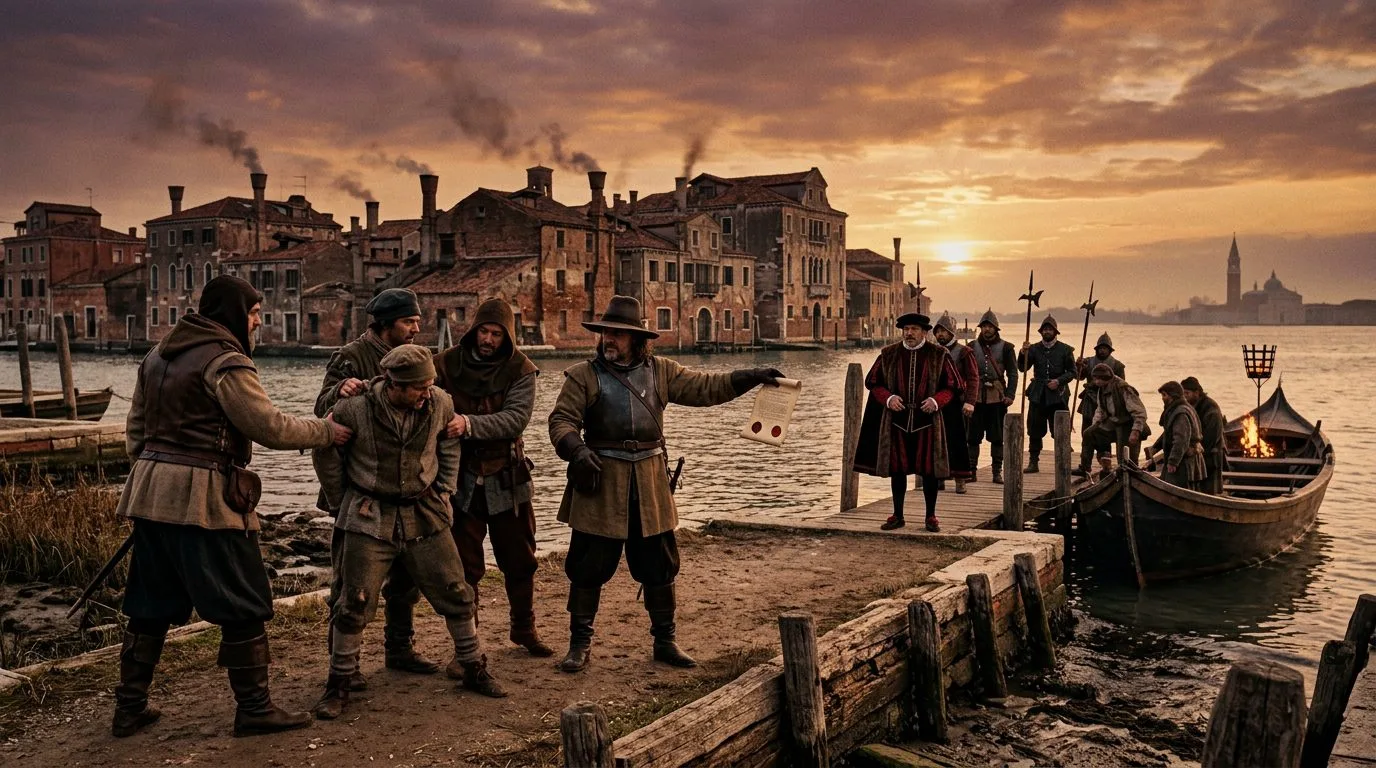
Deadly enforcement: bounty hunters tracked
In 1291, Venice confined all glassmakers to Murano island, officially to prevent fires but actually to control them. The Senate decreed that any glassmaker who fled faced execution, and their family members would be imprisoned until they returned. Venice offered 1,000 ducats—enough to buy three houses—for information leading to a fugitive master’s capture. Assassins tracked escaped glassmaker Giovanni Darduin to Bavaria in 1569 and poisoned him. The Council of Ten maintained a network of 50 paid informants across Europe specifically to monitor glassmaking activities. Ships leaving Venice underwent inspections where officials smashed suspicious cargo looking for hidden glass samples. By 1740, these enforcement mechanisms had weakened, allowing techniques to spread—but by then, many crucial formulas had already been lost through deaths and failed transmissions.
Source: britannica.com
Did You Know?
Did You Know? The irony of Venice’s extreme secrecy is that it destroyed what it tried to preserve. By 1800, when the guild system finally collapsed and glassmakers could freely share knowledge, they discovered that three generations of enforced silence had created permanent gaps in understanding. Modern scientists using spectroscopy can identify the elements in surviving Venetian glass but cannot determine the precise sequences and timing that made them work—the very knowledge masters refused to write down is now lost forever, making Renaissance Venetian glass literally irreproducible.