
In 213 BCE, China’s first emperor ordered every book burned except farming manuals and divination texts. He wasn’t alone. History’s greatest losses weren’t accidents—they were calculated erasures by rulers who understood that controlling the past meant controlling the future.
1. Qin Shi Huang Burned Philosophy to Build an Empire

Qin Shi Huang Burned Philosophy to Build an Empire
China’s first emperor issued his devastating decree in 213 BCE after a scholar criticized his policies by citing ancient texts. Qin Shi Huang ordered all books except technical manuals on medicine, agriculture, and divination destroyed within 30 days. Scholars who refused faced execution—460 Confucian scholars were reportedly buried alive the following year. The emperor sought to eliminate competing philosophies that challenged his legalist state ideology. Only texts hidden by brave scholars in wall cavities and underground chambers survived, creating massive gaps in pre-Qin Chinese intellectual history that scholars still struggle to fill today.
Source: britannica.com
2. One Bishop Destroyed Nearly Every Mayan Book in Existence
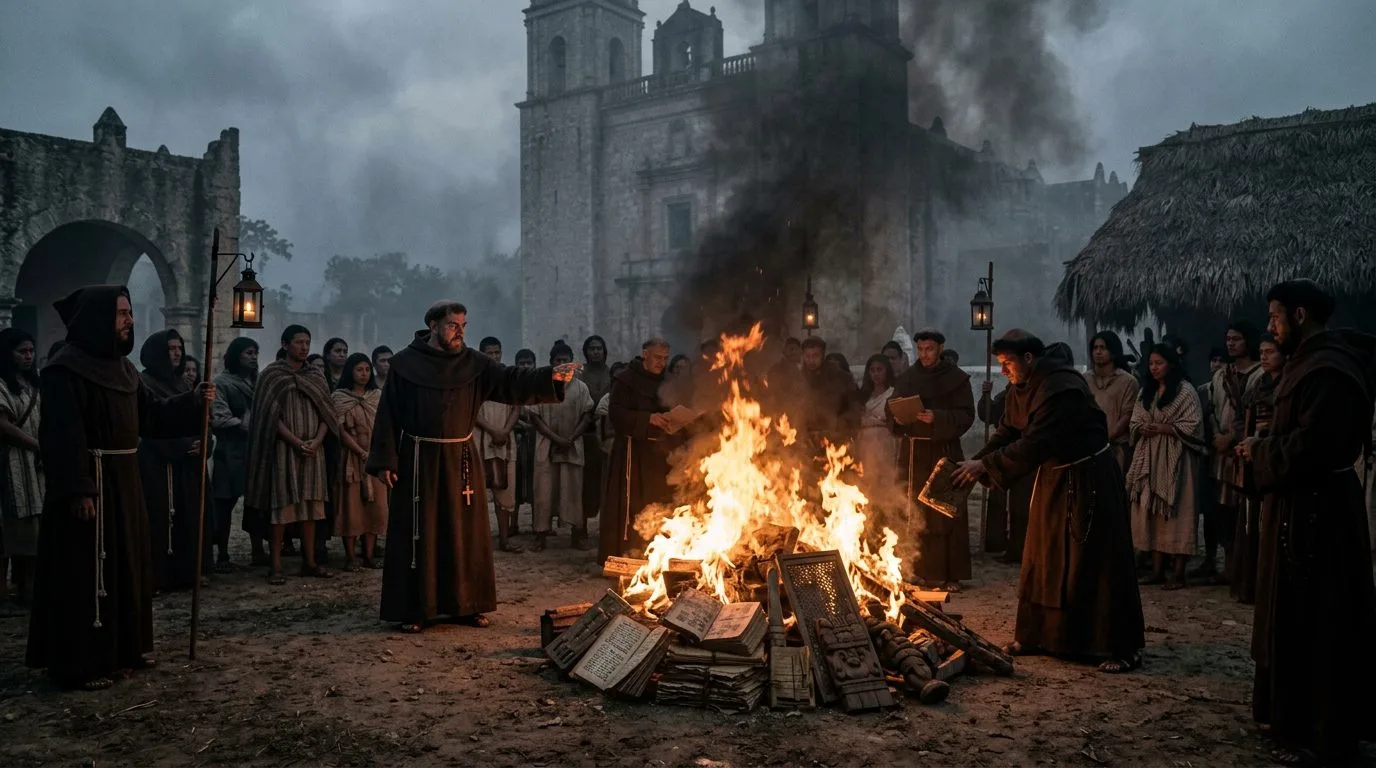
Bishop Diego de Landa’s devastating book burnings.
Bishop Diego de Landa staged an auto-da-fé in Maní, Yucatán on July 12, 1562, burning approximately 27 Mayan codices along with 5,000 cult images. The Franciscan friar justified the destruction by claiming the books contained “nothing but superstition and lies of the devil.” Of thousands of bark-paper books recording Mayan astronomy, mathematics, history, and medicine, only four codices survived by chance in European collections. Ironically, de Landa later wrote a detailed account of Mayan culture to aid conversion efforts, becoming our primary source for understanding the very civilization whose records he destroyed.
Source: smithsonianmag.com
3. Rome’s Senate Burned Its Own Oracle Books to Control Prophecy
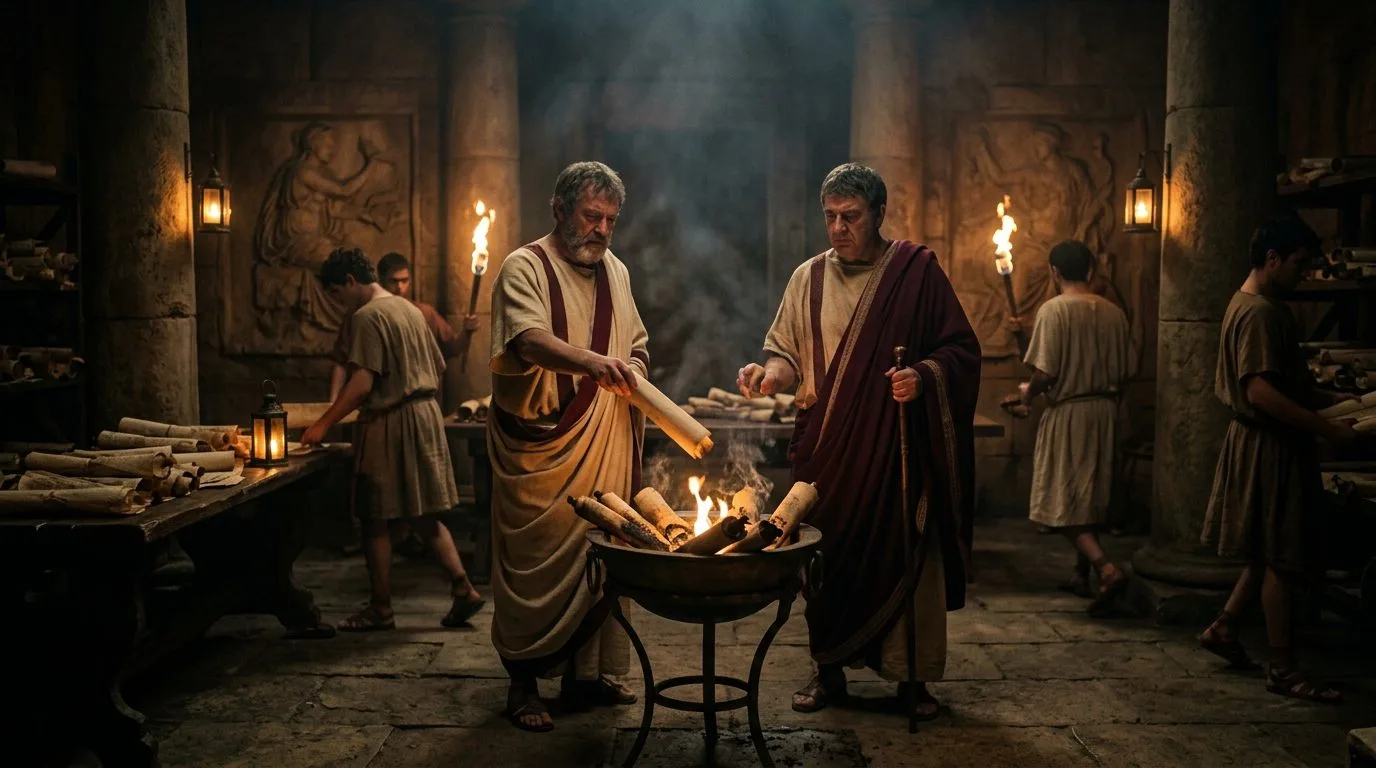
Senate destroyed prophecy texts to control fate.
The Roman Senate ordered the original Sibylline Books burned in 76 BCE after decades of unauthorized consultation by ambitious politicians. These prophetic texts, supposedly written by the Cumaean Sibyl and kept in the Temple of Jupiter, guided Roman policy during crises for over 400 years. When the temple burned in 83 BCE, the Senate sent envoys across the Mediterranean to collect replacement prophecies, but rigorously controlled access to prevent manipulation. Augustus had over 2,000 spurious prophecies destroyed in 12 BCE, keeping only verified texts. The power to interpret divine will was too dangerous to leave unregulated.
Source: britannica.com
4. Mongol Siege Drowned Baghdad’s Books in the Tigris
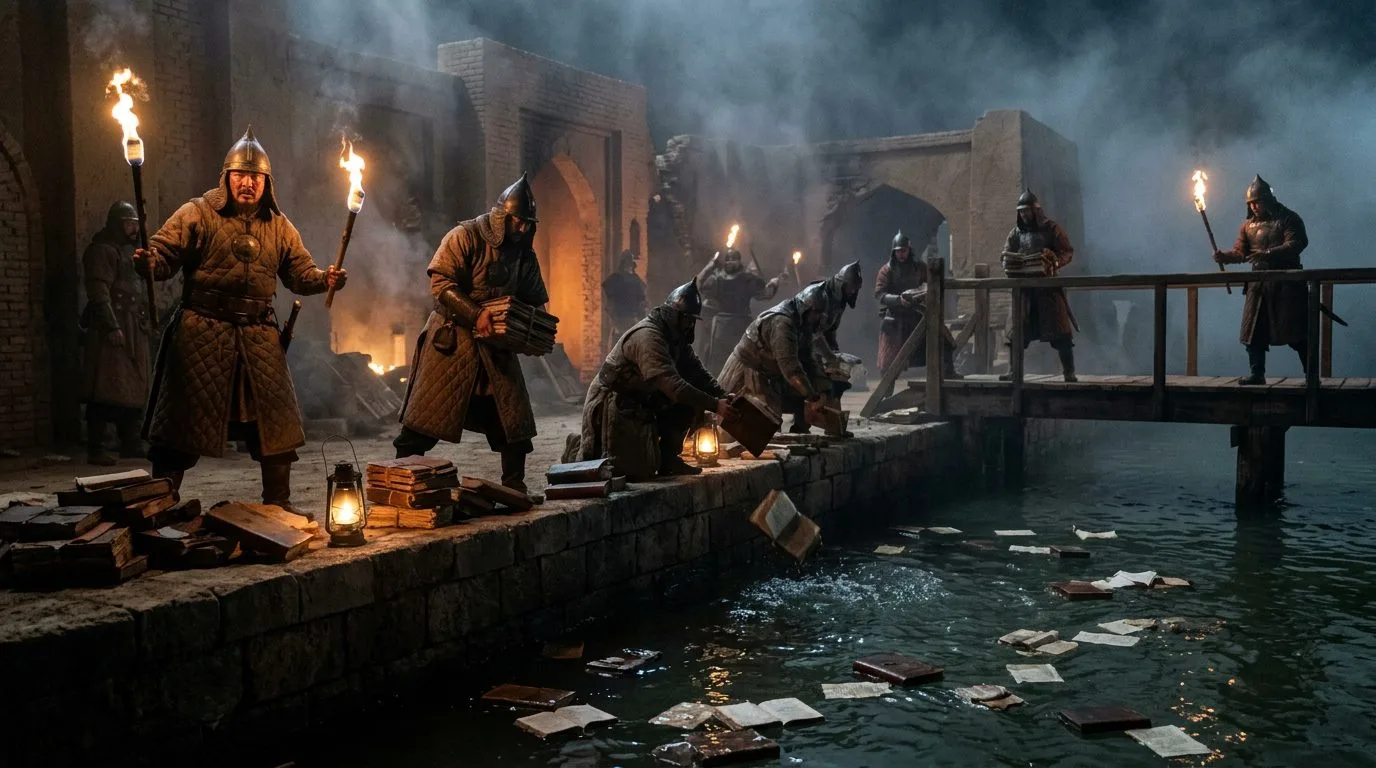
Mongol Siege Drowned Baghdad’s Books in the Tigris
Hulagu Khan’s forces sacked Baghdad in February 1258, destroying the House of Wisdom and its irreplaceable collection of scientific and philosophical texts. Eyewitnesses reported that soldiers threw so many books into the Tigris River that the water ran black with ink for days. The library housed works from the Golden Age of Islam—original astronomical observations, medical treatises, mathematical innovations, and Greek texts preserved nowhere else. An estimated 400,000 manuscripts perished. The scholar Nasir al-Din al-Tusi managed to save a portion by convincing Hulagu of their astrological value, but centuries of accumulated knowledge vanished in a week-long orgy of destruction.
Source: britannica.com
5. Diocletian Ordered Alchemical Books Burned to Protect Rome’s Gold
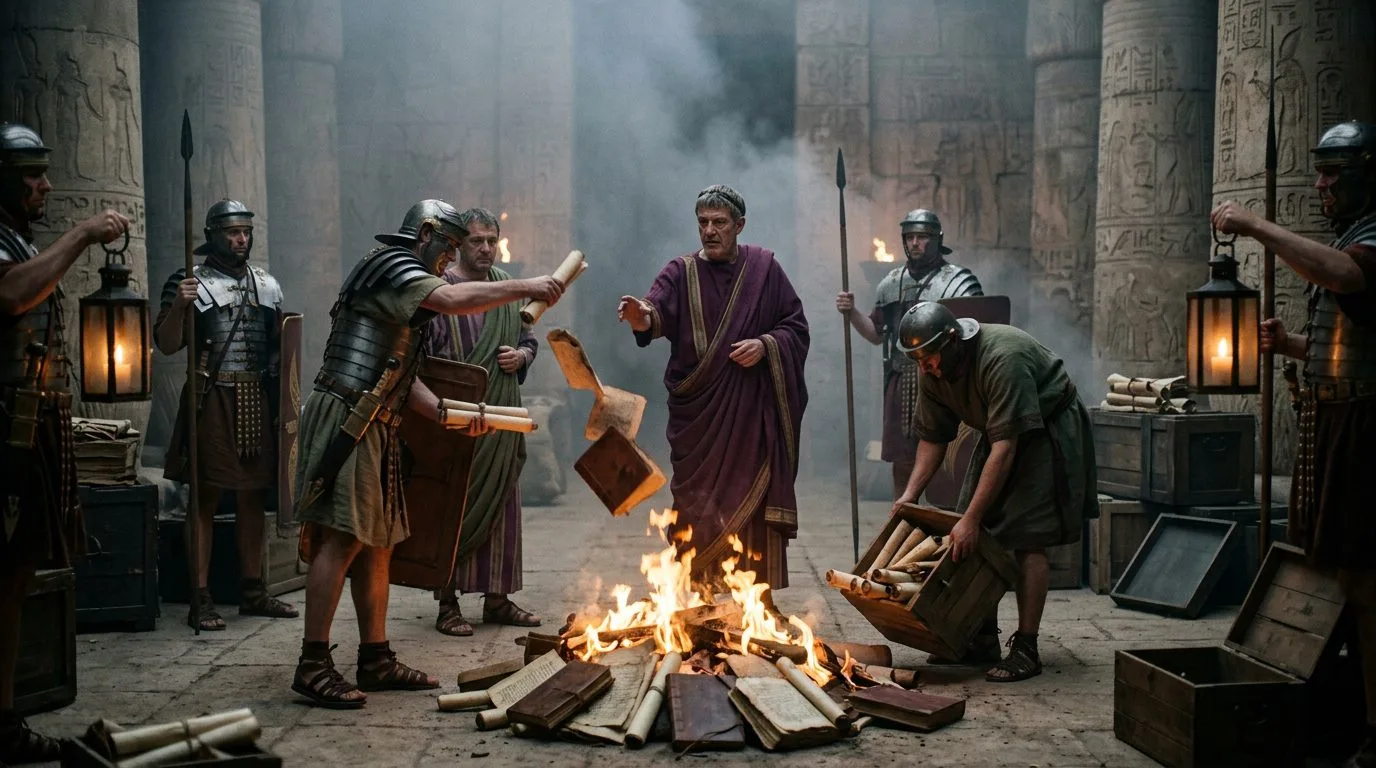
Diocletian’s decree destroyed alchemical texts.
Emperor Diocletian issued an edict around 300 CE commanding the burning of all Egyptian books on the art of making gold and silver. His reasoning was purely economic—if Egyptians possessed alchemical knowledge to create precious metals, they could finance rebellions against Roman rule. Imperial agents systematically confiscated and destroyed texts on chemistry, metallurgy, and early scientific experiments throughout Egypt’s temples and libraries. This decree eliminated much of Hellenistic Egypt’s practical chemical knowledge, leaving only fragments quoted in later Arabic and Byzantine sources. The loss set back experimental chemistry by centuries, as subsequent alchemists had to rediscover basic processes from scratch.
Source: britannica.com
6. Ming Emperors Destroyed Evidence of China’s Maritime Supremacy
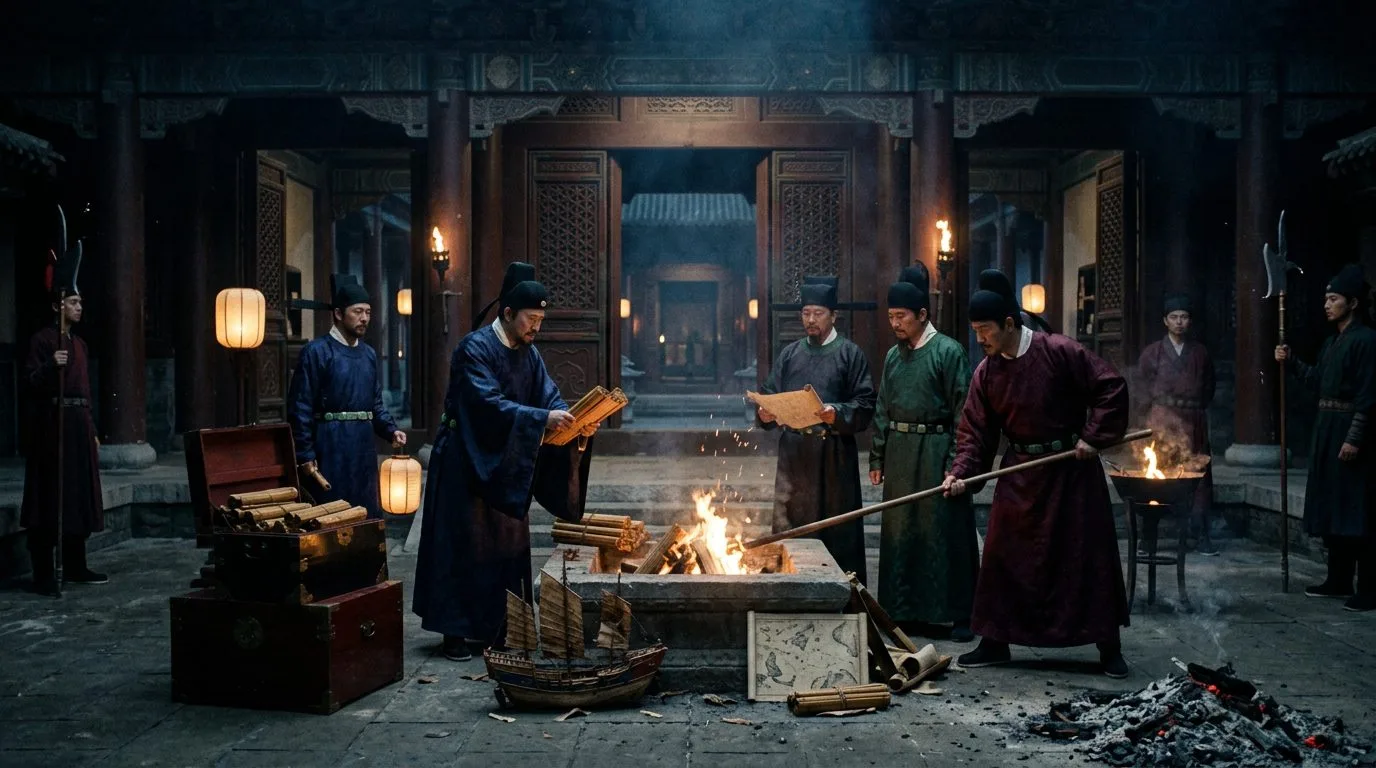
Chinese treasure ships burned in Ming era.
The Ming court issued orders throughout the 15th century to destroy records of Zheng He’s spectacular maritime expeditions after Emperor Yongle’s death in 1424. Confucian bureaucrats who opposed expensive naval ventures systematically eliminated ships’ logs, navigational charts, and official reports documenting seven voyages that reached East Africa and possibly beyond. Officials destroyed so thoroughly that historians debate whether Zheng He’s treasure ships were really 400 feet long—no construction records survived. By the mid-15th century, the War Ministry reported that all expedition documents had been lost or burned. China turned inward, and when Europeans arrived a century later, the Chinese had forgotten they once commanded the world’s greatest navy.
Source: britannica.com
7. The Vatican’s Index Banned 4,000 Books for Four Centuries

The Vatican’s Index Banned 4
Pope Paul IV issued the first official Index Librorum Prohibitorum in 1559, listing books Catholics were forbidden to read under pain of excommunication. The Index eventually grew to include over 4,000 titles, from Copernicus’s astronomical works to Descartes’s philosophy. Enforcement varied—Venice burned 10,000 copies of the Talmud in 1553, while Spanish Inquisitors destroyed Protestant texts by the wagon-load. The Index wasn’t formally abolished until the mid-20th century. Unlike sudden imperial burnings, this was slow-motion erasure: four centuries of systematic suppression that shaped which ideas could circulate in Catholic Europe and which authors risked their careers by publication.
Source: britannica.com
8. Ottoman Decrees Targeted Armenian Historical Memory

Ottoman Suppression of Armenian Heritage
Ottoman authorities issued multiple orders suppressing Armenian historical texts, particularly intensifying during the late 19th century and early 20th century. Sultan Abdulhamid II’s regime in the 1890s confiscated manuscripts documenting Armenian territorial claims and cultural autonomy. During the Armenian Genocide of the early 20th century, Turkish officials specifically targeted libraries, schools, and churches housing historical documents. The Catholicosate of Etchmiadzin lost thousands of irreplaceable medieval manuscripts. Survivors report soldiers burning church archives while systematically destroying Armenian inscriptions on historical monuments. The goal was eliminating physical evidence of Armenian presence in Anatolia, making future territorial claims impossible to substantiate with historical documentation.
Source: britannica.com
9. A General Burned India’s Greatest University for Three Months
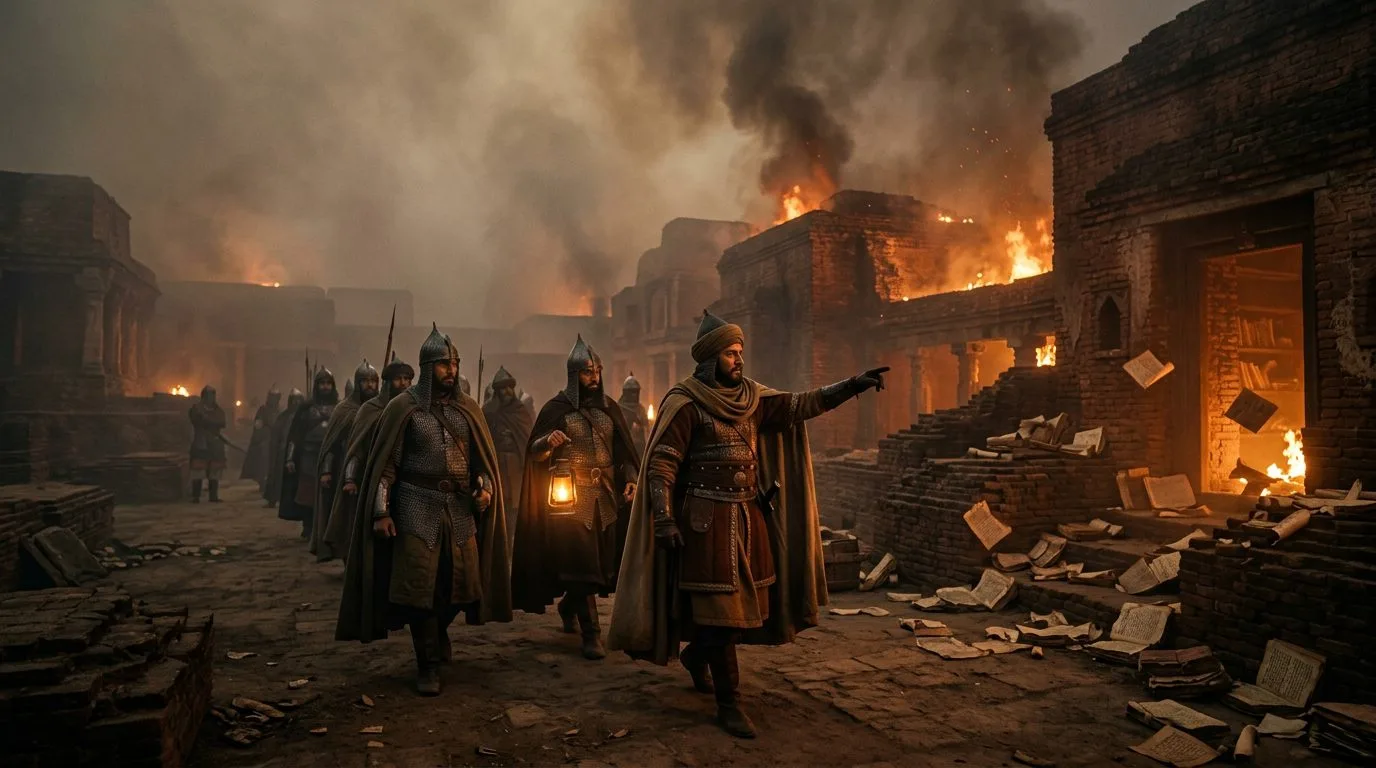
Ancient flames consumed scholarly treasures.
Turkish general Bakhtiyar Khilji attacked Nalanda University around 1193, setting fire to its legendary library that allegedly burned for three months. The university housed nine million manuscripts in three massive buildings, accumulating 800 years of Buddhist scholarship, scientific texts, and philosophical works. Khilji’s soldiers killed thousands of monks—reportedly mistaking the university for a fortress because its massive libraries resembled defensive towers. The destruction eliminated much of India’s Buddhist intellectual heritage; scholars fled to Tibet carrying what few texts they could save. Modern historians estimate that 90% of pre-Islamic Indian scientific and philosophical literature perished in this single catastrophic event.
Source: britannica.com
10. Conquistadors Burned Aztec Books to Erase a Calendar
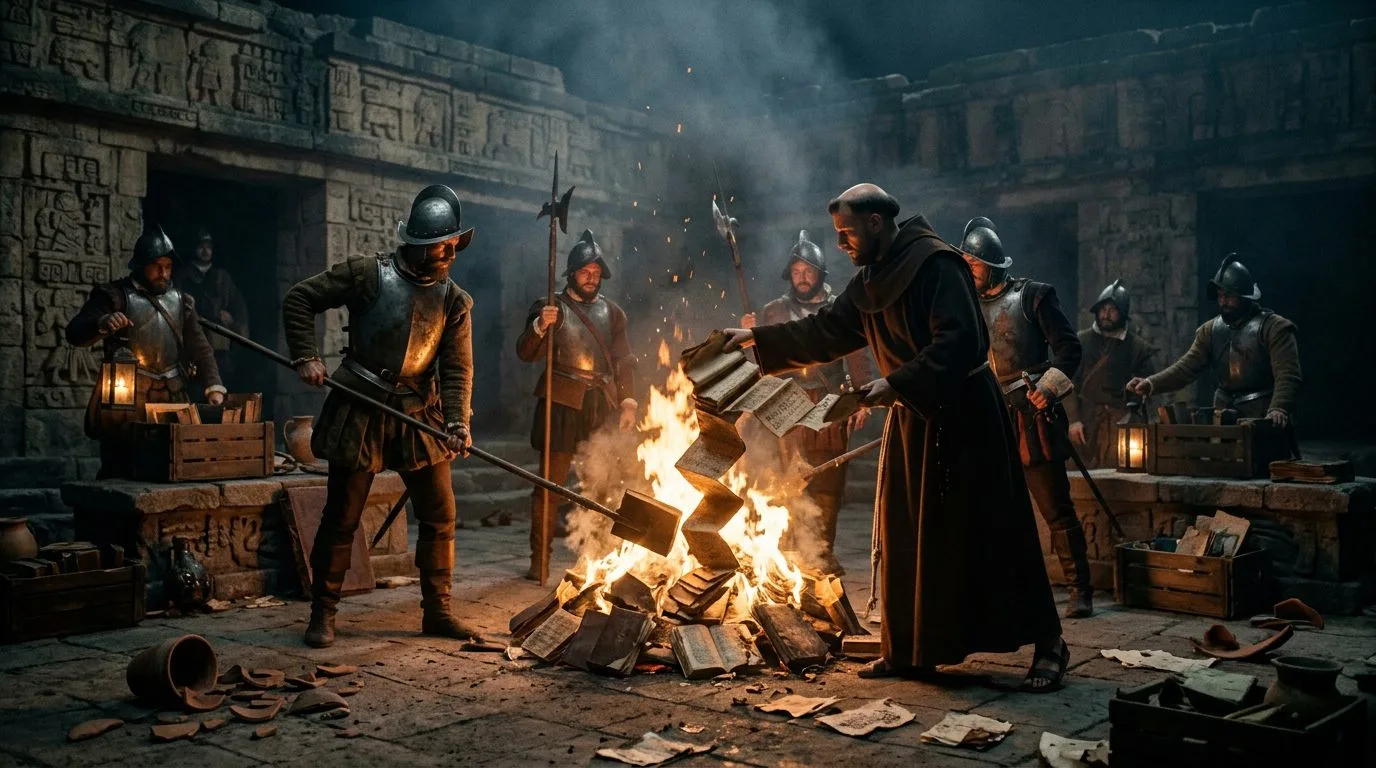
Spanish conquistadors destroyed Aztec codices and
Spanish missionaries systematically destroyed Aztec codices throughout the 1520s and 1530s, viewing their pictographic calendar systems as demonic. Franciscan friar Juan de Zumárraga personally ordered the burning of thousands of codices in Texcoco in 1530, calling them “works of the devil.” The Aztecs maintained extensive libraries documenting astronomy, history, tribute records, and religious ceremonies painted on bark paper and deerskin. Of hundreds of pre-Conquest codices, fewer than 20 survived—mostly because they’d been sent to Europe as curiosities before missionaries could destroy them. The loss means we’ll never fully understand Aztec science, particularly their sophisticated astronomical calculations that rivaled European knowledge of the era.
Source: britannica.com
Did You Know?
Did you know that after burning China’s books, Qin Shi Huang died from consuming mercury pills prescribed by the very alchemists whose texts survived his purge? Meanwhile, Diego de Landa’s detailed description of Mayan writing became the key that allowed later scholars to finally decipher the hieroglyphs—meaning the man who destroyed Mayan literature inadvertently preserved the knowledge to read what little survived. History’s greatest irony: the destroyers often became the only sources for what they erased.