
Throughout history, the most memorable victories weren’t always won on the battlefield—sometimes they were won by never letting the enemy reach it at all. These ten defensive strategies prove that brains often triumph over brawn in warfare.
1. Greek Fire: Constantinople’s Secret Weapon That Burned on Water
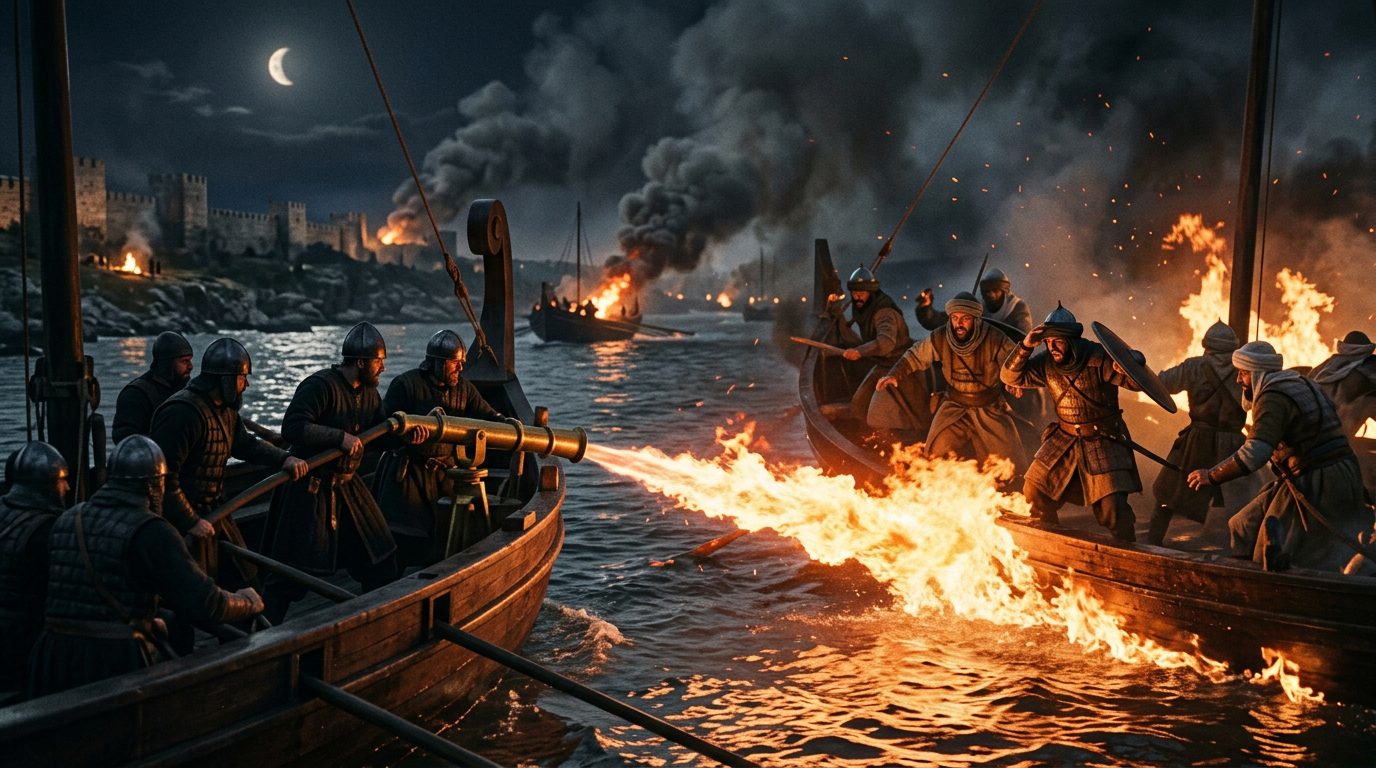
Greek Fire
In 674 CE, Byzantine engineers unveiled a terrifying naval weapon that would save Constantinople from Arab fleets for centuries: Greek Fire. This incendiary mixture ignited on contact with water and burned so intensely that seawater couldn’t extinguish it. The formula, containing naphtha and quicklime, was such a closely guarded state secret that even today historians debate its exact composition. During the Arab siege of 717-718 CE, Greek Fire destroyed entire enemy fleets as they approached the city walls. The Byzantines deployed it through bronze tubes mounted on ship bows, creating walls of flame that turned the Bosporus into a death trap for invaders.
Source: britannica.com
2. The Great Wall’s Beacon System: Ancient China’s 750-Mile Communication Network
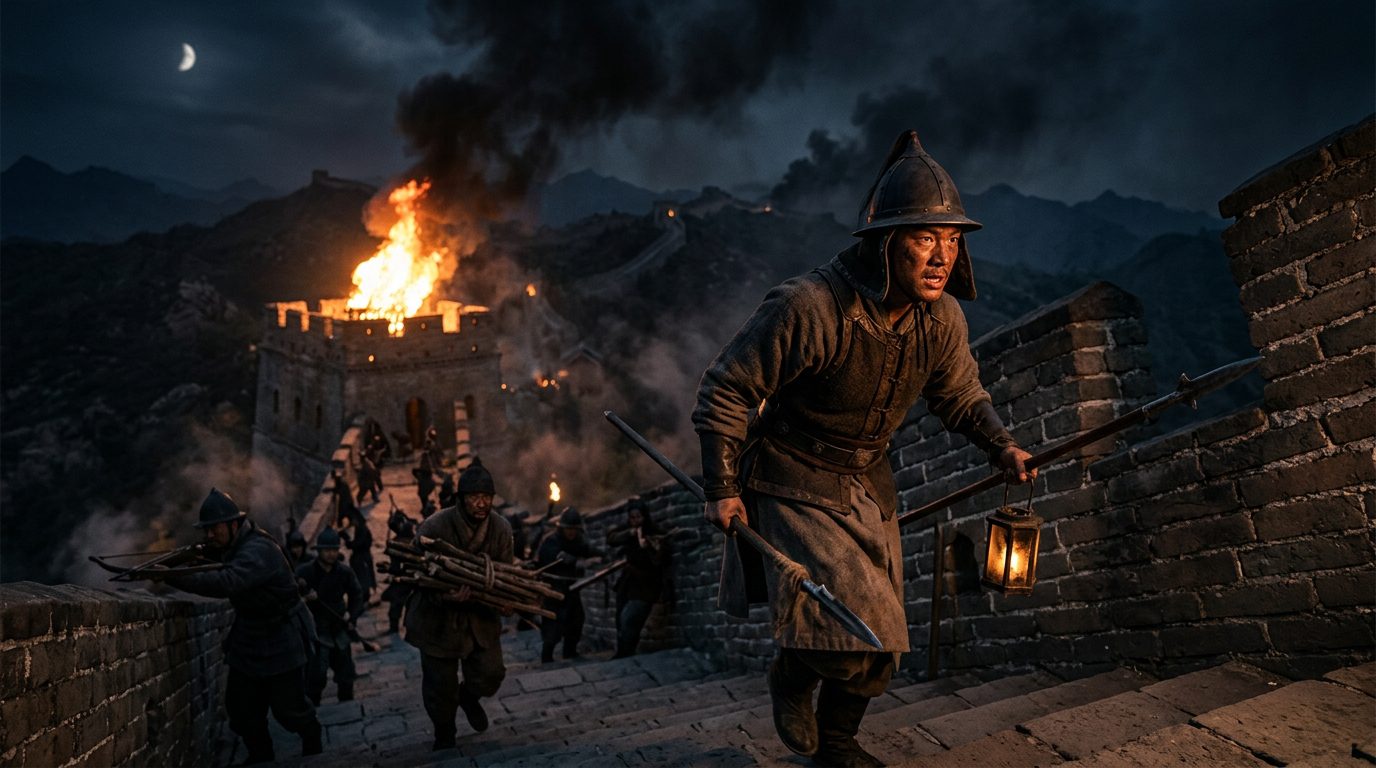
The Great Wall’s Beacon System
Built primarily during the Ming Dynasty (1368-1644 CE), the Great Wall‘s true genius wasn’t its physical barrier but its beacon tower communication system. Every 5 to 10 kilometers stood a watchtower equipped with wolf dung fires that produced thick smoke visible for miles. Guards could relay invasion warnings across 750 kilometers in just hours using a standardized signal code: one smoke plume meant 100 enemy soldiers, two meant 500, and three signaled 1,000 or more. This allowed Chinese armies to mobilize and reinforce threatened sections before invaders could breach defenses. In 1549 CE, this system detected a Mongol force of 30,000 warriors three days before they reached Beijing, enabling a successful counter-deployment.
Source: britannica.com
3. Swiss Pike Squares: The Hedgehog Formation That Defeated Noble Cavalry
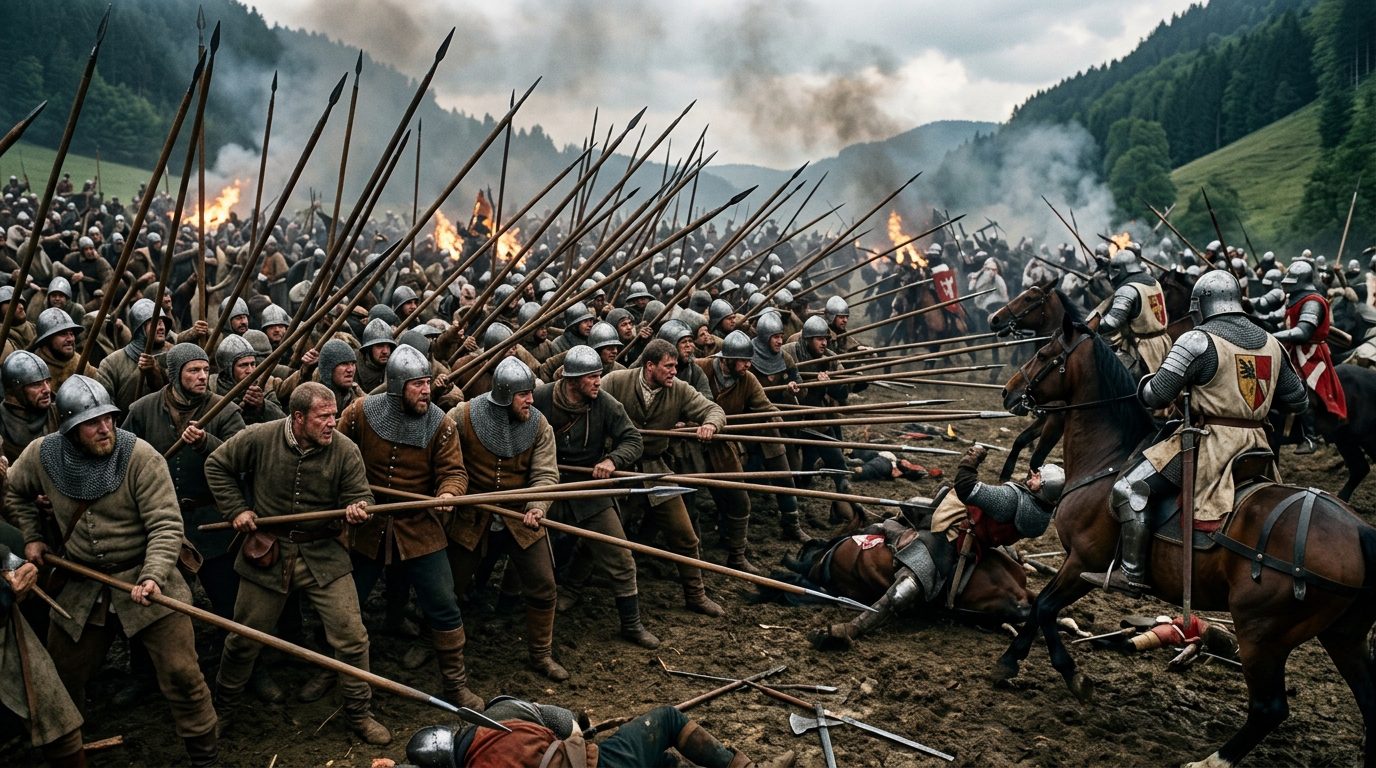
Swiss Pike Squares
At the Battle of Morgarten in 1315 CE, Swiss infantry unveiled a defensive formation that would dominate European warfare for 200 years. The pike square massed 6,000 men wielding 18-foot pikes in a bristling square formation, with the front five ranks pointing weapons outward at different angles. This created an impenetrable hedgehog that no cavalry charge could break. At Grandson in 1476 CE, 20,000 Swiss pikemen routed Charles the Bold‘s army of 30,000, killing only 12 of their own while slaughtering thousands of Burgundian knights. The formation’s success relied on rigorous drilling—each pikeman trained 300 hours annually to maintain perfect spacing and cohesion.
Source: britannica.com
4. Japanese Castle Moats: The Triple-Water Defense That Never Failed
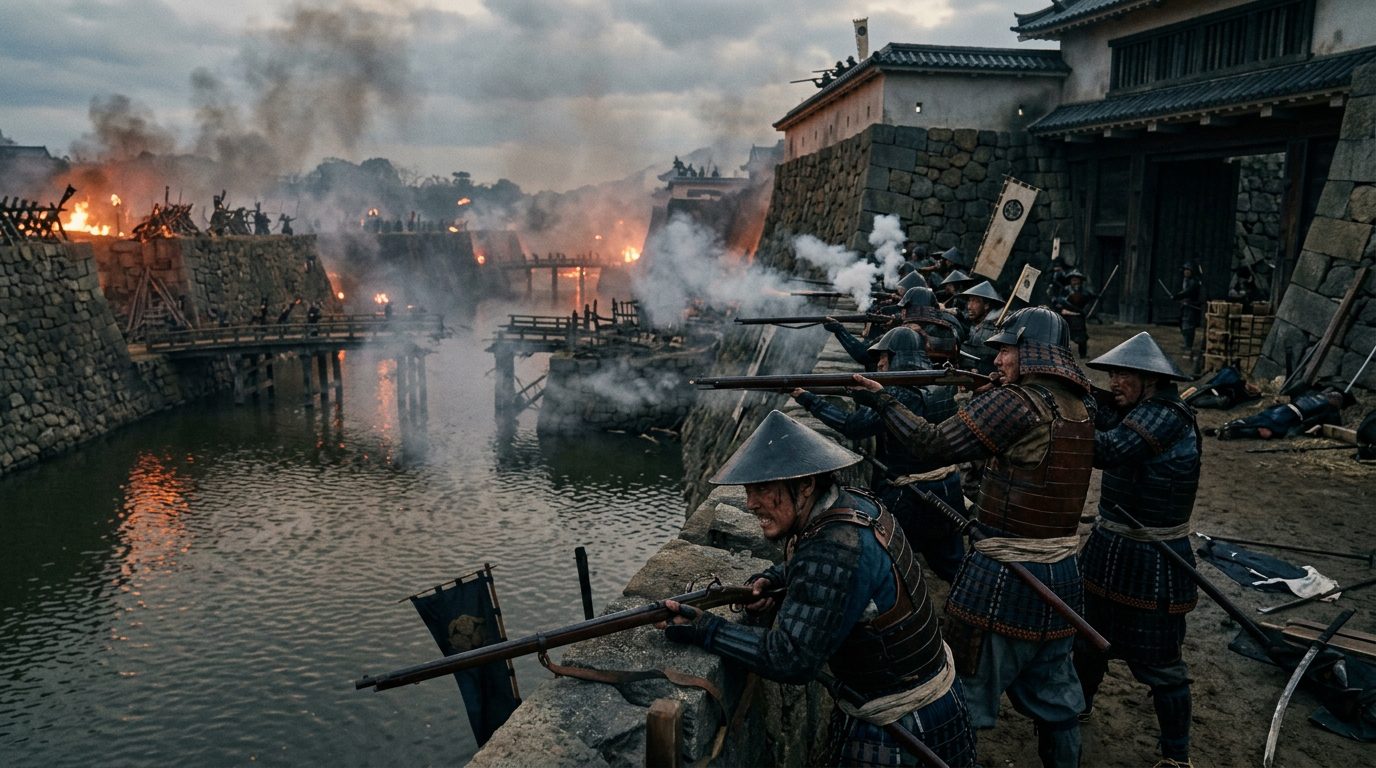
Japanese Castle Moats
Osaka Castle, completed in 1597 CE, featured a revolutionary three-tiered moat system totaling 75 meters wide that made siege virtually impossible. The outer moat measured 30 meters across and 5 meters deep, followed by a middle moat, then an inner moat surrounding 12-meter stone walls built at precise 75-degree angles. This angle prevented scaling and made stone walls immune to undermining because the angled base redistributed weight perfectly. During the 1614 Winter Siege, Tokugawa forces of 200,000 troops spent four months unable to breach these defenses. The castle’s designer, Todo Takatora, created walls using interlocking stones weighing up to 130 tons each, fitted so precisely that no mortar was needed.
Source: britannica.com
5. Roman Testudo: The Human Tank That Walked Through Arrow Storms
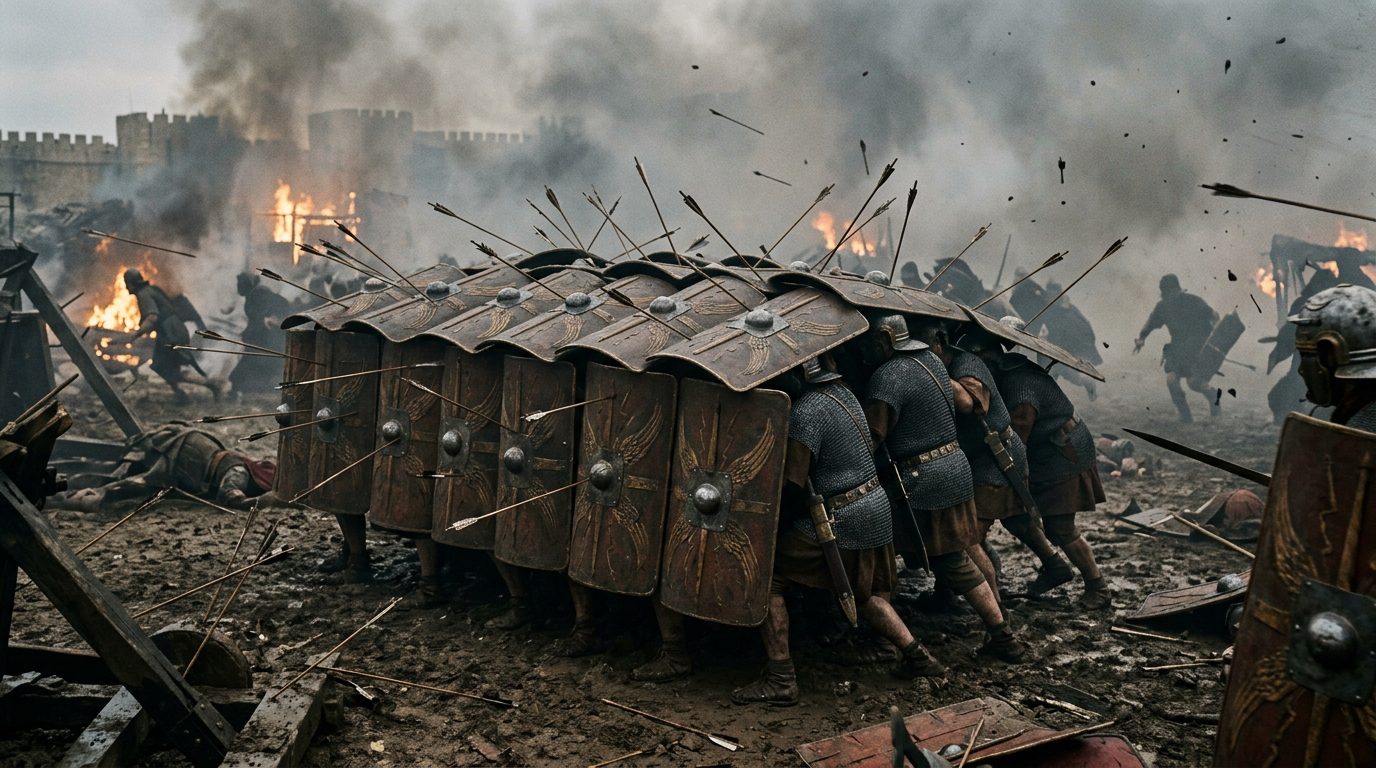
Roman Testudo
During the siege of Jerusalem in 70 CE, Roman legionaries demonstrated the testudo formation’s devastating effectiveness by advancing through storms of 10,000 arrows without losing a single man. Soldiers locked their rectangular scutum shields overhead and on all sides, creating an armored shell measuring 3 meters wide and 6 meters long. Each scutum weighed 10 kilograms and consisted of three layers of birch wood covered in leather and bronze, capable of stopping arrows, spears, and even small stones dropped from walls. The formation moved at 40 meters per minute, allowing siege towers and battering rams to reach enemy fortifications under complete protection from projectiles.
Source: britannica.com
6. Krak des Chevaliers: The Concentric Castle That Never Fell by Force
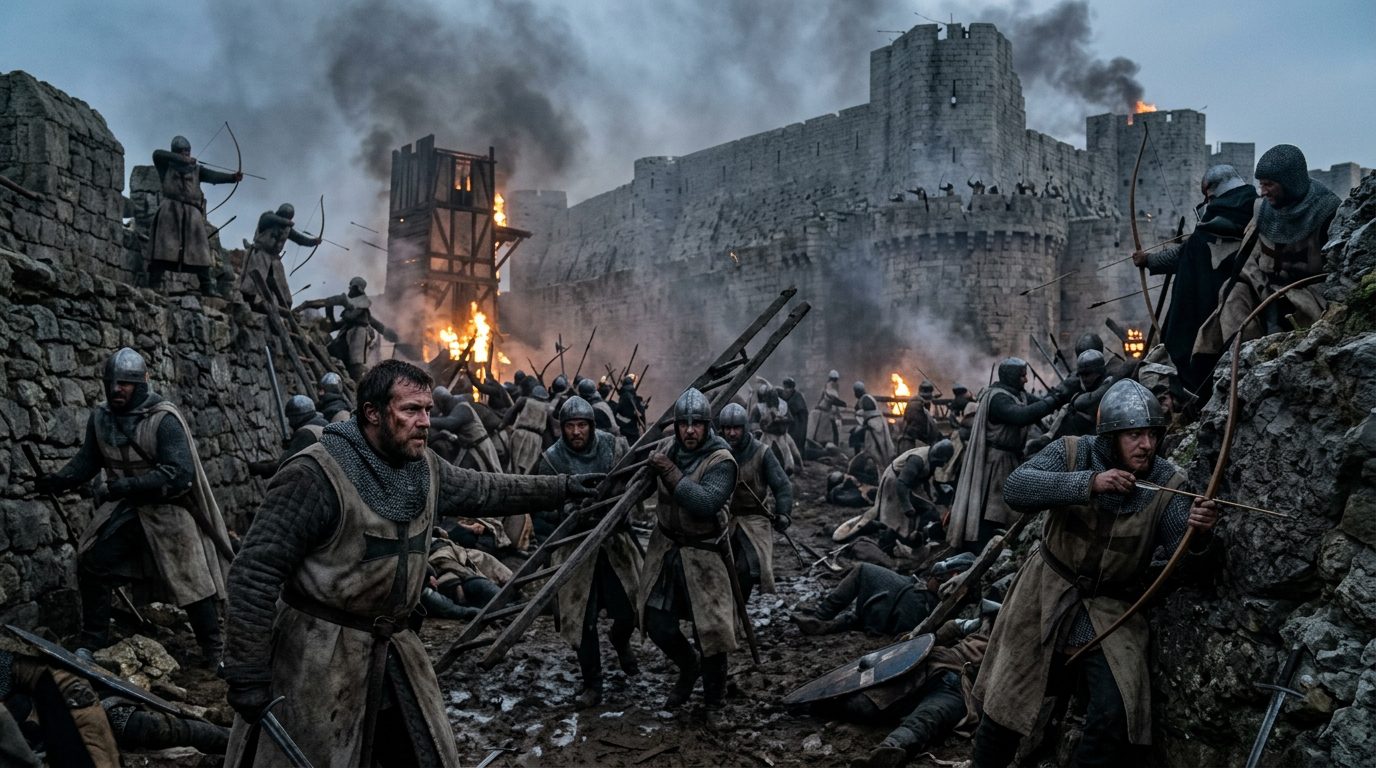
Krak des Chevaliers
Built by Crusaders in 1142 CE in Syria, Krak des Chevaliers pioneered concentric castle design with two complete fortress rings separated by 30 meters of killing ground. The outer wall stood 8 meters thick with thirteen towers, while the inner wall rose 10 meters higher with seven additional towers, creating overlapping fields of fire covering every approach. The castle’s 2,000-man garrison could withstand sieges indefinitely thanks to storage chambers holding five years of provisions and a windmill producing 500 kilograms of flour daily. Sultan Baibars besieged it in 1271 CE for 36 days but only captured it through forged letters, not force—the fortification itself remained impregnable.
Source: britannica.com
7. Korean Turtle Ships: The Ironclad Innovation That Routed Japan’s Navy
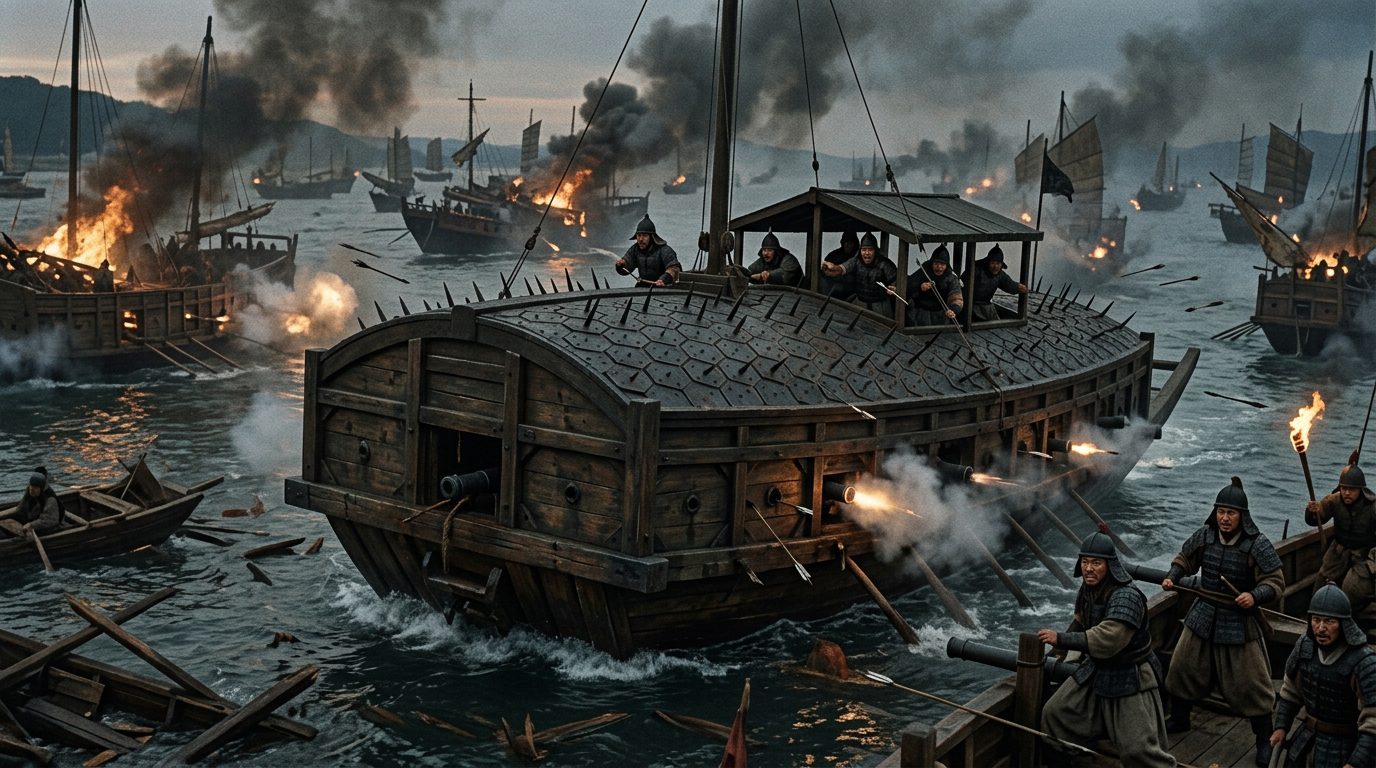
Korean Turtle Ships
Admiral Yi Sun-sin‘s turtle ships, deployed in 1592 CE during the Imjin War, featured the world’s first armored warship decks covered with hexagonal iron plates and spikes. The curved roof prevented Japanese boarders from climbing aboard while protecting 80 rowers and gunners operating 24 cannons. At the Battle of Hansan Island in 1592 CE, just 56 Korean ships including 5 turtle ships destroyed 130 Japanese vessels, killing 9,000 sailors while losing only 19 men. The ships measured 35 meters long, moved at 5 knots, and featured a dragon-head prow that emitted sulfuric smoke to obscure visibility and terrify enemies.
Source: britannica.com
8. Spartan Phalanx: The Human Wall That Held 300,000 Persians
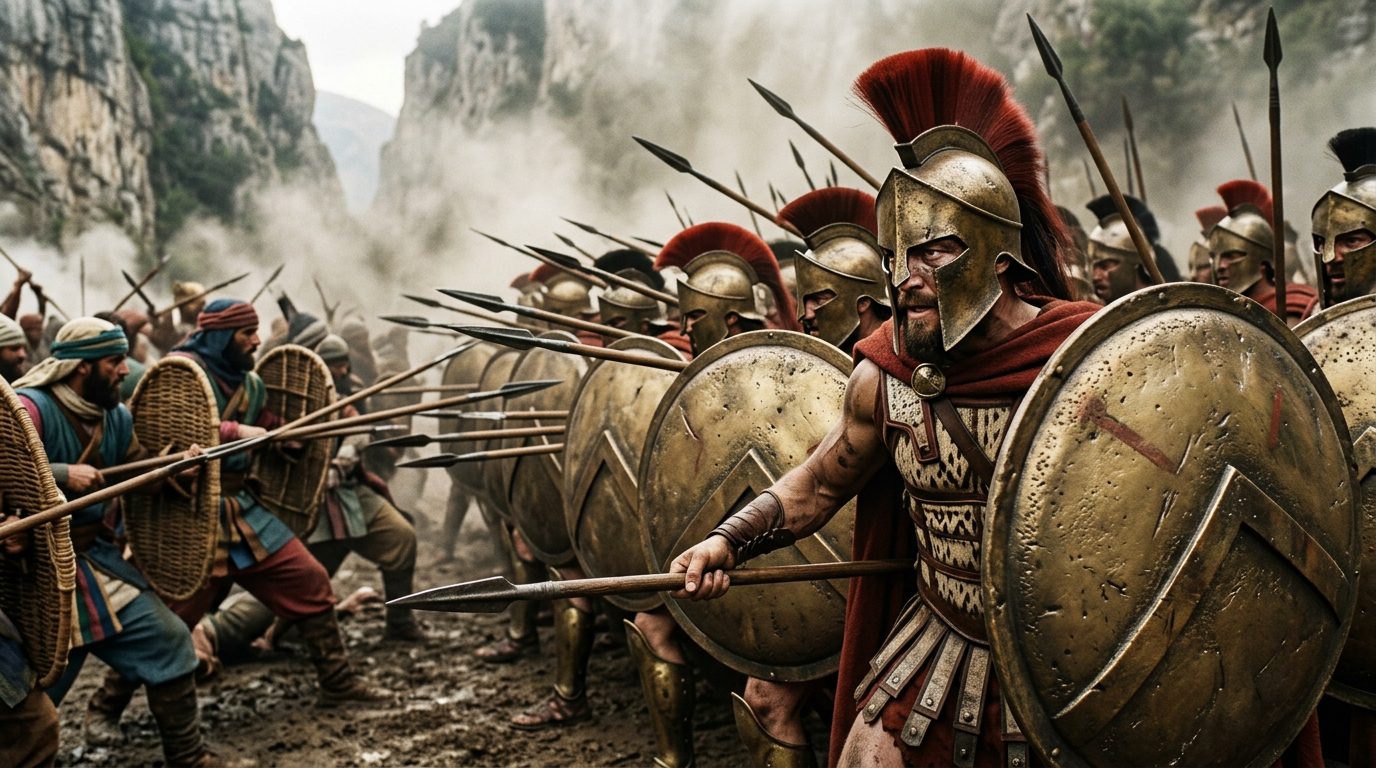
Spartan Phalanx
At Thermopylae in 480 BCE, 300 Spartans used the phalanx formation to hold a narrow pass against Xerxes‘ army for seven days. Each warrior carried an aspis shield weighing 7 kilograms and measuring 1 meter in diameter, locking it with his neighbor’s to create an unbreakable bronze wall. The phalanx stood 8 men deep, with warriors’ 2.5-meter spears creating a lethal hedge five rows thick. This formation functioned like a human tank—the front line absorbed attacks while rear ranks thrust spears through gaps. During the battle, the Spartans killed an estimated 20,000 Persians while losing only 2,000 Greeks before being flanked through a secret mountain path.
Source: britannica.com
9. Hadrian’s Wall: The 73-Mile Bluff That Controlled an Empire’s Border
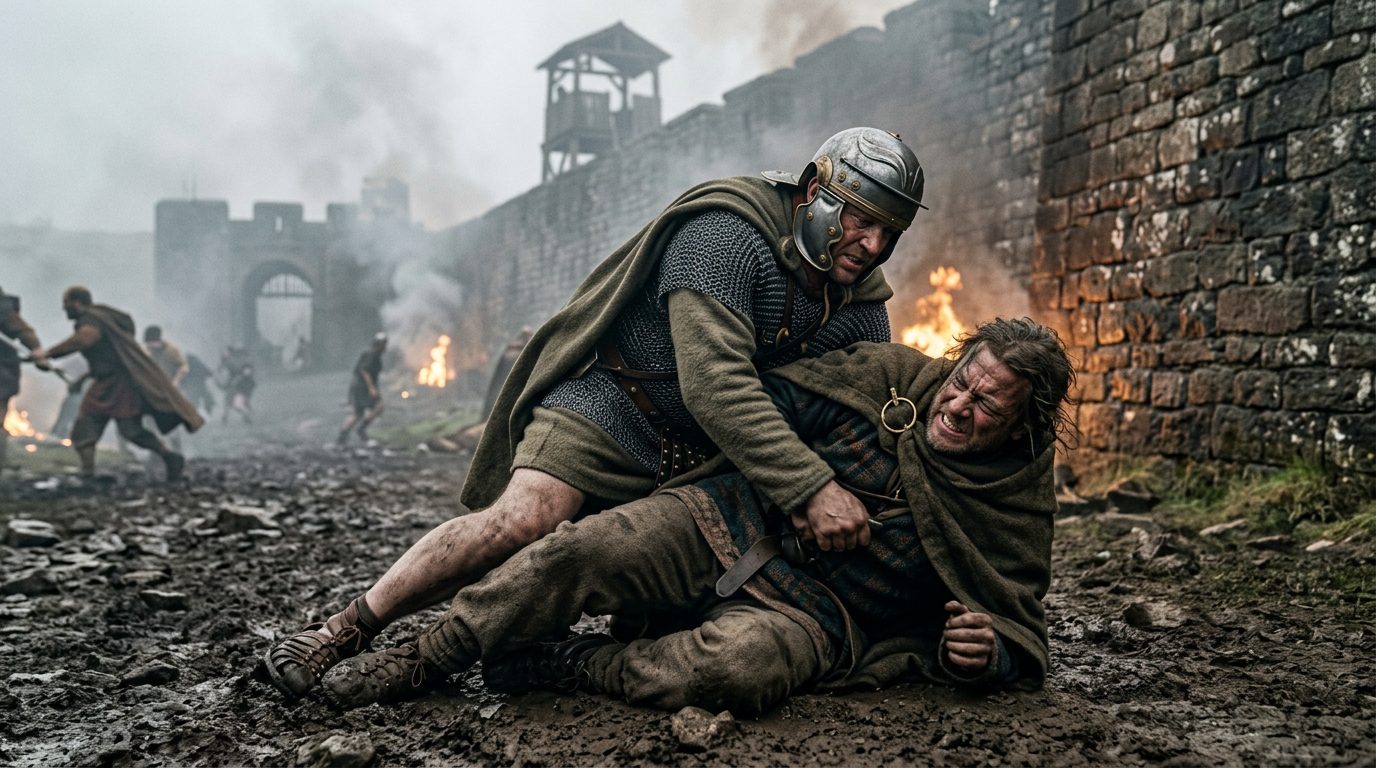
Hadrian’s Wall
Completed in 128 CE across northern Britain, Hadrian’s Wall served less as an impenetrable barrier than as history’s most sophisticated customs checkpoint and psychological deterrent. The 73-mile fortification stood 4.5 meters high and 3 meters thick, but its real power lay in 80 milecastles spaced every 1,500 meters, each garrisoned by 32 soldiers. The wall didn’t aim to stop invasions—it controlled movement and trade, forcing travelers through 17 major gates where Roman soldiers processed 500 people daily, collected taxes, and monitored tribal movements. This intelligence-gathering network prevented surprise attacks while projecting Roman power so effectively that Pictish tribes rarely tested it for 250 years.
Source: britannica.com
10. Byzantine Gold Diplomacy: The Defense Budget That Bought Peace
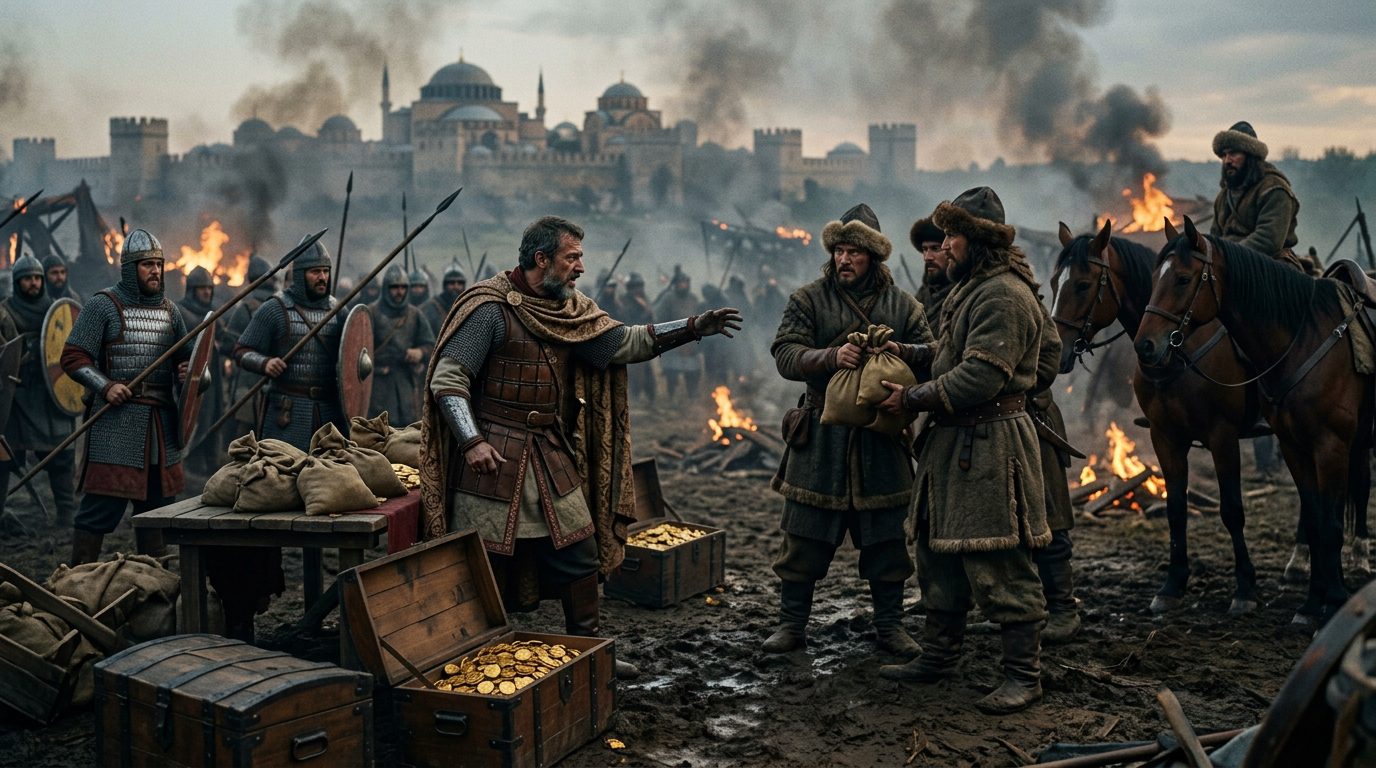
Byzantine Gold Diplomacy
Emperor Justinian II perfected defensive diplomacy in 705 CE by paying potential invaders to fight each other instead of Constantinople. The Byzantine Empire allocated 1,000 pounds of gold annually—equivalent to 45 million modern dollars—to bribe barbarian tribes, hiring Bulgars to fight Avars and Khazars to attack Arabs. This strategy proved remarkably cost-effective: one year of tribute payments cost less than one month of warfare. In 717 CE, Emperor Leo III paid 300 pounds of gold to Bulgar Khan Tervel, who attacked the Arab siege army from behind, killing 22,000 troops and forcing withdrawal. For four centuries, Byzantine gold payments prevented invasions that would have cost billions in modern currency to fight militarily.
Source: britannica.com
Did You Know?
Did You Know? The most successful defensive strategy in history never involved walls or weapons at all—Byzantine gold diplomacy kept Constantinople safe for 400 years at a fraction of the cost of maintaining armies. Even more surprising: Greek Fire’s formula was so secret that when the empire fell in 1453 CE, the recipe died with it, and modern scientists still can’t perfectly recreate this ancient weapon that burned on water.