
When enemy armies appeared on the horizon, medieval cities had mere hours to prepare for sieges that could last months. The difference between survival and massacre often came down to defensive innovations that turned stone walls into nearly impenetrable fortresses.
1. Murder Holes Turned Castle Ceilings Into Death Traps
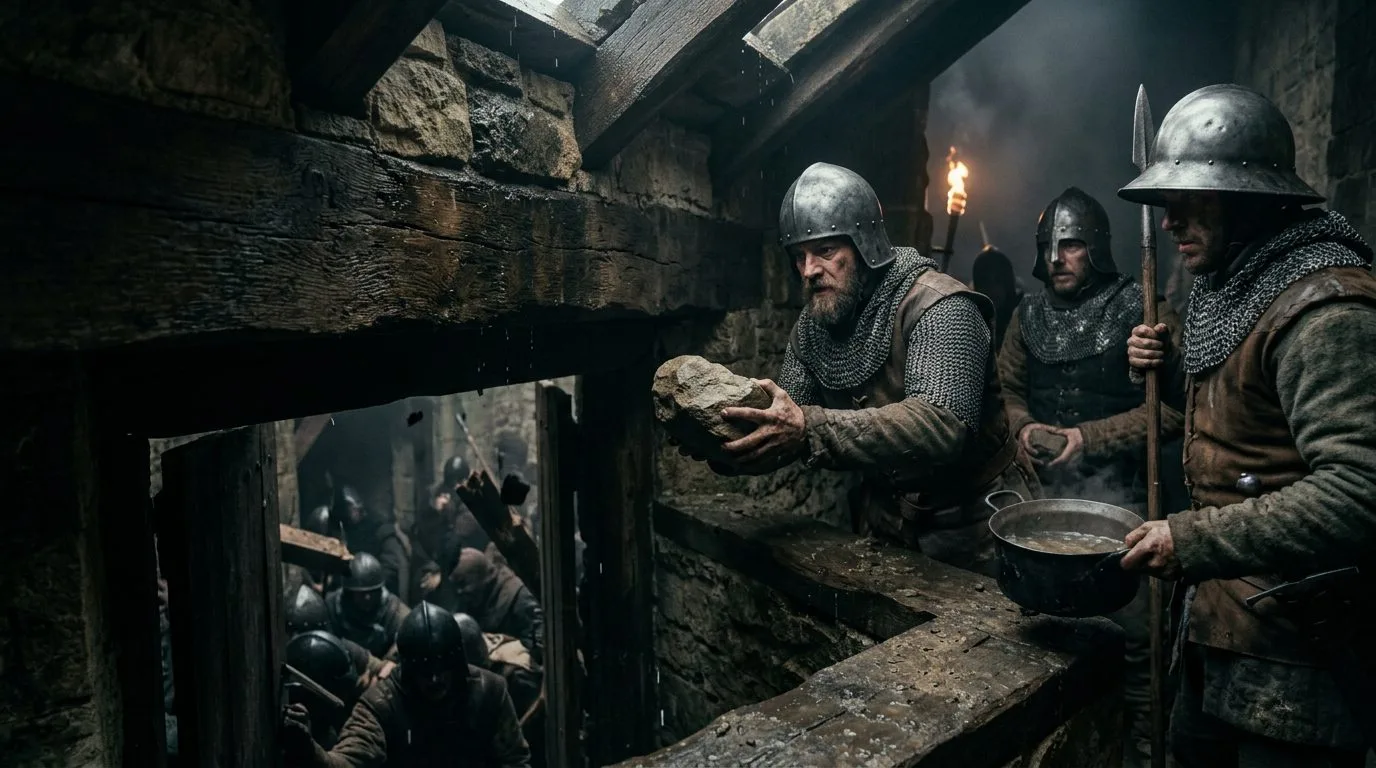
Defensive openings rained death on attackers
Defenders at Château de Pierrefonds in France could rain destruction through floor openings called murder holes without ever exposing themselves to enemy fire. These strategic gaps, typically measuring 12 to 18 inches wide, were cut into the stone vaulting above gateways and passages. During the siege of Château Gaillard in 1204, French soldiers poured quicklime through murder holes, blinding and burning attackers trapped in the confined space below. The machicolations jutting from castle walls worked similarly, creating covered galleries where defenders could drop stones, boiling liquids, or burning materials straight down onto enemies attempting to breach walls or gates.
Source: britannica.com
2. Concentric Walls Made Castles Nearly Impossible to Breach

Medieval fortress design with layered defensive
The Tower of London’s concentric design, completed under Edward I in 1285, featured two complete circuits of walls that turned the fortress into a nightmare for attackers. The outer wall stood 20 feet high while the inner wall towered at 40 feet, creating a deadly killing ground called the ward between them. If enemies breached the first wall, they found themselves trapped in a narrow space with defenders firing down from both sides. Krak des Chevaliers in Syria perfected this system with walls up to 30 feet thick and three separate defensive rings. Any army that penetrated one layer had to regroup and mount an entirely new assault while facing concentrated fire from multiple directions.
Source: britannica.com
3. Boiling Sand Caused More Agony Than Any Other Weapon
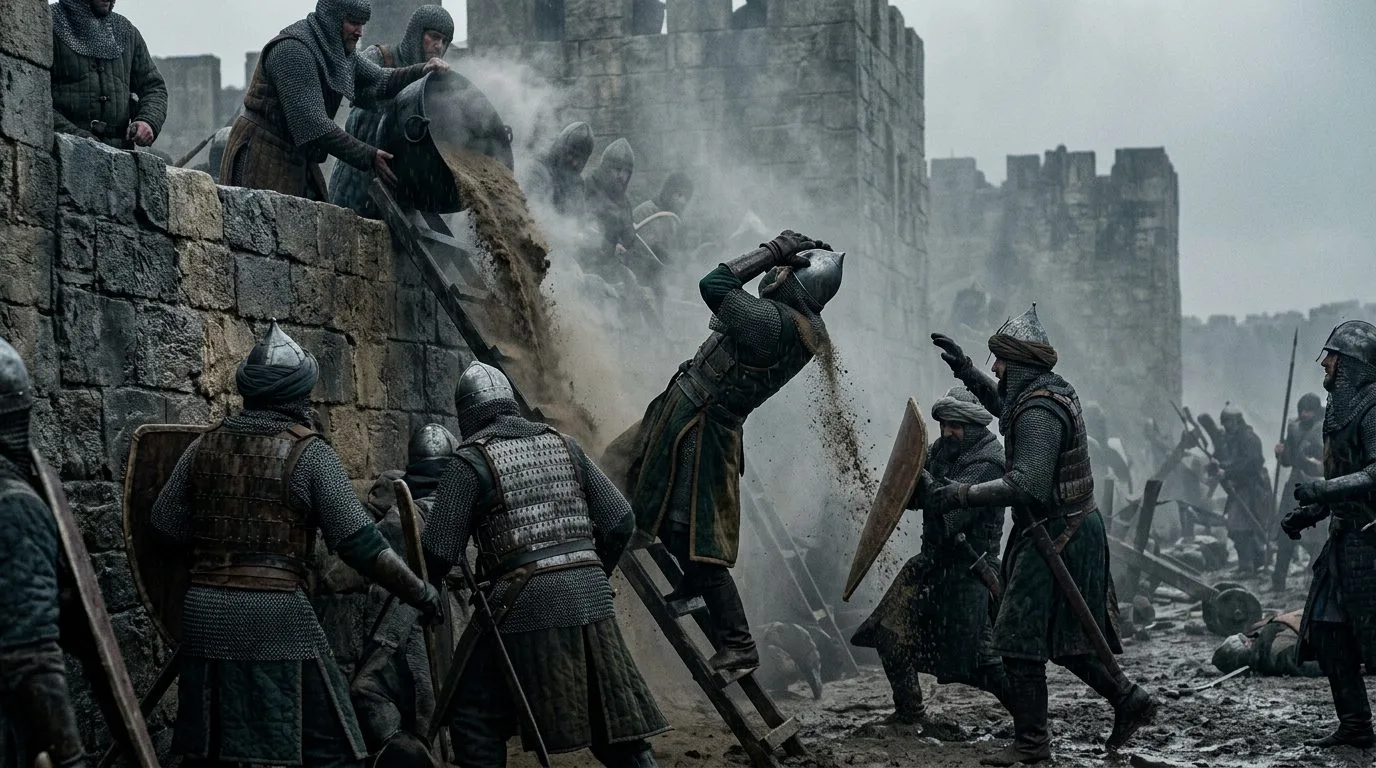
Extreme heat turned sand into a deadly weapon.
During the siege of Acre in 1291, defenders heated sand to scorching temperatures and poured it on Mamluk attackers, causing injuries far worse than boiling oil. The superheated grains, reaching over 1,000 degrees Fahrenheit, slipped through gaps in armor and stuck to exposed skin, continuing to burn for minutes. Unlike oil which could be wiped away, sand worked its way into chainmail links and cloth padding where it was impossible to remove quickly. Chronicles from the Crusades report that soldiers struck by boiling sand would tear off their own armor in desperation, leaving them completely vulnerable. This technique was particularly effective and required far less fuel than heating large quantities of oil.
Source: history.com
4. Arrow Loops Were Engineered for Perfect Crossbow Angles
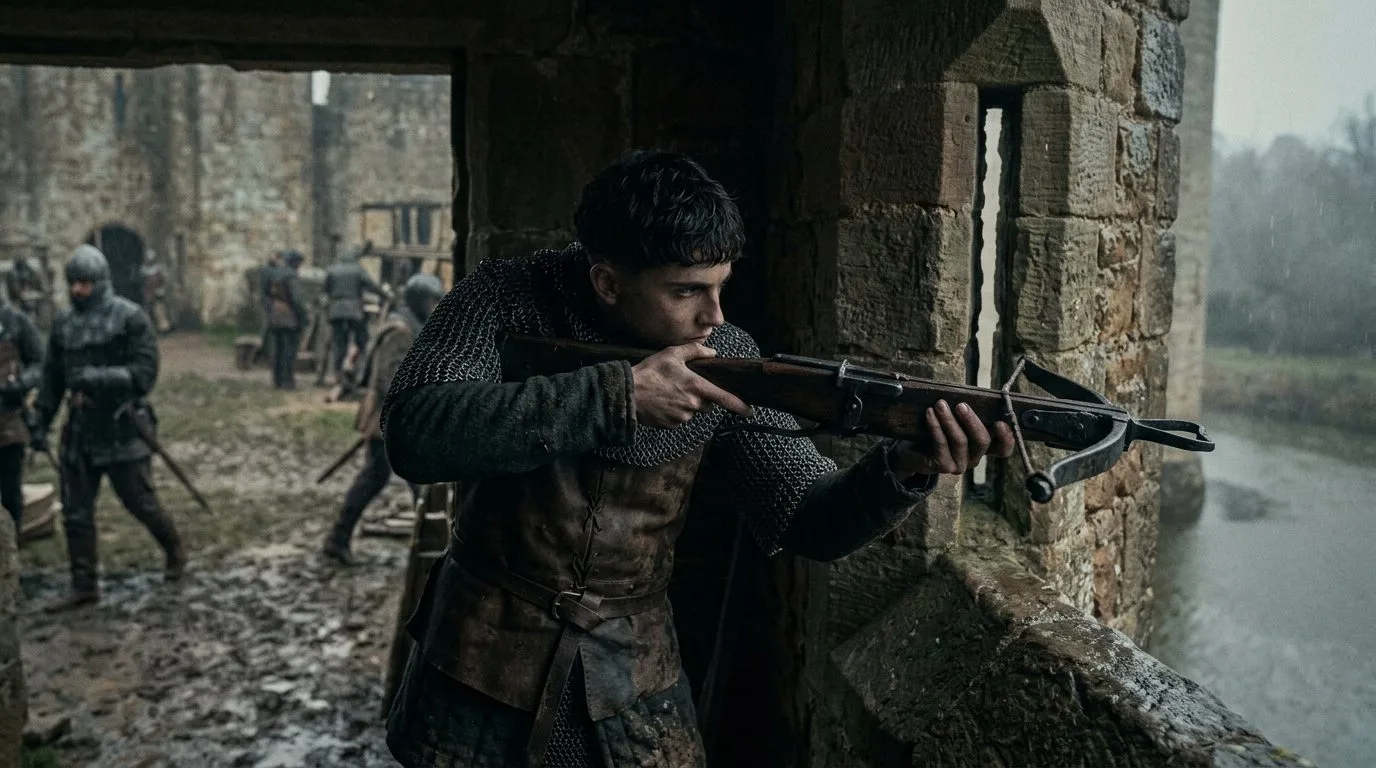
Narrow medieval slits designed for maximum arrow
The arrow loops at Bodiam Castle, constructed in 1385, featured precise internal dimensions that allowed crossbowmen to fire at 90-degree angles while remaining almost completely protected. These narrow slits measured just 3 inches wide on the exterior but flared to 3 feet inside, giving defenders a massive firing range while presenting attackers with an impossible target. Each loop was positioned exactly 6 feet apart, ensuring overlapping fields of fire that left no blind spots. The cross-shaped design allowed both horizontal and vertical aiming, and the stone depth of 8 to 10 feet meant enemy arrows had virtually no chance of penetrating. A single skilled crossbowman could control an approach corridor 50 yards wide.
Source: britannica.com
5. Hidden Moat Stakes Drowned Attackers in Darkness
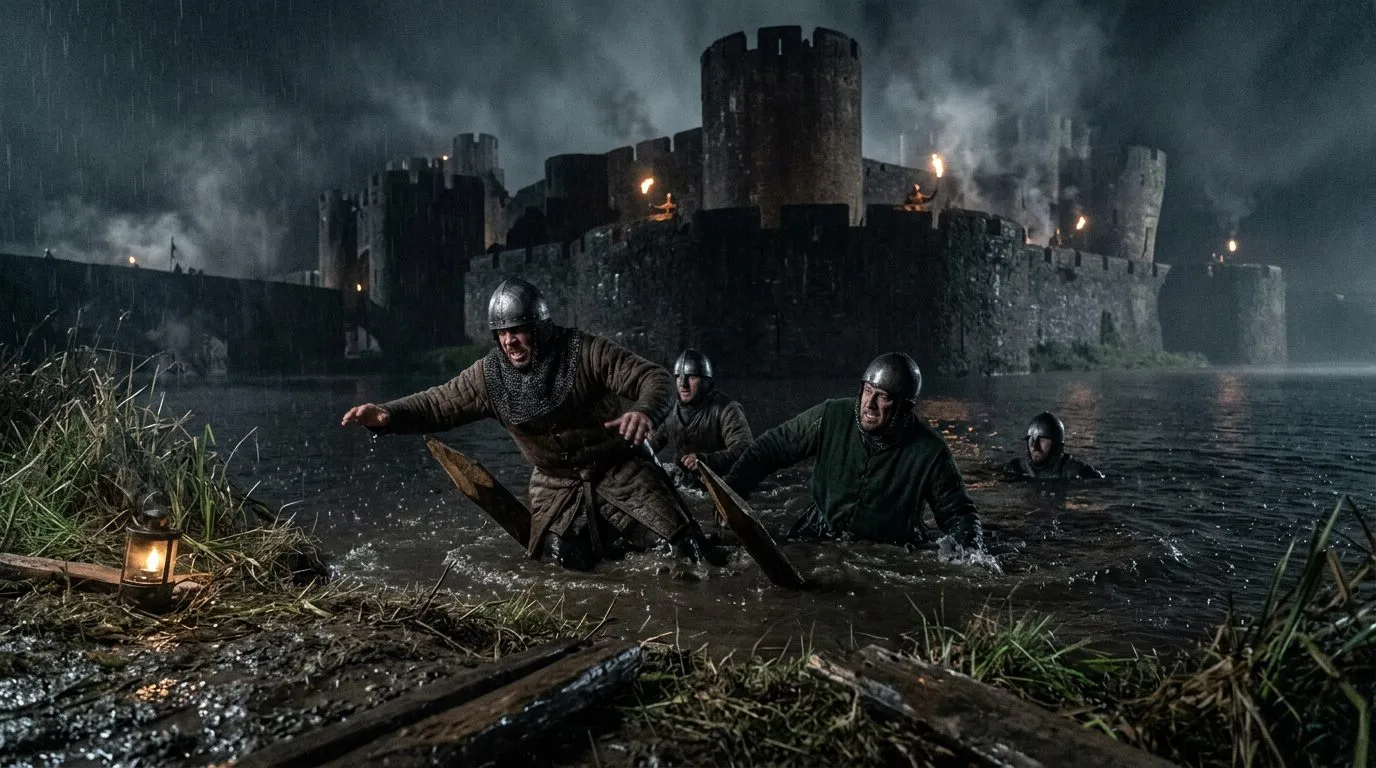
Hidden Moat Stakes Drowned Attackers in Darkness
The moat surrounding Caerphilly Castle in Wales, flooded in 1271, concealed sharpened wooden stakes positioned 2 feet below the water’s surface that impaled anyone attempting to swim or wade across. These underwater obstacles, called caltrop stakes, were arranged in irregular patterns so attackers couldn’t simply memorize safe routes. The moat itself stretched 30 acres, making it the largest in Britain, and defenders maintained a depth of at least 8 feet to prevent enemies from simply walking through. Engineers also installed angled stakes pointing downstream to catch attackers attempting night crossings. The murky water made detection impossible, and medieval armies lost hundreds of soldiers to these hidden defenses before abandoning assault attempts.
Source: britannica.com
6. Bent Passages Trapped Attackers in Deadly Ambush Zones
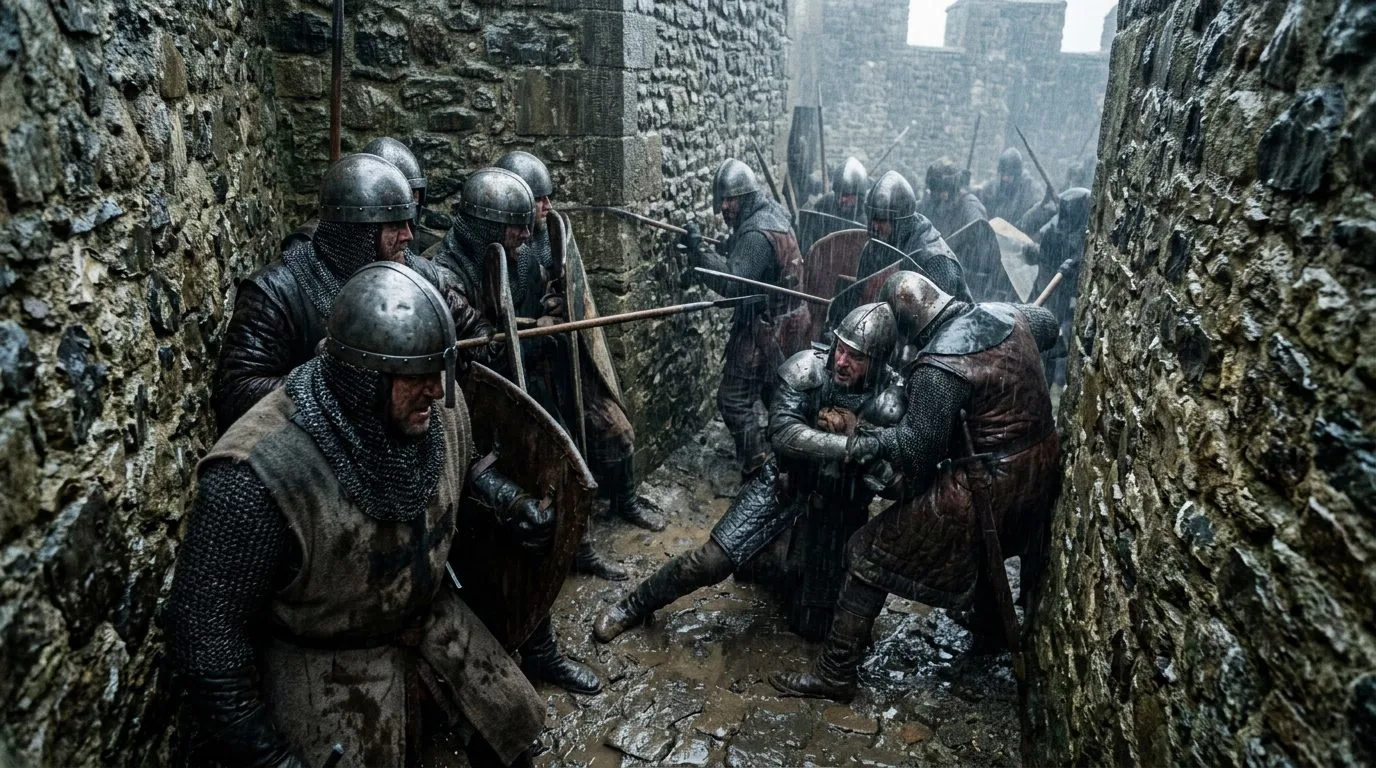
Medieval fortress design used winding corridors
Dover Castle’s gate design from 1180 forced attackers through a serpentine passage that turned 90 degrees three times before reaching the interior, creating perfect killing zones at each corner. The narrow corridor measured only 8 feet wide, preventing any formation tactics and forcing enemies into single file. Each turn positioned attackers directly in front of murder holes and arrow loops while exposing their vulnerable right side, which typically held the sword and remained unprotected by shields. The final turn placed a second gate and portcullis, meaning attackers had to breach multiple barriers while defenders fired from above. This maze-like approach could turn a 100-man assault force into a disorganized mob within minutes.
Source: britannica.com
7. Early Cannons Revolutionized Battlements in the 1320s

Cannons transformed medieval fortifications
The first gunpowder weapons mounted on castle walls appeared at Edinburgh Castle around 1314, firing crude stone balls that could kill a dozen men with a single shot. These early bombards, weighing up to 300 pounds, were positioned on reinforced battlements with firing ports cut specifically for their barrels. By 1346, English forces at the Battle of Crécy deployed small cannons called ribaulds that fired clusters of bolts, creating deadly anti-personnel weapons. The psychological impact proved as valuable as the physical damage since the thunderous noise and smoke terrified horses and inexperienced troops. Castle designs began incorporating artillery platforms by 1370, with walls thickened to 15 feet to support the weight and absorb recoil.
Source: britannica.com
8. Sally Ports Enabled Devastating Surprise Counter-Attacks
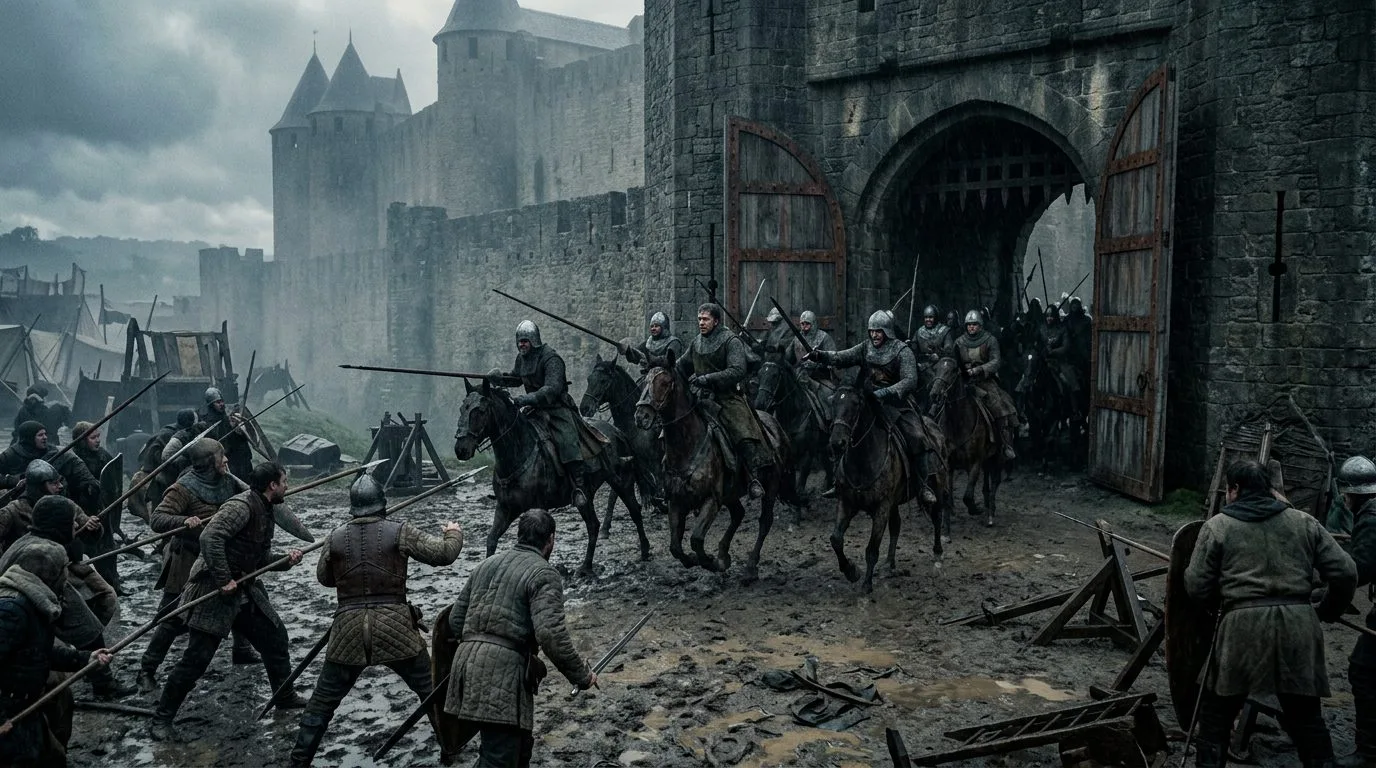
Hidden gates allowed swift defensive strikes.
Carcassonne’s fortifications included hidden sally ports, small reinforced doors that allowed 20 to 30 mounted knights to burst out unexpectedly and strike besieging forces from behind. These concealed exits, typically measuring 6 feet high and 4 feet wide, were positioned in walls facing away from main siege camps. During the siege of 1240, defenders used sally ports to destroy siege engines and burn supply wagons before retreating back inside. The element of surprise proved devastating since attackers focused their attention on main gates and walls. Timing was critical—defenders would wait until enemy troops were exhausted or distracted during meal times, then strike with fully rested cavalry in coordinated hit-and-run attacks that could break siege morale.
Source: britannica.com
9. Castle Architecture Itself Weaponized Fear and Intimidation
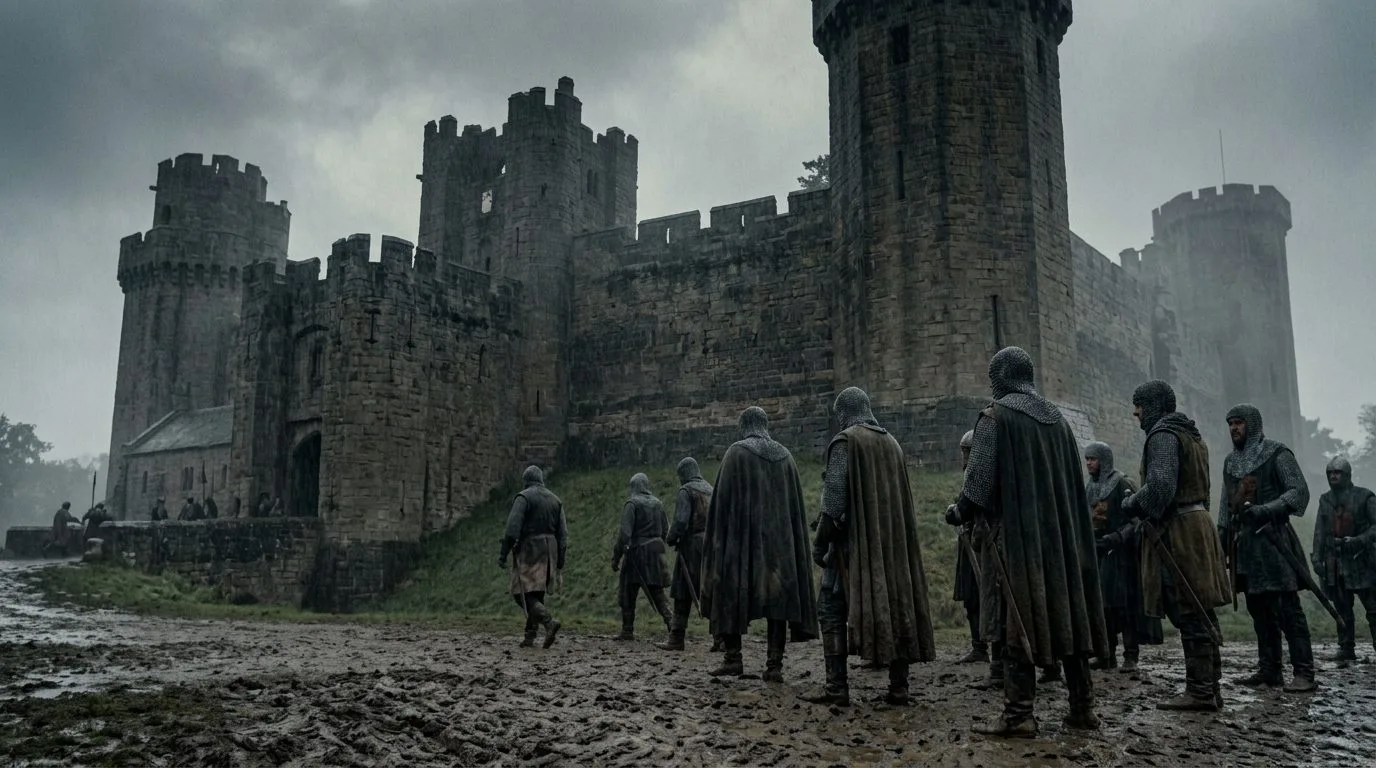
Imposing stone fortresses designed to dominate
Warwick Castle, rebuilt in 1350, featured towers deliberately designed to loom 128 feet high, creating an overwhelming sense of impossibility for attackers approaching across flat terrain. Medieval architects understood that psychological defeat could prevent sieges entirely, so they incorporated features like blood-red paint on gates, carved demons on battlements, and exaggerated heights that made walls appear unscalable. The strategy worked—chronicles record that armies sometimes retreated after merely viewing certain fortresses. Conwy Castle’s eight massive towers were positioned to be visible from 12 miles away, advertising defensive strength long before enemies arrived. Even interior spaces were designed to intimidate, with great halls built to showcase wealth and power to visiting rivals.
Source: britannica.com
10. Underground Cisterns Stored Months of Drinking Water
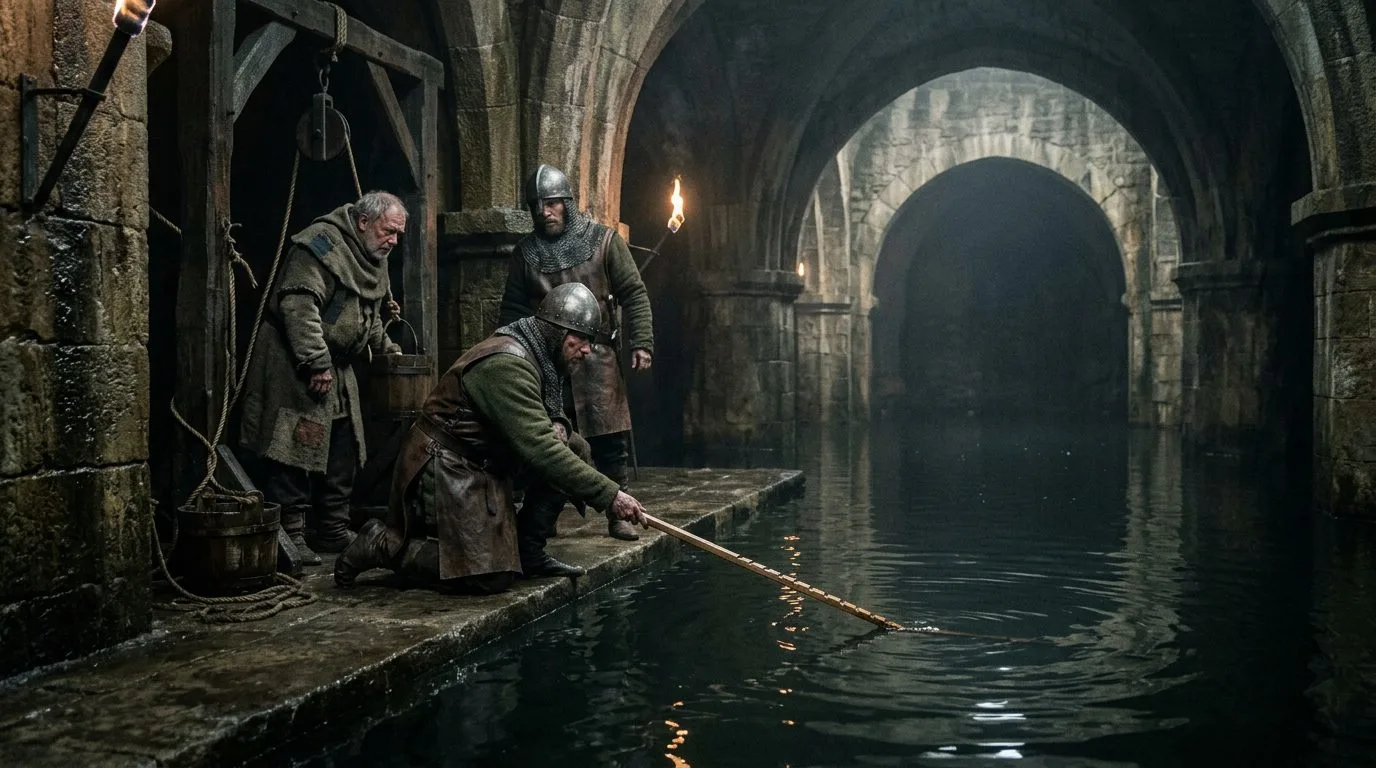
Ancient cisterns preserved vital water supplies
The cistern beneath Beaumaris Castle, constructed in 1295, held over 40,000 gallons of fresh water collected from rainfall through an elaborate system of gutters and filters. These underground chambers, carved 30 feet into bedrock, maintained cool temperatures that prevented bacterial growth and kept water drinkable for six months or longer. Engineers designed stepped access tunnels allowing workers to descend and clean the cistern even when partially full. Some castles like Château de Chinon incorporated natural springs into their defenses, guaranteeing unlimited water supplies. Wells were typically poisoned by attackers, so these hidden cisterns represented the difference between surrender in weeks versus enduring year-long sieges. Garrison commanders rationed water at 2 quarts per person daily during emergencies.
Source: britannica.com
Did You Know?
The most ingenious medieval defense wasn’t a weapon at all—it was the deliberate placement of latrines that emptied directly onto sections of wall where attackers had to climb, forcing besieging soldiers to scale surfaces covered in human waste. This disgustingly effective tactic caused more infections and disease among assault forces than actual combat injuries, proving that medieval engineers understood biological warfare centuries before the term existed.
Continue Exploring
For the offensive side of medieval warfare, see our deep dive on 15 deadly medieval weapons that revolutionized warfare — covering the trebuchets, ballistae, and siege towers that forced these defensive innovations in the first place.