
Long before globalization, desert oasis cities made intercontinental commerce possible. These urban centers provided water, security, and markets where merchants from Chang’an to Constantinople exchanged goods and ideas that transformed civilizations.
1. Samarkand: The Sogdian Pearl of Central Asia
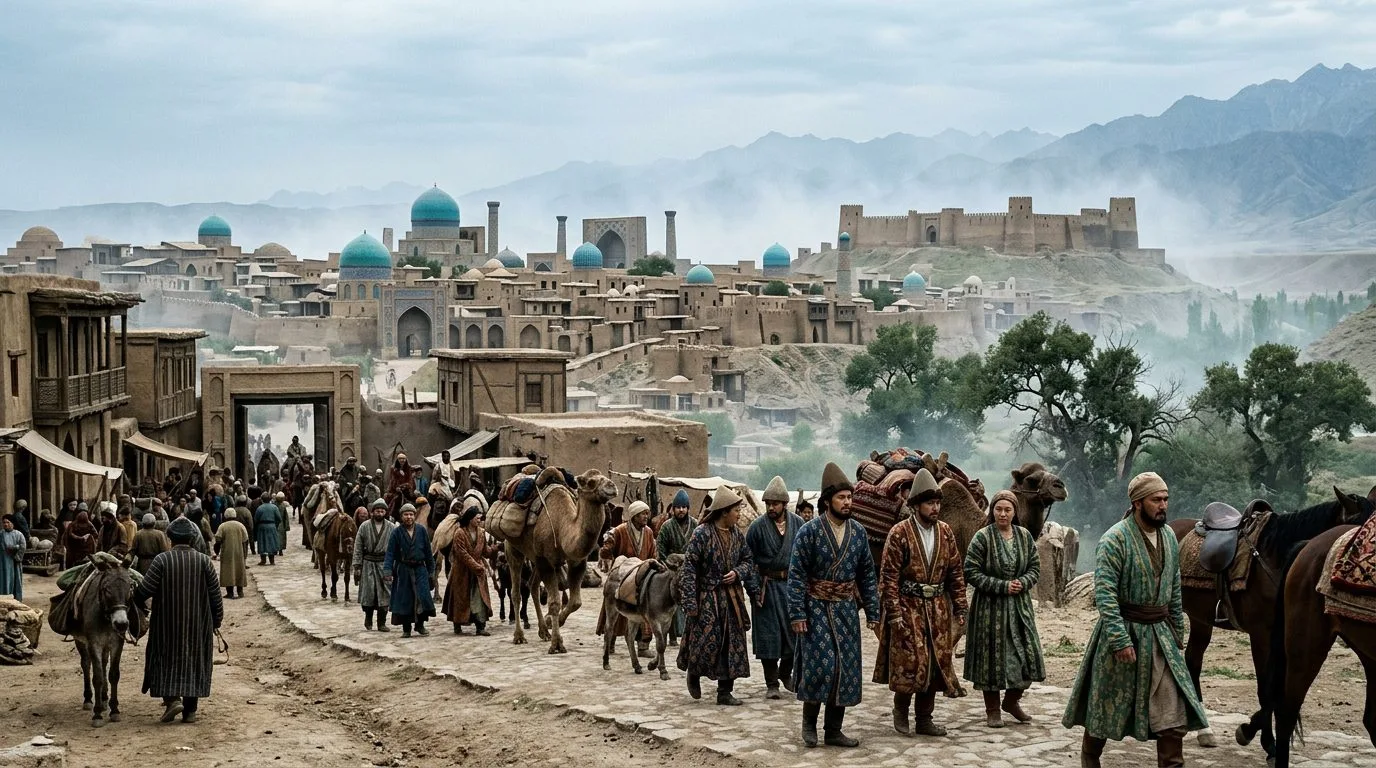
Samarkand: The Sogdian Pearl of Central Asia
Samarkand controlled Silk Road traffic for over 2,000 years, with Sogdian merchants establishing trading colonies from the Mediterranean to China. By the 6th century CE, this oasis city housed approximately 500,000 residents and operated markets selling goods from 30 different nations. The Sogdian language became the lingua franca of Silk Road commerce, much like English today. Samarkand’s strategic position where routes from China, India, and Persia converged made it the wealthiest city between Baghdad and Beijing, with caravanserais accommodating up to 1,500 merchants simultaneously.
Source: britannica.com
2. Kashgar: Where Three Empires Met
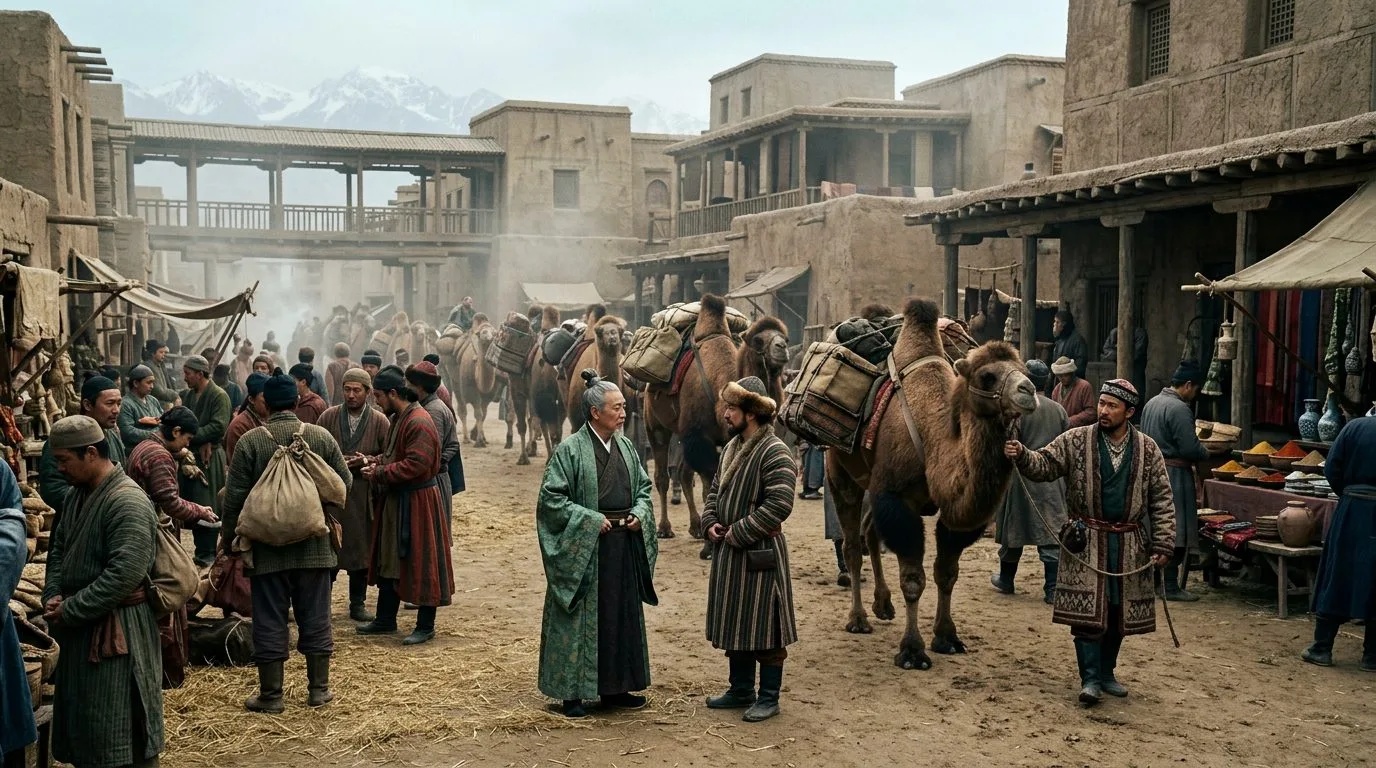
Kashgar: Where Three Empires Met
Kashgar stood at the Tarim Basin’s western edge where routes split around the Taklamakan Desert‘s deadly expanse. During the Tang Dynasty in 640 CE, Chinese administrators recorded 3,000 camels arriving weekly during peak trading season. The city’s Sunday Bazaar, established in the 8th century CE, became the largest market in Central Asia, with over 50,000 traders gathering to exchange horses, jade, and spices. Kashgar’s position made it contested territory—Chinese, Tibetan, and Islamic empires each controlled it at different periods, recognizing that whoever held Kashgar controlled access to both China and the West.
Source: britannica.com
3. Dunhuang: The Gateway of Buddhist Enlightenment
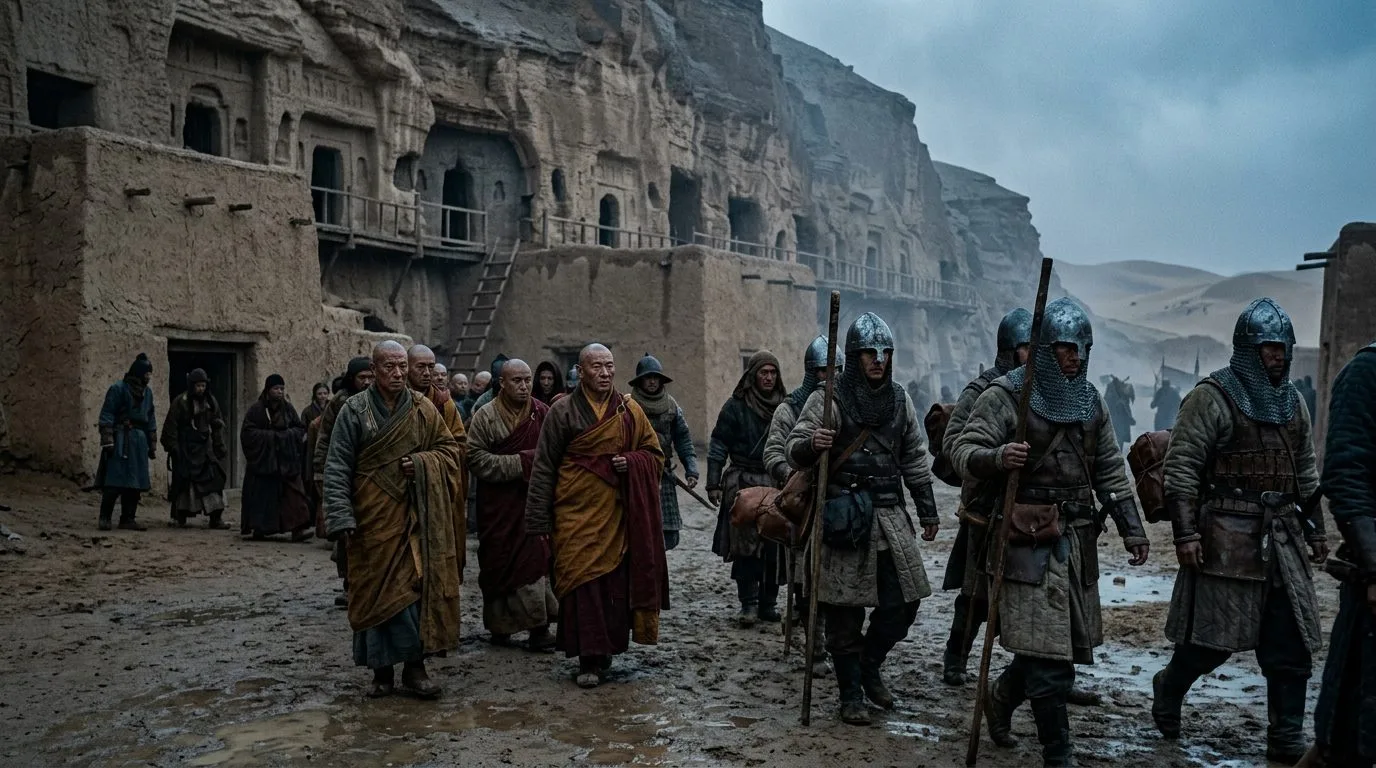
Dunhuang: The Gateway of Buddhist Enlightenment
Dunhuang transformed from a military garrison in 111 BCE into the Silk Road’s most important religious center. The Mogao Caves, begun in 366 CE, eventually contained 492 temples decorated by artists from across Asia. Buddhist monk Xuanzang stopped here in 629 CE during his famous journey to India, joining thousands of pilgrims who used Dunhuang as a spiritual waystation. Merchants stored over 50,000 manuscripts in Cave 17, sealed in 1006 CE and rediscovered in 1900, preserving texts in 17 different languages that documented everything from Buddhist sutras to commercial contracts.
Source: britannica.com
4. Bukhara: The Pillar of Persian Learning
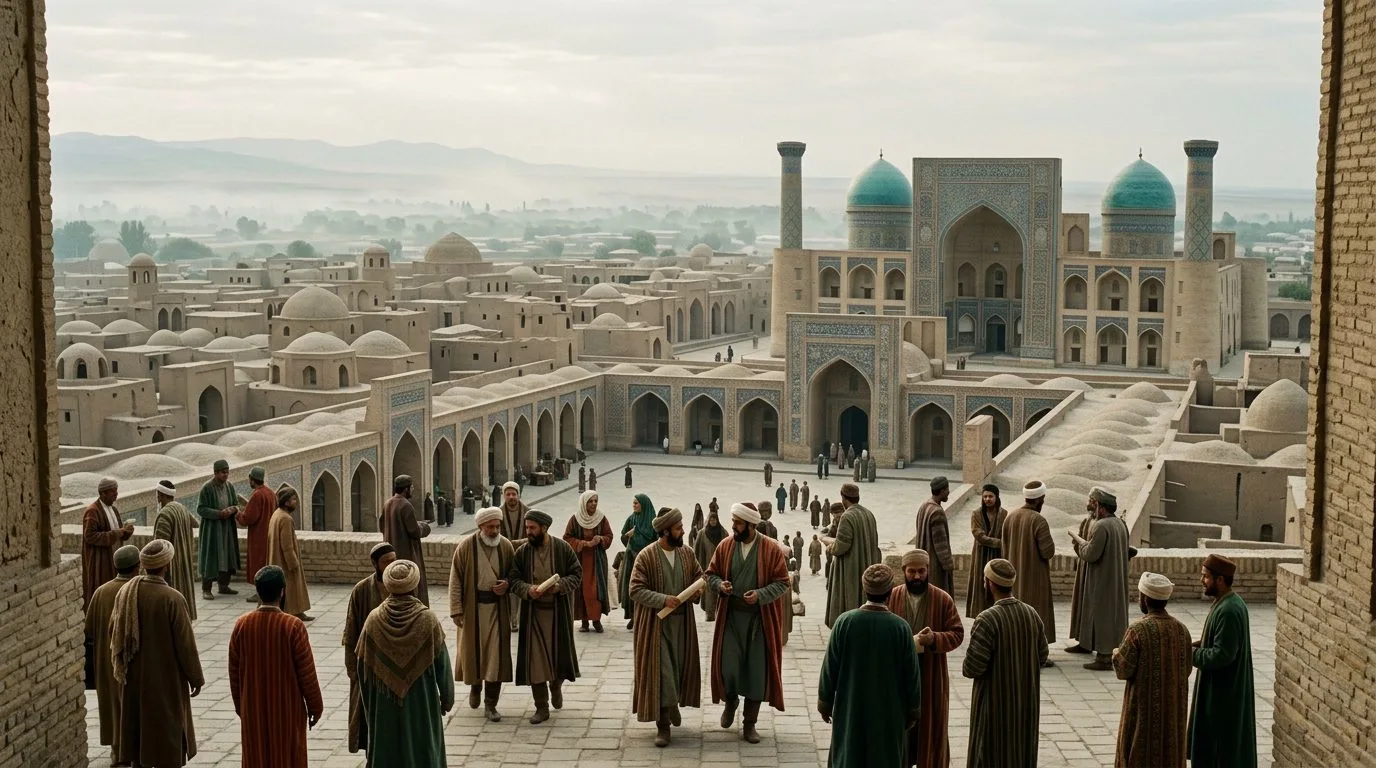
Bukhara: The Pillar of Persian Learning
Bukhara earned its title as the “Pillar of Islam” by the 9th century CE, operating 60 madrasas and producing scholars like Ibn Sina, who revolutionized medicine in 1025 CE. The city’s 12-acre covered bazaar, constructed in the 10th century CE, featured separate sections for 30 different crafts and commodities. Bukharian merchants, known as Bukhariot, established trading networks extending to Russia, Tibet, and India, often serving as diplomatic envoys because their multilingual education made them invaluable negotiators. The city minted its own silver coins that became accepted currency across Central Asia.
Source: britannica.com
5. Merv: The Mother of the World
Merv reached its zenith in 1145 CE as possibly the world’s largest city, with estimates suggesting 200,000 residents within its walls. The oasis supported this massive population through an intricate irrigation system channeling water from the Murghab River through 90 miles of underground canals. Merv’s libraries reportedly held 150,000 volumes, rivaling Baghdad and Alexandria. The city manufactured specialized goods including ceramics whose blue glaze formula remained a trade secret, and textiles so fine that a complete outfit could pass through a finger ring.
Source: britannica.com
6. Turfan: The Depression That Defied the Desert
Turfan: The Depression That Defied the Desert
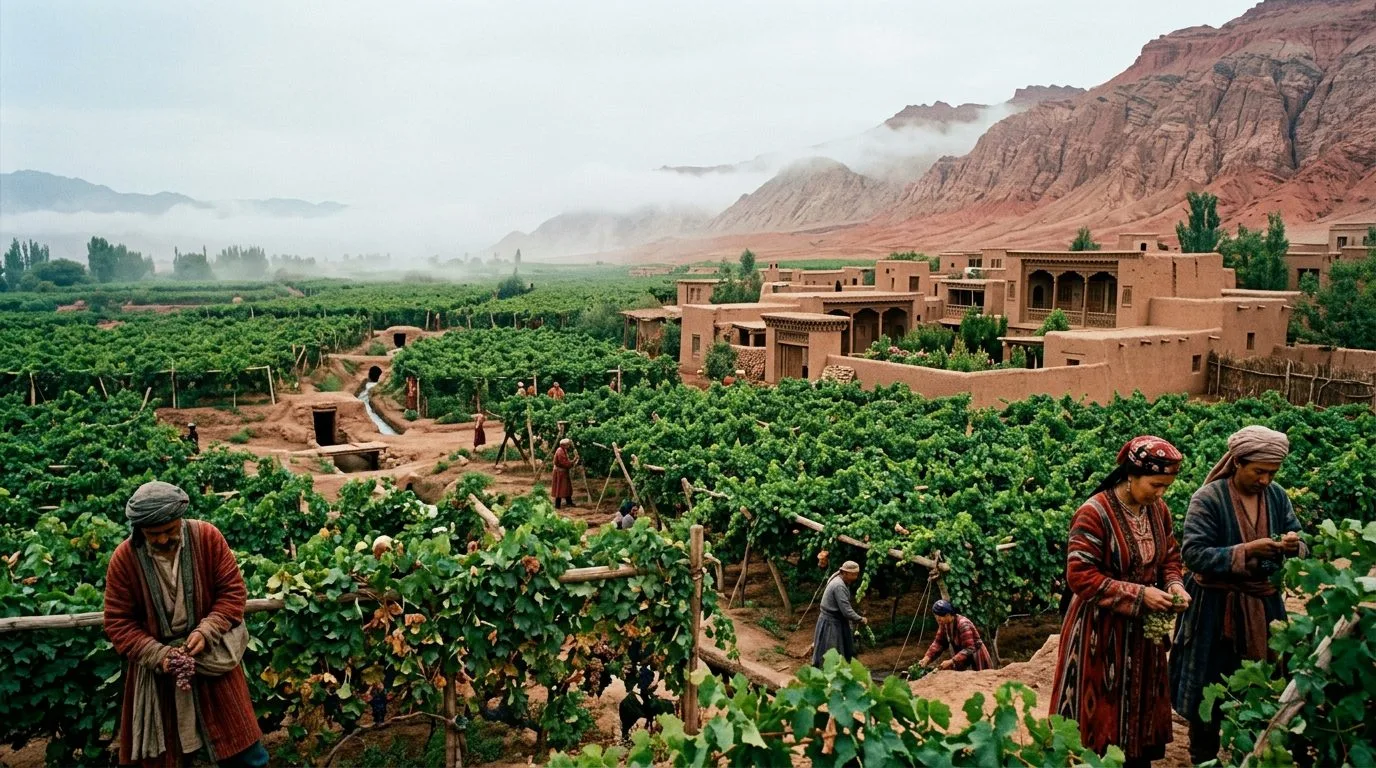
Turfan sits 505 feet below sea level in one of Earth’s hottest locations, yet its ingenious karez underground channels delivered snowmelt from distant mountains to irrigate vineyards producing Central Asia’s finest grapes. The city’s Nestorian Christian community, established by 400 CE, coexisted with Buddhist monasteries and Manichaean temples, making Turfan a laboratory of religious tolerance. Archaeologists discovered 1,200-year-old dumplings in Turfan’s Astana tombs, perfectly preserved by the arid climate alongside contracts showing Sogdian merchants lending money at 30 percent annual interest. The oasis provided crucial respite before merchants faced the brutal Taklamakan crossing.
Source: britannica.com
7. Khotan: Where Silk Secrets Escaped China
Khotan: Where Silk Secrets Escaped China
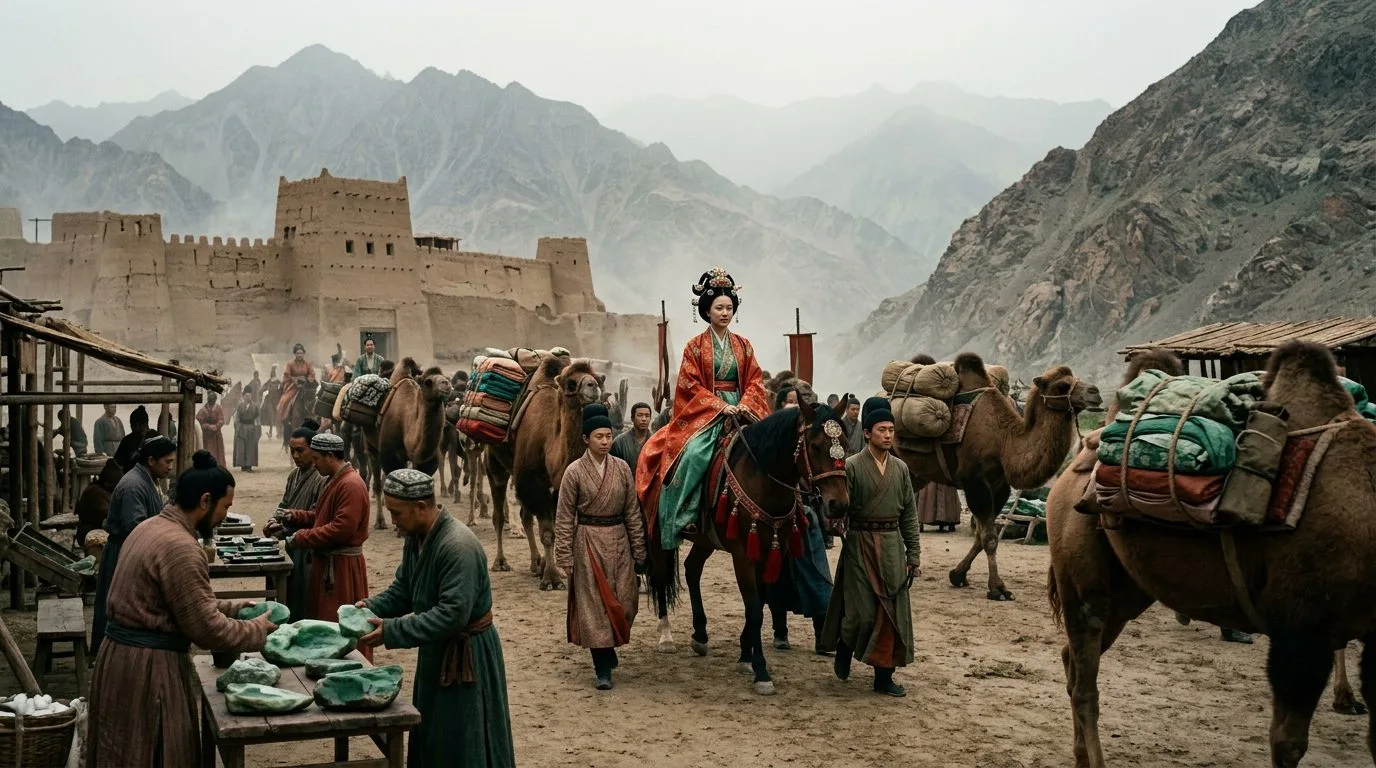
Khotan built its fortune on two prized commodities: jade from the Kunlun Mountains and silk production that legend says began around 440 CE when a Chinese princess smuggled silkworm eggs in her headdress. The oasis supplied white jade to Chinese emperors for 2,000 years, with the finest pieces reserved exclusively for imperial workshops. By the 8th century CE, Khotan operated 14 Buddhist monasteries and minted gold coins depicting both Chinese emperors and local rulers, reflecting its position between two cultural spheres. The city’s carpets, woven with silk pile, commanded prices equivalent to 50 camels per piece.
Source: britannica.com
8. Balkh: The Mother of Cities
Balkh: The Mother of Cities
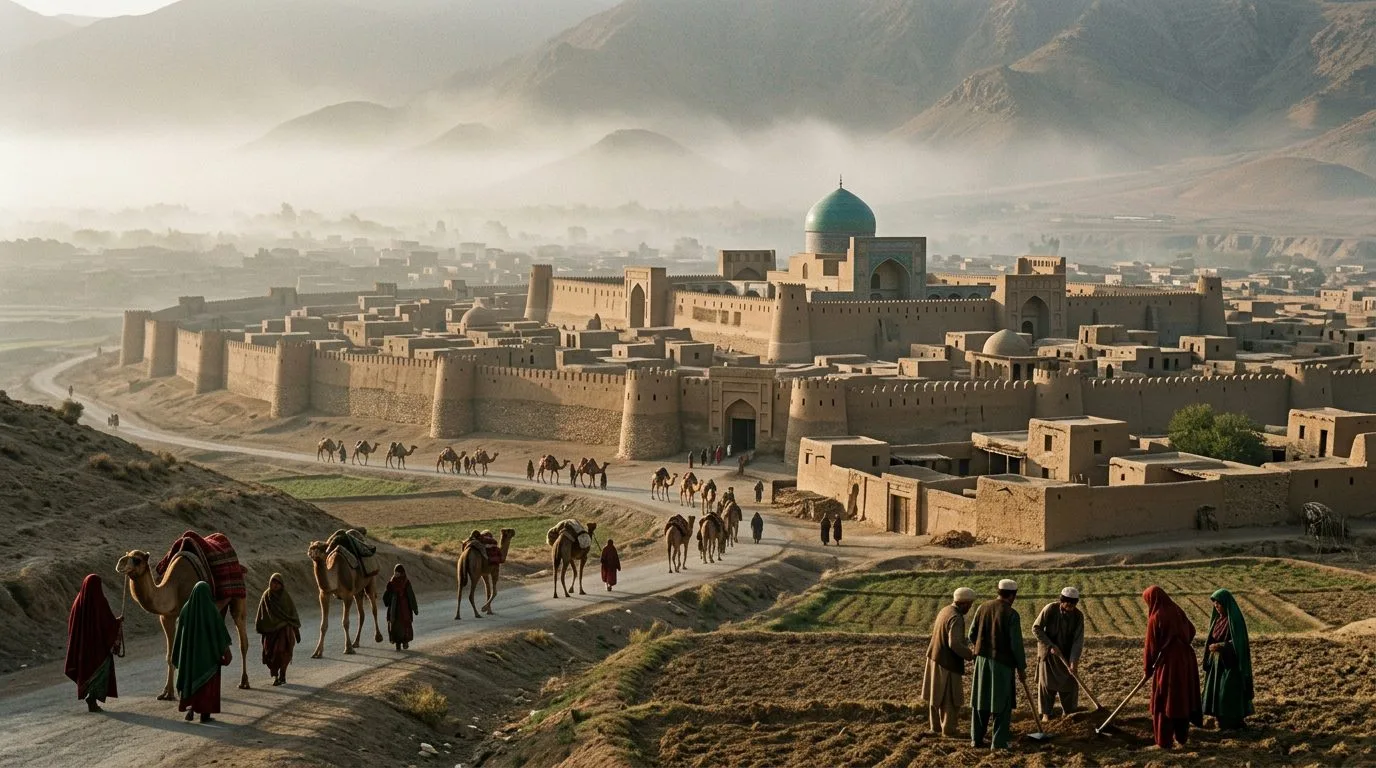
Balkh claimed 3,000 years of continuous habitation when Arab geographers visited in 900 CE, calling it “Mother of Cities” for its antiquity and grandeur. The ancient Bactrian capital controlled trade routes connecting India, Persia, and China, with its bazaars offering Indian spices, Chinese silks, and Persian metalwork simultaneously. Zoroastrian fire temples operated here until the 7th century CE, when Balkh became an early Islamic scholarly center producing the poet Rumi in 1207 CE. The city’s walls, stretching 8 miles in circumference, enclosed gardens irrigated by the Balkh River that Marco Polo described as paradise.
Source: britannica.com
9. Loulan: The Oasis That Vanished
Loulan: The Oasis That Vanished
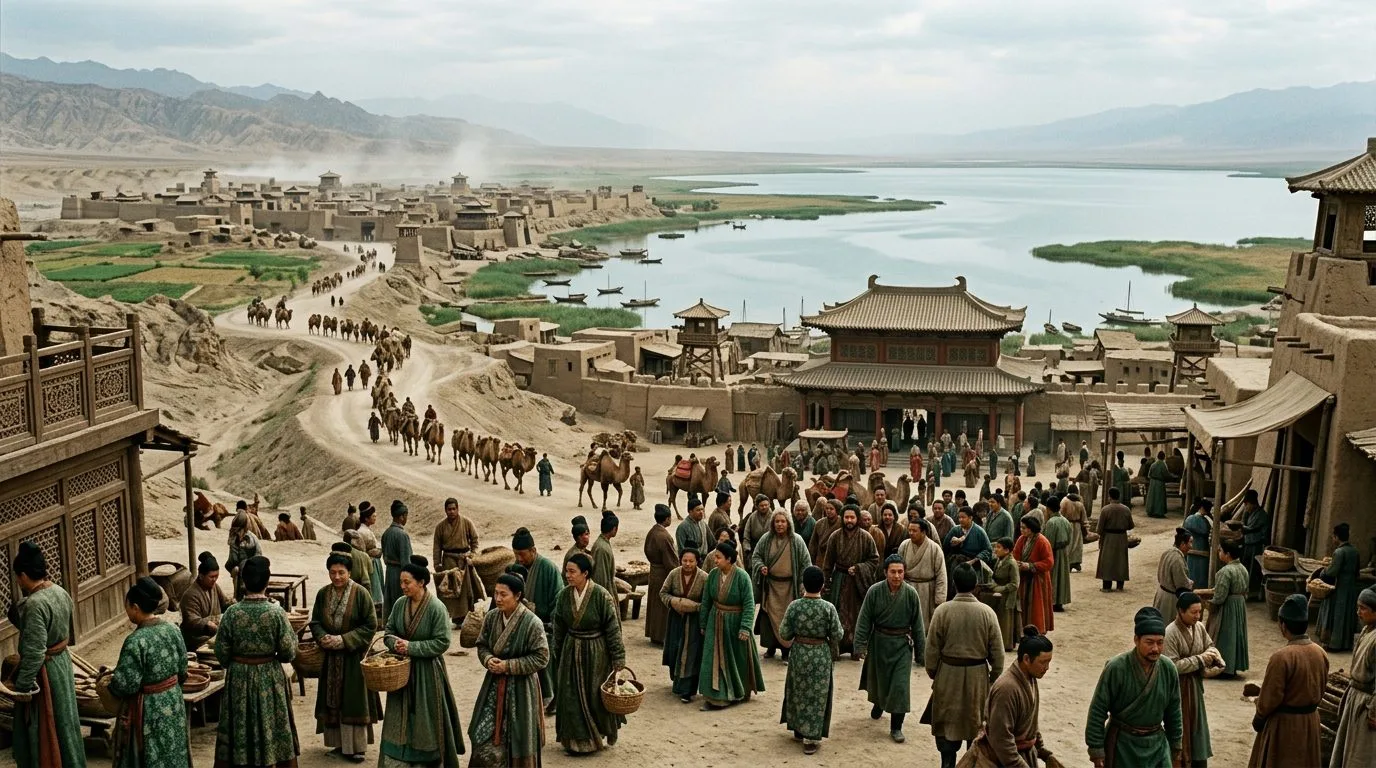
Loulan thrived beside Lop Nur lake until approximately 330 CE, when the lake dried and forced 10,000 residents to abandon their homes literally overnight. Chinese records from 77 BCE describe Loulan controlling a crucial eastern Silk Road junction with 1,570 households paying tribute to Han Dynasty officials. Swedish explorer Sven Hedin rediscovered the buried city in 1900, finding mummies preserved by extreme dryness, including the “Beauty of Loulan” from 1800 BCE with European features that challenged assumptions about ancient Central Asian populations. Loulan’s demise demonstrated how dependent Silk Road commerce was on fragile desert water sources.
Source: britannica.com
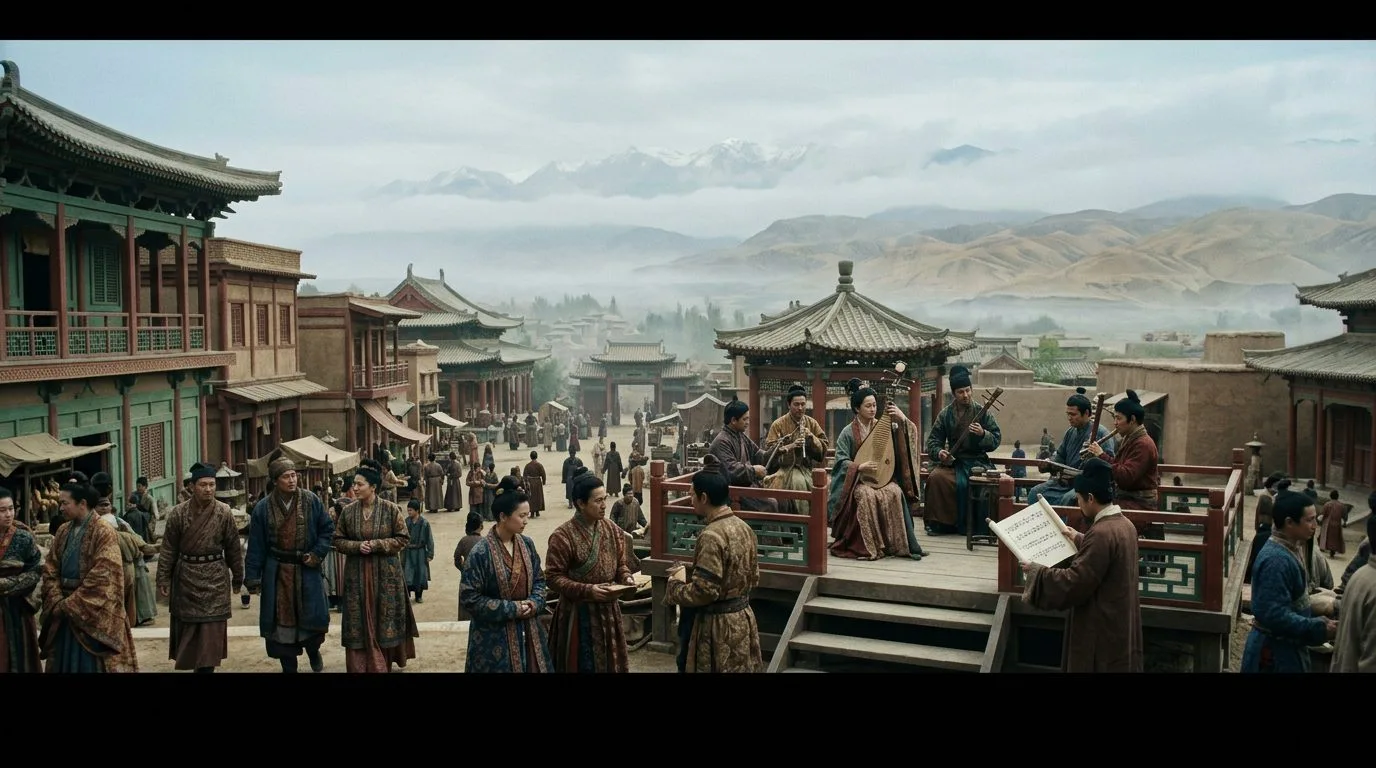
10. Kucha: The Music Capital of the Silk Road
Kucha: The Music Capital of the Silk Road
Kucha gave the world its most influential musical export: the pipa lute and musical notation system that reached China’s Tang court by 568 CE. The oasis kingdom maintained independence until 648 CE, developing a unique Tocharian language and Buddhist tradition that produced Kumarajiva, who translated 300 Sanskrit texts into Chinese in 401 CE. Kucha’s Kizil Caves contain 236 chambers with frescoes showing musicians from India, Persia, and China performing together, visual evidence of the cultural mixing that made Silk Road cities laboratories of innovation. The city’s 5,000 monks made it second only to Dunhuang as a Buddhist center.
Source: britannica.com
Did You Know?
Did You Know? When Mongols destroyed Merv in 1221 CE, the city’s libraries burned for three weeks straight—suggesting they contained far more than 150,000 volumes. The irrigation systems that made these oases possible were so sophisticated that Turfan’s karez channels, some 2,000 years old, still deliver water today, outlasting the empires they served.