
When Pepi II inherited the throne around 2278 BCE at age six, he would rule for 94 years—the longest verified reign in history. Egypt’s 3,000-year pharaonic tradition produced dozens of child rulers who wielded godlike authority before age 25, navigating deadly court intrigue and military crises.
1. Pepi II Neferkare: The Six-Year-Old Who Ruled for Nearly a Century
Pepi II Neferkare ascended to Egypt’s throne around 2278 BCE at approximately six years old, inheriting the leadership of the 6th Dynasty during the Old Kingdom’s twilight years. His mother, Queen Ankhenespepi II, and uncle Djau served as regents during his minority, wielding actual power while the boy-king performed ceremonial duties. Historical records indicate Pepi II’s reign lasted an unprecedented 94 years, making him the longest-reigning monarch in verified human history—surpassing even Louis XIV of France by 22 years. During his early years, Egypt maintained 42 administrative districts called nomes, each governed by increasingly powerful nobles who gradually eroded central authority. The young pharaoh’s extended childhood reign coincided with declining Nile flood levels, which reduced agricultural productivity by an estimated 30 percent over six decades. By the time Pepi II reached his teenage years around 2266 BCE, provincial governors had accumulated enough wealth and military power to challenge Memphis’s supremacy. Historians now recognize that his extraordinarily long rule, beginning in childhood, contributed directly to the Old Kingdom’s collapse around 2184 BCE. The decentralization that began during his youth ultimately fragmented Egypt into competing regional powers, ushering in the chaotic First Intermediate Period that lasted 125 years.
Source: britannica.com
2. Tutankhamun: The Nine-Year-Old Golden Pharaoh
Tutankhamun claimed Egypt’s throne around 1332 BCE at approximately nine years old, inheriting a kingdom destabilized by his predecessor Akhenaten’s radical religious revolution. Born as Tutankhaten, the boy-king ruled during the 18th Dynasty’s turbulent period when Egypt’s traditional polytheistic religion was being violently restored after 17 years of monotheistic Aten worship. His chief advisors, the elderly vizier Ay and general Horemheb, controlled state affairs while the young pharaoh resided in Memphis rather than Akhenaten’s abandoned capital at Amarna. By age 12 around 1329 BCE, Tutankhamun had changed his name from Tutankhaten to Tutankhamun, formally rejecting the Aten cult and reinstating Amun-Ra as Egypt’s supreme deity. The restoration stela he commissioned recorded the reopening of temples across Egypt’s 42 nomes and the re-employment of thousands of priests. During his teenage reign, Egypt’s military conducted campaigns in Nubia and the Levant, though scholars debate whether the 15-year-old pharaoh participated personally in the battles depicted in his tomb. Tutankhamun died unexpectedly around 1323 BCE at approximately 19 years old, possibly from complications of a leg fracture combined with malaria, as DNA analysis of his mummy revealed in recent centuries. His intact tomb, discovered by Howard Carter in the early twentieth century, contained over 5,000 artifacts including the iconic 24-pound solid gold funeral mask, making him history’s most famous teenage ruler despite his relatively minor historical impact.
Source: britannica.com
3. Thutmose III: The Two-Year-Old Who Became Egypt’s Napoleon
Thutmose III became Egypt’s nominal ruler around 1479 BCE at approximately two years old when his father Thutmose II died unexpectedly, making him the youngest pharaoh to claim the throne in the 18th Dynasty. His stepmother and aunt, Hatshepsut, immediately declared herself regent and within seven years had proclaimed herself pharaoh, relegating the child-king to ceremonial status for 22 years. During this unprecedented co-regency, young Thutmose received military training and administrative education while Hatshepsut ruled Egypt, constructed massive monuments including her mortuary temple at Deir el-Bahari, and dispatched the famous expedition to Punt around 1470 BCE. Historical evidence suggests Thutmose assumed some royal duties by age 16 around 1463 BCE, leading military exercises and participating in religious ceremonies at Karnak Temple. When Hatshepsut died around 1458 BCE, Thutmose III finally claimed sole authority at approximately 23 years old and immediately launched an aggressive military campaign. Over the next 32 years, he personally led 17 military campaigns, conquered 350 cities, and expanded Egypt’s borders from the Fourth Cataract of the Nile in Nubia to the Euphrates River in Syria—earning him the title “Napoleon of Egypt” from modern historians. His decisive victory at the Battle of Megiddo in 1457 BCE, where he defeated a coalition of 330 Canaanite princes, established Egyptian hegemony over the Levant for a century. The delay in his assumption of full power, caused by ascending the throne as a toddler, paradoxically created Egypt’s most successful military pharaoh.
Source: britannica.com
4. Ptolemy V Epiphanes: The Five-Year-Old Behind the Rosetta Stone
Ptolemy V Epiphanes inherited the throne in 204 BCE at five years old following his father Ptolemy IV’s suspicious death, becoming pharaoh during the Ptolemaic Dynasty’s most vulnerable period. His mother Arsinoe III was murdered within months by court conspirators Agathocles and Sosibius, who established a brutal regency that sparked the Fifth Syrian War against the Seleucid Empire. By 200 BCE, when Ptolemy V was only nine years old, Egyptian forces had suffered catastrophic defeats at Panium, losing all Ptolemaic territories in Coele-Syria and reducing Egypt’s Levantine empire by approximately 40 percent. Native Egyptian revolts erupted simultaneously in the Thebaid region around 206 BCE, with rebel pharaohs controlling Upper Egypt for 20 years while the boy-king remained in Alexandria under regent control. The famous Rosetta Stone, discovered in antiquity, actually commemorates Ptolemy V’s coronation ceremony at Memphis in 196 BCE when he was 13 years old, recording the same decree in three scripts: hieroglyphic, Demotic, and Greek. This trilingual inscription revealed the priesthood’s acknowledgment of the teenage pharaoh’s authority in exchange for tax exemptions and land grants worth millions of drachmas annually. Ptolemy V assumed personal rule around 196 BCE at approximately 14 years old, immediately marrying the Seleucid princess Cleopatra I to formalize peace and receiving Coele-Syria as her dowry. His childhood reign, marked by territorial losses and internal rebellion, permanently weakened Ptolemaic Egypt’s position among Hellenistic kingdoms, setting the stage for eventual Roman domination 170 years later.
Source: britannica.com
5. Amenhotep II: The Athletic Eighteen-Year-Old Warrior
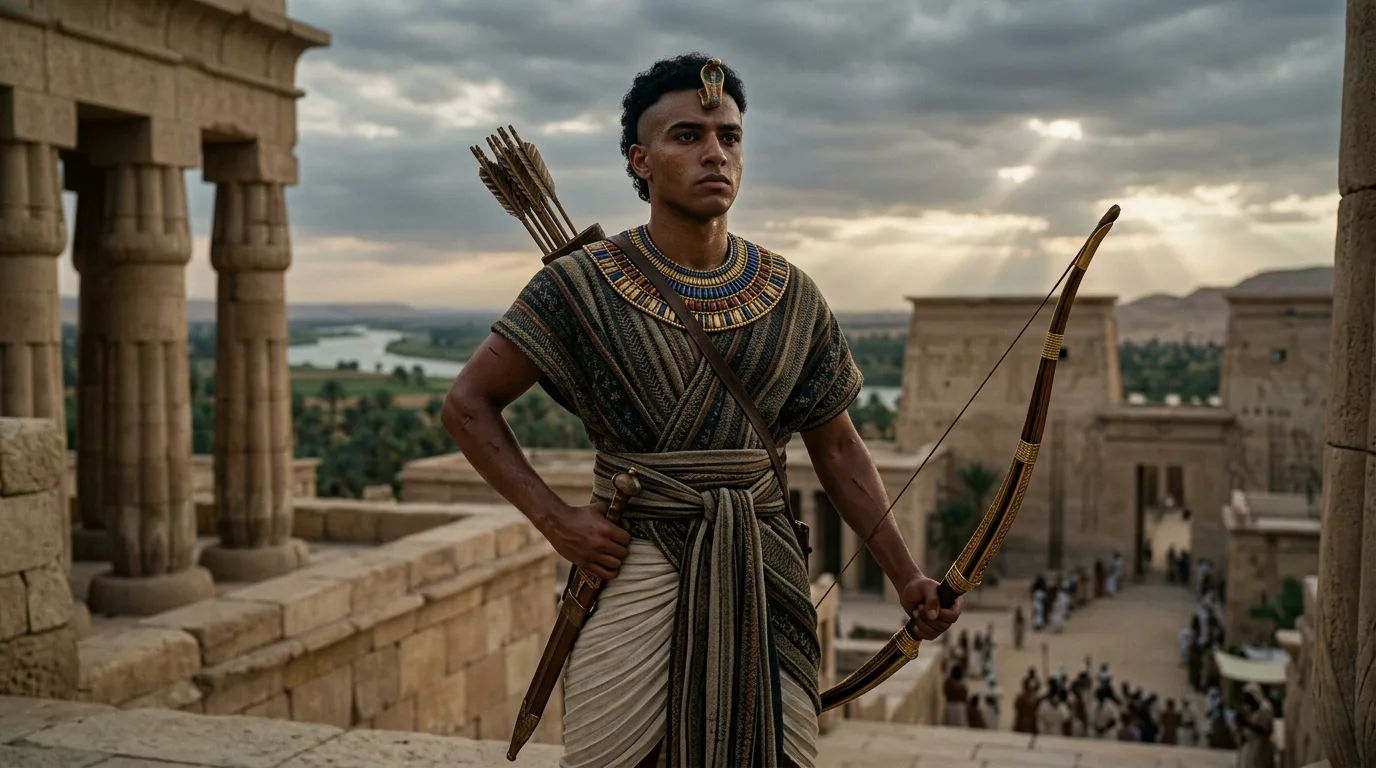
Amenhotep II ascended to Egypt’s throne around 1427 BCE at approximately 18 years old, inheriting the vast empire his father Thutmose III had conquered through 17 military campaigns spanning three decades. Ancient texts describe the young pharaoh as an exceptional athlete who could shoot arrows through copper targets three fingers thick while driving his chariot at full gallop, and row a boat faster than 200 trained oarsmen combined. Within his first regnal year around 1426 BCE, Amenhotep II personally led a military expedition into Syria to suppress rebellions in seven cities that had erupted immediately after Thutmose III’s death, demonstrating that youth would not weaken Egyptian authority. His brutal campaign methods included publicly executing seven captured Syrian princes at Thebes, then displaying six bodies on the city walls and sending the seventh corpse 1,200 miles south to Napata in Nubia as a deterrent. Historical records from his third regnal year around 1424 BCE document a second Asian campaign where his forces captured 89,600 prisoners, 2,214 horses, and 820 chariots, though modern scholars suspect these numbers were inflated by 50 percent for propaganda purposes. By age 20 around 1407 BCE, Amenhotep II had stabilized Egypt’s Asian territories and shifted focus to monumental building, commissioning additions to the Temple of Amun at Karnak and constructing his mortuary temple near the Ramesseum. His athletic prowess and military success during his late teenage years established a martial ideal for Egyptian kingship that influenced royal propaganda for centuries. The transition from teenage warrior to established ruler occurred seamlessly, proving that 18 was considered full adulthood in ancient Egypt’s 18th Dynasty.
Source: britannica.com
6. Seti II: The Young Pharaoh Who Lost His Throne Twice
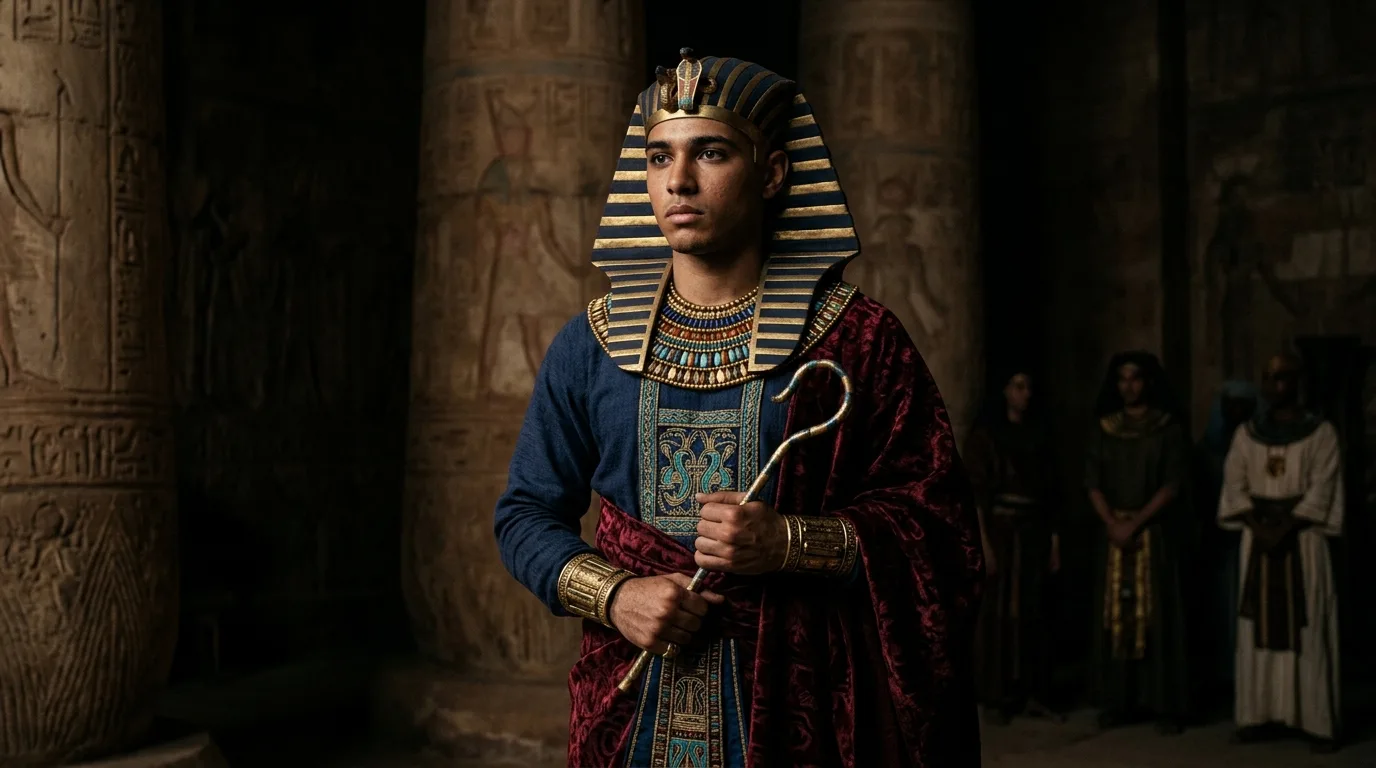
Seti II claimed Egypt’s throne around 1203 BCE at approximately 20-22 years old during the 19th Dynasty’s terminal decline, inheriting a kingdom already weakened by succession disputes and foreign pressures. His right to rule was immediately challenged by a rival claimant named Amenmesse, possibly his half-brother or cousin, who controlled Upper Egypt and Nubia while Seti II held Lower Egypt from Memphis. For approximately two years between 1203-1201 BCE, Egypt endured a civil war with two simultaneous pharaohs, each erasing the other’s cartouches from monuments and issuing competing decrees to provincial governors. Archaeological evidence from Karnak Temple shows Seti II’s year 1 inscriptions deliberately defaced, then restored after Amenmesse’s death around 1201 BCE when the young pharaoh was roughly 22-24 years old. The reunification of Egypt under Seti II’s sole authority proved temporary and fragile, lasting only four more years until his death around 1197 BCE. During his brief reign, he commissioned construction at Karnak and maintained diplomatic relations with the Hittite Empire, but administrative papyri reveal grain shortages affecting 13 nomes and delayed payments to Deir el-Medina workers for three months. His young son Siptah succeeded him at approximately age 10, continuing the pattern of child rulers that destabilized the late 19th Dynasty. Seti II’s inability to consolidate power during his early twenties contributed directly to the dynasty’s collapse and the chaos of the Bronze Age Collapse period affecting the entire Eastern Mediterranean. His reign demonstrates how even legitimate young pharaohs could fail when ascending during periods of systematic instability, regardless of their age or royal bloodline.
Source: britannica.com
7. Ramesses II: The Prince Who Commanded Armies at Age Fourteen
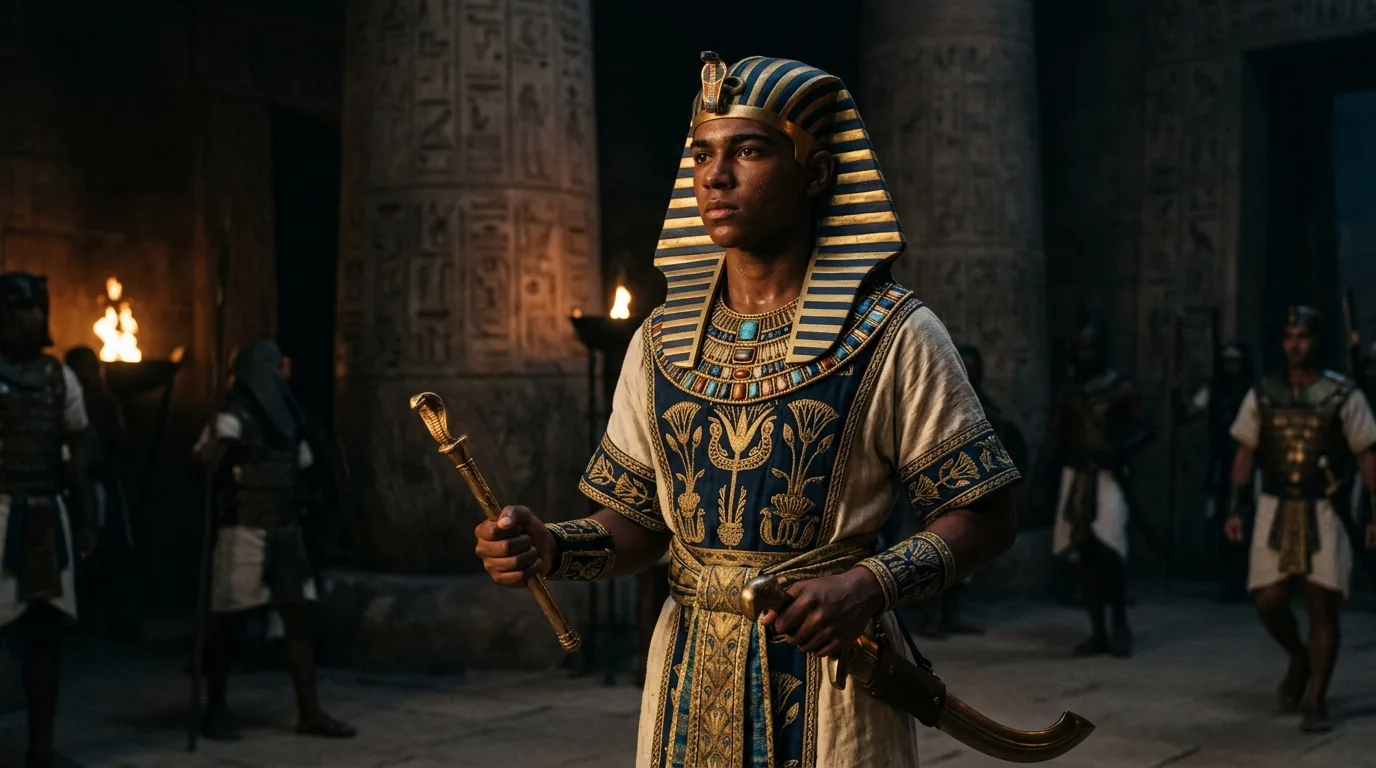
Ramesses II, history’s most prolific builder-pharaoh, began his military career around 1293 BCE at age 10 when his father Seti I appointed him as prince regent and commander of a garrison, though he would not claim sole rulership until age 25 around 1279 BCE. The young prince accompanied Seti I on military campaigns into Libya and Palestine by age 14 around 1289 BCE, learning battlefield tactics that would later define his 66-year reign as Egypt’s longest-ruling pharaoh after Pepi II. By age 22 around 1281 BCE, Ramesses had already married his first two principal wives, Nefertari and Isetnofret, and fathered at least four children while serving as co-regent and heir apparent. His father’s death around 1279 BCE elevated him to sole pharaoh at approximately 25 years old, immediately inheriting command of Egypt’s estimated 100,000-strong military and an empire stretching from Nubia to Syria. Within his second regnal year around 1278 BCE, the young pharaoh personally led a naval campaign against Sherden pirates raiding Egypt’s Mediterranean coast, defeating them decisively and incorporating captured warriors into his royal bodyguard. His most famous military engagement occurred at age 30 during the Battle of Kadesh in 1274 BCE against the Hittite Empire, where 20,000 Egyptian soldiers faced approximately 50,000 Hittite troops in history’s largest chariot battle. Though Ramesses claimed victory in propaganda inscriptions covering multiple temple walls, modern historians recognize the battle as a strategic stalemate that eventually produced the world’s first recorded peace treaty in 1259 BCE. His early assumption of military command as a teenager, combined with 67 years of rule, allowed Ramesses II to construct more monuments than any pharaoh—including Abu Simbel, the Ramesseum, and additions to Karnak covering 6 acres.
Source: britannica.com
8. Ptolemy XIII: Cleopatra’s Ten-Year-Old Rival and Husband
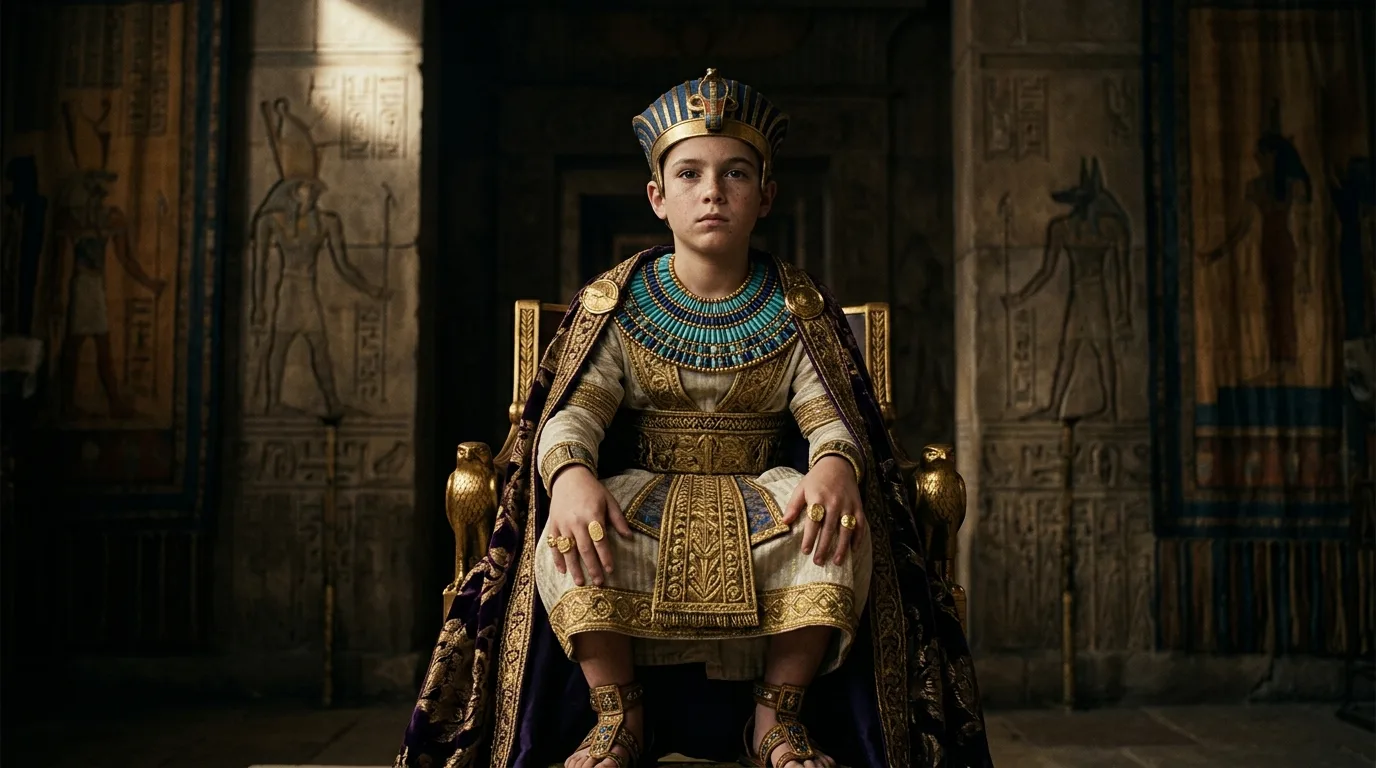
Ptolemy XIII Theos Philopator became co-ruler of Egypt in 51 BCE at approximately 10 years old alongside his 18-year-old sister Cleopatra VII, whom he was simultaneously required to marry according to Ptolemaic dynastic tradition. Their father Ptolemy XII’s will explicitly mandated joint rule, but the young pharaoh’s regency council—dominated by the eunuch Pothinus, general Achillas, and rhetoric teacher Theodotus—immediately maneuvered to exclude Cleopatra from power. By 49 BCE, when Ptolemy XIII was only 12 years old, his advisors had successfully expelled Cleopatra from Alexandria, forcing her to raise a mercenary army in Syria while Egypt’s treasury hemorrhaged funds supporting both sides. The arrival of Julius Caesar in Alexandria during October 48 BCE transformed the sibling rivalry into international crisis when the 15-year-old pharaoh’s advisors presented Caesar with the severed head of Pompey the Great, hoping to curry favor with Rome’s new master. Instead, Caesar was appalled by the murder and sided with 21-year-old Cleopatra, who famously smuggled herself into his presence rolled inside a carpet according to Plutarch’s account written centuries later. The Alexandrian War erupted in late 48 BCE with Ptolemy XIII’s 20,000-strong army besieging Caesar and Cleopatra in Alexandria’s royal palace for five months. During the naval battle in Alexandria’s harbor, flames from burning ships spread to the great Library of Alexandria, destroying an estimated 40,000 scrolls representing centuries of accumulated knowledge. Ptolemy XIII died in January 47 BCE at approximately 15 years old when his forces were routed at the Battle of the Nile, allegedly drowning in the river while fleeing in heavy golden armor. His brief reign demonstrates how Ptolemaic Egypt’s practice of child co-rulers created dangerous power vacuums exploited by ambitious advisors, ultimately contributing to the dynasty’s annexation by Rome in 30 BCE.
Source: britannica.com
9. Siamun: The Mysterious Teenage Pharaoh of Egypt’s Decline
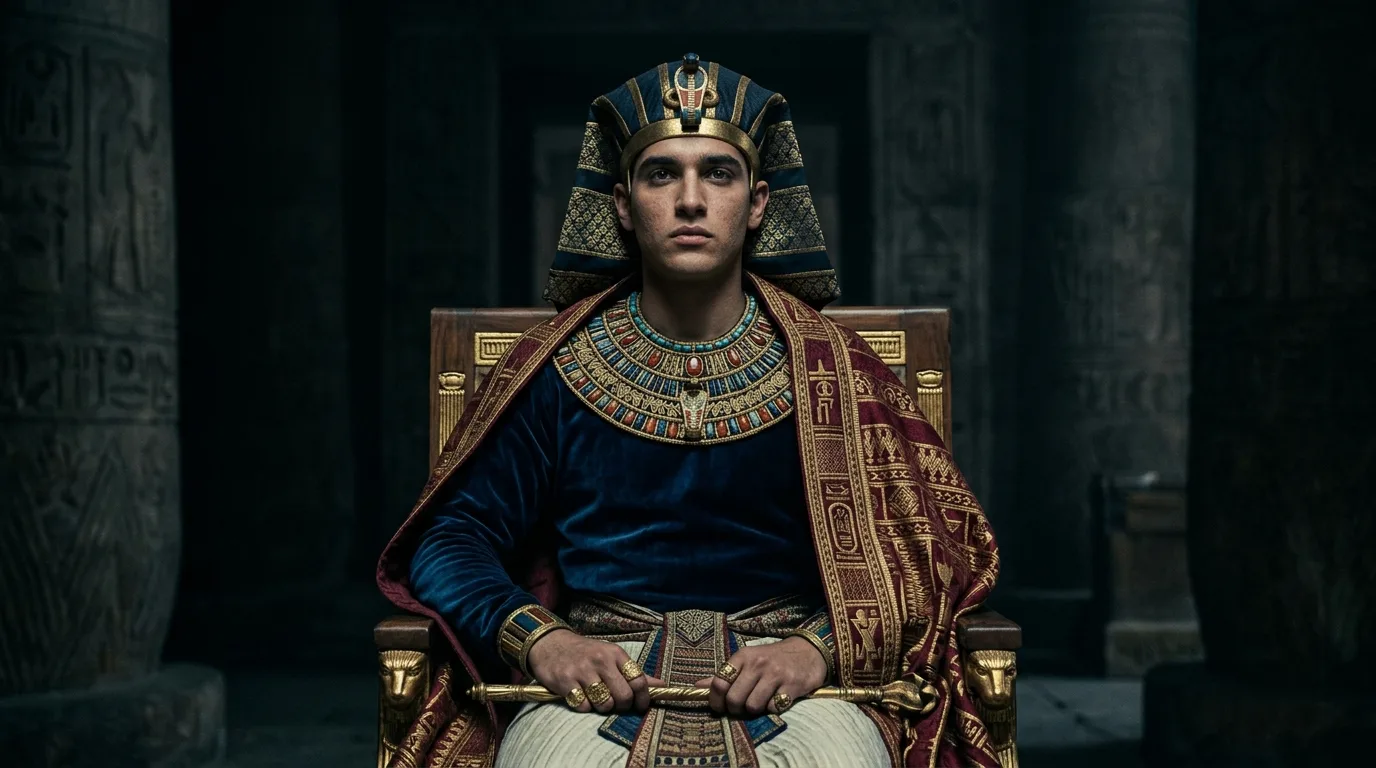
Siamun ascended to Egypt’s throne around 986 BCE at an estimated age between 15-20 years old, ruling during the 21st Dynasty when Egypt’s unified power had fractured into competing northern and southern kingdoms. Historical records from this Third Intermediate Period remain fragmentary, but archaeological evidence from Tanis, Egypt’s northern capital, suggests Siamun assumed power while the High Priests of Amun independently controlled Thebes and Upper Egypt 400 miles south. His reign lasted approximately 19 years until around 967 BCE, during which he maintained diplomatic relations with the newly established United Monarchy of Israel under King David and possibly Solomon. A relief from Tanis depicts Siamun smiting enemies with traditional pharaonic iconography, which some scholars interpret as evidence of a military campaign into Philistine territory around 980 BCE when he was approximately 21-26 years old. The biblical Book of Kings mentions an unnamed Egyptian pharaoh who conquered the city of Gezer and presented it as a dowry when his daughter married King Solomon around 970 BCE, leading some historians to identify this pharaoh as the young Siamun. However, his actual political authority remained limited to Lower Egypt’s 20 nomes, while Theban High Priest Pinedjem II wielded independent power in the south, controlling access to the Valley of the Kings and its accumulated wealth. Archaeological excavations at Tanis revealed Siamun’s intact silver coffin in the early twentieth century, showing he was buried with modest grave goods compared to New Kingdom pharaohs—reflecting Egypt’s diminished wealth and international prestige. His teenage accession during Egypt’s political fragmentation represents the systemic instability that characterized the Third Intermediate Period, when seven dynasties ruled simultaneously or consecutively between 1070-664 BCE. The 21st Dynasty’s reliance on young, weak pharaohs allowed priestly families and military strongmen to accumulate power that would eventually enable foreign conquest by Libyan and Nubian dynasties.
Source: britannica.com
10. Neferkare II: The Phantom Teenage Pharaoh of Chaos
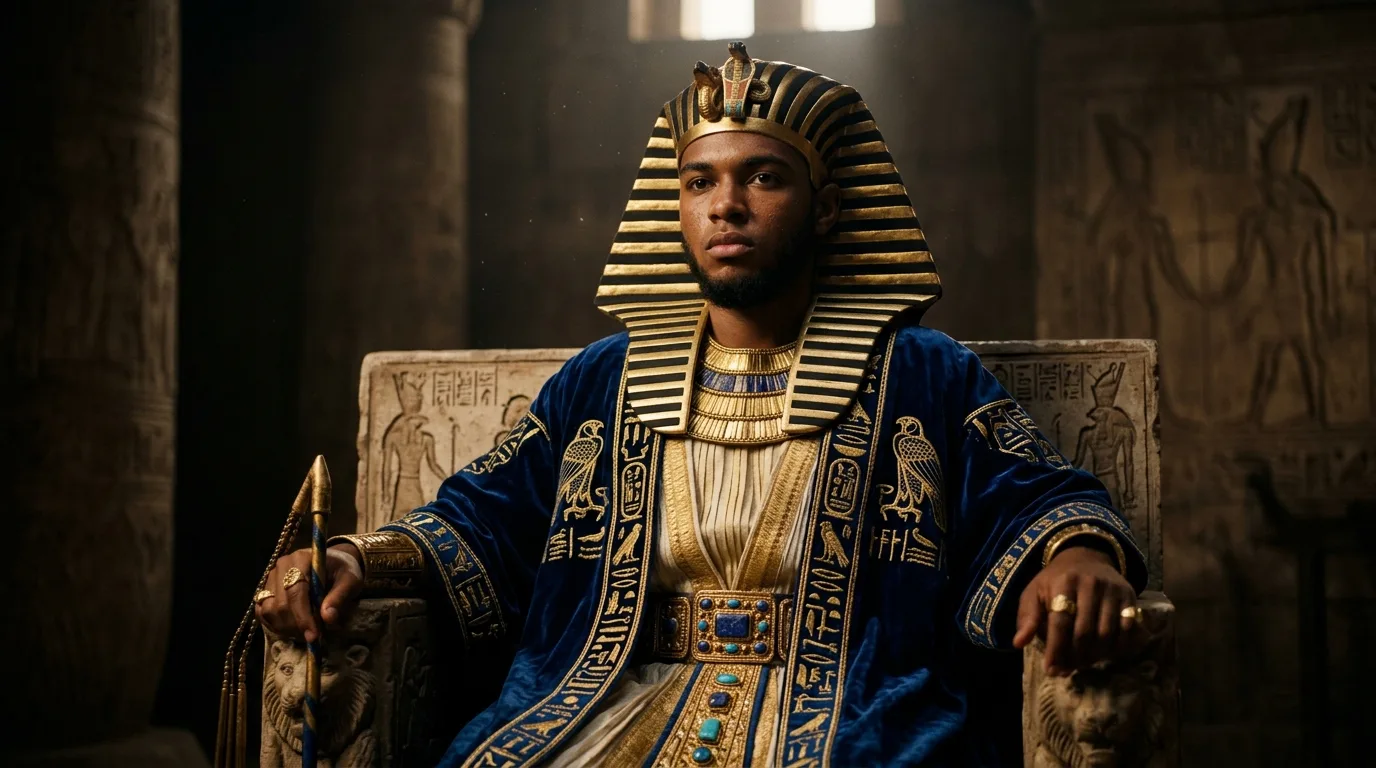
Neferkare II ruled Egypt sometime during the 8th Dynasty around 2150 BCE at an estimated teenage age, though historical evidence remains so fragmentary that scholars debate whether he existed as an independent ruler or merely held regional authority during the First Intermediate Period’s chaos. The Turin King List, compiled over 1,000 years later during the 19th Dynasty, credits Neferkare II with a reign lasting only 1 year and 1 day, making him one of the shortest-reigning pharaohs if the document’s accuracy can be trusted. This brief tenure occurred during a 25-year period when the 8th Dynasty produced approximately 17 ephemeral pharaohs, none maintaining control beyond Memphis and the surrounding 5-6 nomes of Lower Egypt. Contemporary administrative papyri describe widespread famine conditions affecting the Nile Delta, with grain prices inflating by 300 percent and desperate populations fleeing northward toward Mediterranean coastal cities. The Admonitions of Ipuwer, a literary text possibly composed during this era, describes Egypt’s social collapse: “The land turns around as does a potter’s wheel… beggars have become owners of wealth.” Archaeological surveys reveal that during Neferkare II’s approximate reign period around 2150 BCE, Egypt’s population declined by an estimated 35-40 percent due to famine, disease, and civil conflict between competing regional governors. His presumed teenage age at accession reflects the 8th Dynasty’s desperate instability, where royal legitimacy had become so degraded that children or adolescents could claim pharaonic titles without controlling territory beyond a single city. The collapse of centralized authority during this period, symbolized by phantom rulers like Neferkare II, lasted until Mentuhotep II reunified Egypt around 2040 BCE, ending 140 years of fragmentation. These forgotten teenage pharaohs represent the ultimate failure of Egypt’s divine kingship ideology when faced with environmental catastrophe and systematic governmental collapse.
Source: britannica.com
Did You Know?
Did you know that if Pepi II’s 94-year reign calculation is accurate, he would have celebrated his 100th birthday while still sitting on Egypt’s throne around 2184 BCE—ruling longer than some entire dynasties lasted? Even more surprising: the practice of child pharaohs didn’t weaken Egypt during its peak power periods, but rather during its declines, suggesting that young rulers were symptoms of instability rather than causes. Perhaps most ironic, Tutankhamun—history’s most famous Egyptian king—accomplished virtually nothing of political significance during his nine-year childhood reign, yet his accidental tomb preservation made him infinitely more recognizable than Thutmose III, who actually conquered an empire spanning 350 cities before age thirty.