
While male masters dominated Asian art history, women created masterpieces that museums treasure today. From Yuan Dynasty calligraphy to Edo period woodblocks, these ten artists defied convention and shaped centuries of cultural evolution across China, Japan, Korea, and India.
1. Guan Daosheng Became the Only Woman Calligrapher Recorded in Imperial History
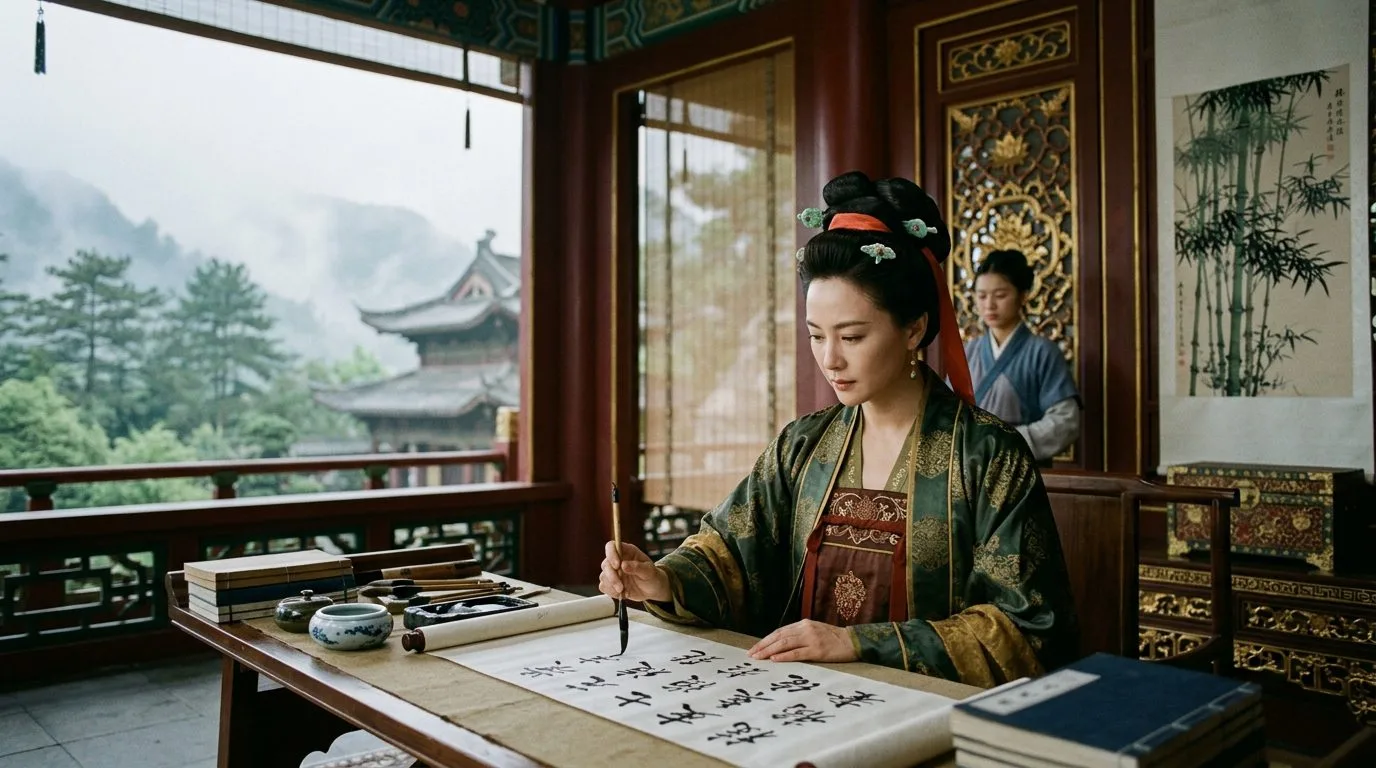
Guan Daosheng’s elegant brushwork mastered by
In 1262 CE, Guan Daosheng was born into a scholar’s family, destined to become the first woman in Chinese history whose calligraphy earned imperial recognition. She married the renowned painter Zhao Mengfu in 1289, creating a legendary artistic partnership. Her bamboo paintings commanded prices equal to her husband’s work, with Emperor Renzong himself collecting 10 of her scrolls for the palace treasury. The Ming Dynasty compendium ‘Precious Mirror of Painting’ honored her as the only female artist included among 287 masters, cementing her status as China’s most celebrated woman painter for five centuries.
Source: britannica.com
2. Kiyohara Yukinobu Shattered Japan’s Male-Only Painting Academy in 1649
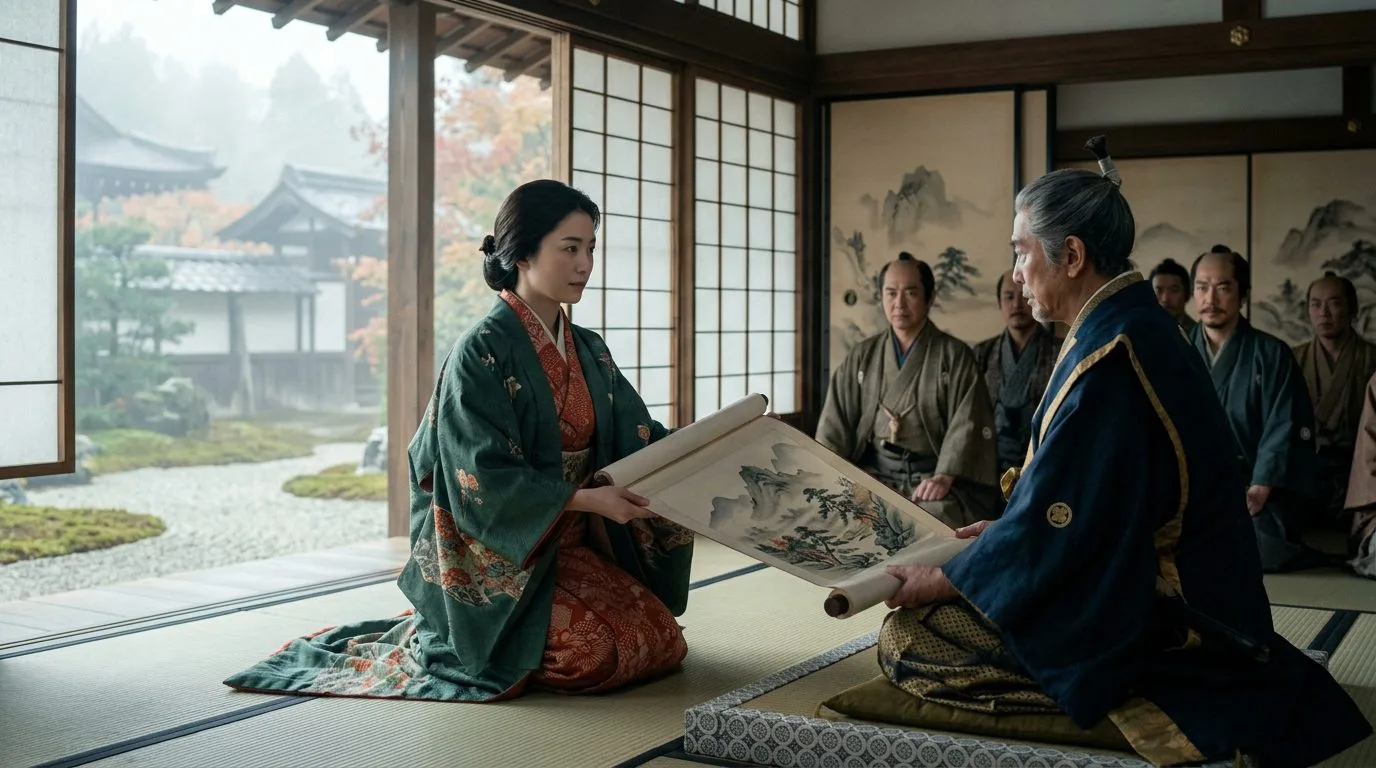
Yukinobu breaks into Japan’s art world.
When Kiyohara Yukinobu received official recognition from the Tokugawa shogunate in 1649, she became the first woman to achieve professional painter status in feudal Japan. Born into the prestigious Kano school lineage, she mastered the rigorous techniques that male artists studied for decades. The Imperial Court commissioned her to paint 260 sliding door panels for the retired emperor’s palace, an honor previously reserved exclusively for men. Her screen depicting ‘The Tale of Genji‘ demonstrated such technical mastery that critics initially refused to believe a woman created it, forever changing perceptions about female artistic capability in Japanese society.
Source: britannica.com
3. Shin Saimdang Appeared on Korea’s 50,000 Won Banknote Centuries After Her Death
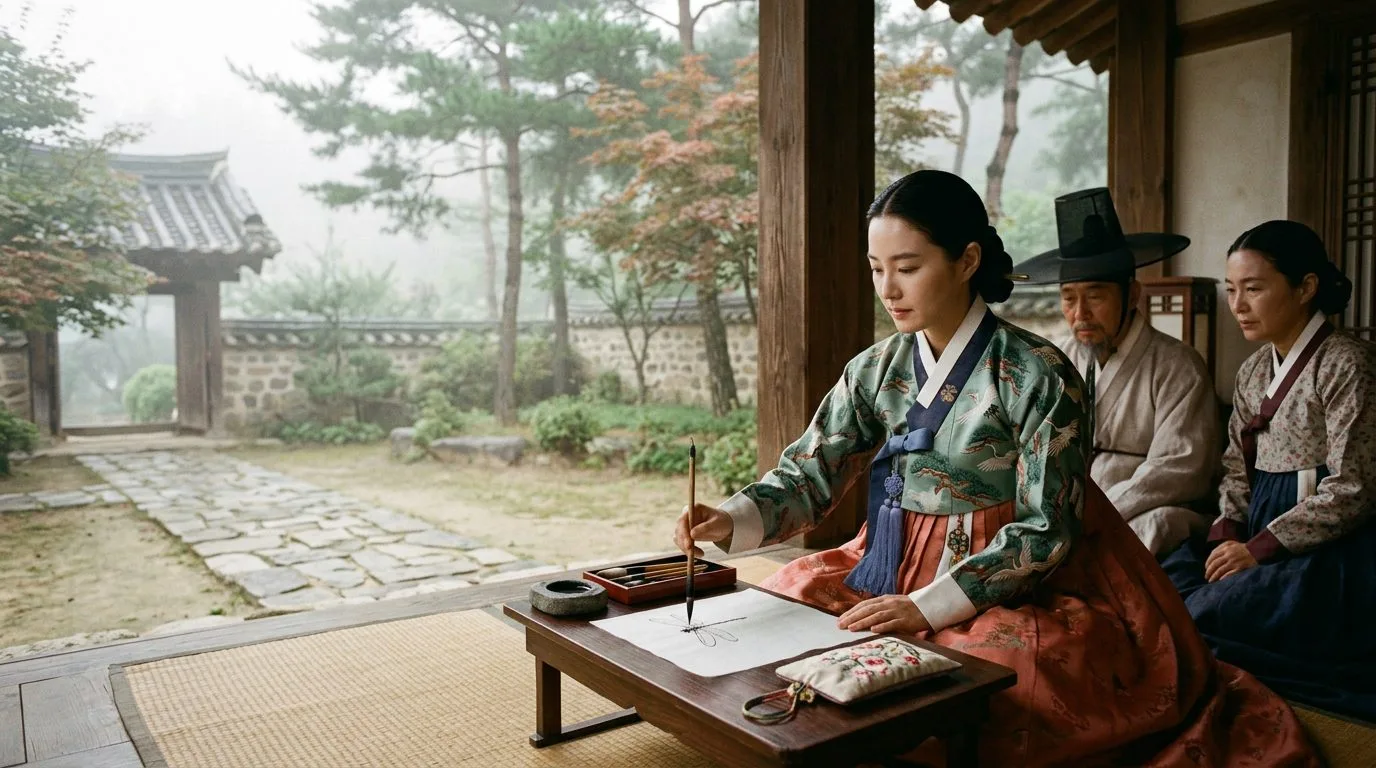
Shin Saimdang Appeared on Korea’s 50
Born in 1504 during the Joseon Dynasty, Shin Saimdang mastered seven artistic disciplines including painting, calligraphy, and embroidery before turning 20. Her paintings of insects, fish, and plants introduced naturalistic observation techniques that revolutionized Korean art. She balanced Confucian scholarship with motherhood, raising Yi I, who became one of Korea’s two greatest philosophers. In the early 21st century, the Bank of Korea selected her image for the 50,000 won note, making her the first woman depicted on South Korean currency and acknowledging her profound influence on 16th-century cultural development.
Source: britannica.com
4. Wen Shu Painted Landscapes So Masterfully That Collectors Attributed Them to Men
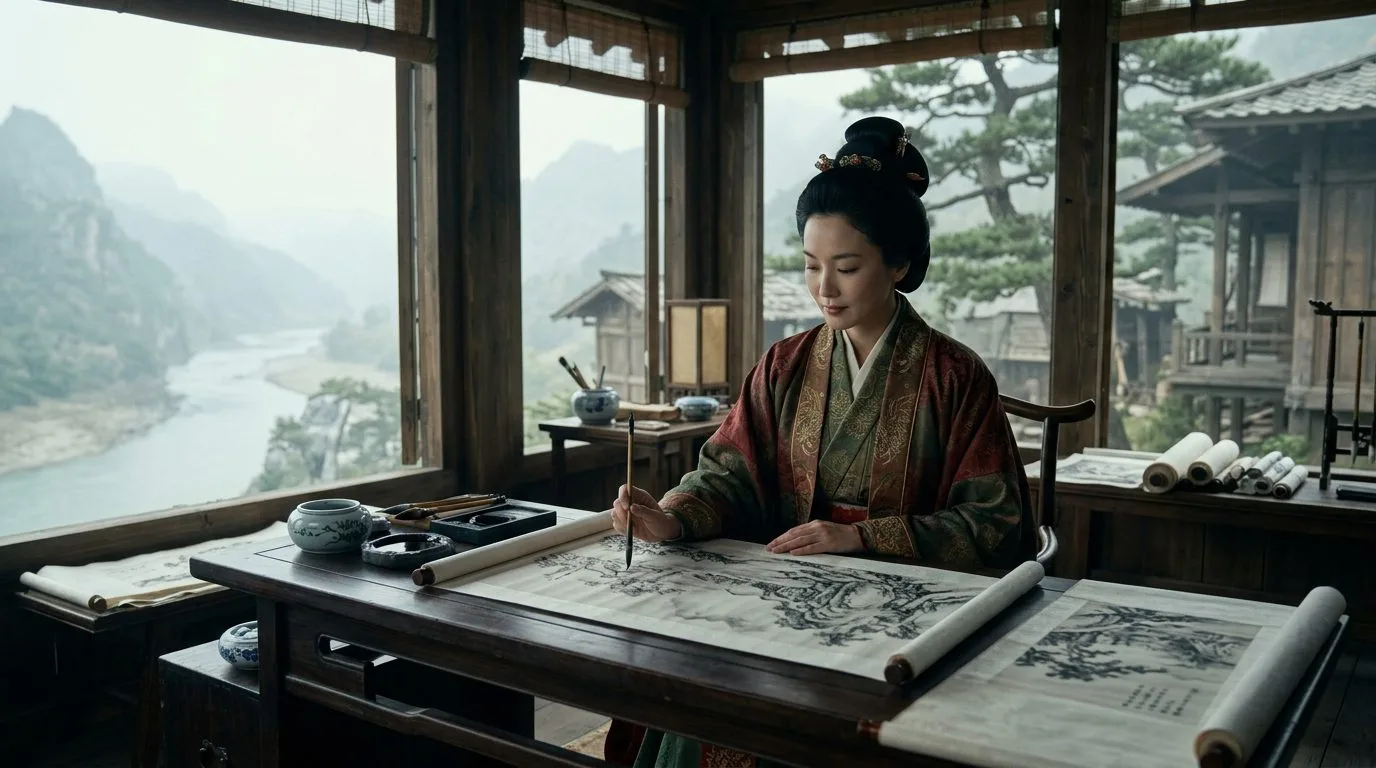
Wen Shu’s masterful landscapes attributed to male
During the late Ming Dynasty around 1595, Wen Shu created landscape paintings with such technical sophistication that dealers routinely re-signed them with male names to increase their value. She studied under her father Wen Congjian, absorbing the Wu school techniques that emphasized scholarly refinement over commercial appeal. Her surviving scroll ‘Elegant Gathering in the Apricot Garden’ demonstrates the monumental landscape style typically reserved for imperial court painters, featuring 47 individual figures rendered with meticulous precision. Modern scholars have identified at least 15 works previously attributed to male contemporaries as actually coming from her brush, revealing how gender bias erased female artistic achievement.
Source: britannica.com
5. Katsushika Ōi Completed Her Father Hokusai’s Commissions When He Went Blind
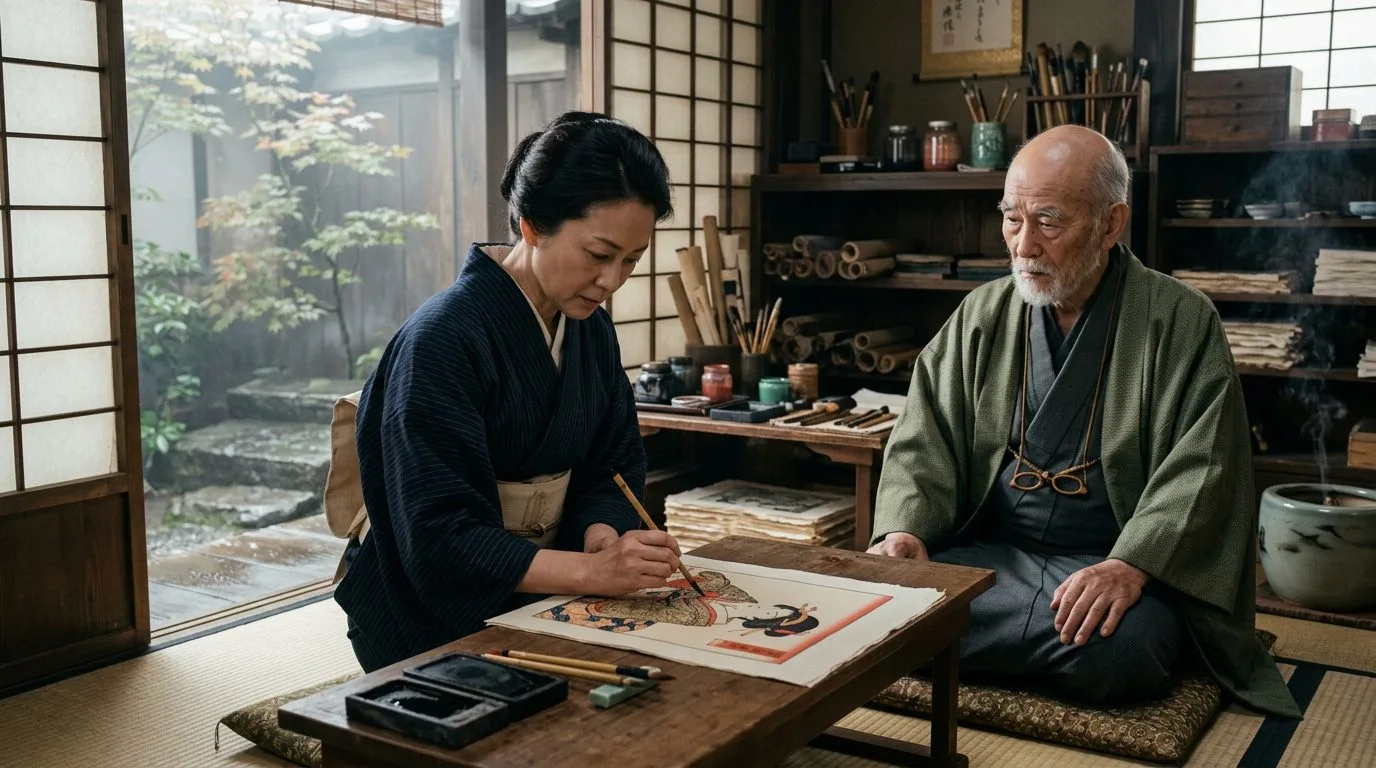
Ōi assisted her aging father with artistic
Born around 1800, Katsushika Ōi became the chief assistant to her father, the legendary ukiyo-e master Hokusai, eventually producing works indistinguishable from his hand. When cataracts diminished Hokusai’s vision in his later years, she completed major temple commissions under his name while developing her signature specialty in bijin-ga paintings of beautiful women. Her dramatic use of light and shadow, particularly in night scenes illuminated by lanterns, introduced chiaroscuro techniques rarely seen in Japanese woodblock prints. Only 10 works survive bearing her own signature, though scholars estimate she produced hundreds more attributed to her father during their 40-year collaboration.
Source: britannica.com
6. Sugimura Jihei’s Anonymous Wife Designed Erotic Prints That Scandalized Edo Society
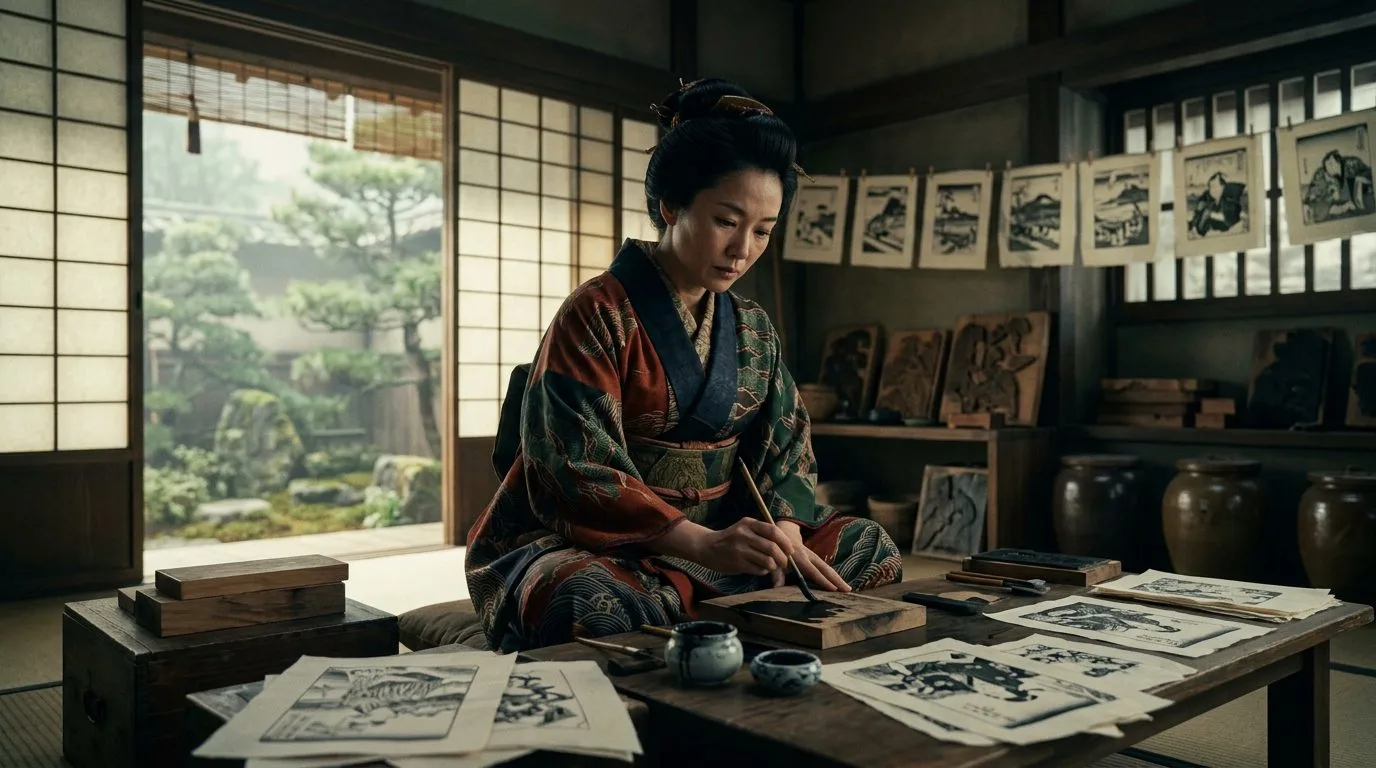
Wife’s provocative woodblock prints shocked Edo.
Around 1680, the wife of publisher Sugimura Jihei created some of the Edo period‘s most controversial shunga prints, though her name was never recorded in any document. Her designs depicted female pleasure with unprecedented frankness, showing women as active participants rather than passive objects in 32 sequential narrative prints. The Tokugawa authorities banned her work in 1684, confiscating woodblocks from 18 different publishers across Edo. Modern forensic analysis of remaining prints reveals her distinctive composition style, identifying approximately 200 designs previously attributed to anonymous male artists, making her potentially the most prolific female print designer of the late 17th century in Japan despite total historical erasure.
Source: britannica.com
7. Ma Shouzhen Rejected Marriage 40 Times to Preserve Her Artistic Freedom
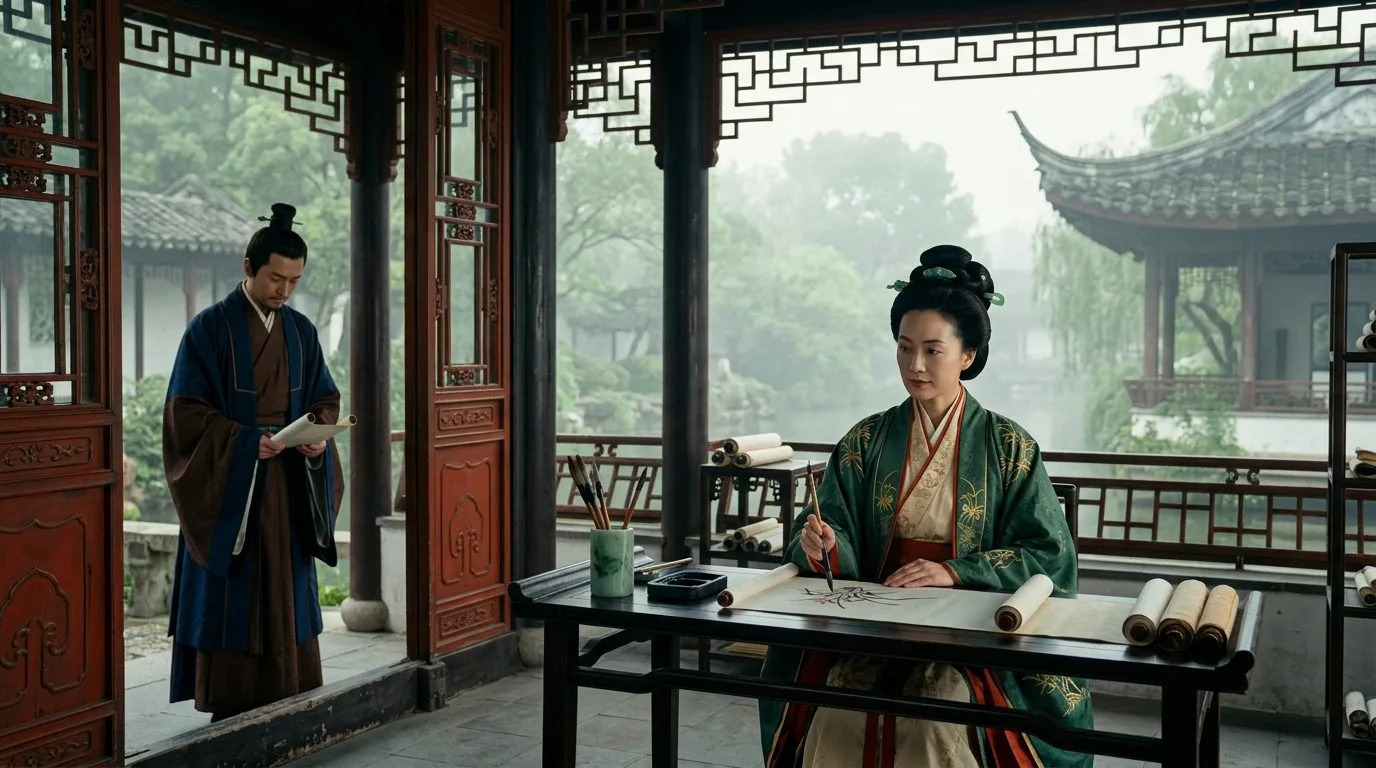
Ma Shouzhen refused marriage to pursue art freely.
In 1548, Ma Shouzhen was born into Nanjing‘s courtesan culture, where she developed orchid painting techniques so refined that collectors paid 300 taels of silver per scroll. She refused 40 marriage proposals from wealthy merchants and officials, maintaining her independence in a society that denied unmarried women property rights. Her calligraphy combined masculine strength with feminine grace, earning comparison to the great master Wang Xizhi who lived over a millennium earlier. When she died in 1604, over 2,000 mourners attended her funeral, and the city of Nanjing commissioned a memorial pavilion honoring her contributions to literati art culture.
Source: britannica.com
8. Gyokuran Painted With Her Husband Side-by-Side in Japan’s Only Equal Artistic Marriage
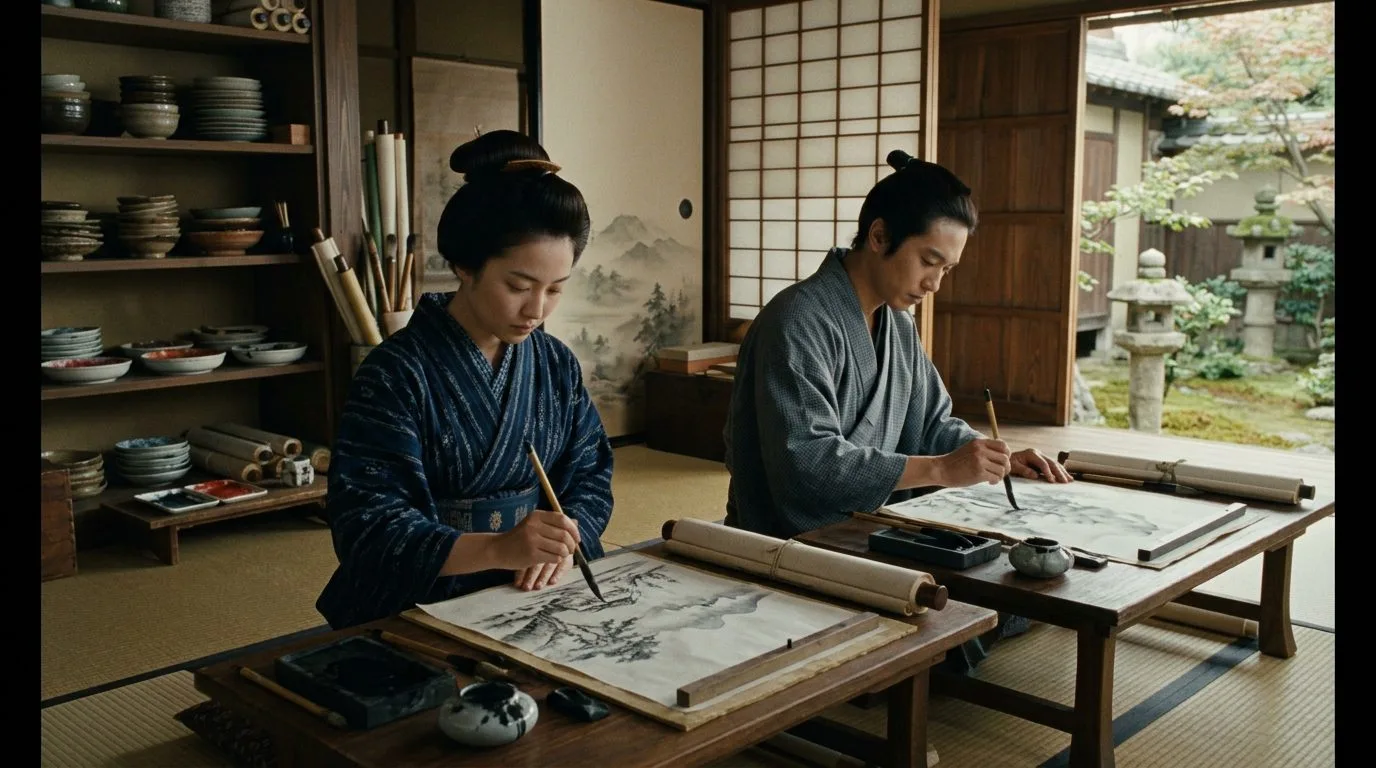
Gyokuran and her husband painting together.
Born in 1727 as the daughter of a sake brewer, Gyokuran mastered nanga literati painting and married fellow artist Ike no Taiga in 1751, forming Japan’s first documented artistic partnership of equals. They painted collaborative scrolls where her mountains met his rivers without visible seam, exhibited together in 15 major cities, and split commissions equally. Her painting ‘Autumn Festival’ sold for 50 ryo in 1776, the highest price ever paid for a female artist’s work during the Edo period. After Taiga’s death in 1776, she supported herself entirely through painting sales for several more years, proving women could achieve financial independence through art.
Source: britannica.com
9. Mughal Princess Nadira Banu Created Miniatures Using Brushes With Just 3 Hairs
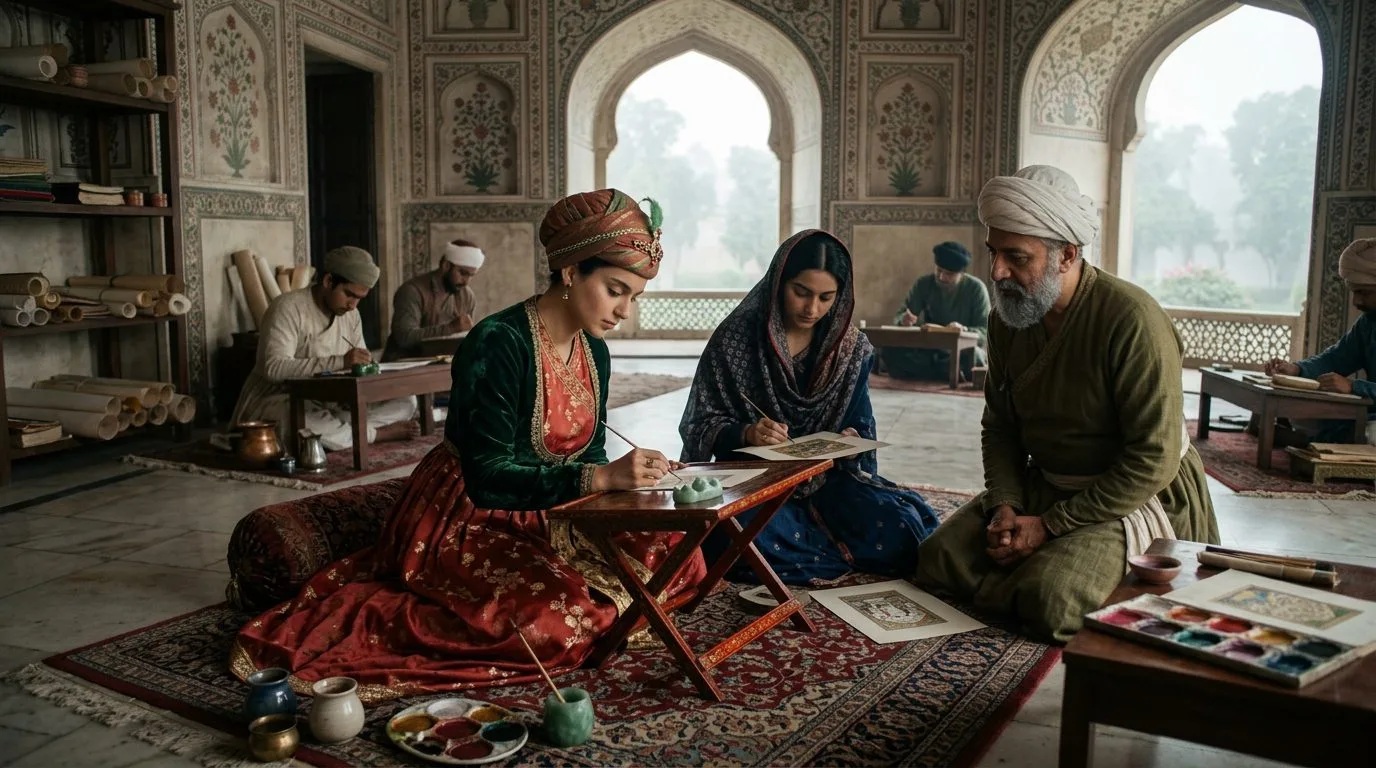
Nadira Banu’s intricate miniature art
In the Mughal court around 1650, Princess Nadira Banu and her sister Jahan Ara studied under master painter Mir Sayyid Ali, becoming the only documented female miniature painters in the imperial workshop. They used squirrel-hair brushes containing merely 3 individual hairs to apply gold leaf in patterns requiring 400 strokes per square inch. Emperor Shah Jahan commissioned Nadira to illustrate 12 pages of the royal manuscript ‘Padshahnama,’ depicting court ceremonies with such accuracy that historians use her work to reconstruct 17th-century protocol. Their studio trained 6 additional noblewomen, creating South Asia’s first recorded community of professional female painters.
Source: britannica.com
10. Fang Wanyi Painted 200 Species of Flowers From Her Family’s Botanical Garden
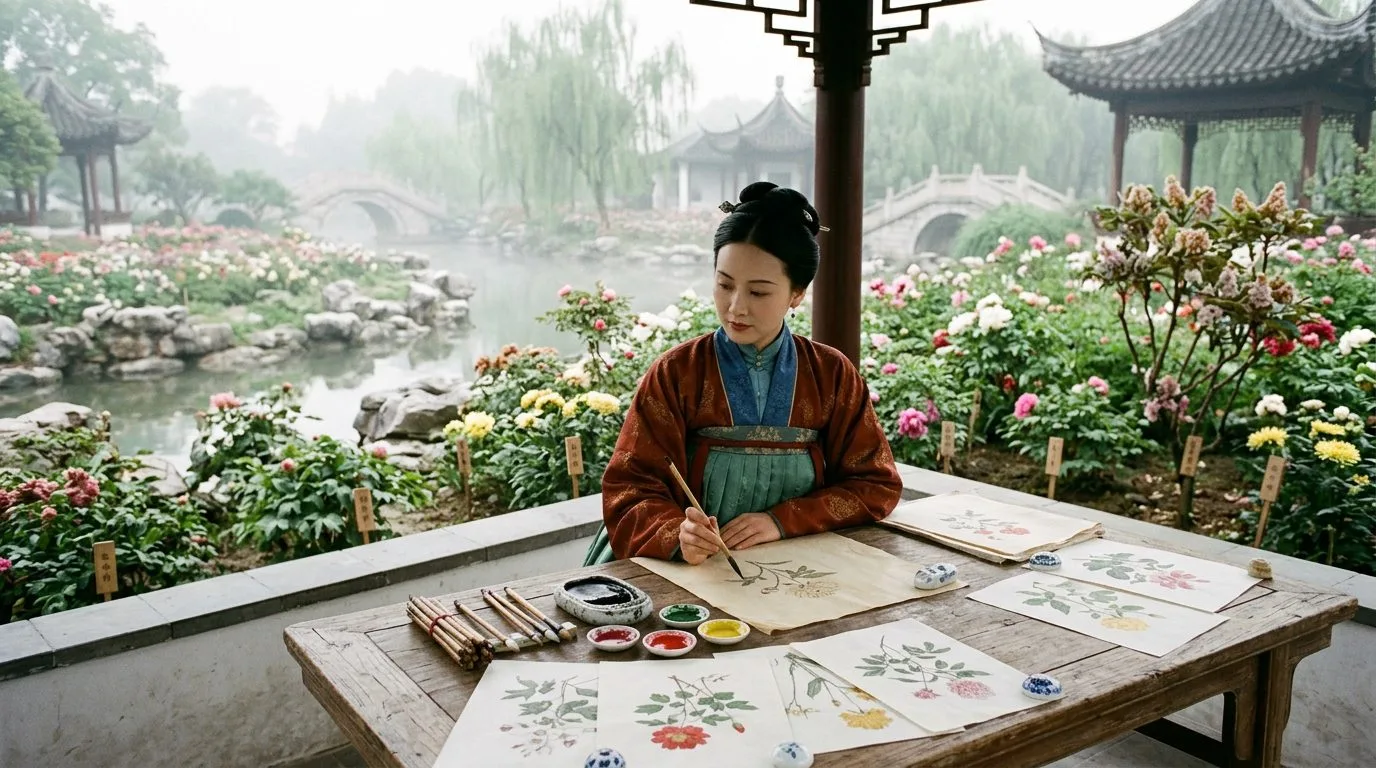
Fang Wanyi’s botanical paintings preserved her
Born in 1732 during the Qing Dynasty, Fang Wanyi transformed her family’s 5-acre Yangzhou garden into China’s most comprehensive botanical illustration project. She documented 200 plant species across 16 years, painting each flower in 4 seasonal stages with scientific precision that predated European botanical illustration by decades. Her 8-panel folding screen ‘One Hundred Flowers’ combined Song Dynasty realism with European perspective techniques learned from Jesuit missionaries, creating a unique hybrid style. The Qianlong Emperor acquired 34 of her paintings in 1768, paying 1,200 taels of silver and declaring her ‘the greatest flower painter since antiquity,’ regardless of gender.
Source: britannica.com
Did You Know?
Despite creating works that emperors collected and museums now treasure, most of these artists were systematically excluded from official histories compiled by male scholars. Katsushika Ōi’s paintings hung in temples under her father’s signature for over a century before researchers identified her distinctive brushwork. Even more surprising: recent ultraviolet analysis reveals that male dealers in 18th-century China routinely removed female signatures from valuable scrolls, replacing them with fictitious male names to increase auction prices—meaning hundreds of ‘masterworks by unknown artists’ in today’s collections may actually represent lost legacies of brilliant women whose names were literally erased from history.