
Ancient Greece gave us philosophy, democracy, and epic poetry—but history forgot the women who shaped it all. From naval commanders to Olympic champions, these ten extraordinary women defied every expectation and changed civilization forever.
1. Aspasia of Miletus Taught Socrates the Art of Rhetoric
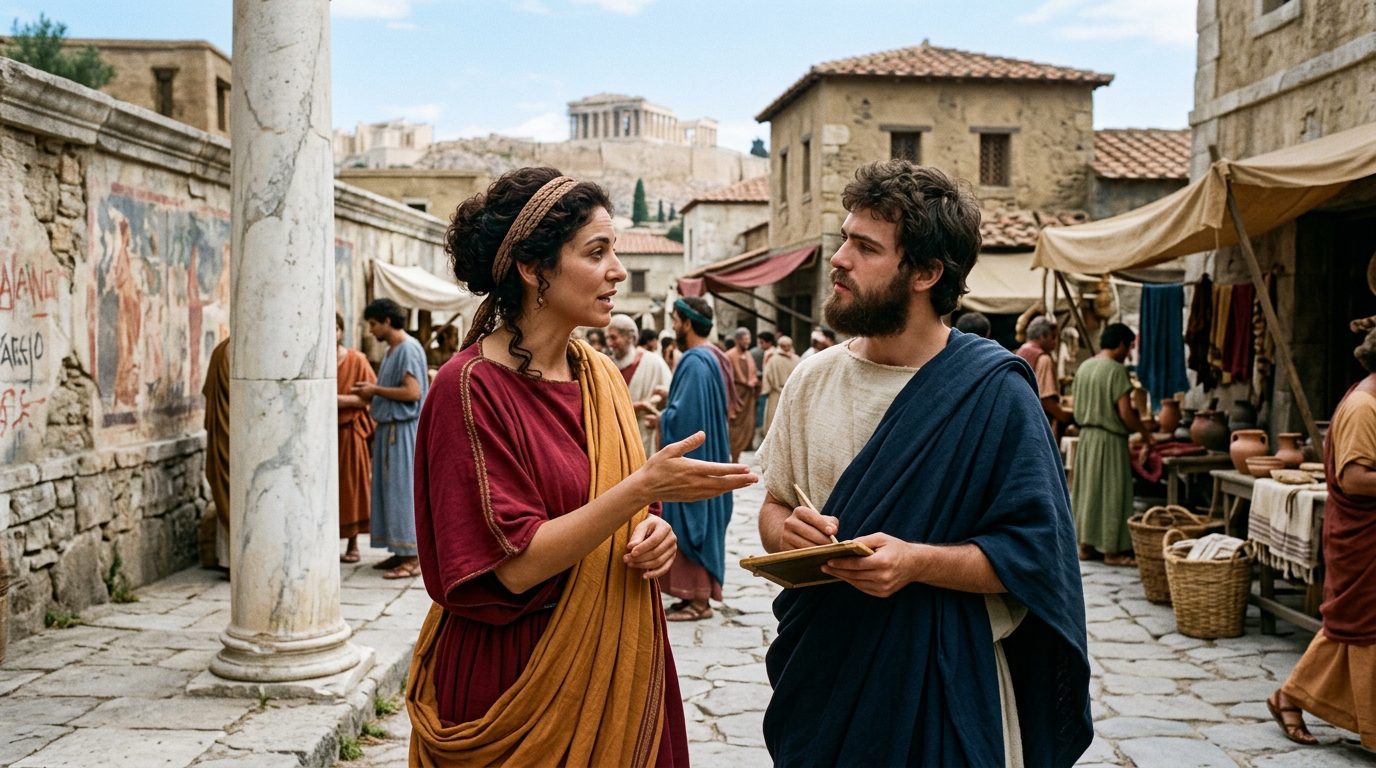
Ancient Greek scholar Aspasia instructs Socrates.
Aspasia of Miletus didn’t just influence Athenian politics—she reportedly taught Socrates himself how to argue. Born around 470 BCE in Miletus, she became the partner of Pericles, Athens’s most powerful leader, and ran an intellectual salon that attracted the city’s greatest minds. Ancient writers credited her with composing Pericles’s famous funeral oration in 431 BCE, one of history’s most celebrated speeches. While Athenian women were confined to domestic roles, Aspasia debated philosophy publicly, advised on military strategy, and shaped democratic thought. Her influence was so threatening that political enemies put her on trial for impiety—a charge Pericles himself had to defend her against.
Source: britannica.com
2. Agnodice Faced Death to Become Athens’s First Female Physician
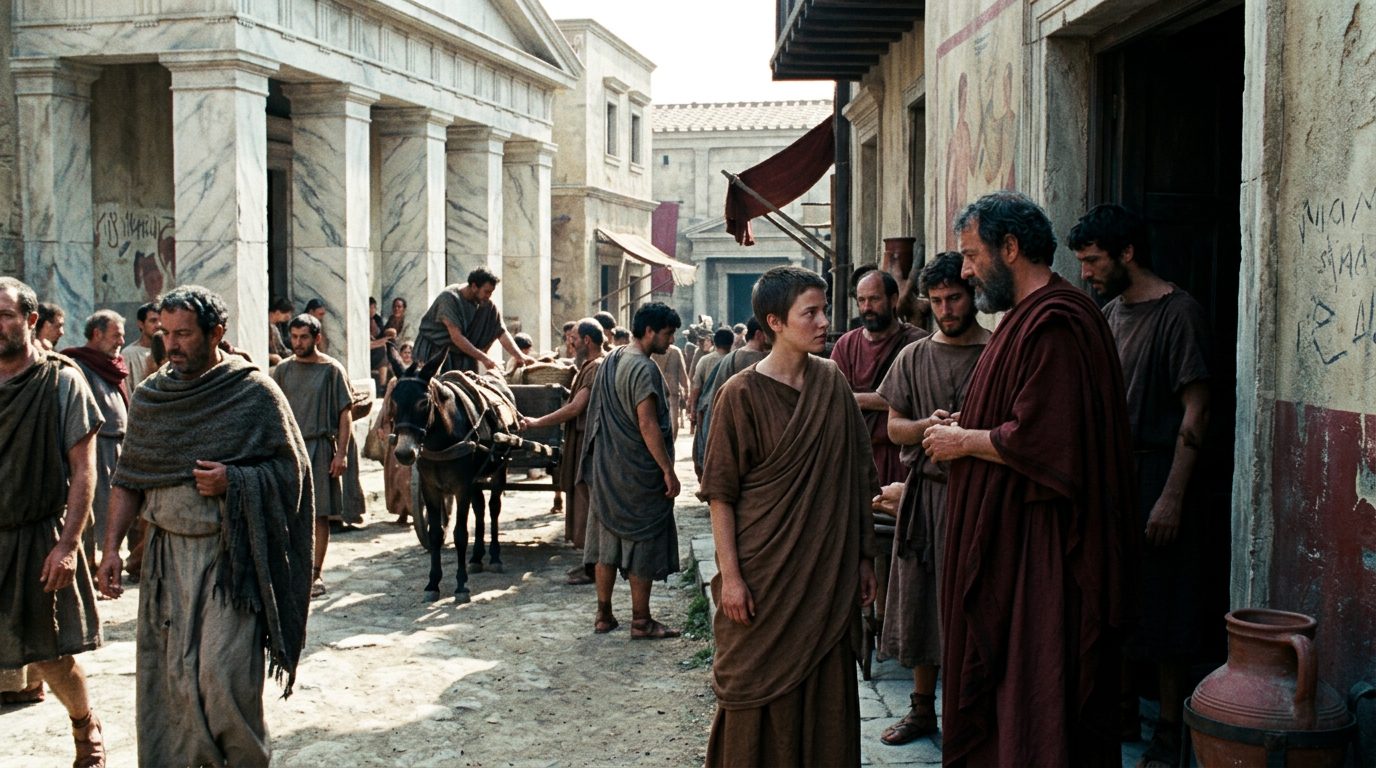
Ancient healer defied laws to practice medicine.
In 4th century BCE Athens, women were forbidden from practicing medicine under penalty of death. Agnodice cut her hair, disguised herself as a man, and studied under the renowned physician Herophilus in Alexandria. Returning to Athens around 350 BCE, she built a thriving practice treating women who refused male doctors for gynecological conditions. When jealous male physicians accused her of seducing female patients, she revealed her identity in court—immediately facing execution for illegal practice. Her patients, including the wives of Athens’s most powerful men, stormed the courthouse and threatened rebellion. The court acquitted her and Athens changed its laws, finally allowing freeborn women to practice medicine.
Source: britannica.com
3. Sappho’s Poetry Was So Powerful It Survived 2,600 Years of Destruction
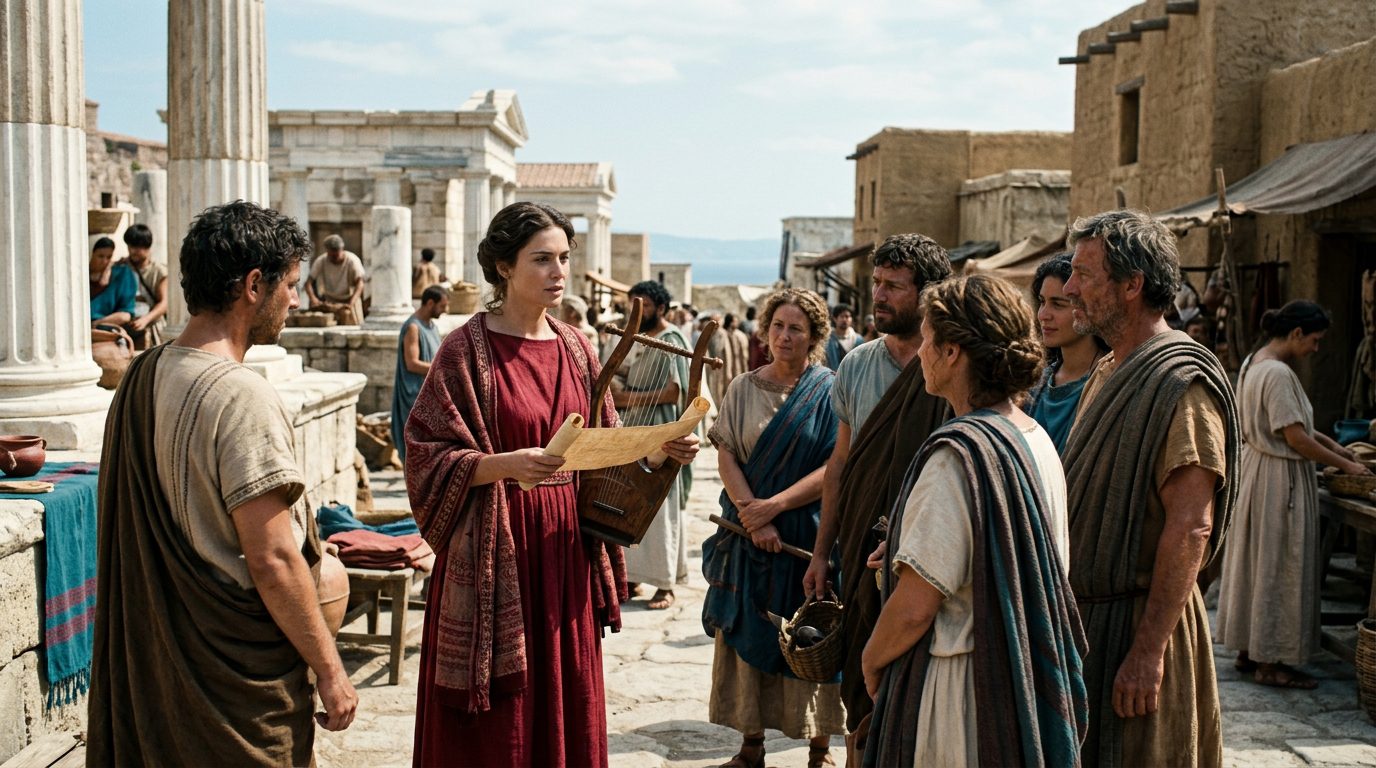
Sappho’s Poetry Was So Powerful It Survived 2
Sappho composed lyric poetry on the island of Lesbos around 600 BCE that was so revolutionary, the church burned most of it in the Middle Ages. Of nine volumes totaling roughly 10,000 lines, only one complete poem and scattered fragments survived. Ancient critics called her the “Tenth Muse” and placed her alongside Homer—extraordinary praise for any poet, unheard of for a woman. She ran an academy for young women where she taught poetry, music, and rhetoric. Her verses explored love, desire, and female beauty with unprecedented intimacy and emotional depth. Even Plato, writing 200 years after her death, acknowledged her genius, fundamentally altering how Western literature approached personal emotion.
Source: britannica.com
4. Queen Gorgo of Sparta Decoded the Message That Saved Greece
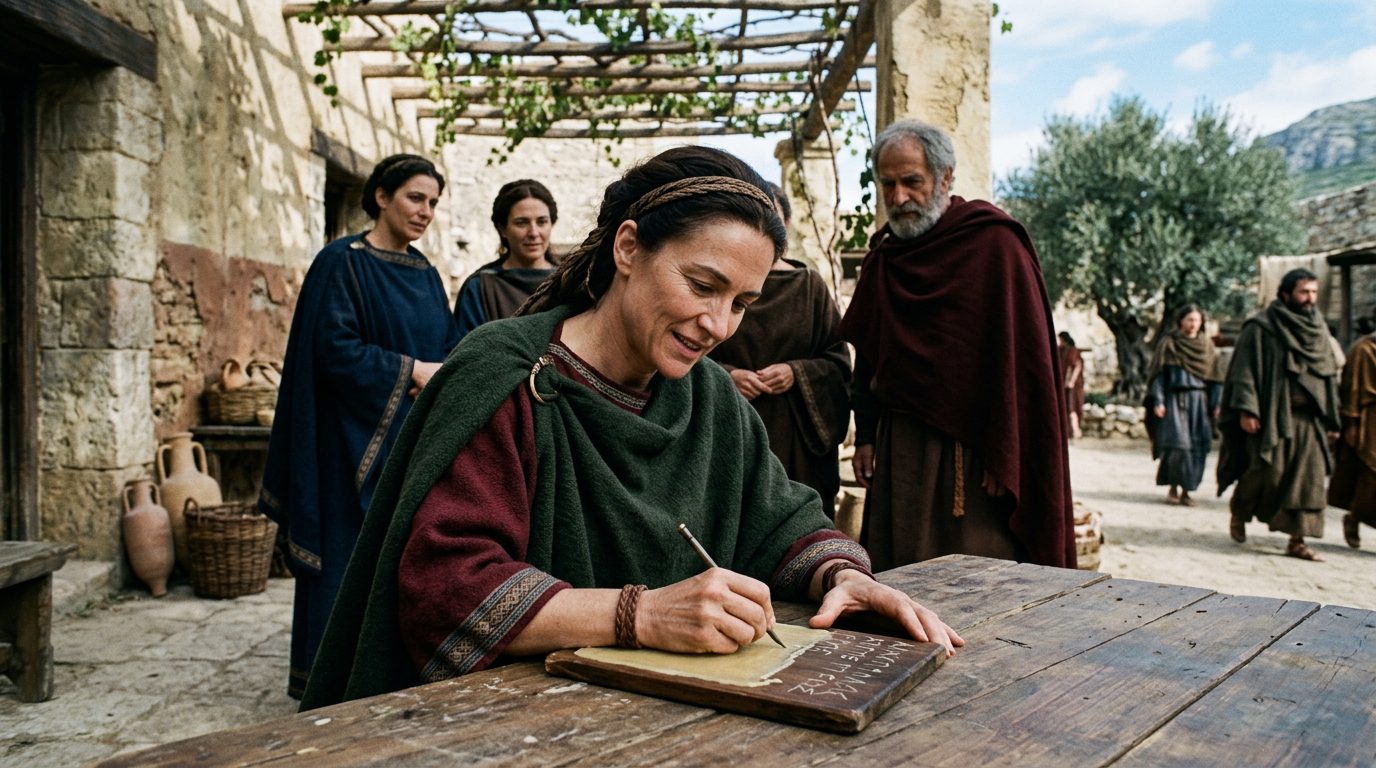
Gorgo’s wisdom uncovered the secret message.
When Persian spies sent a seemingly blank wax tablet to Sparta in 481 BCE, Queen Gorgo alone realized the secret: scrape away the wax to reveal the warning written on the wood beneath. Her intelligence discovery alerted the Greek city-states to Xerxes‘s planned invasion, allowing them to prepare the defense that culminated in the battles of Thermopylae and Salamis. Born around 518 BCE, Gorgo was the daughter of King Cleomenes I and wife of King Leonidas. She famously advised her husband on military matters and, when asked by an Athenian woman why Spartan women were the only ones who could rule men, replied: “Because we are the only ones who give birth to men.”
Source: britannica.com
5. Hypatia of Alexandria Led the Ancient World’s Greatest Library
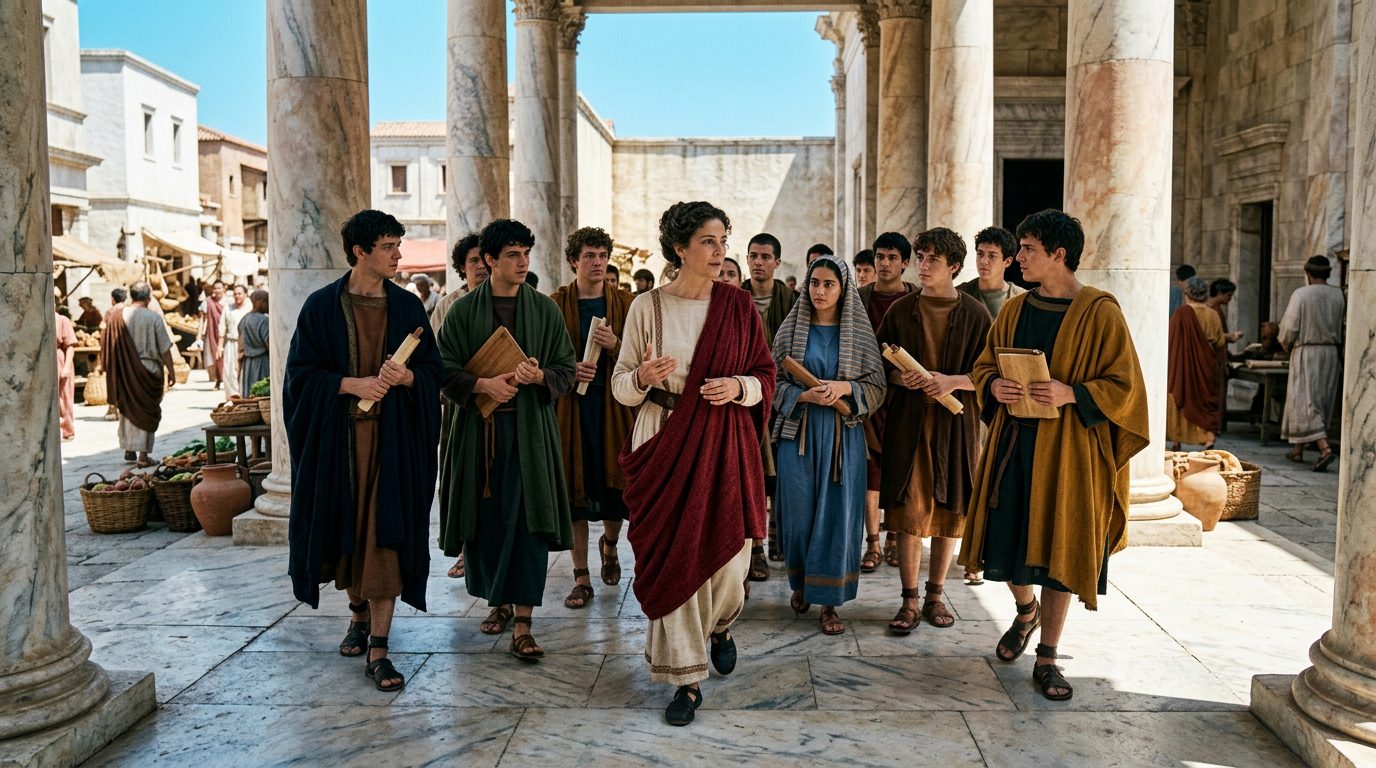
Hypatia directs scholars at the Library of
Hypatia became head of Alexandria‘s Neoplatonic school around 400 CE, teaching mathematics, astronomy, and philosophy to students who traveled from across the Roman Empire. She refined the design of the astrolabe, invented a hydrometer for measuring liquid density, and wrote commentaries on Diophantus’s Arithmetica and Apollonius’s Conics—texts that would later influence Islamic and European mathematics. Born around 355 CE, she was the first woman mathematician whose life is reasonably well documented. She never married, declaring herself “wedded to truth.” In 415 CE, a Christian mob murdered her in the streets, viewing her pagan philosophy as a threat—an attack that symbolized the end of Alexandria’s classical intellectual tradition.
Source: britannica.com
6. Arete of Cyrene Taught Philosophy for 35 Years at Plato’s Academy
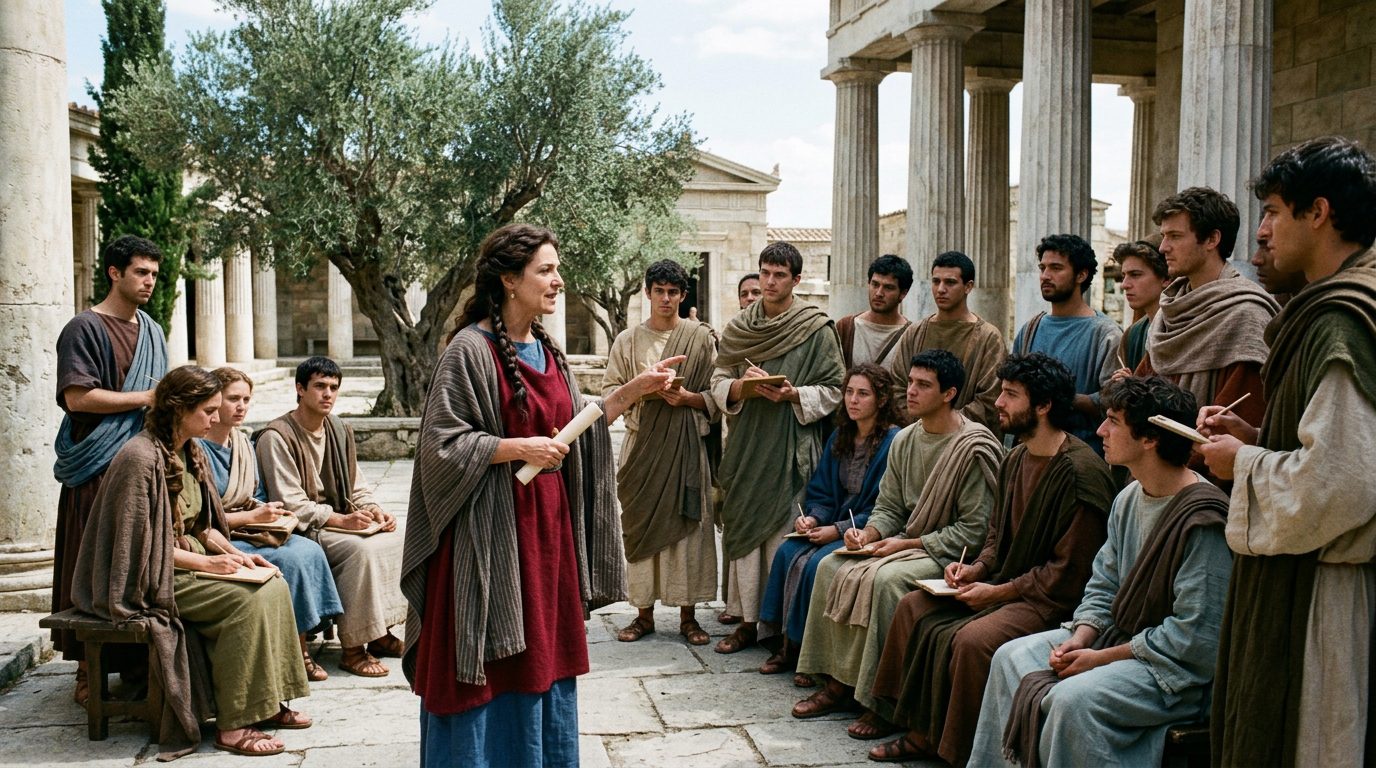
Arete of Cyrene at Plato’s Academy.
Arete of Cyrene learned philosophy from her father Aristippus, a student of Socrates, then taught at the Academy in Athens for 35 years during the 4th century BCE. Ancient sources credit her with writing 40 books on philosophy, though none survived. She taught natural and moral philosophy to over 100 students, an extraordinary achievement when women were barred from most public intellectual life. Her son, also named Aristippus, became a renowned philosopher himself, trained entirely by his mother. The citizens of Cyrene honored her with a public monument, and later philosophers praised her wisdom. She proved that women could master the same philosophical heights as men—a radical idea that challenged Greek society’s fundamental assumptions.
Source: britannica.com
7. Cynisca of Sparta Shattered Olympic Gender Barriers in 396 BCE
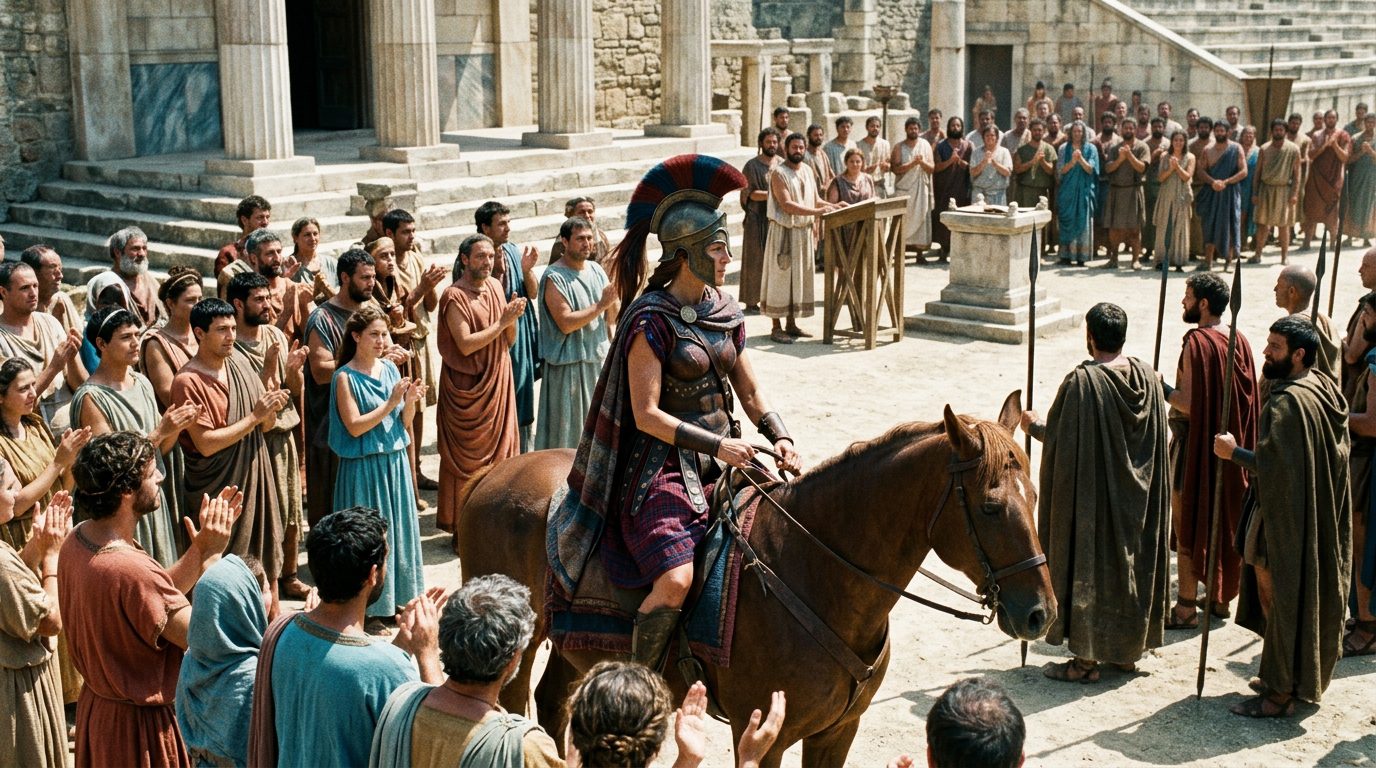
Cynisca’s chariot victory broke Olympic tradition.
Princess Cynisca became the first woman to win at the Olympic Games in 396 BCE, then won again in 392 BCE—achievements so significant the Greeks erected a bronze statue of her at Olympia. Women were banned from even attending the Olympics under penalty of death, but chariot racing victories were awarded to the owner, not the driver. Cynisca exploited this loophole, breeding and training her own four-horse chariot team. Born around 440 BCE to King Archidamus II, she possessed the wealth and status to maintain an Olympic-caliber stable. Her victories forced Greek society to acknowledge female athletic and strategic excellence. The statue’s inscription read: “Kings of Sparta were my fathers and brothers, and I won with a team of swift-footed horses.”
Source: britannica.com
8. Artemisia I Commanded Xerxes’s Fleet at the Battle of Salamis
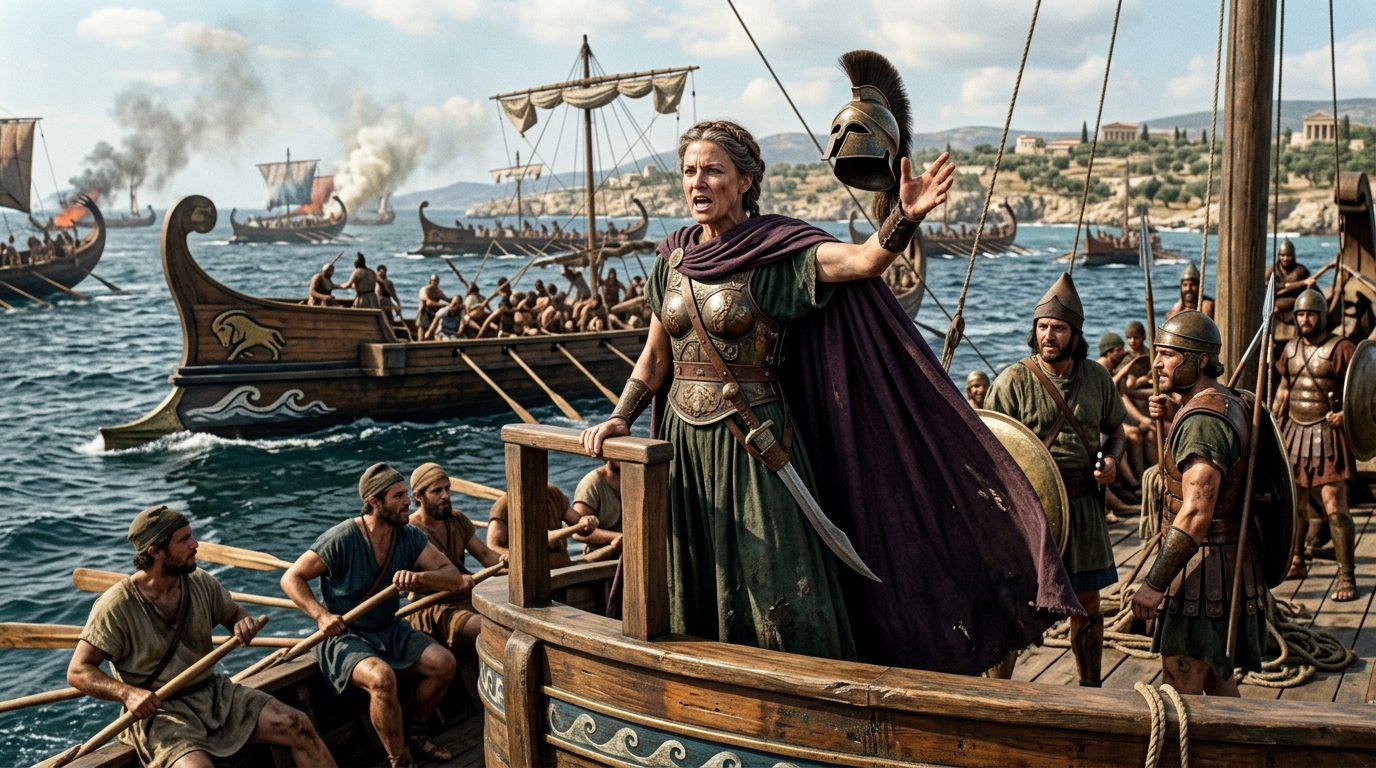
Artemisia I of Halicarnassus led naval forces at
Queen Artemisia I of Halicarnassus commanded five warships in Xerxes’s invasion fleet at the Battle of Salamis in 480 BCE—the only female commander in the Persian armada. When her ship was trapped by an Athenian trireme, she rammed and sank a Persian allied vessel, making the Greeks think she had switched sides. The ruse worked perfectly. Xerxes, watching from shore, reportedly declared: “My men have become women, and my women men.” Born around 520 BCE, she ruled Caria as regent for her young son after her husband’s death. The Greek historian Herodotus praised her tactical brilliance and noted that Xerxes valued her counsel above all other commanders, consulting her before every major decision throughout the failed invasion.
Source: britannica.com
9. Theano Preserved Pythagoras’s Mathematical Legacy After His Death
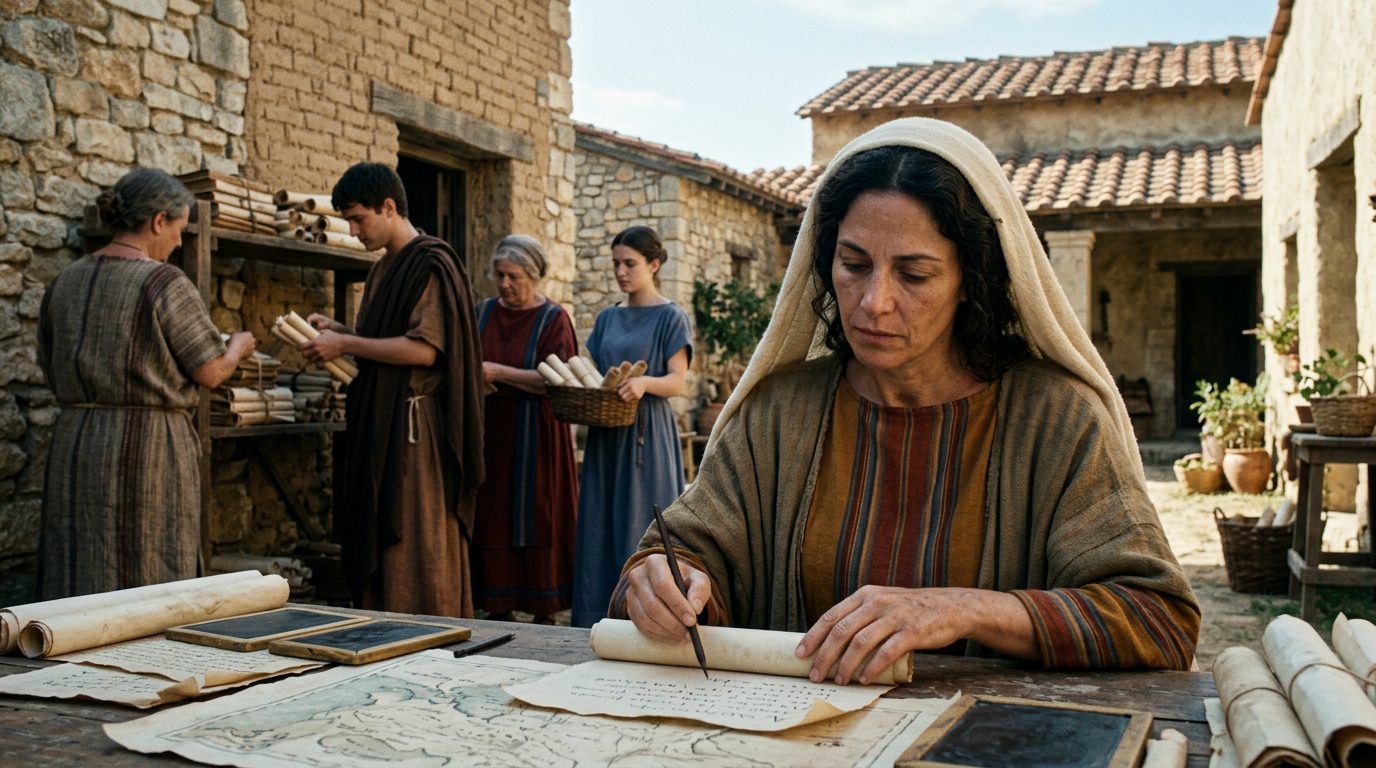
Theano safeguarded Pythagoras’s mathematical
Theano studied mathematics at Pythagoras‘s school in Croton around 550 BCE, eventually becoming his wife and intellectual partner. When anti-Pythagorean riots killed Pythagoras around 495 BCE, she assumed leadership of his philosophical community and preserved his mathematical discoveries. Ancient sources credit her with treatises on mathematics, physics, medicine, and child psychology—making her one of history’s first female mathematicians. She developed the principle of the Golden Mean, the mathematical ratio that would influence art and architecture for millennia. She also raised their five children, several of whom became philosophers themselves. Her work ensured that Pythagorean mathematics survived the violent suppression of the school, transmitting knowledge that would shape Western science.
Source: britannica.com
10. Hydna of Scione Sabotaged the Persian Fleet Before the Battle of Salamis
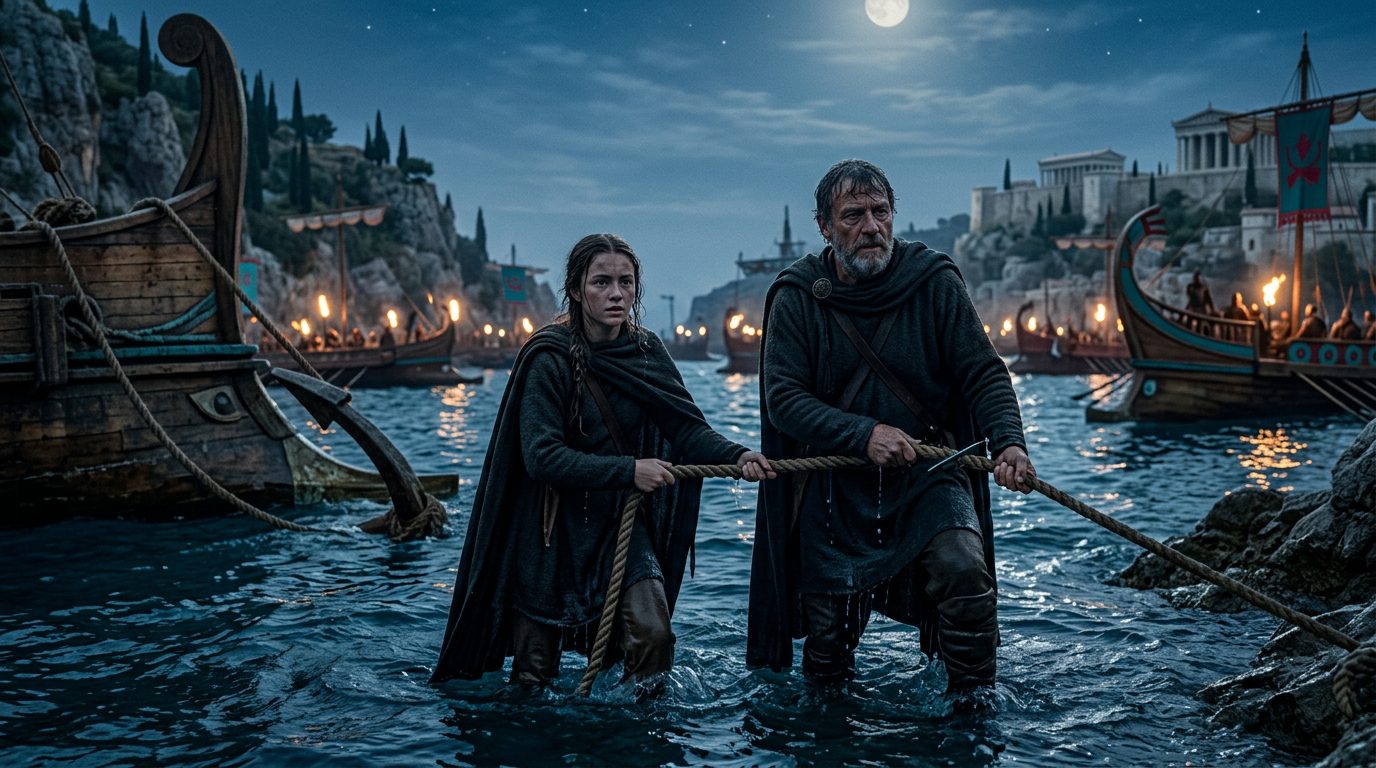
Hydna dove to cut Persian ship moorings.
In 480 BCE, fifteen-year-old Hydna and her father Scyllis swam nearly ten miles through a storm to sabotage the Persian fleet anchored off Mount Pelion. They dove repeatedly, cutting anchor ropes and setting ships adrift—over 400 Persian vessels smashed against rocks or each other in the chaos. This underwater assault significantly weakened Xerxes’s navy before Salamis, contributing to the Greek victory that saved Western civilization. Trained as a diver from childhood in Scione, Hydna could hold her breath longer than any soldier. The Greeks honored both father and daughter with statues at Delphi—an extraordinary recognition for a teenage girl. Her courage proved that women could execute military operations requiring the same physical endurance and strategic thinking as male warriors.
Source: britannica.com
Did You Know?
Did You Know? The Spartans allowed women to own land and property—by the 4th century BCE, women controlled roughly 40 percent of Sparta’s wealth, making them the richest women in the ancient world. This economic power explains why Spartan women like Cynisca and Gorgo wielded political influence that would have been unthinkable in Athens, where women couldn’t even leave home without male permission. The society that produced history’s fiercest warriors gave its women the freedom to become warriors themselves.