
When a gladiator entered the arena, his weapon defined not just his fighting style but his very survival. Each arsenal created deadly matchups that transfixed 50,000 Roman spectators with life-or-death drama.
1. Retiarius Net and Trident: The Fisherman’s Deadly Gambit

Retiarius Net and Trident
The retiarius carried perhaps the most unusual gladiator arsenal—a weighted net called a rete and a three-pronged trident known as a fuscina. Fighting nearly naked except for a shoulder guard, these gladiators represented fishermen and entered the Colosseum around 1 CE during Augustus’s reign. The net measured roughly 10 feet in diameter with lead weights sewn into its edges, designed to entangle an opponent’s sword arm or legs. If the first throw missed, the retiarius had no backup plan—he fought with a dagger and trident against heavily armored opponents. Contemporary mosaics from Pompeii show these fighters often faced secutores, creating a speed-versus-armor dynamic that made crowds roar.
Source: britannica.com
2. Secutor’s Gladius and Scutum: Purpose-Built Net Hunter
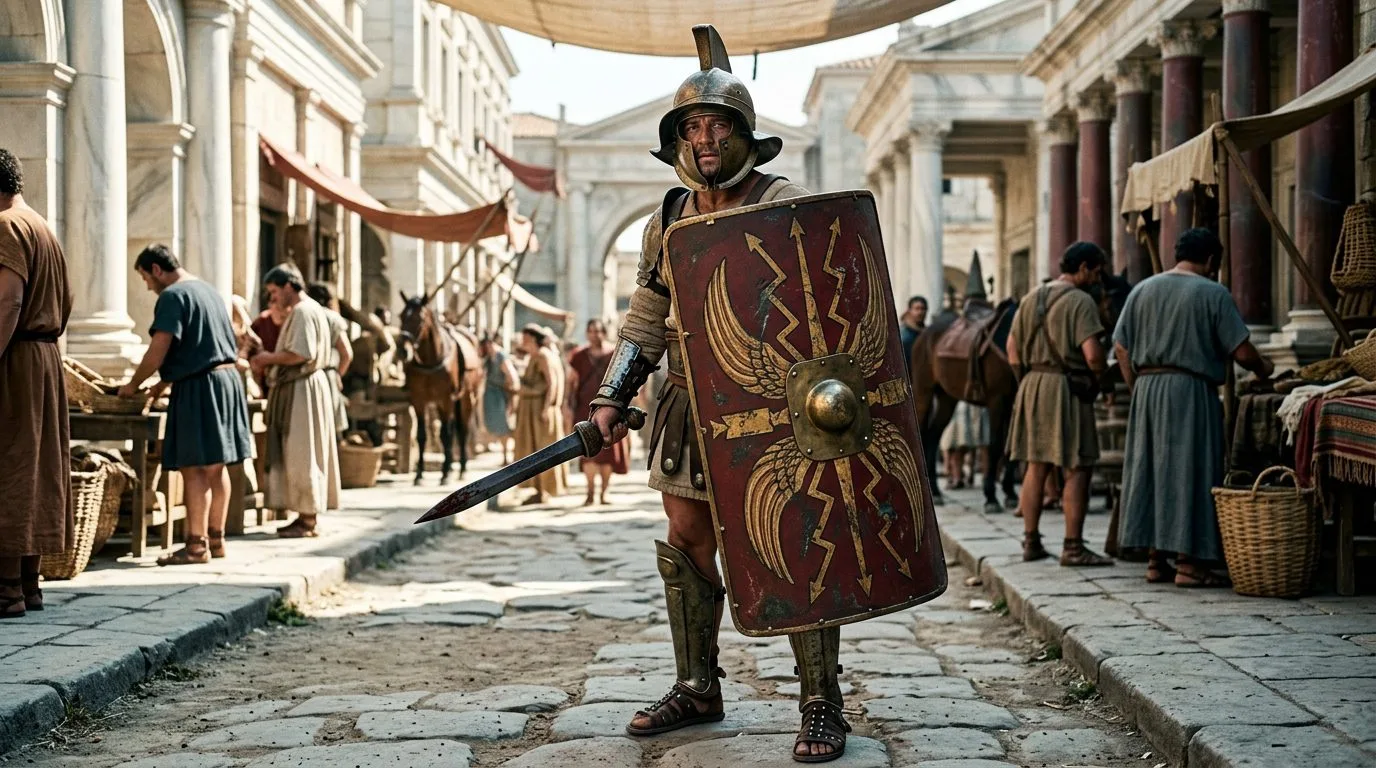
Secutor’s Gladius and Scutum
The secutor wielded a gladius—a 24-inch double-edged sword—and a massive curved rectangular scutum shield that covered most of his body. Created specifically to counter the retiarius around 50 CE, the secutor’s name literally means “pursuer” or “chaser.” His egg-shaped helmet featured only two small eye holes, preventing net entanglement but severely limiting vision and breathing. The scutum weighed approximately 22 pounds and stood four feet tall, constructed from three layers of wood strips glued in alternating directions. This combination forced the secutor to press forward aggressively before exhaustion set in, creating the exact spectacle Roman crowds demanded—a relentless armored warrior hunting a nimble, nearly naked opponent.
Source: britannica.com
3. Murmillo’s Curved Scutum: The Gaul’s Wall of Defense
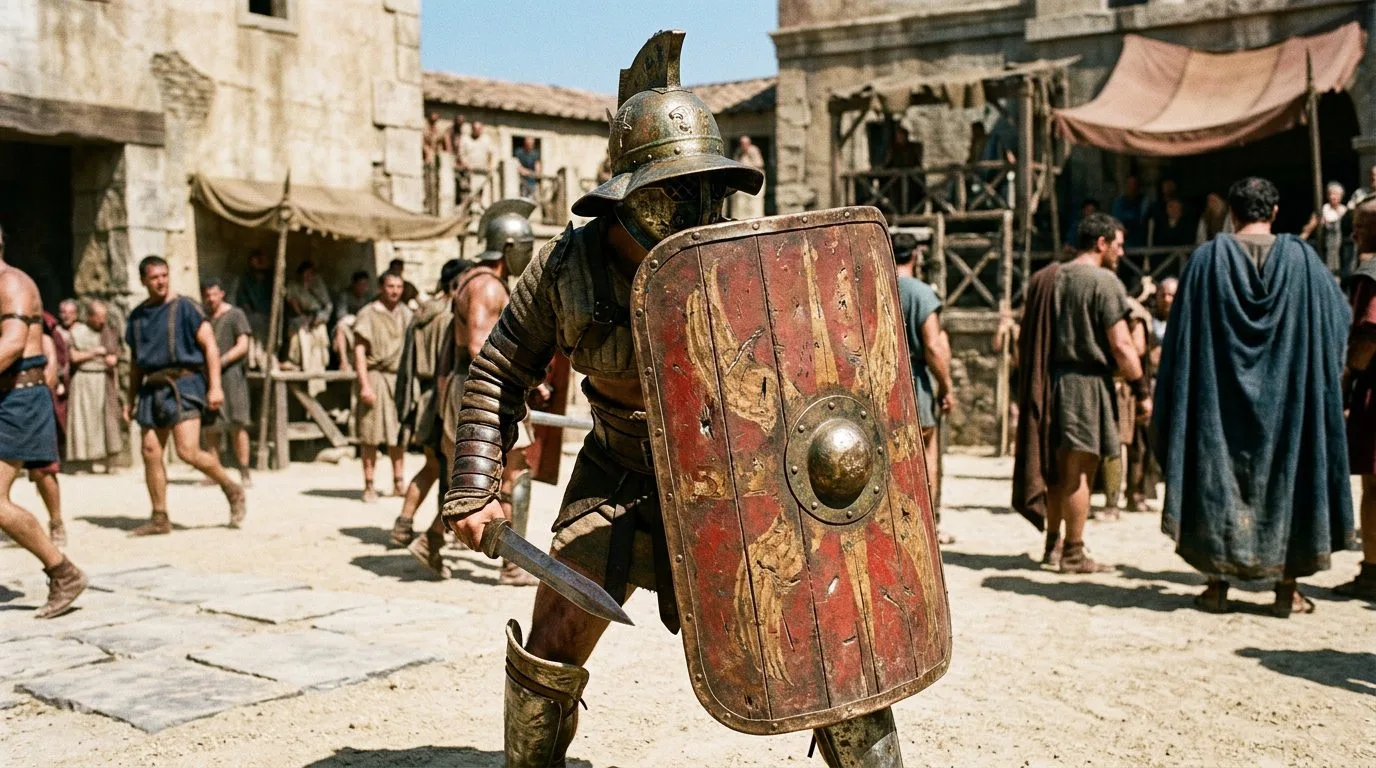
Murmillo’s Curved Scutum
The murmillo carried the same curved rectangular scutum as the secutor but paired it with a distinctive tall-crested helmet resembling a fish. These gladiators emerged during the late Republic period around 50 BCE, representing Gallic warriors Rome had conquered. The shield’s curve allowed it to wrap partially around the body, and its iron boss in the center could be used as a battering weapon. Archaeological evidence from Pompeii’s gladiator barracks shows these shields were painted with unit emblems and god symbols. At 42 inches tall, the scutum provided protection from neck to shin. Murmillones typically faced Thraeces or hoplomachi, and their defensive style often led to prolonged, grinding battles that tested endurance as much as skill.
Source: britannica.com
4. Thraex Sica: The Thracian Killer’s Curved Blade
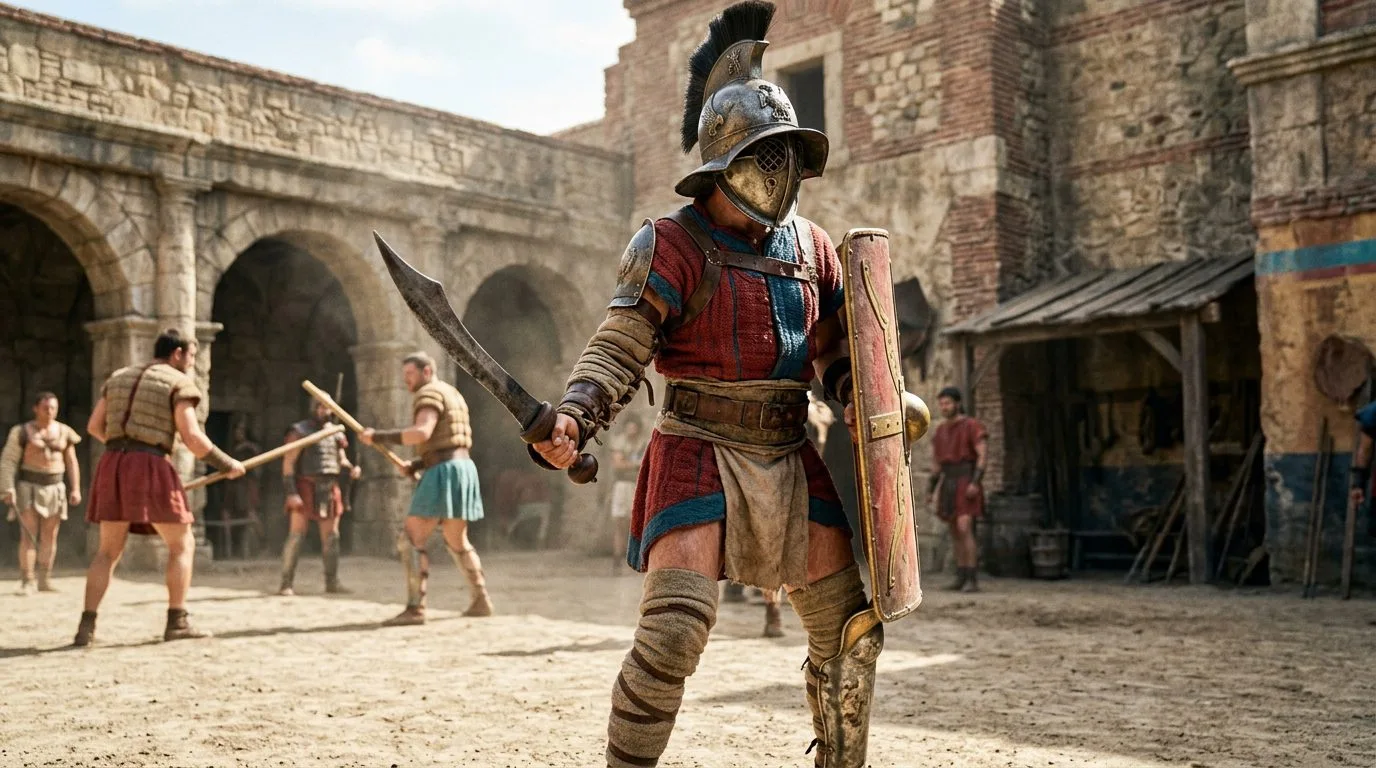
Thraex Sica: The Thracian Killer’s Curved Blade
The Thraex gladiator wielded a sica—a viciously curved short sword measuring about 16 inches with a sharp inner edge designed to hook around shields and strike flesh. Originating from Thracian warriors around 100 BCE, this weapon could bypass the defensive advantages of larger Roman shields by curving over or around their edges. The sica’s distinctive 90-degree bend near the tip made it devastating in close combat. Thraeces also carried a small square shield called a parmula, forcing them to rely on agility and the sica’s unique geometry. Graffiti from Pompeii names famous Thraex fighters like Celadus, called “the girls’ heartthrob,” showing how weapon specialization created celebrity gladiators with devoted followings.
Source: britannica.com
5. Hoplomachus Spear and Parma: Greek Warrior Reborn
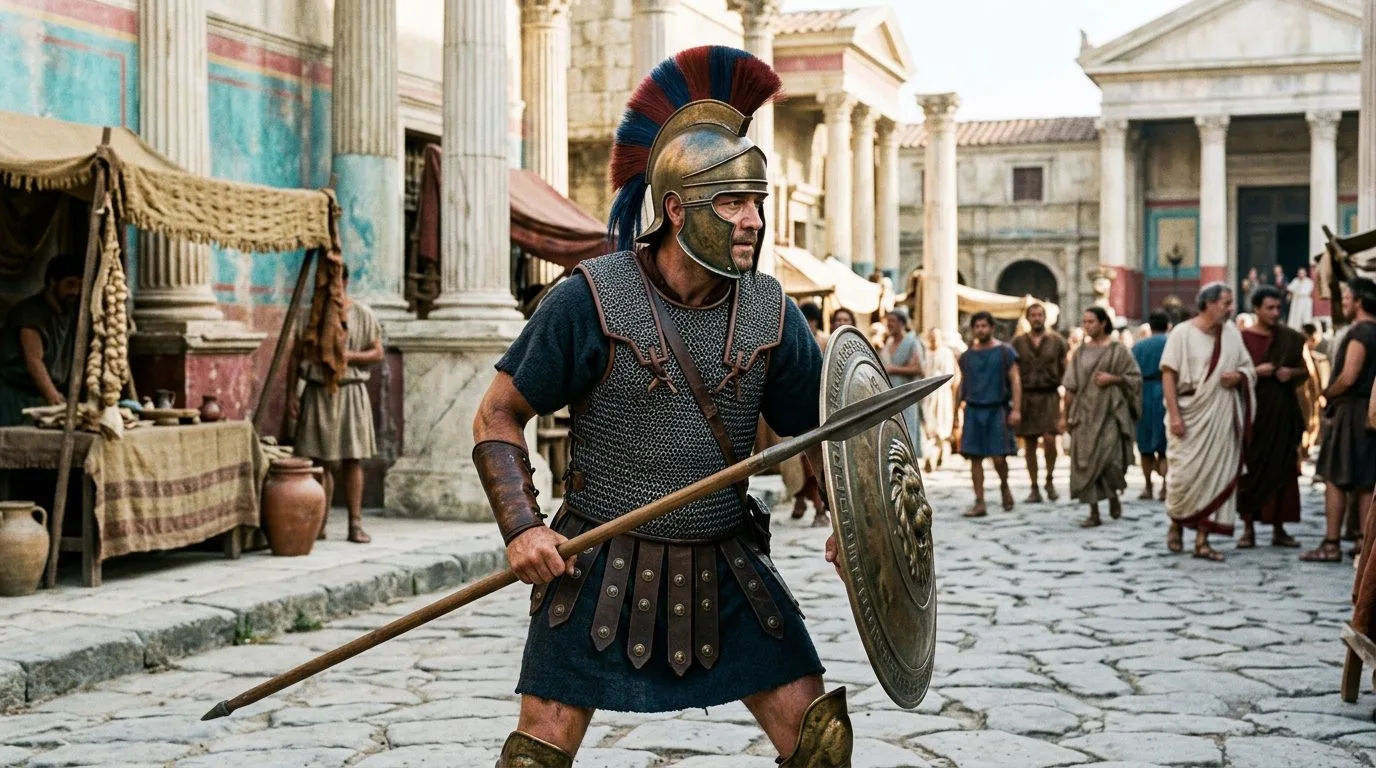
Hoplomachus Spear and Parma: Greek Warrior Reborn
The hoplomachus fought with a hasta—a 6-foot thrusting spear—and a small bronze parma shield only 3 feet in diameter, deliberately mimicking Greek hoplite warriors. These gladiators appeared in Roman arenas around 50 BCE as Rome expanded into Greece. Unlike the massive scutum, the parma required constant movement and precise positioning to deflect blows. The hoplomachus also carried a pugio dagger and short sword as backup weapons when the spear broke or became lodged in an opponent’s shield. Their quilted leg wrappings and tall crested helmets distinguished them visually. Archaeological finds at the Carnuntum gladiator school in Austria revealed practice weapons matching these specifications, confirming historical accounts of their arsenal.
Source: britannica.com
6. Scissor Arm-Blade: The Arena’s Most Bizarre Weapon
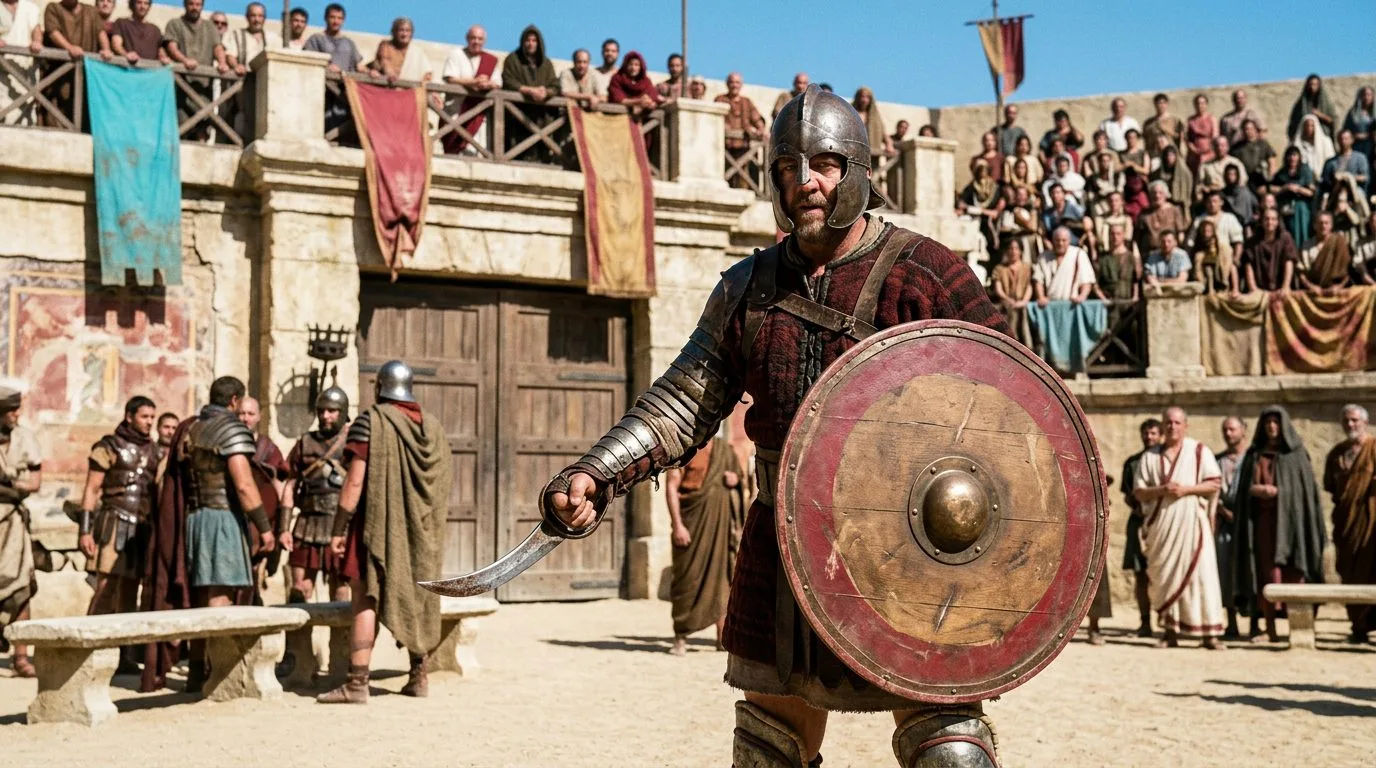
Scissor Arm-Blade: The Arena’s Most Bizarre Weapon
The scissor consisted of a tube-shaped metal sleeve covering the entire arm, ending in a crescent or straight blade extending 18 inches beyond the fist. First documented during Trajan’s reign around 110 CE, this weapon transformed the gladiator’s arm into a combination shield and slashing device. The metal tube, made of hardened steel or iron, weighed approximately 15 pounds and required exceptional arm strength to wield effectively. Scissores typically fought each other or retiarii, creating visually spectacular contests. The blade’s position meant every punch became a potentially lethal strike. Relief sculptures from Ephesus show these gladiators in combat stance, their armored arms extended like mechanical appendages—a weapon so impractical yet theatrical it perfectly embodied Roman arena entertainment values.
Source: britannica.com
7. Provocator’s Hasta: The Challenger’s Thrusting Spear
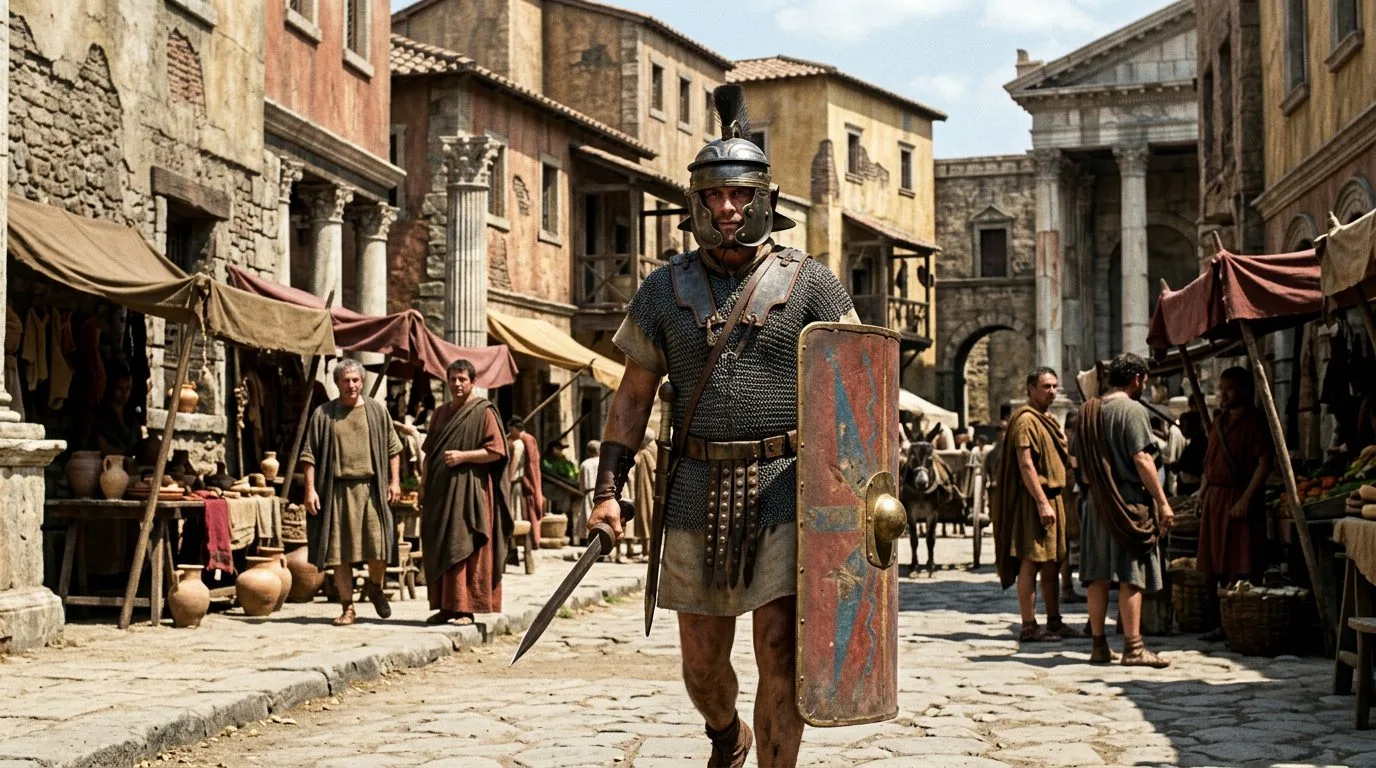
Provocator’s Hasta
The provocator carried a shorter hasta spear measuring roughly 4 feet and wore a breastplate—unique among gladiator types who typically fought bare-chested. Emerging during the late Republic around 70 BCE, provocatores represented Roman legionaries and fought only against other provocatores, ensuring matched equipment and skill-based contests. Their name means “challenger,” and they epitomized honorable combat rather than exotic spectacle. The hasta’s shorter length compared to the hoplomachus version made it ideal for arena confines, where 6-foot spears became unwieldy. These gladiators wore medium-sized rectangular shields and visored helmets with two feathers. Emperor Caligula reportedly fought as a provocator in private games around 40 CE, though likely against unarmed opponents.
Source: britannica.com
8. Dimachaerus Dual Swords: The Two-Blade Whirlwind
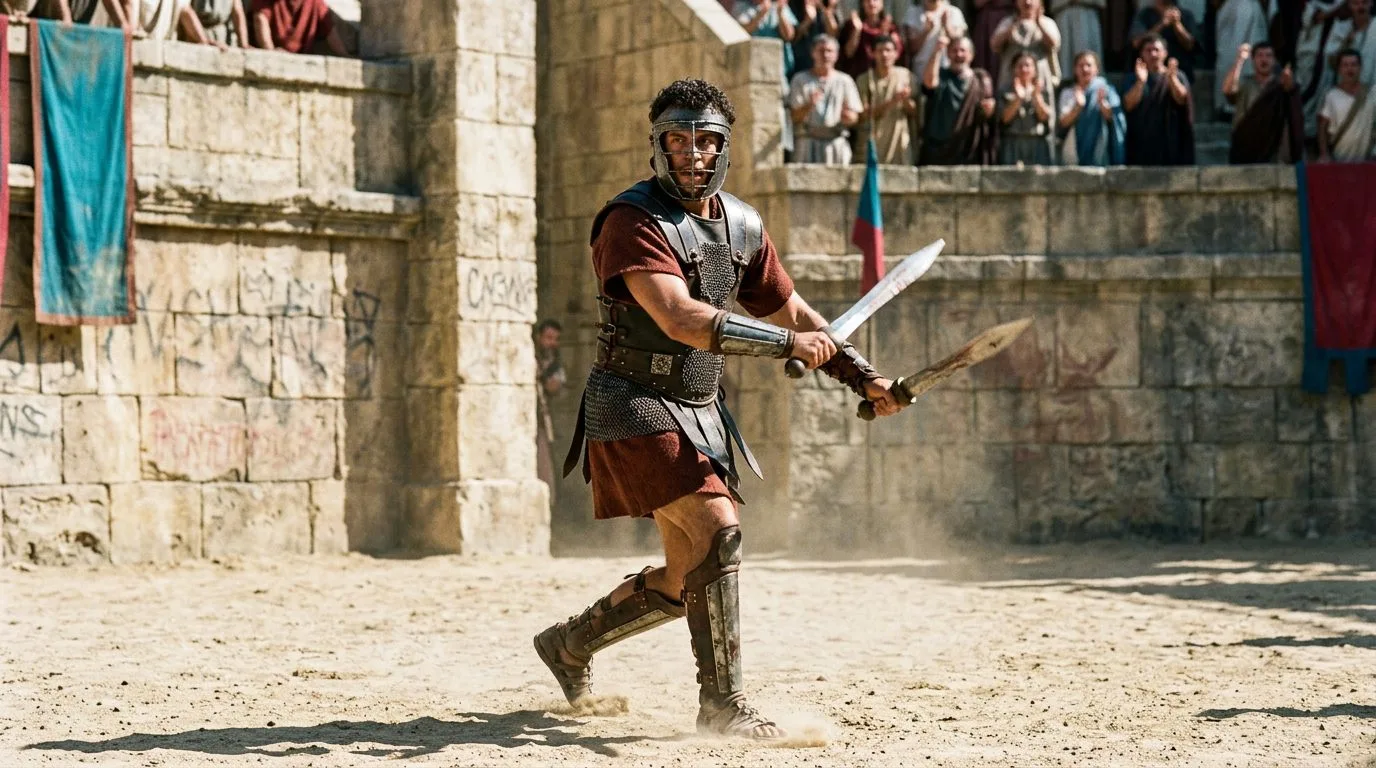
Dimachaerus Dual Swords: The Two-Blade Whirlwind
The dimachaerus fought with two swords simultaneously, typically gladii or slightly curved blades each measuring 20 inches. Historical references to these gladiators remain scarce, appearing primarily in records from the 2nd century CE. The name derives from Greek “di-” meaning two and “machaira” meaning sword. Fighting with dual weapons required extraordinary coordination and years of training, as each hand had to defend while attacking. These gladiators wore minimal armor—usually just arm guards and a light helmet—because maximum mobility was essential to their whirling attack style. A relief from the Zliten mosaic in Libya, dated to 80 CE, shows what appears to be a dimachaerus in action, his twin blades captured mid-strike against a retiarius.
Source: britannica.com
9. Laquearius Lasso: The Rope Strangler’s Gambit
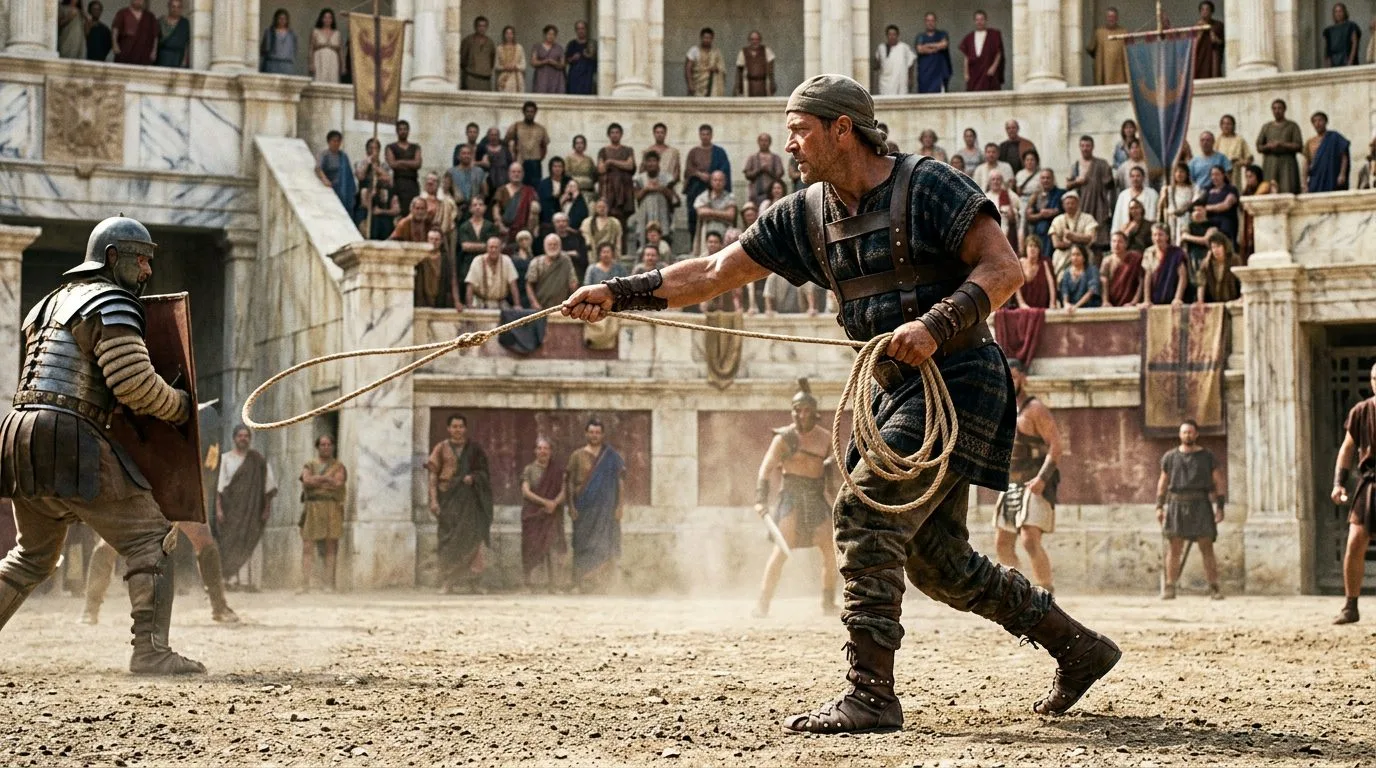
Laquearius Lasso: The Rope Strangler’s Gambit
The laquearius wielded a lasso or noose called a laqueus, attempting to ensnare opponents before finishing them with a short sword. Mentioned in texts from the 1st century CE, these gladiators represented perhaps the rarest and most specialized arena fighters. The laqueus measured approximately 12 feet long, crafted from twisted leather or hemp rope with a running noose at one end. Unlike the retiarius net which entangled limbs, the laquearius aimed specifically for the neck or weapon arm, yanking opponents off balance. Suetonius mentions Emperor Commodus forcing senators to watch him fight as a laquearius around 190 CE, suggesting the weapon’s association with humiliation and control. The technique required precision timing—one missed throw left the fighter vulnerable with only a pugio dagger for defense.
Source: britannica.com
10. Bestiarius Hunting Spear: Facing Rome’s Deadliest Beasts
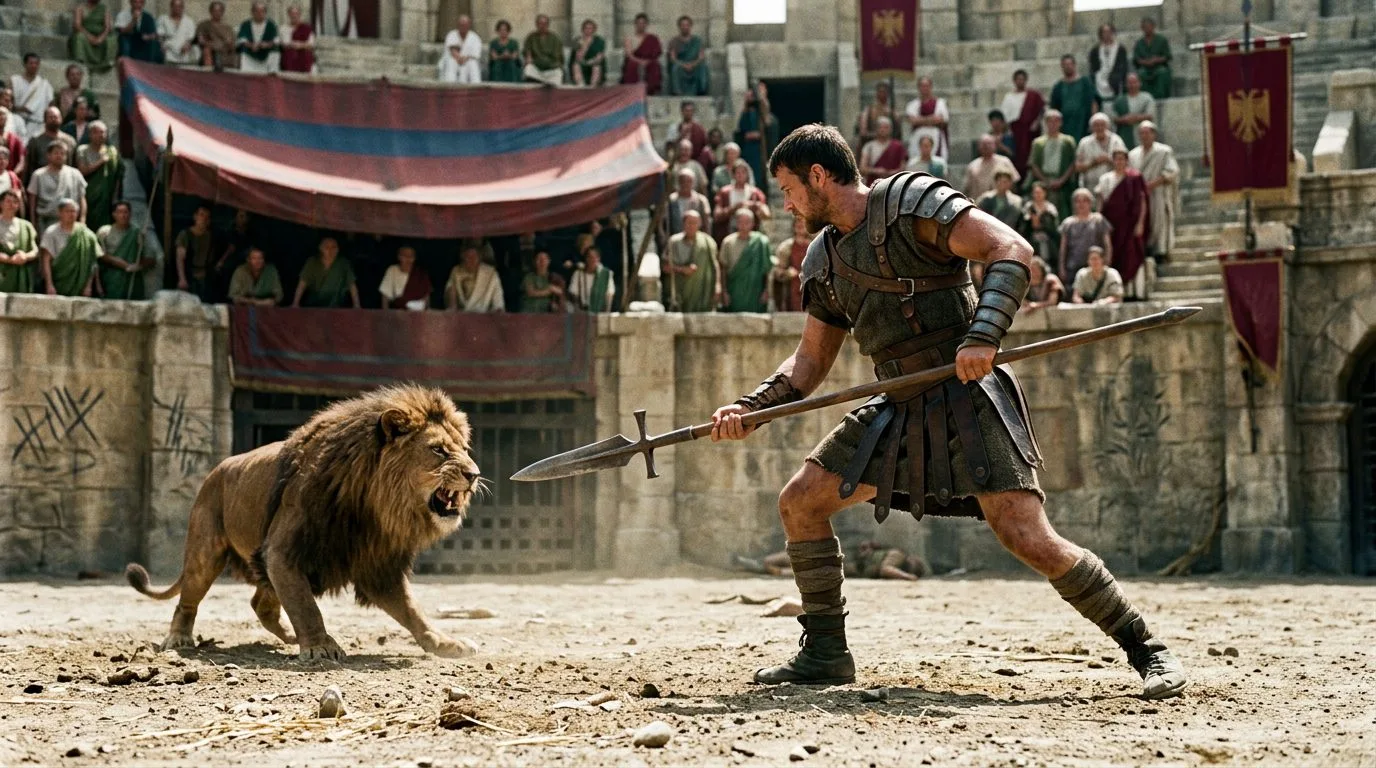
Bestiarius Hunting Spear
The bestiarius fought wild animals with a specialized hunting spear called a venabulum, featuring a broad leaf-shaped blade and crossbar to prevent wounded beasts from climbing the shaft. While technically not gladiators, bestiarii fought in the same arenas around 80 CE when the Colosseum opened. The venabulum measured 7 feet long with an iron point spanning 12 inches. The crossbar, positioned 18 inches below the blade, stopped charging lions or bears from reaching the hunter even when impaled. Emperor Commodus killed 100 bears in a single day around 192 CE using this weapon from the arena’s safety barrier. Archaeological remains at amphitheaters in Pompeii and Capua show underground chambers where bestiarii awaited their turn to face imported African lions, Germanic aurochs, and Asian tigers.
Source: britannica.com
Did You Know?
Did You Know? The gladius sword that defined Roman military conquest was actually adopted from Spanish tribesmen Rome fought in the 3rd century BCE—meaning Rome’s most iconic weapon came from their enemies. Even more surprising, many gladiators survived multiple arena fights and gained freedom, with archaeological evidence showing some lived into their 40s despite their brutal profession. The weapons that thrilled emperors and crowds weren’t designed for efficiency but for entertainment—making Roman gladiator combat less about warfare and more about choreographed violence.
Continue Exploring
For the human side of the arena — survival rates, training schools, the strange economics of gladiator fame — see 10 brutal gladiator facts history books leave out.