
Long before corporations or international banks, Sogdian merchants from Central Asia built the world’s first truly global economy. Their private letters, abandoned in a remote watchtower, reveal the high-stakes world of ancient commerce across 4,000 miles of desert.
1. Nanai-vandak: The Merchant Prince Who Dined with Emperors

Nanai-vandak
Nanai-vandak commanded such wealth and influence that Tang Emperor Xuanzong granted him personal audiences in 742 CE. Operating from a palatial compound in Chang’an with over 200 employees, this merchant prince controlled camel caravans stretching from the Mediterranean to the Yellow Sea. His private seal, discovered in Dunhuang, bore inscriptions in four languages—Sogdian, Chinese, Sanskrit, and Persian—reflecting his multinational operations. When he negotiated tariff reductions for Sogdian traders, the emperor reportedly consulted him on Central Asian politics, treating him more like an ambassador than a businessman. His trading house moved approximately 15,000 bolts of silk westward annually, generating revenues that rivaled some provincial treasuries.
Source: britannica.com
2. Farn-khwasto: The Desperate Letter That Survived 1,600 Years

Farn-khwasto
In 313 CE, Farn-khwasto penned a frantic letter to his business partner, begging for financial rescue after a disastrous caravan loss near Dunhuang. The letter, part of the famous Ancient Letters collection discovered in a Han Dynasty watchtower in the early 20th century, details how bandits seized goods worth 3,000 silver drachmas—roughly equivalent to 30 years of wages for a common laborer. His desperate plea went unanswered; the letter never reached its destination, abandoned when the watchtower garrison evacuated. The document reveals that Farn-khwasto had borrowed heavily from Chinese moneylenders at 20 percent annual interest, betting everything on a single silk shipment to Samarkand. His bankruptcy illustrates the razor-thin margins and enormous risks that Sogdian merchants faced daily.
Source: britannica.com
3. Kharachar: The Caravan Master Who Mapped the Desert
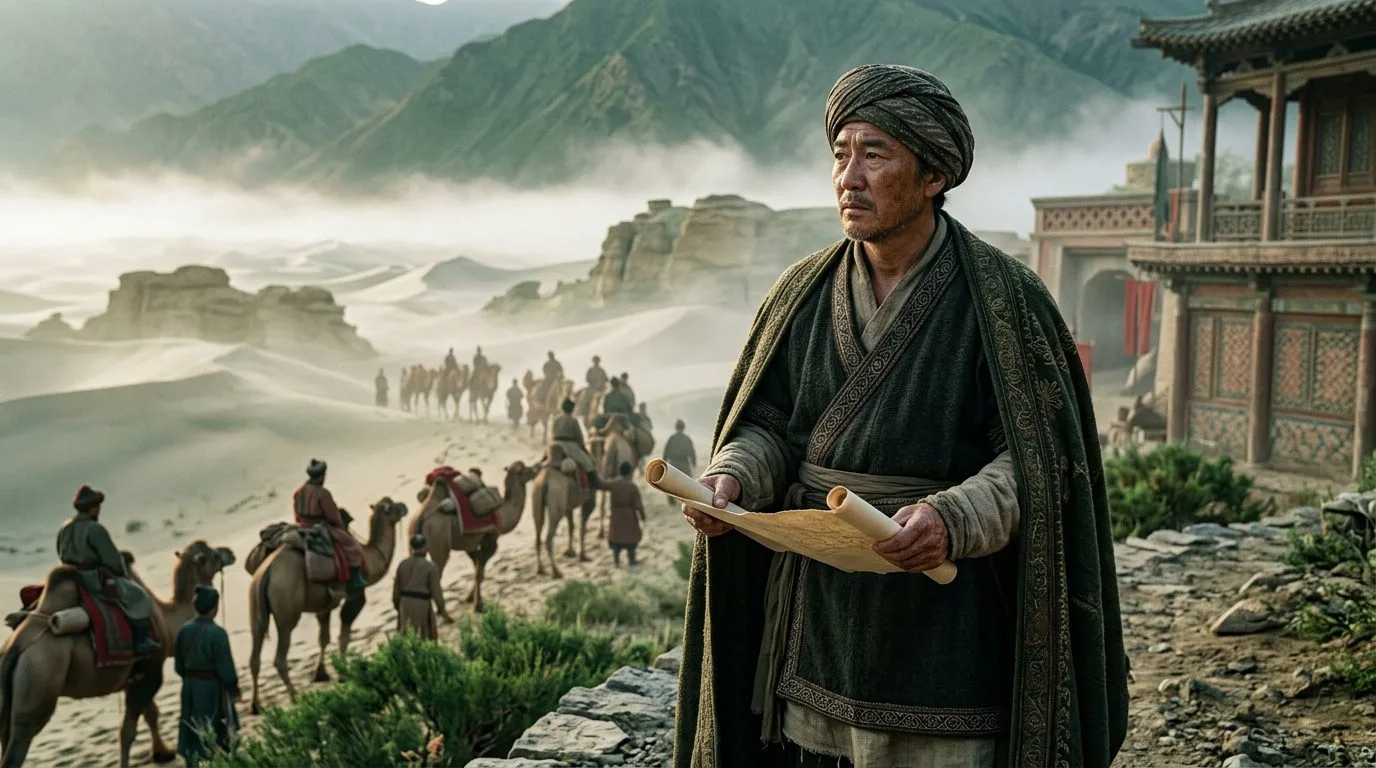
Kharachar
Kharachar led 47 successful crossings of the Taklamakan Desert between 680 and 702 CE, pioneering routes that reduced travel time by nearly 12 days. His detailed route notes, preserved in Turfan monastery archives, identified 23 reliable water sources and calculated precise distances between oasis settlements—measurements accurate to within 5 percent by modern standards of his time. Each caravan he commanded included approximately 80 camels and 35 men, carrying loads worth 50,000 silver coins at destination prices. His route through the Tarim Basin became the preferred northern corridor, bypassing the bandit-infested southern tracks. When a Tang military expedition needed guides in 692 CE, officials specifically requested Kharachar, paying him triple the standard merchant’s fee for his geographic expertise.
Source: britannica.com
4. Wirkak: The Diplomat Who Brokered East-West Silk Treaties
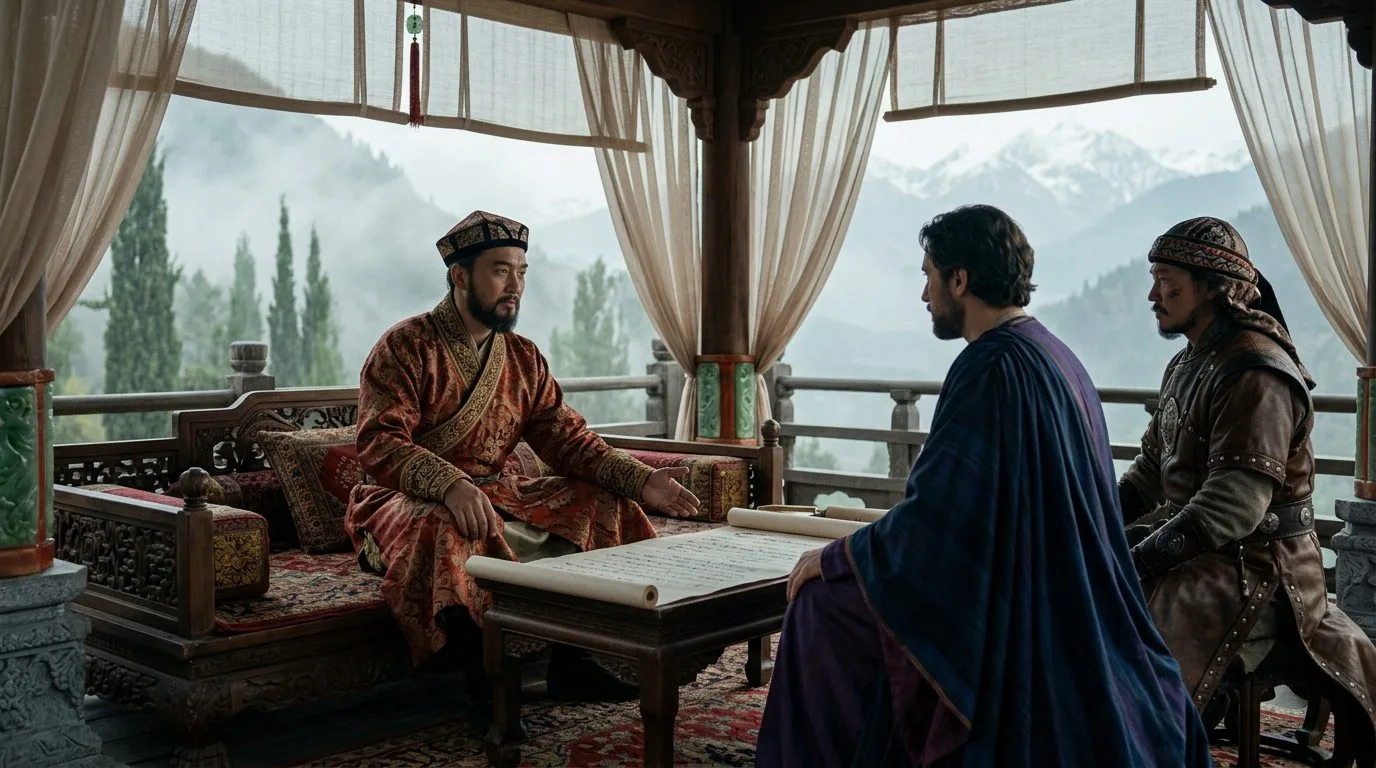
Wirkak
Wirkak served simultaneously as merchant and unofficial diplomat, negotiating the landmark silk trade agreement of 568 CE between the Byzantine Empire and the Western Turkic Khaganate. His fluency in six languages and family connections in both Constantinople and Ctesiphon made him the ideal intermediary when political tensions threatened to close caravan routes. The treaty he helped broker guaranteed Sogdian merchants safe passage and standardized customs duties at 10 percent of cargo value across territories spanning 3,000 miles. Byzantine chronicler Menander Protector documented Wirkak’s arrival in Constantinople with 12 bales of the finest Turfan silk as diplomatic gifts. His success earned him a permanent exemption from Persian taxes, effectively doubling his profit margins on westbound caravans.
Source: britannica.com
5. Shapur: The Banker Who Operated in Two Imperial Capitals

Shapur
Shapur revolutionized Silk Road finance by establishing correspondent banking houses in both Chang’an and Samarkand around 650 CE, allowing merchants to deposit funds in one city and withdraw in the other. His system used sealed clay tokens—essentially ancient checks—that could be redeemed at either location, eliminating the need to transport heavy silver coins across 2,500 miles of dangerous territory. Tang Dynasty tax records list his Chang’an branch as handling transactions worth 500,000 strings of cash annually, roughly 2 percent of the entire city’s commercial activity. He charged a 3 percent commission on each transaction, generating profits that funded his ownership of 17 caravanserais along the route. When he died in 667 CE, his estate inventory included gold reserves exceeding those of several minor Chinese prefectures.
Source: britannica.com
6. Akhmat: The Ledger That Reveals Three Empires’ Economies
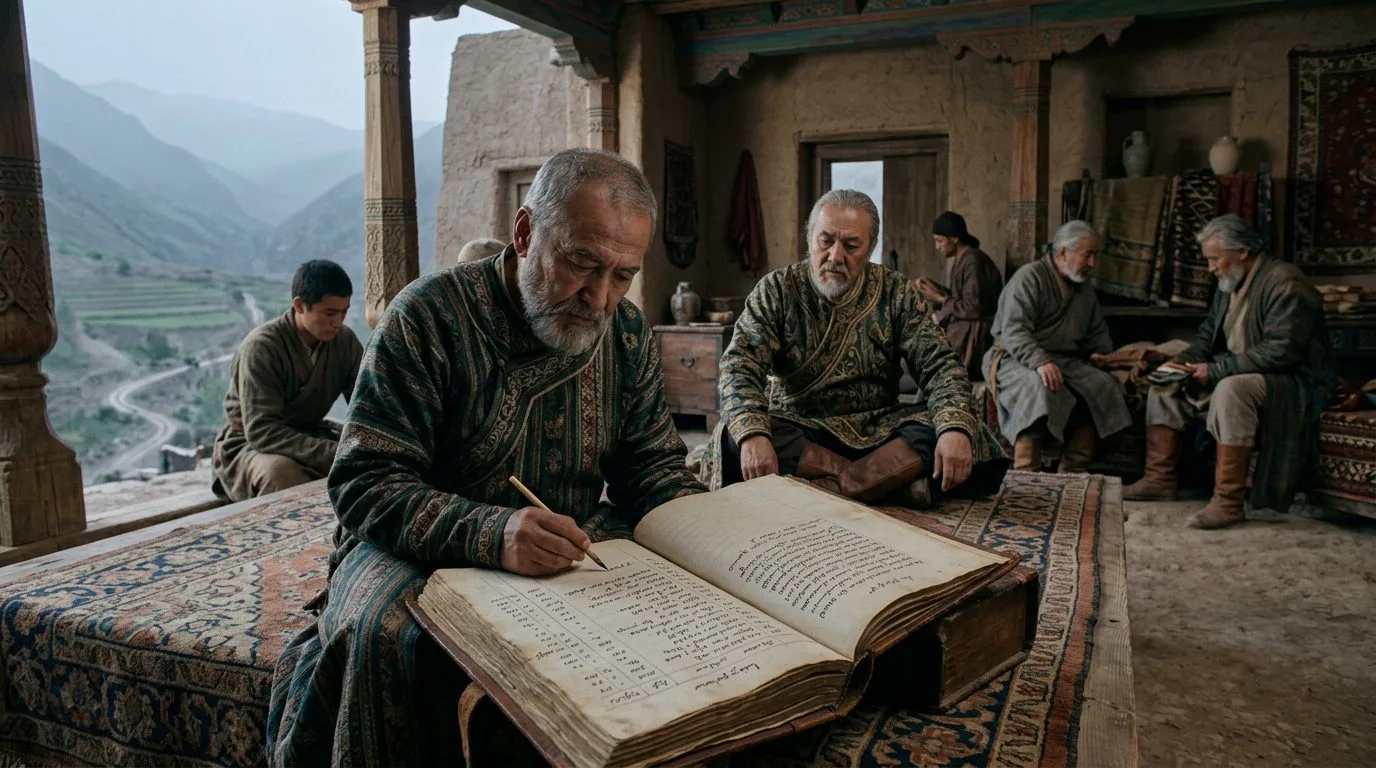
Akhmat
Akhmat’s meticulous account book from 719 CE, discovered in Panjikent ruins, records 347 separate transactions across Chinese, Persian, and Byzantine territories with prices in three different currencies. A single bolt of premium Chinese silk sold for 8 gold dinars in Baghdad but fetched 120 silver dirhams in Constantinople—a 40 percent markup that reveals both transportation costs and market variations. His ledger documents purchasing pepper in Guangzhou for 2 taels of silver per pound and reselling it in Samarkand for 5 taels, achieving profit margins of 150 percent. The accounting system he used—double-entry bookkeeping with credits and debits—predates similar European systems by six centuries. His records show that transporting goods from Chang’an to Baghdad typically required 9 months and consumed 25 percent of cargo value in expenses.
Source: britannica.com
7. Rustam: The Silk Wholesaler Who Survived Rebellion

Rustam: The Silk Wholesaler Who Survived Rebellion
Rustam operated the largest silk wholesale operation in Chang’an when the An Lushan Rebellion erupted in 755 CE, threatening to destroy both the Tang Dynasty and his business empire. While most foreign merchants fled, he buried 2,000 bolts of silk—worth approximately 100,000 strings of cash—in secret warehouses outside the city walls before evacuating to Luoyang. When Chang’an fell to rebel forces, his competitors lost everything; Rustam survived by maintaining duplicate records in Samarkand and continuing operations from temporary headquarters. After imperial forces recaptured the capital in 757 CE, he retrieved his hidden inventory and cornered the silk market during reconstruction, tripling his wealth within 18 months. His business acumen during crisis earned him an honorary title from the restored emperor.
Source: britannica.com
8. Manich: The Merchant Who Imported Central Asian Viticulture
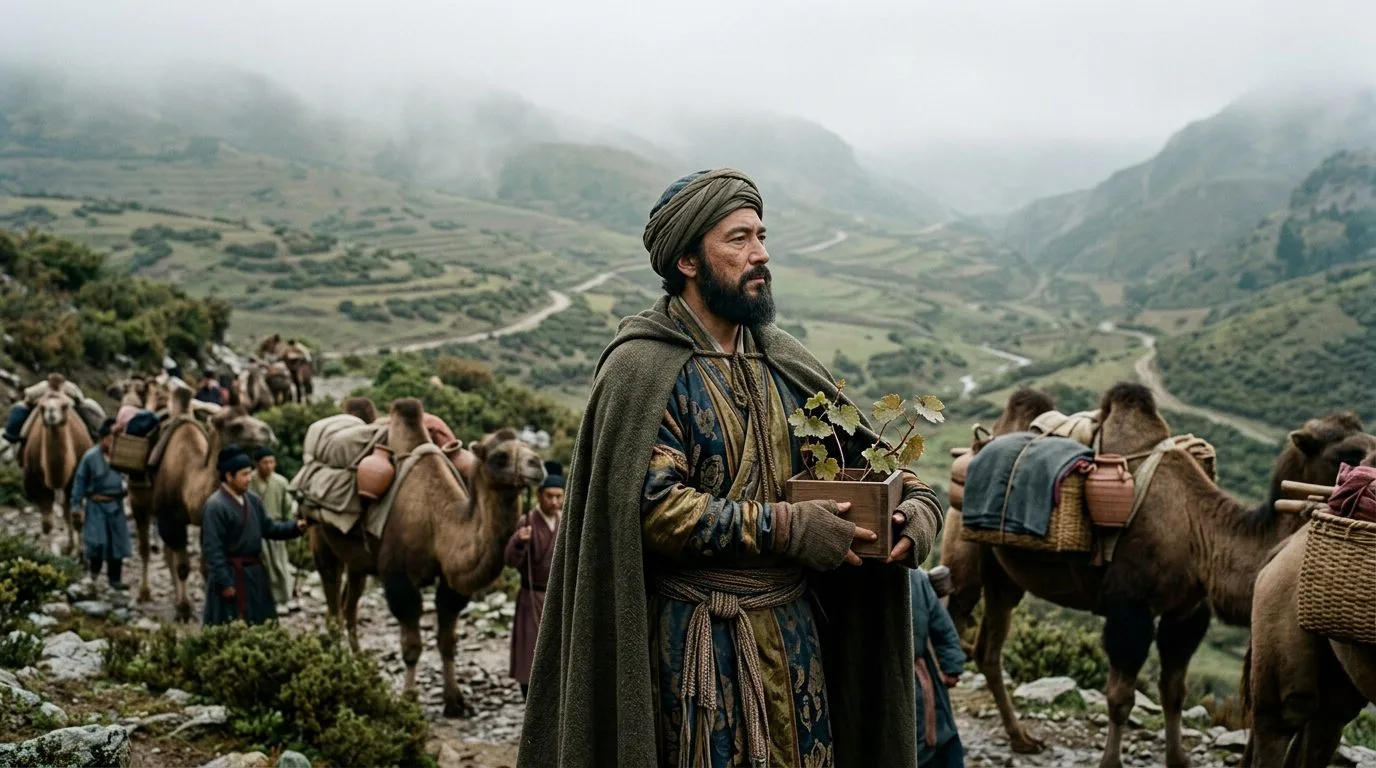
Manich
Manich introduced Sogdian grape varieties to China around 640 CE, transforming Chinese viticulture and creating an entirely new luxury market. He transported not just dried grapes but living rootstock—packed in sealed clay vessels with moistened soil—across 1,800 miles of desert, a horticultural feat that required precise timing and knowledge of plant dormancy cycles. His imported varieties produced larger, sweeter grapes than native Chinese species, commanding prices 5 times higher in Chang’an markets. Tang agricultural records credit him with establishing vineyards in the Turpan region that supplied the imperial court with 3,000 jars of wine annually. His success sparked a broader trade in Central Asian crops including pistachios, pomegranates, and alfalfa, diversifying Silk Road commerce beyond traditional textiles and spices.
Source: smithsonianmag.com
9. The Zhaowu Clan: Aristocrats Who Built a Trading Empire

The Zhaowu Clan
The Zhaowu family operated the most extensive trading network in Silk Road history, maintaining permanent agents in 12 cities from Kashgar to Luoyang during the 7th and 8th centuries CE. Their business model combined aristocratic lineage—they claimed descent from Sogdian royalty—with ruthless commercial efficiency, requiring family members to apprentice for 10 years before managing branch operations. Tax records from 726 CE show their Chang’an headquarters employed 340 people and controlled warehouses storing goods worth over 1 million strings of cash. They pioneered the practice of marrying daughters to Chinese officials while sending sons to manage western outposts, creating political connections that protected their caravans. When the Abbasid Caliphate disrupted western routes after 750 CE, their diversified operations across multiple empires prevented total collapse.
Source: britannica.com
10. Nana-dhat: The Female Merchant Who Inherited an Empire
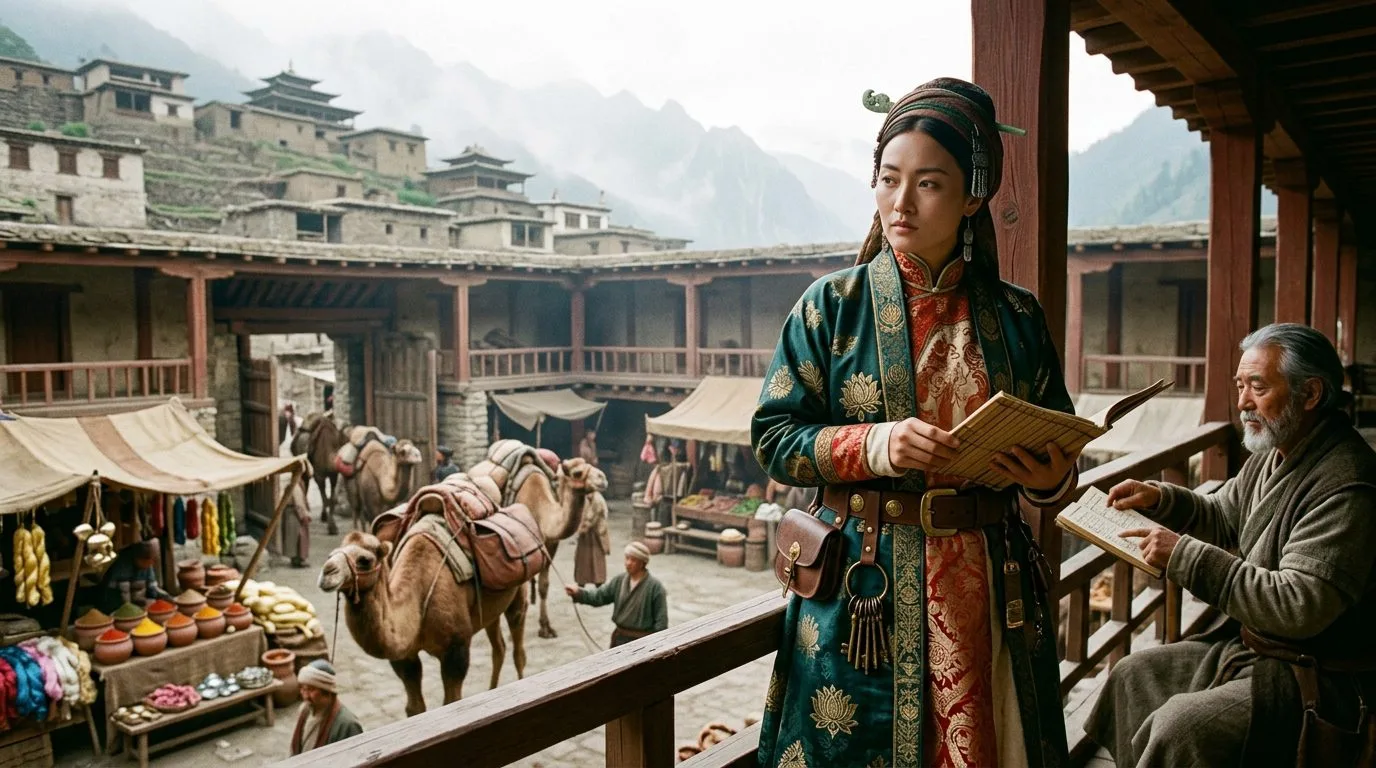
Nana-dhat
Nana-dhat assumed control of her deceased husband’s trading network in 698 CE, managing 7 caravanserais and 23 permanent agents across Central Asia—a position almost unprecedented for women in any medieval society. Legal documents from Turfan show her successfully defending property rights in Chinese courts, citing Tang laws that permitted widows to inherit commercial enterprises. She expanded operations by specializing in luxury textiles and precious stones, products that generated higher profit margins than bulk commodities. Her personal seal, inscribed with both her name and title “Merchant Director,” appears on contracts worth over 200,000 silver dirhams preserved in monastery archives. She operated for 19 years until her death in 717 CE, when her daughter inherited the business, establishing a rare two-generation female commercial dynasty.
Source: smithsonianmag.com
Did You Know?
Did You Know? The Sogdian merchants’ dominance ended not through competition but catastrophe—when the An Lushan Rebellion destroyed Chang’an in 755 CE, it severed the Silk Road’s eastern terminus and bankrupted hundreds of trading houses overnight. Ironically, the same remote watchtower where desperate merchant Farn-khwasto’s letter was abandoned became the time capsule that preserved Sogdian commercial secrets for modern historians, revealing a sophisticated global economy that wouldn’t be matched until the Age of Exploration nearly eight centuries later.