
While history celebrates battles, the true turning points came when enemies traded swords for pens. These 10 treaties didn’t just end wars—they invented diplomacy, redrew continents, and created international law frameworks still governing our world today.
1. Treaty of Kadesh: The World’s First International Peace Agreement
Treaty of Kadesh
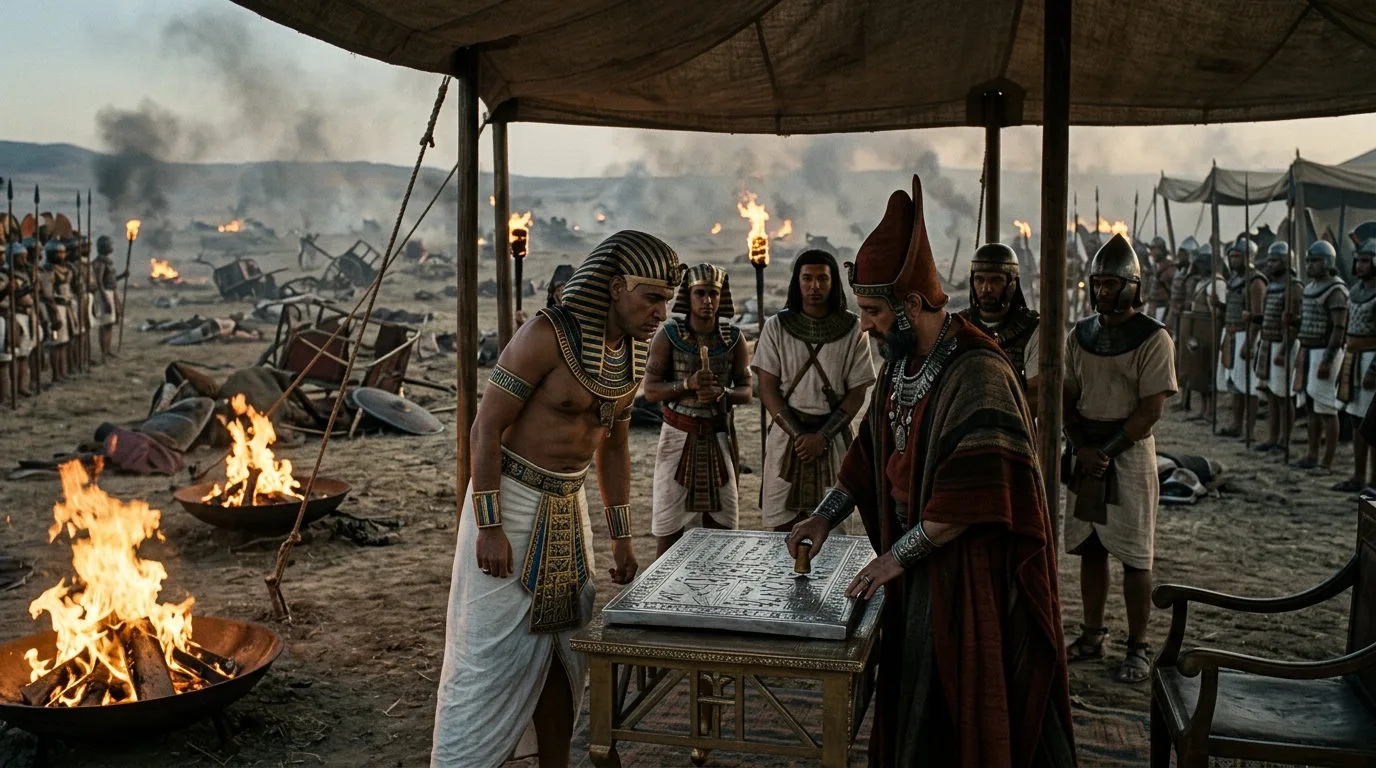
Carved into silver tablets in 1259 BCE, the Treaty of Kadesh between Egyptian Pharaoh Ramesses II and Hittite King Hattusili III became humanity’s earliest surviving peace treaty. After the bloody Battle of Kadesh five years earlier claimed over 5,000 lives, both empires recognized mutual exhaustion. The treaty established extradition clauses, mutual defense pacts, and even forgiveness for political refugees—concepts that wouldn’t appear again in diplomacy for centuries. Clay copies were deposited in temples across both empires, while a replica now hangs in the United Nations headquarters. This agreement maintained peace between the superpowers for 80 years, allowing both civilizations to prosper until their eventual collapse around 1180 BCE.
Source: britannica.com
2. Peace of Callias: Athens Forces Persia to Recognize Greek Freedom
Peace of Callias
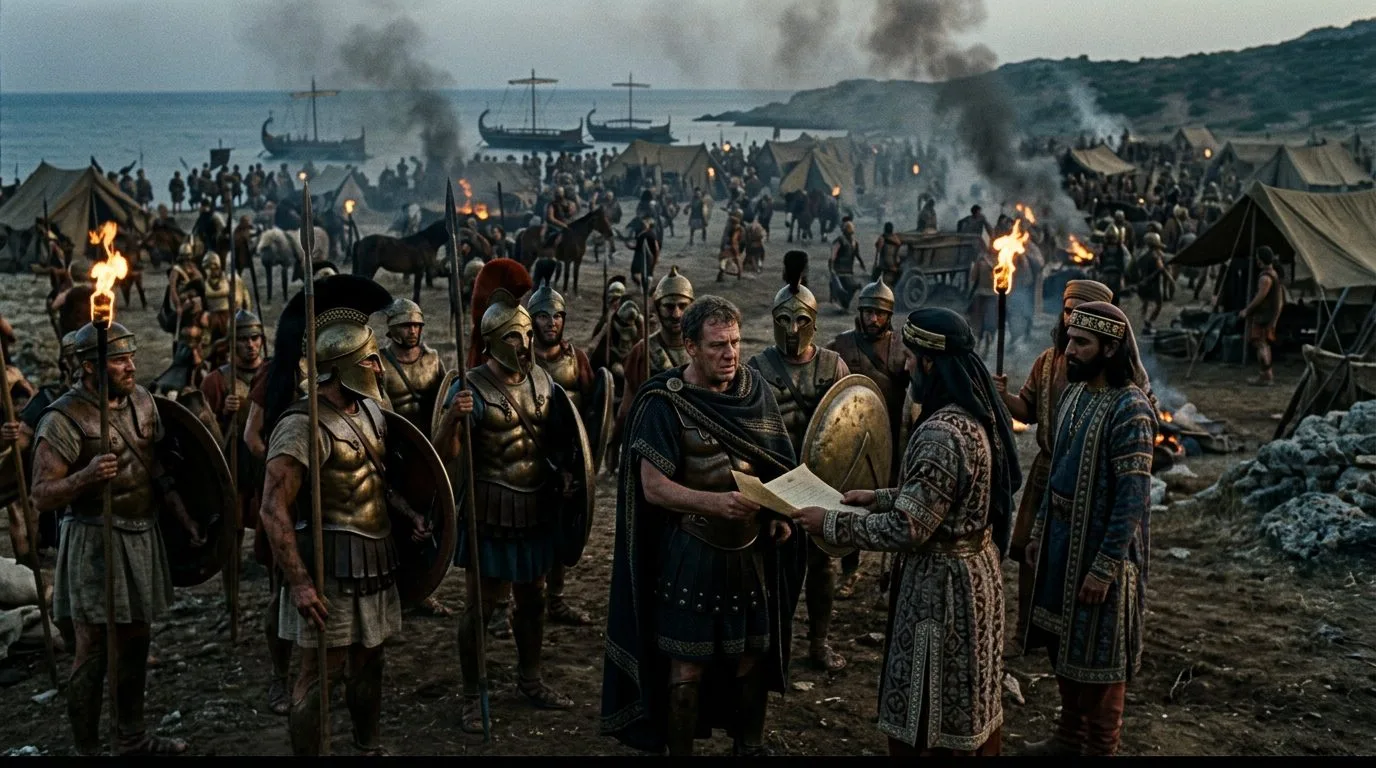
Signed in 449 BCE after 50 years of intermittent warfare, the Peace of Callias marked Persia’s acknowledgment that Greek city-states would remain independent. Named after Athenian diplomat Callias, who negotiated directly with Persian King Artaxerxes I, this treaty prohibited Persian warships from sailing within three days’ journey of Greek coasts. The agreement required Persia to withdraw military forces from all Ionian cities in Asia Minor, effectively ending the Persian Empire’s westward expansion. Athens celebrated by redirecting funds from the Delian League—originally formed to fight Persia—toward constructing the Parthenon. The treaty held for 40 years until renewed hostilities during the Peloponnesian War shattered Greek unity.
Source: britannica.com
3. Treaty of Apamea: Rome Cripples a Superpower Without Conquering It
Treaty of Apamea
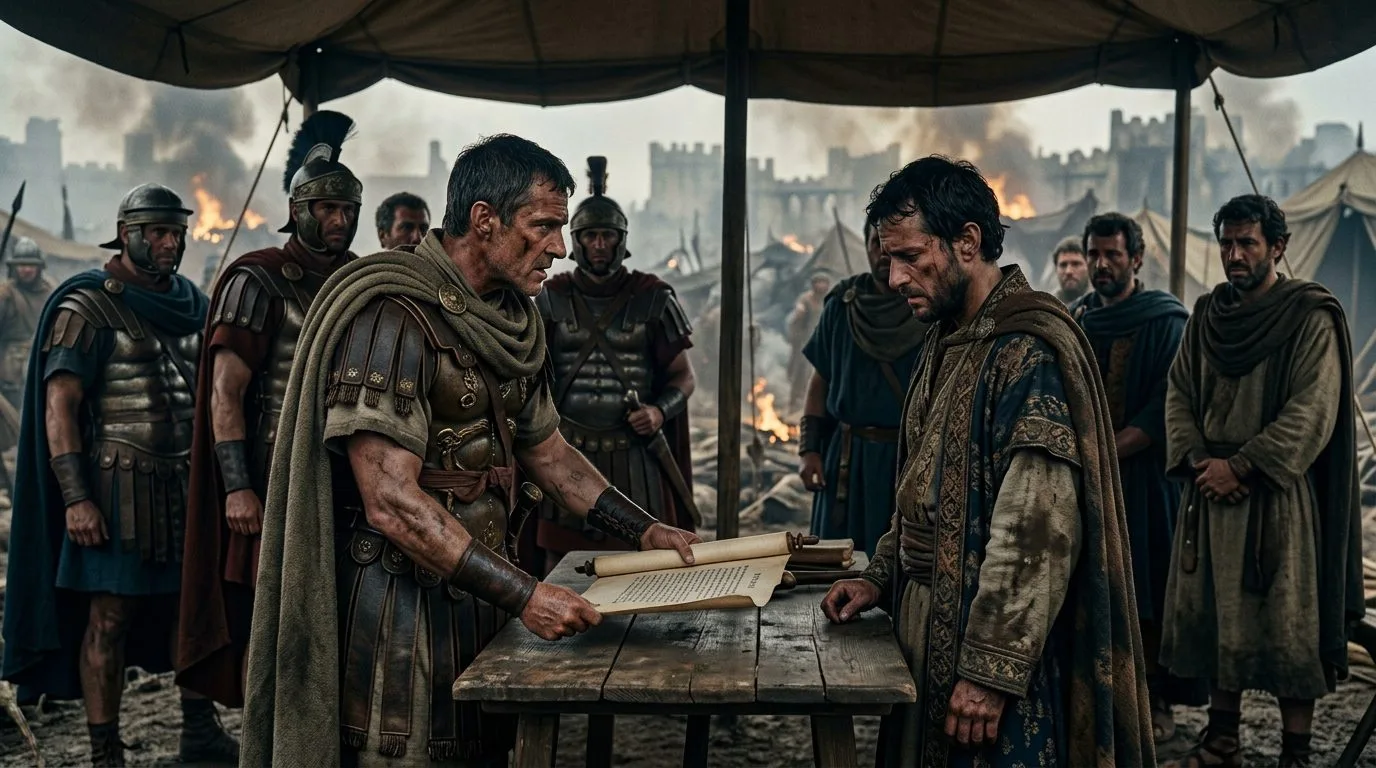
After crushing Seleucid King Antiochus III at the Battle of Magnesia in 190 BCE, Rome imposed the Treaty of Apamea in 188 BCE—transforming Mediterranean politics without annexing territory. The treaty limited the Seleucid navy to 10 warships, banned war elephants entirely, and demanded 15,000 talents in war reparations paid over 12 years. Antiochus surrendered all territories west of the Taurus Mountains and provided 20 hostages, including his son (the future Antiochus IV). Rome didn’t occupy Seleucid lands but instead redistributed them to allied kingdoms, perfecting a strategy of controlling regions through client states. This diplomatic model became Rome’s blueprint for Mediterranean domination for the next 200 years.
Source: britannica.com
4. Edict of Milan: Two Emperors Accidentally Create Religious Freedom
Edict of Milan
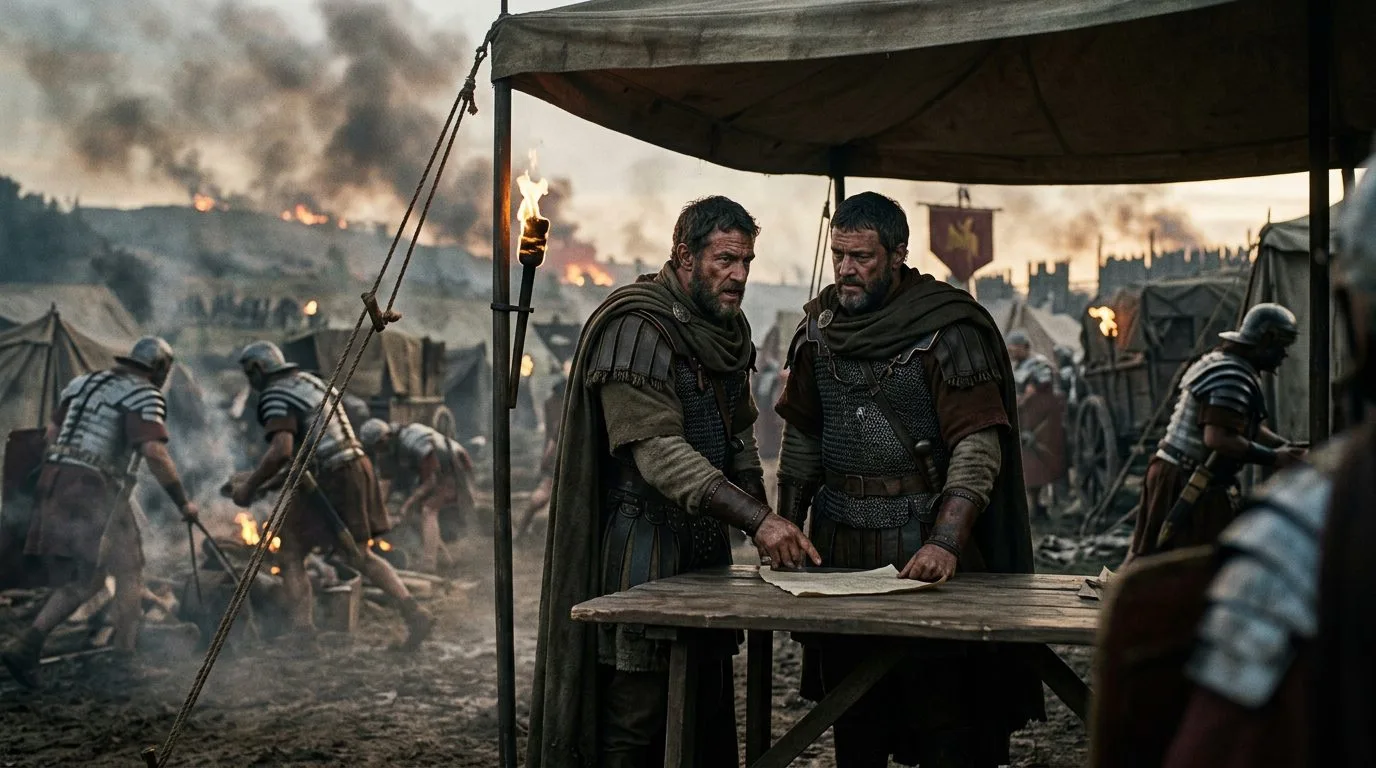
Meeting in February 313 CE, Roman Emperors Constantine I and Licinius issued the Edict of Milan—not technically a treaty but an agreement between co-rulers that revolutionized civilization. This proclamation granted legal status to Christianity and all religions throughout the empire, ending 250 years of sporadic persecution that had killed thousands of Christians. The edict ordered return of confiscated church property and established that religious choice was a personal right—a radical concept in ancient governance. Within 70 years, Christianity transformed from a persecuted minority comprising perhaps 10 percent of the empire’s 60 million people into the state religion. This single agreement fundamentally altered Western civilization’s spiritual trajectory.
Source: britannica.com
5. Treaty of Verdun: Three Brothers Accidentally Invent France and Germany
Treaty of Verdun
Signed in August 843 CE after three years of civil war, the Treaty of Verdun partitioned Charlemagne’s empire among his grandsons—creating the foundations of modern European nations. Louis the German received East Francia (future Germany), Charles the Bald took West Francia (future France), and Lothair I claimed the Middle Kingdom stretching from the North Sea to Italy. This division of 1.2 million square kilometers created linguistic and political boundaries still visible today in the French-German border. The treaty established that empires could be peacefully divided rather than fought over eternally—though Lothair’s middle kingdom proved unstable and was later absorbed by its neighbors. These borders, drawn to avoid further bloodshed, have shaped European identity for 1,180 years.
Source: britannica.com
6. Peace of Augsburg: The Compromise That Delayed Catastrophe for a Century

Peace of Augsburg
Signed on September 25, 1555, the Peace of Augsburg temporarily resolved religious conflicts in the Holy Roman Empire by establishing the principle of cuius regio, eius religio—whose realm, their religion. This meant each of the empire’s 300-plus princes could choose either Catholicism or Lutheranism for their territories, while subjects who disagreed could emigrate without penalty. Emperor Charles V, exhausted after decades fighting Protestant princes, reluctantly accepted this arrangement dividing his empire of 20 million people. The treaty specifically excluded Calvinism and other Protestant denominations, a fatal flaw that contributed to tensions erupting in the Thirty Years’ War in 1618. Still, it provided 63 years of relative religious peace in German territories.
Source: britannica.com
7. Treaty of Tordesillas: Two Nations Divide an Unknown World on Paper
Treaty of Tordesillas
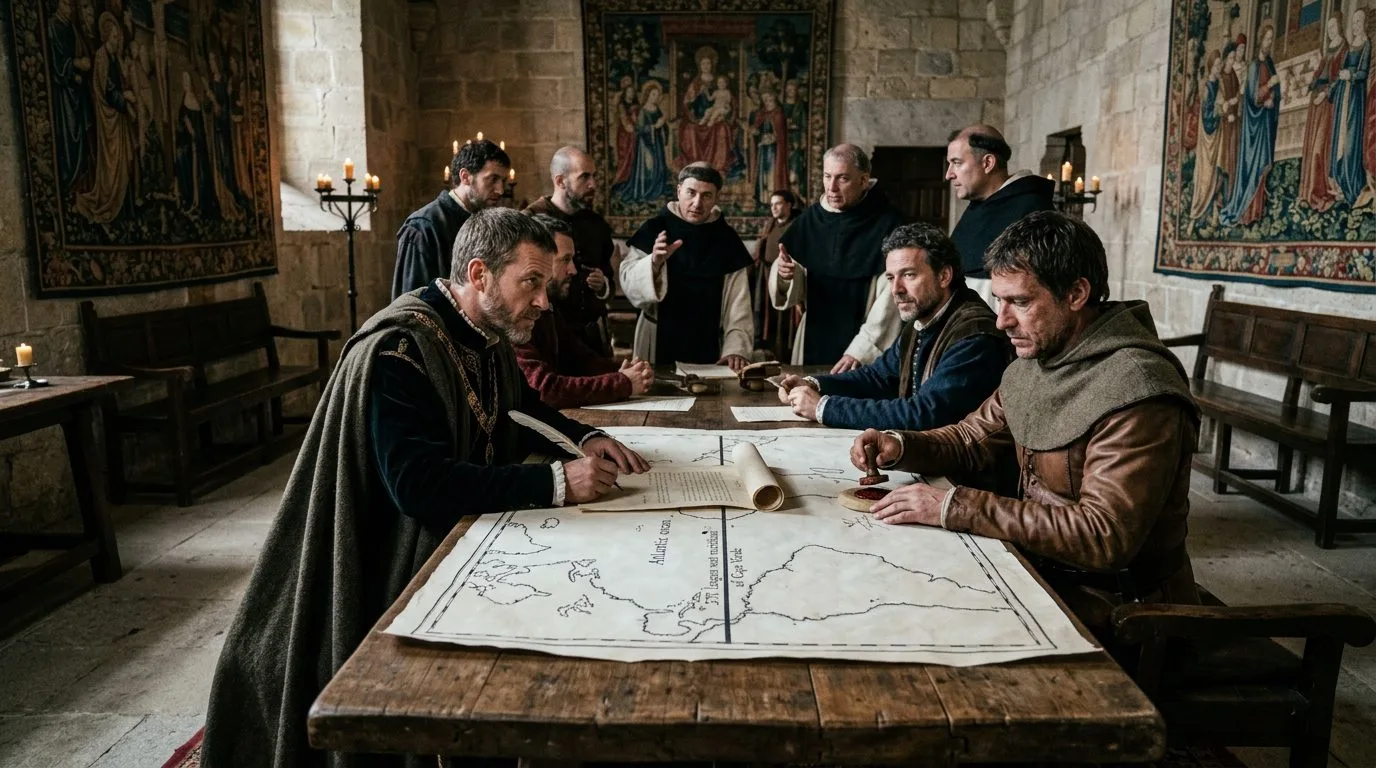
On June 7, 1494, Spain and Portugal signed the Treaty of Tordesillas, dividing all newly discovered lands along a meridian 370 leagues west of the Cape Verde Islands—approximately 46 degrees west longitude. Pope Alexander VI had initially proposed a line 100 leagues west, but Portuguese King John II negotiated the adjustment, accidentally securing Brazil for Portugal when Pedro Álvares Cabral reached it in 1500. This remarkable agreement prevented wars between two expanding empires by preemptively dividing territories neither had yet explored. The treaty influenced colonial boundaries for 300 years, explaining why Brazil speaks Portuguese while the rest of South America speaks Spanish. Other European powers ignored this papal-sanctioned division entirely.
Source: britannica.com
8. Treaty of Westphalia: Birth of the Modern International Order

Treaty of Westphalia
Signed on October 24, 1648, the Peace of Westphalia ended the Thirty Years’ War that had killed approximately 8 million people—roughly 20 percent of Central Europe’s population. Negotiated simultaneously in Münster and Osnabrück with 109 delegations, this treaty established revolutionary principles: state sovereignty, non-interference in domestic affairs, and legal equality between nations regardless of size or power. France gained Alsace, Sweden acquired territories along the Baltic, and the Holy Roman Empire fragmented into 300 effectively independent states. The treaty permanently ended religious wars in Europe by granting Calvinists equal rights alongside Catholics and Lutherans. These principles of territorial integrity and sovereign equality became the foundation of modern international law.
Source: britannica.com
9. Treaty of Nerchinsk: China and Russia Establish History’s Longest Border
Treaty of Nerchinsk
Signed on August 27, 1689, the Treaty of Nerchinsk became the first agreement between the Qing Dynasty and a European power, establishing borders that still influence the 4,209-kilometer Sino-Russian frontier. Emperor Kangxi sent diplomat Songgotu to negotiate with Russian envoy Fyodor Golovin after skirmishes threatened full-scale war in Manchuria. Drafted in five languages including Latin (the diplomatic compromise), the treaty required Russia to demolish Fort Albazin and withdraw from the Amur River valley. China retained control of the Amur region for 170 years until the unequal treaties of the 1850s. Remarkably, both empires honored this agreement for 170 years—extraordinary longevity for any border treaty.
Source: britannica.com
10. Congress of Vienna: Reshaping a Continent Without Revenge

Congress of Vienna
Convening from September 1814 to June 1815, the Congress of Vienna brought together diplomats from over 200 European states to rebuild after 23 years of revolutionary and Napoleonic wars. Led by Austria’s Klemens von Metternich, Britain’s Viscount Castlereagh, and France’s Talleyrand, negotiators redrew European borders affecting 200 million people. Rather than punishing France severely, the congress restored legitimate monarchies and created buffer states around France to contain future expansion. The settlement established the Concert of Europe system where major powers consulted regularly to prevent wars—successfully avoiding major continental conflict for 99 years until World War I. This diplomatic framework pioneered multilateral peace conferences that became standard practice in international relations.
Source: britannica.com
Did You Know?
The Treaty of Kadesh’s silver tablets outlasted both empires that created them, while the Treaty of Tordesillas divided continents neither signatory had seen. Perhaps most ironic: the Peace of Westphalia, celebrated as ending religious warfare, was negotiated while armies still fought—diplomats signed the treaty weeks before the final battle. These agreements prove that the pen truly reshapes civilizations longer than any sword.