
While history books celebrate male masters of the Enlightenment, brilliant women artists were quietly revolutionizing European art from Paris to Rome. These trailblazing painters broke into exclusive academies, earned royal commissions, and created masterpieces that still captivate viewers today.
1. Élisabeth Louise Vigée Le Brun – Marie Antoinette’s Portrait Painter
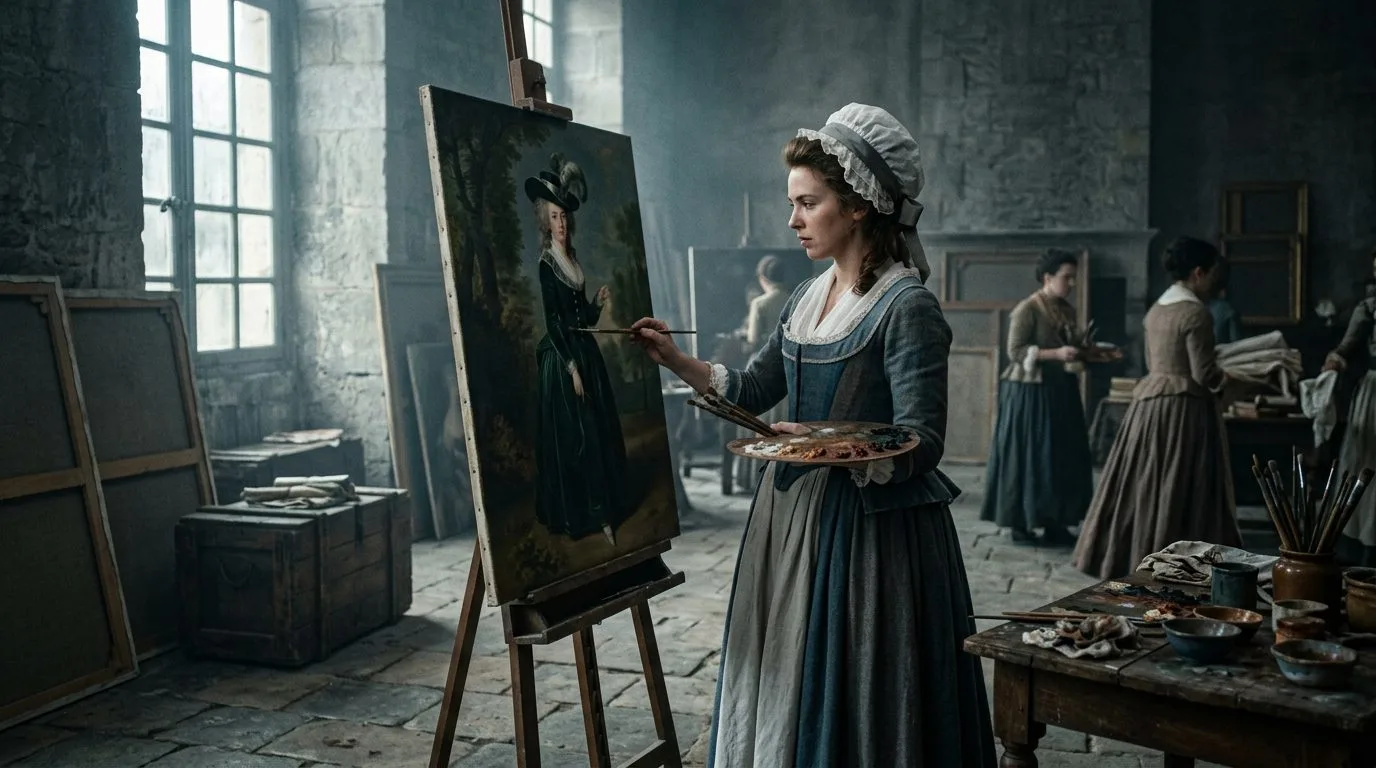
Élisabeth Louise Vigée Le Brun
Élisabeth Louise Vigée Le Brun painted 30 portraits of Marie Antoinette between 1778 and 1789, becoming the youngest artist ever admitted to the French Royal Academy at age 28. Born in Paris in 1755, she charged astronomical fees of 1,000 livres per portrait when male contemporaries earned half that amount. Her 1783 self-portrait holding a palette sparked scandal because women painting themselves was considered immodest. When the French Revolution erupted in 1789, she fled France with her daughter, spending 12 years painting European royalty across Italy, Austria, and Russia. She completed over 660 portraits during her career, documenting the faces of an entire era before guillotines silenced the aristocratic world forever.
Source: britannica.com
2. Angelica Kauffman – Royal Academy Founding Member
Angelica Kauffman – Royal Academy Founding Member
Angelica Kauffman became one of only two women among the 36 founding members of London’s Royal Academy in 1768, breaking into the most exclusive artistic circle in Britain. Born in Switzerland in 1741, she mastered Italian, French, German, and English while studying classical art across Europe. She charged 100 guineas for history paintings when male artists commanded 50, painting grand mythological scenes like “Cornelia, Mother of the Gracchi” in 1785. Her home at 16 Golden Square became a cultural salon where Joshua Reynolds, Johann Wolfgang von Goethe, and other intellectuals gathered weekly. She earned over £14,000 during her career, purchasing property and supporting female art students until her death in Rome in 1807.
Source: britannica.com
3. Rosalba Carriera – Venetian Pastel Portrait Pioneer
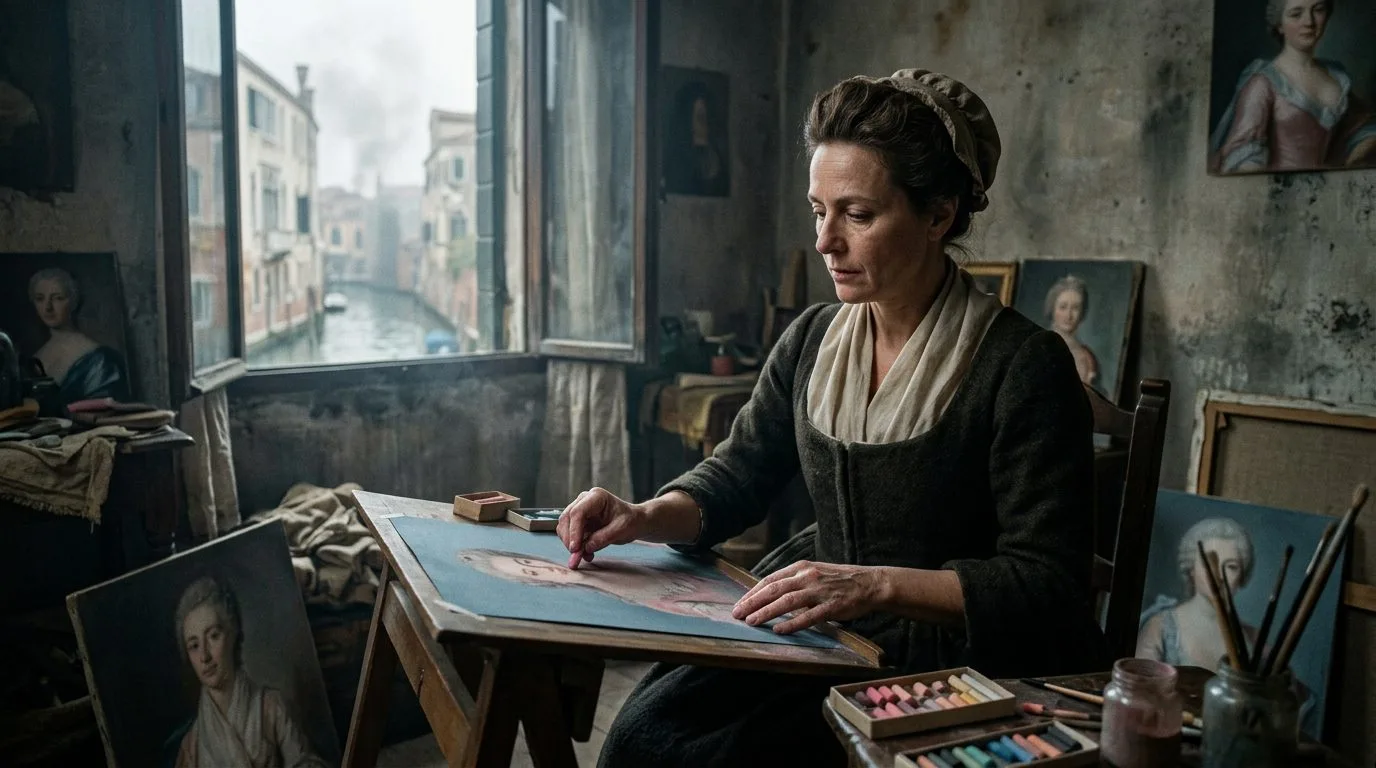
Rosalba Carriera
Rosalba Carriera transformed miniature painting from a decorative craft into high art, completing over 150 pastel portraits that sold for 30 sequins each across Europe. Born in Venice in 1673, she invented a technique of mixing pastels with ivory dust that created luminous skin tones never achieved before. In 1720, she traveled to Paris where she painted Louis XV at age 10, causing such sensation that 300 nobles commissioned portraits within six months. She became the first woman elected to Rome’s Academy of St. Luke in 1705, followed by academies in Bologna and Florence. Her 1730 self-portrait shows her at 57, working despite the cataracts that would blind her completely by 1746.
Source: britannica.com
4. Adelaide Labille-Guiard – French Academy Trailblazer
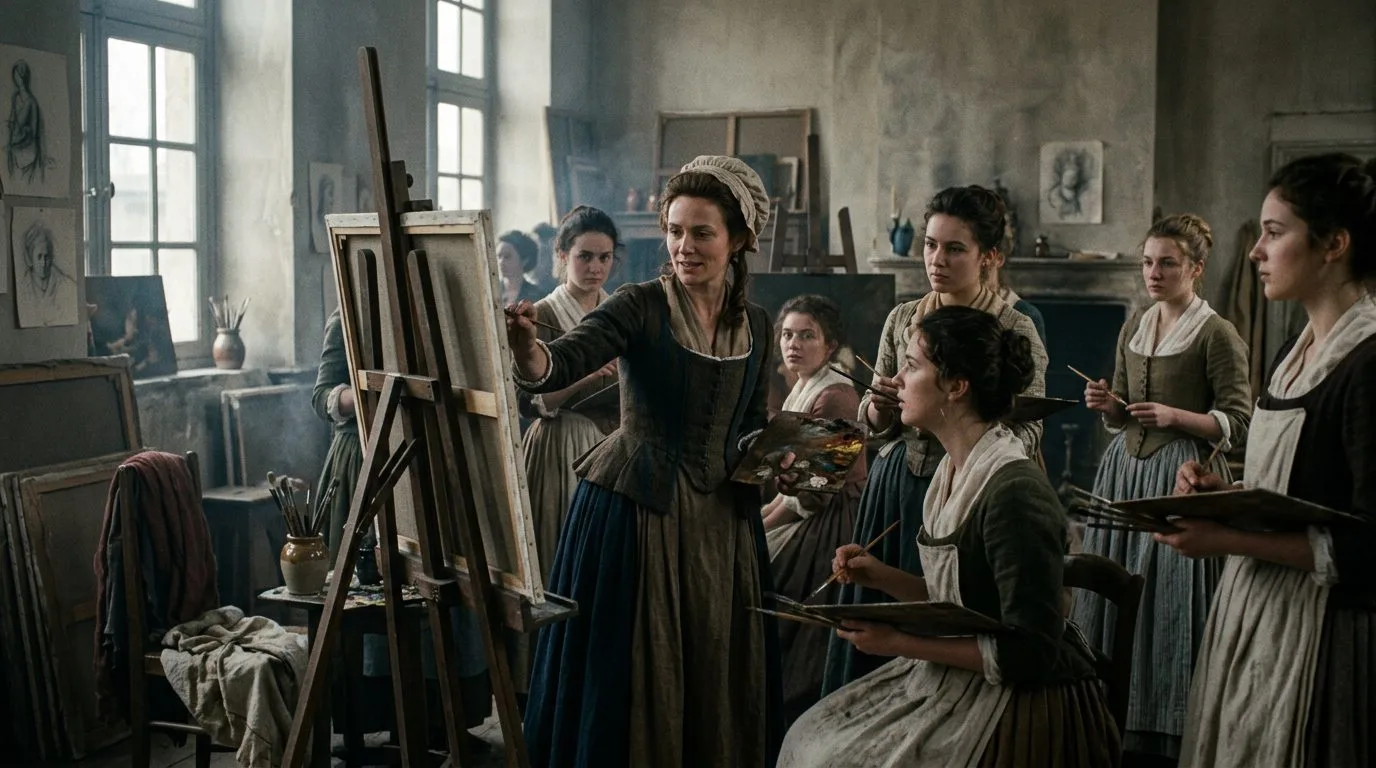
Adelaide Labille-Guiard
Adelaide Labille-Guiard shattered the French Academy’s glass ceiling by admitting 9 female students against explicit regulations limiting women’s participation. Admitted to the Academy in 1783 on the same day as Vigée Le Brun, she painted her revolutionary “Self-Portrait with Two Pupils” in 1785, boldly displaying women teaching women in an institution that forbade it. Born in Paris in 1749, she married miniaturist Louis-Nicolas Guiard at 20, divorcing him in 1779 to pursue her career independently. She painted King Louis XVI‘s aunts Mesdames Adelaide and Victoire in 1787, earning 5,000 livres and an apartment in the Louvre. Her 1791 petition to the National Assembly demanded equal rights for women artists, predating feminist movements by decades.
Source: britannica.com
5. Anna Dorothea Therbusch – Prussian Court Painter
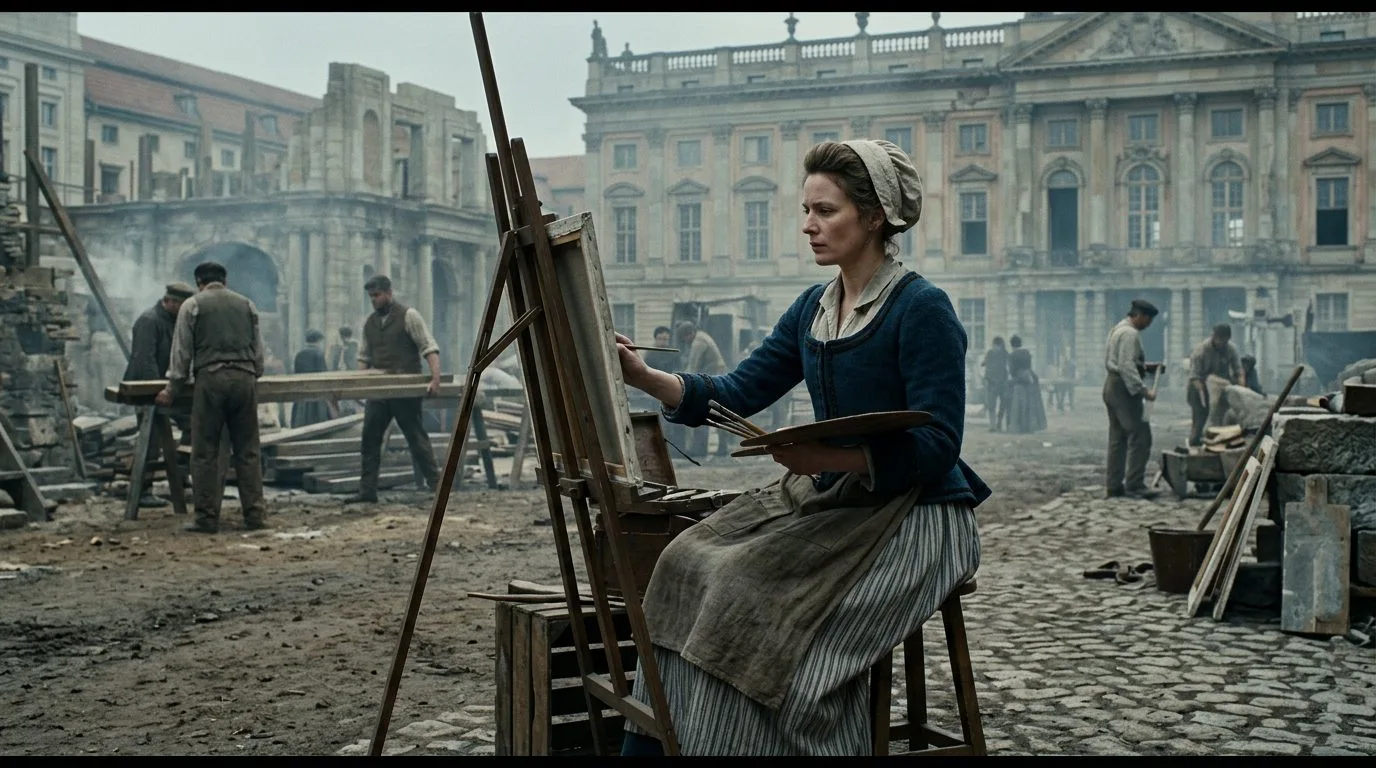
Anna Dorothea Therbusch – Prussian Court Painter
Anna Dorothea Therbusch became the first woman appointed court painter to Frederick the Great of Prussia in 1761, earning 400 thalers annually when male court painters received 300. Born in Berlin in 1721 to a family of painters, she married innkeeper Ernst Friedrich Therbusch at 21 but continued painting secretly in their tavern’s back room. She traveled to Paris in 1765, where she petitioned the French Academy and became the first German woman admitted in 1767. Her allegorical paintings combined mythological subjects with contemporary faces, including her controversial 1776 “Jupiter and Antiope” that showed a nude female figure in stark realism. She completed over 200 portraits before dying in Berlin in 1782, leaving an estate worth 10,000 thalers.
Source: britannica.com
6. Anne Vallayer-Coster – Still Life Master
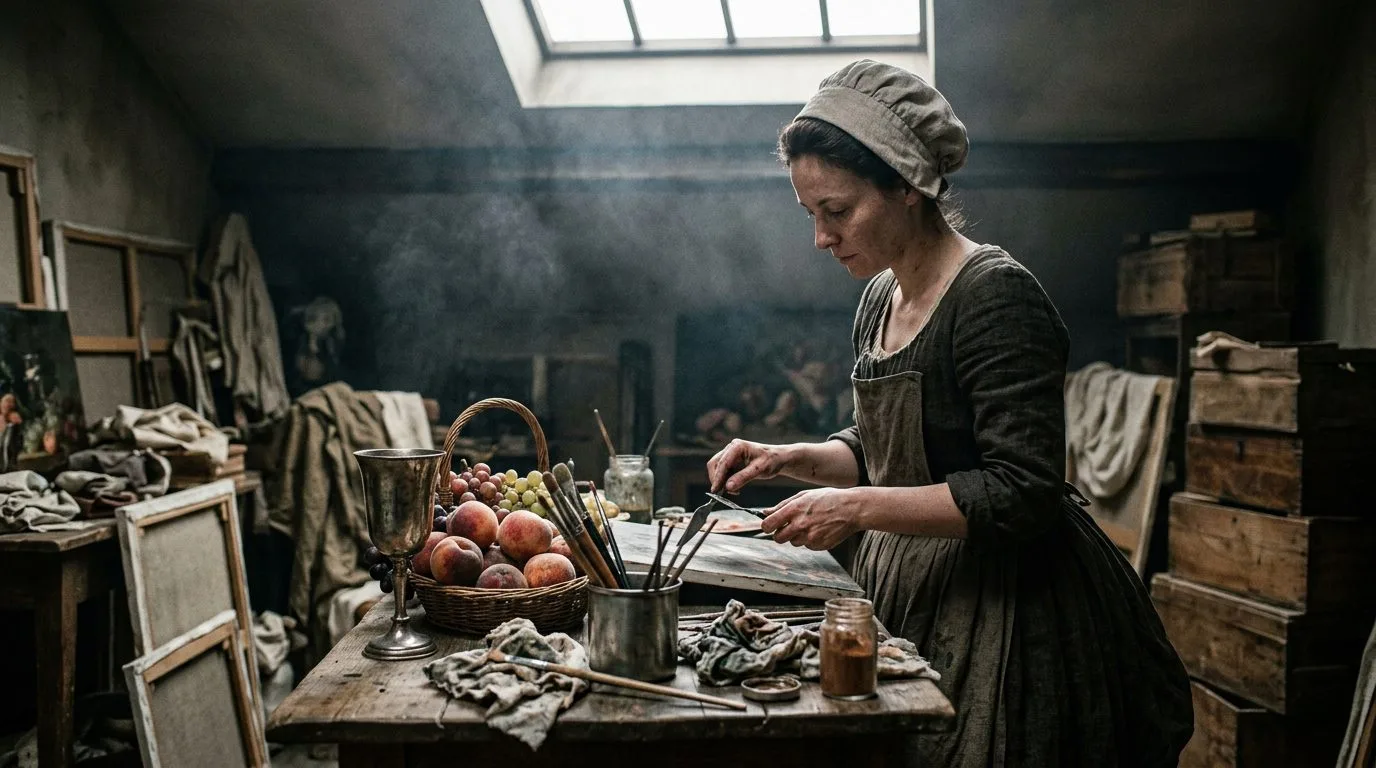
Anne Vallayer-Coster – Still Life Master
Anne Vallayer-Coster earned unanimous French Academy admission in 1770 at age 26, with critics declaring her still lifes rivaled those of Jean-Baptiste-Siméon Chardin himself. Born in Paris in 1744, she painted “The Attributes of Painting, Sculpture and Architecture” as her reception piece, demonstrating technical mastery that stunned male academicians. Marie Antoinette became her patron in 1780, commissioning 15 floral paintings at 500 livres each and granting her an apartment at the Gobelins Manufactory. Her 1783 “Still Life with Lobster” displayed 27 different textures from coral to crystal, proving still life required equal skill to history painting. She survived the Revolution by painting simple vegetables instead of aristocratic luxuries, working until the early nineteenth century.
Source: britannica.com
7. Marie-Denise Villers – Neoclassical Portraitist
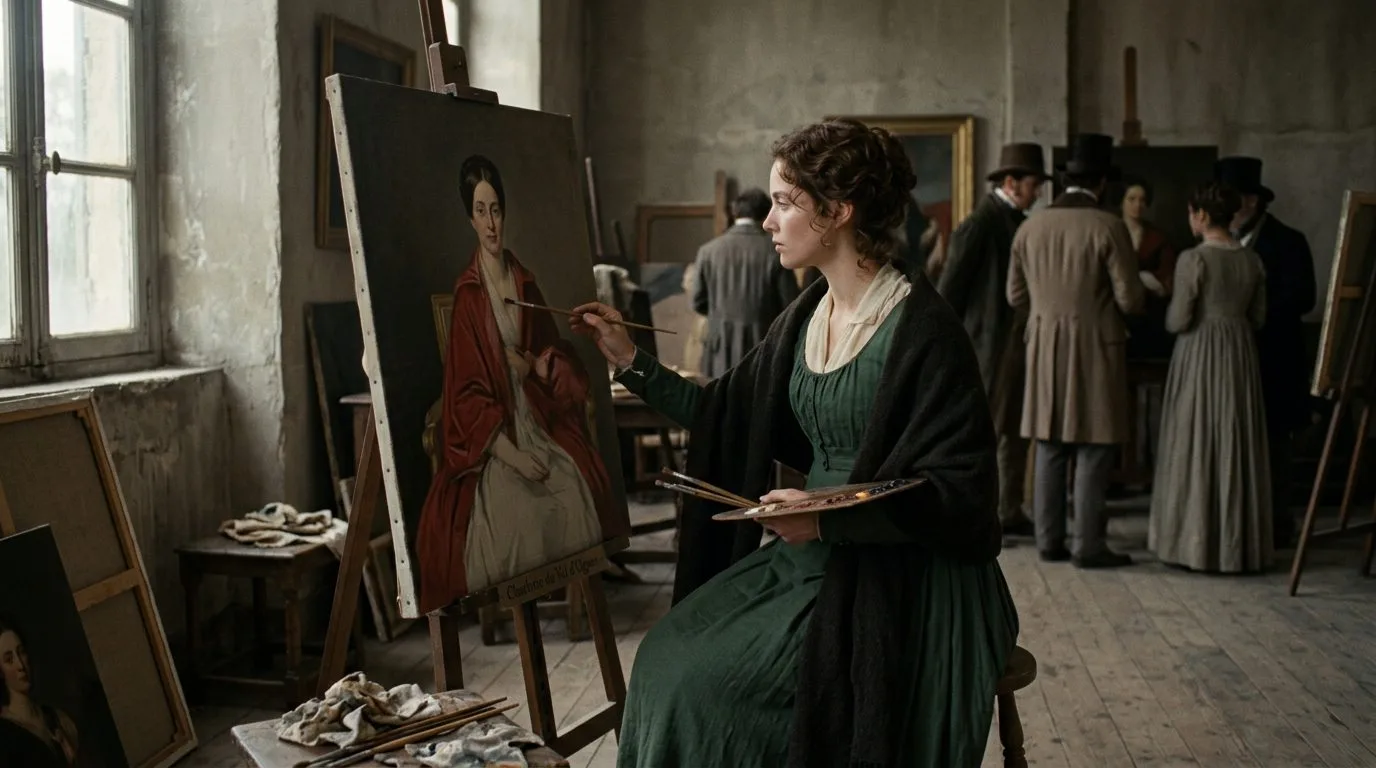
Marie-Denise Villers – Neoclassical Portraitist
Marie-Denise Villers created “Portrait of Charlotte du Val d’Ognes” in 1801, a masterpiece so accomplished it was attributed to Jacques-Louis David for over a century until scholars identified her signature in the mid-twentieth century. Born Marie-Denise Lemoine in Paris in 1774, she studied under her sister Marie-Victoire Lemoine and exhibited at the Paris Salon from 1799 to 1814. Her neoclassical style featured women in simple white muslin dresses against plain backgrounds, emphasizing intellectual dignity over aristocratic luxury. She painted at least 8 Salon works between 1799 and 1802, including portraits of scholars and artists that commanded 300 francs each. Her career mysteriously ended after her marriage to architecture student Michel-Jean-Maximilien Villers in 1799, with no paintings documented after 1814.
Source: britannica.com
8. Marguerite Gérard – Genre Painting Innovator
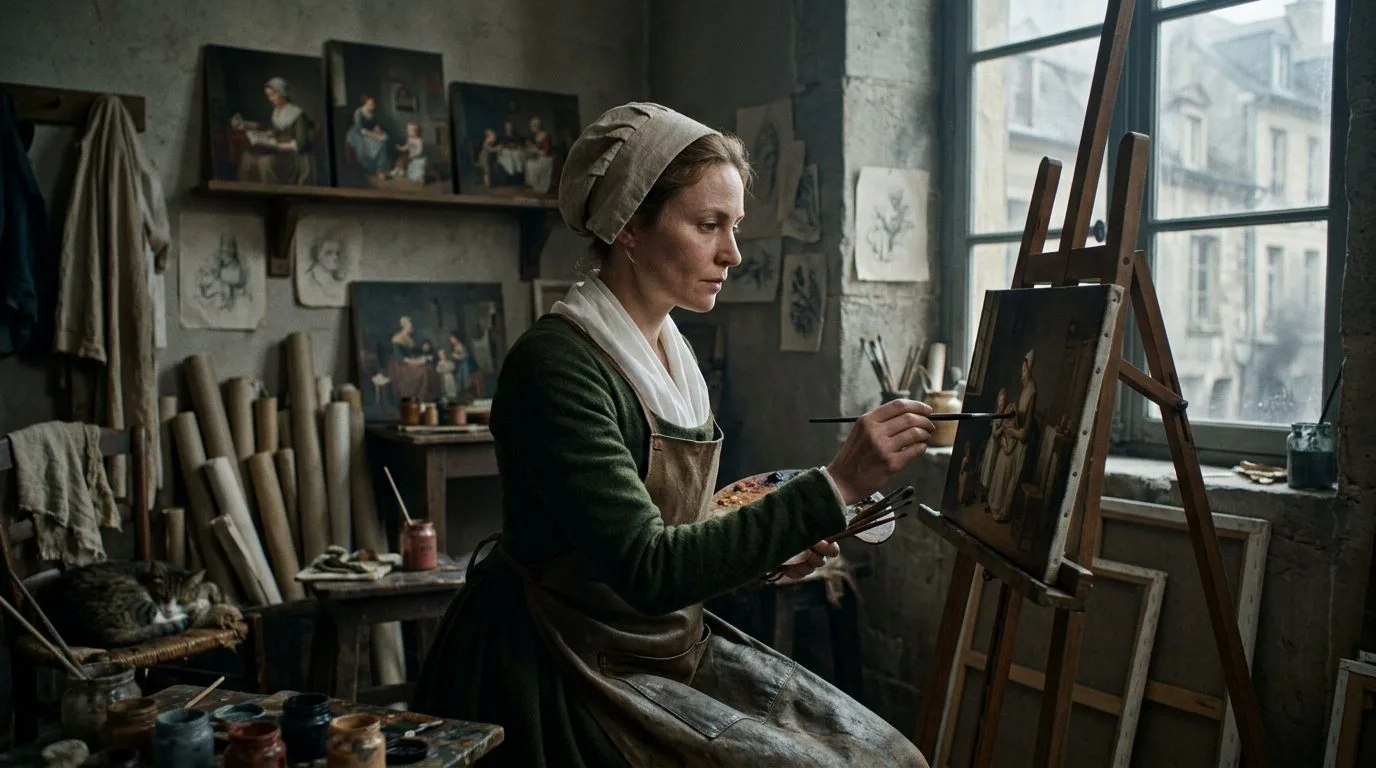
Marguerite Gérard – Genre Painting Innovator
Marguerite Gérard revolutionized genre painting by depicting middle-class domestic life with the technical precision previously reserved for royal portraits, exhibiting 36 works at the Paris Salon between 1799 and 1824. Born in Grasse in 1761, she moved to Paris at 14 to study with her brother-in-law Jean-Honoré Fragonard, becoming his closest collaborator for 20 years. Her 1790 “Bad News” sold for 1,200 livres, showing a young woman receiving a letter while her mother watches anxiously, capturing bourgeois emotional life with unprecedented intimacy. She never married, supporting herself entirely through painting sales that totaled over 50,000 francs during her career. Her meticulous technique involved grinding her own pigments and using magnifying glasses to paint individual lace threads.
Source: britannica.com
9. Marie-Guillemine Benoist – Post-Revolutionary Artist
Marie-Guillemine Benoist
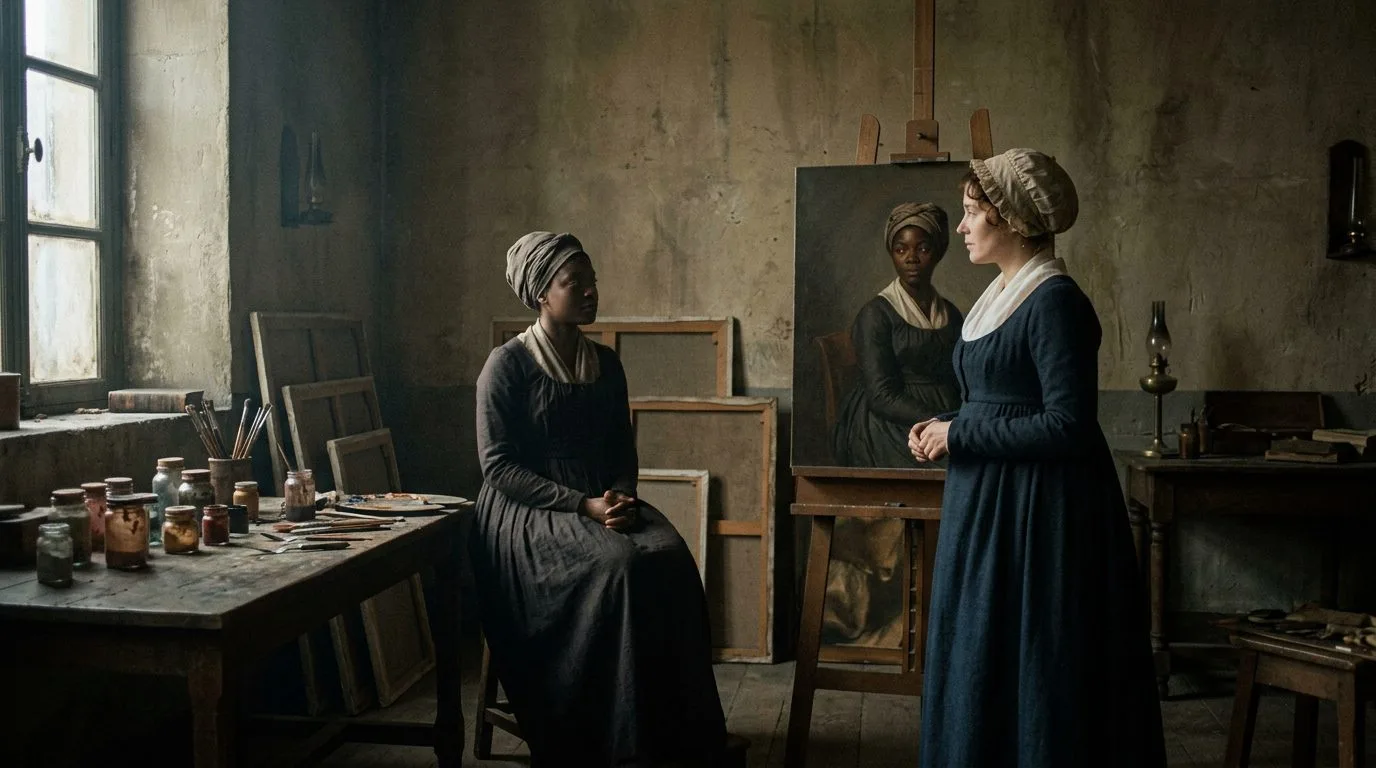
Marie-Guillemine Benoist painted “Portrait of a Negress” in 1800, creating the first monumental portrait of a Black woman as an individual subject rather than exotic accessory, currently displayed at the Louvre. Born Marie-Guillemine Leroux-Delaville in Paris in 1768, she studied under Élisabeth Vigée Le Brun and later Jacques-Louis David, mastering both Rococo and Neoclassical styles. Napoleon‘s government awarded her a gold medal at the early nineteenth-century Salon and commissioned her to paint his family members at 2,000 francs per portrait. She opened a studio accepting 15 female students in 1805, training the next generation despite academy restrictions. When her royalist husband became a government official in 1814, she was forced to close her studio and cease painting to avoid political scandal.
Source: britannica.com
10. Anna Maria van Schurman – Dutch Polymath and Engraver
Anna Maria van Schurman
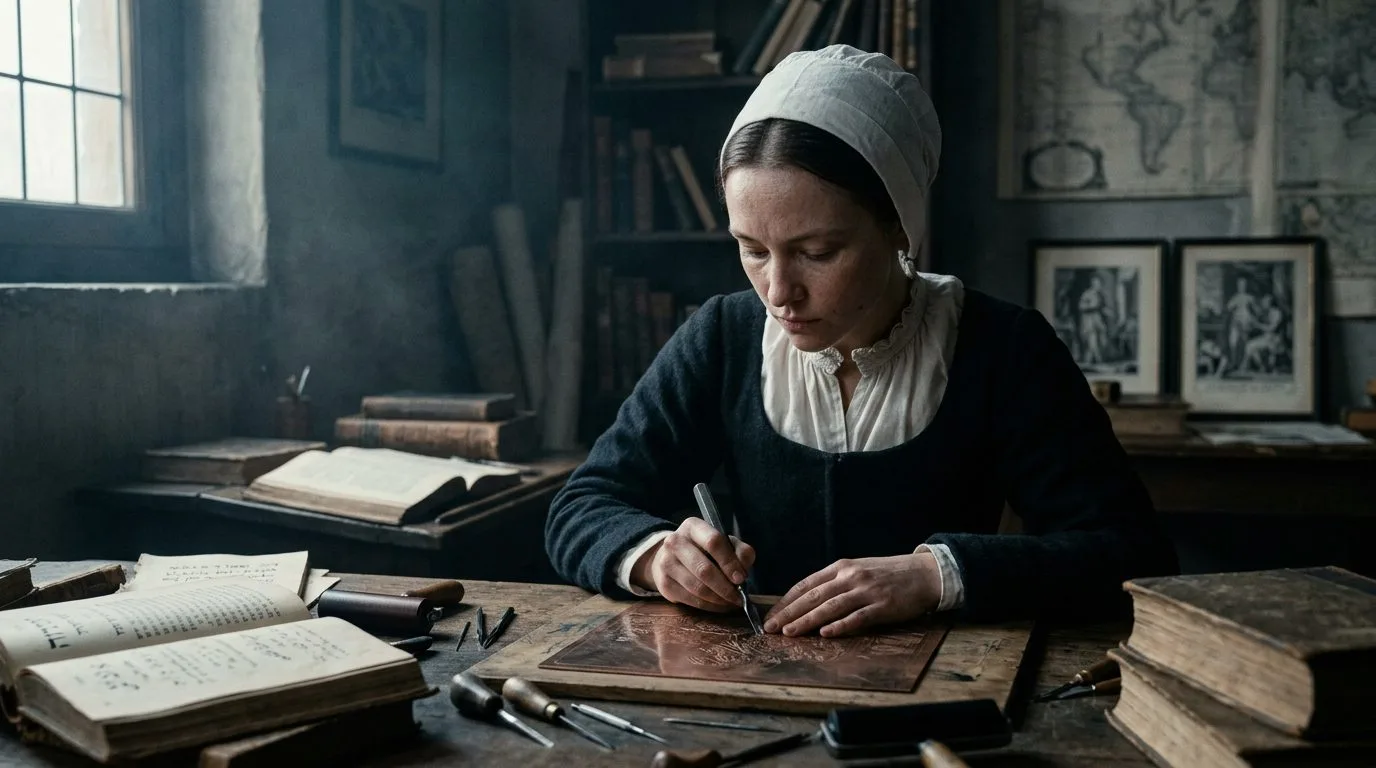
Anna Maria van Schurman mastered 14 languages including Hebrew, Arabic, and Ethiopian, while creating intricate engravings that rivaled Rembrandt‘s technical precision in seventeenth-century Utrecht. Born in Cologne in 1607, she became the first woman to attend Utrecht University in 1636, sitting behind a wooden screen so male students wouldn’t see her. Her 1640 treatise “Whether a Christian Woman Should Be Educated” argued for women’s intellectual equality, sparking Enlightenment debates across Europe fifty years before the movement officially began. She engraved portraits of scholars like René Descartes and self-portraits demonstrating her mastery of multiple artistic media including glass etching and paper cutting. She corresponded with 200 European intellectuals until her death in 1678, leaving behind engravings valued at 500 guilders each.
Source: britannica.com
Did You Know?
Did You Know? Despite their extraordinary success, these pioneering women artists faced a paradox: the more prestigious their careers became, the more restricted their freedoms grew. Marie-Guillemine Benoist, awarded gold medals by Napoleon himself, was forced to abandon painting entirely when her husband entered politics—proving that even celebrated female artists could have their brushes snatched away by the social conventions they’d spent lifetimes defying.