
In 1304, England’s King Edward I grew impatient with the defenders of Stirling Castle. After months of bombardment with conventional siege engines, he ordered the construction of Warwolf—a trebuchet so massive that it required 30 wagons to transport its parts and five master carpenters to assemble. When the Scottish garrison saw the completed weapon and witnessed its test shot hurl a 300-pound boulder over their walls, they immediately surrendered. Edward refused. He wanted to see his new toy in action and forced the defenders back inside to endure the bombardment they had tried to avoid. For centuries, massive stone walls protected kingdoms from invaders—until military engineers developed weapons powerful enough to reduce fortresses to rubble. These innovations didn’t just break down walls; they fundamentally transformed medieval warfare, rendering traditional defensive architecture obsolete and forcing military strategists to completely rethink castle design. From the Romans’ sophisticated ballistae to the gunpowder-powered bombards that ended the Middle Ages, siege weapons evolved into increasingly devastating instruments of destruction. Each technological leap forward triggered an arms race between attackers and defenders that lasted over 2,000 years. What you’ll discover in this exploration of 15 deadly siege weapons is how engineers combined physics, chemistry, and raw human determination to shatter supposedly impregnable fortifications, how these weapons shaped the outcome of history’s most pivotal battles, and why some medieval fortresses still bear the scars of these devastating machines today.
1. Trebuchet: The Medieval Superweapon That Could Launch Cows
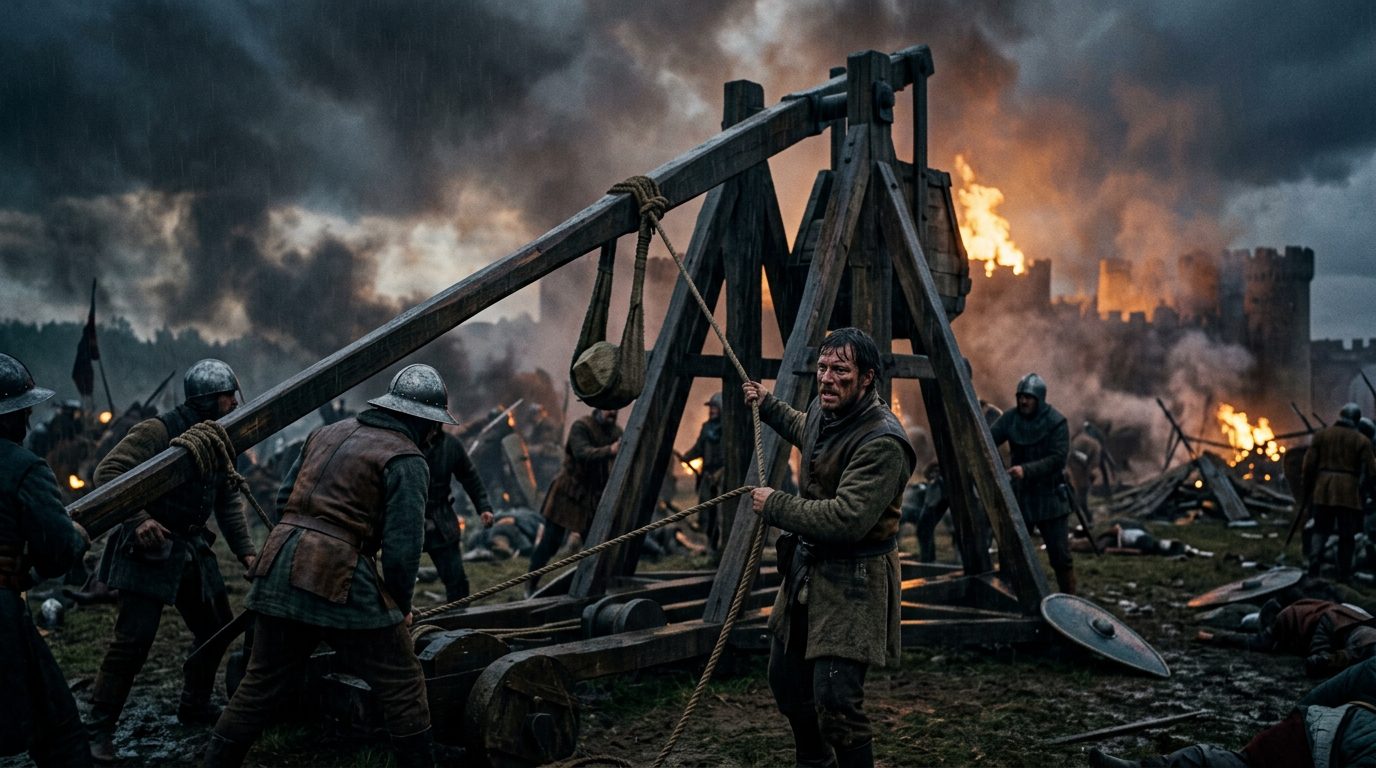
Trebuchet
The counterweight trebuchet emerged around 1200 AD as the medieval era’s deadliest siege weapon, capable of hurling 350-pound projectiles over 300 yards. Unlike earlier rope-powered versions, counterweight trebuchets used gravity—massive weight boxes containing up to 20,000 pounds of material—to generate devastating force. Engineers could adjust trajectory by moving the counterweight’s position, creating the medieval equivalent of precision artillery.
At the Siege of Acre in 1291, Mamluk forces deployed trebuchets named “The Victorious” and “The Furious” that bombarded Crusader positions for 43 days, reducing towers to rubble. Attackers weaponized psychological warfare by launching rotting animal carcasses, severed heads, and diseased corpses to spread disease and break morale.
2. Battering Ram: The Bronze Age Weapon That Never Became Obsolete
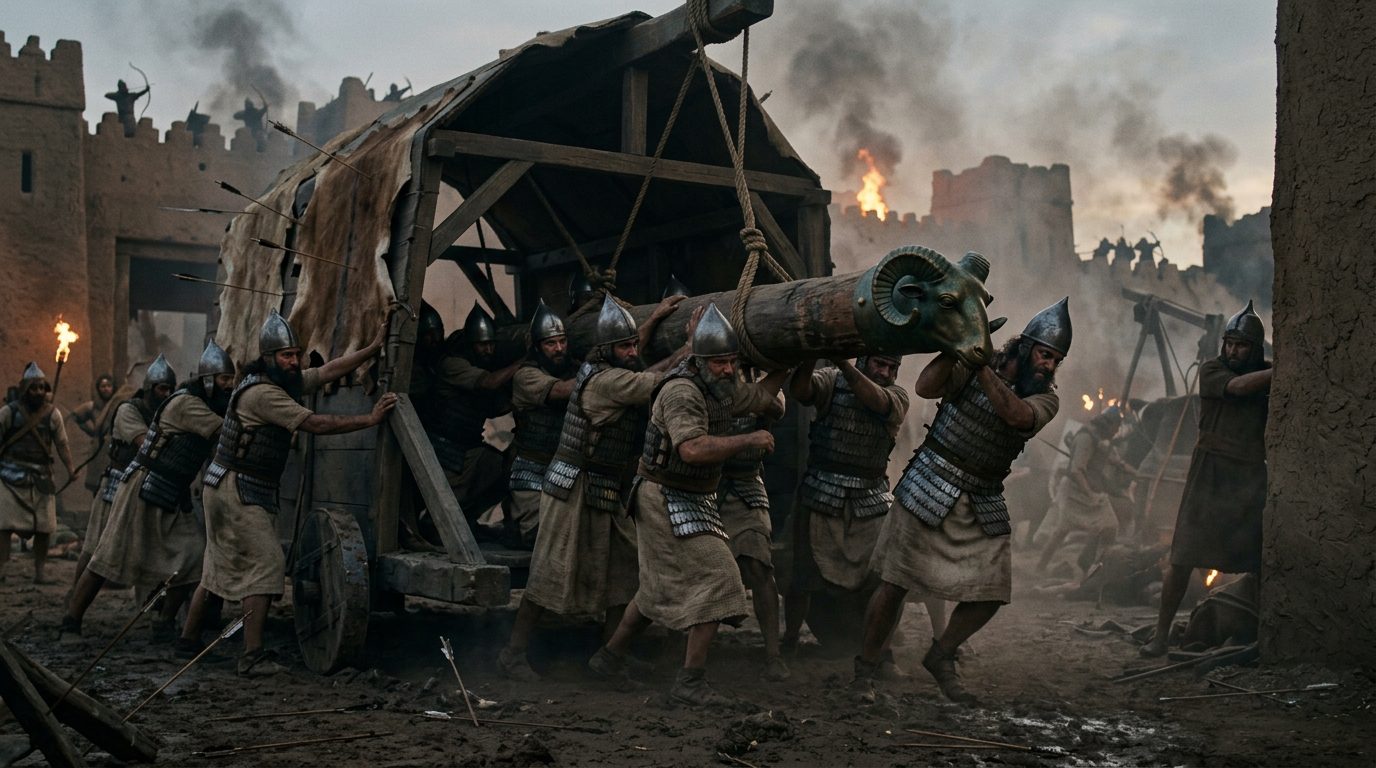
Battering Ram
Battering rams remained frontline siege weapons for over 3,000 years, from their first documented use by Assyrians around 900 BC through Constantinople’s fall in 1453 AD. The basic physics—concentrated kinetic energy applied repeatedly to structural weak points—proved so effective that no defensive innovation could completely neutralize them.
Assyrian relief carvings show sophisticated wheeled rams with protective housing and metal-tipped striking heads weighing 1,000-1,500 pounds. Medieval engineers refined the design by suspending rams from chains inside protective sheds called penthouses, allowing greater swinging momentum while protecting operators from arrows and boiling oil. Shed roofs used wet hides and clay to resist fire arrows, a crucial defense since defenders regularly attempted to burn rams.
3. Siege Tower: The Mobile Fortress That Brought Armies to the Walls
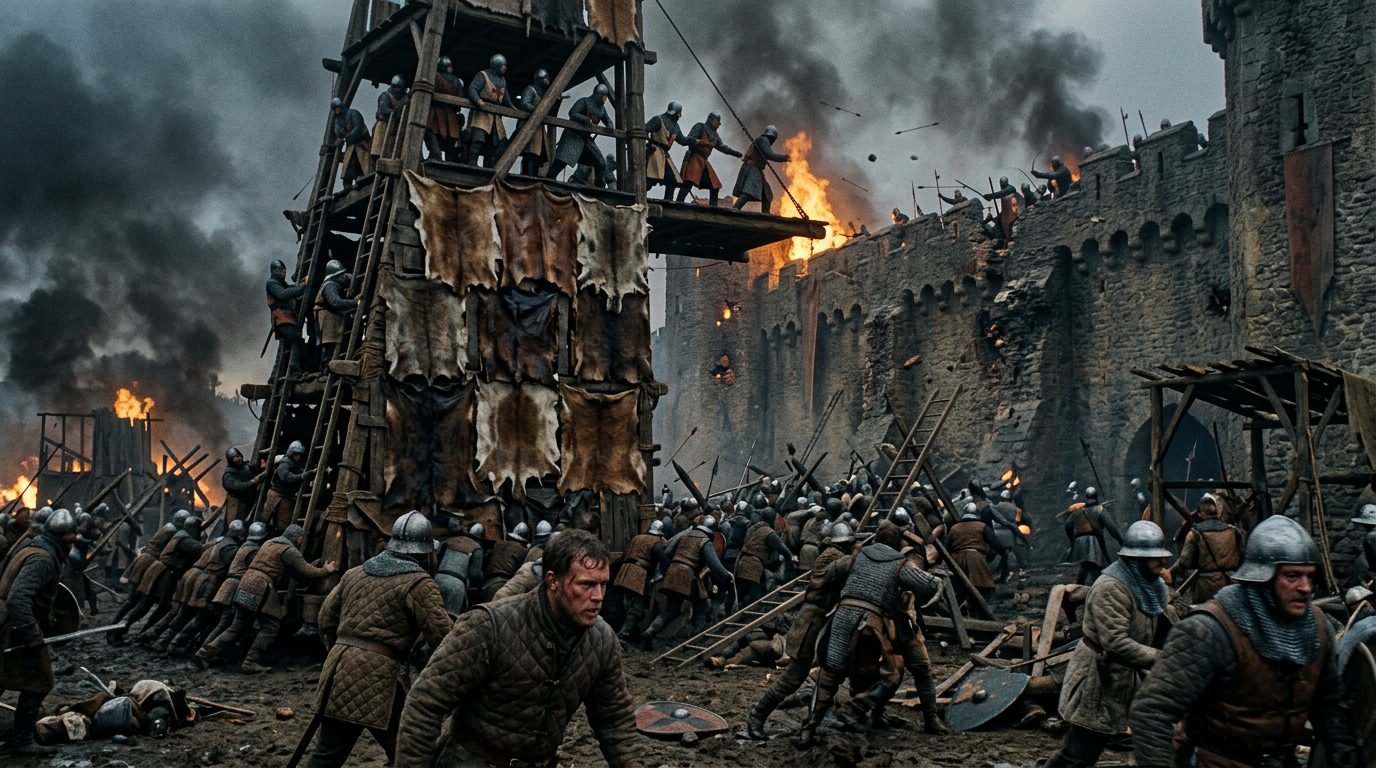
Siege Tower
Siege towers transformed attackers into eye-level combatants who could storm fortress walls directly, fundamentally changing siege warfare. These massive mobile structures, some reaching 100 feet high, allowed assault troops to bypass the deadly killing zone at a wall’s base. The Romans perfected siege tower design during the Siege of Masada in 73 AD, constructing a tower atop an enormous ramp requiring 15,000 tons of stone and earth. Medieval towers incorporated multiple levels: lower floors housed battering rams, middle sections protected archers, and top platforms held assault troops ready to cross drawbridges onto walls.
At the Siege of Lisbon in 1147, Crusader forces built a tower so tall that defenders had to add wooden extensions to their walls to match its height.
4. Ballista: Rome’s Artillery That Could Skewer Multiple Soldiers
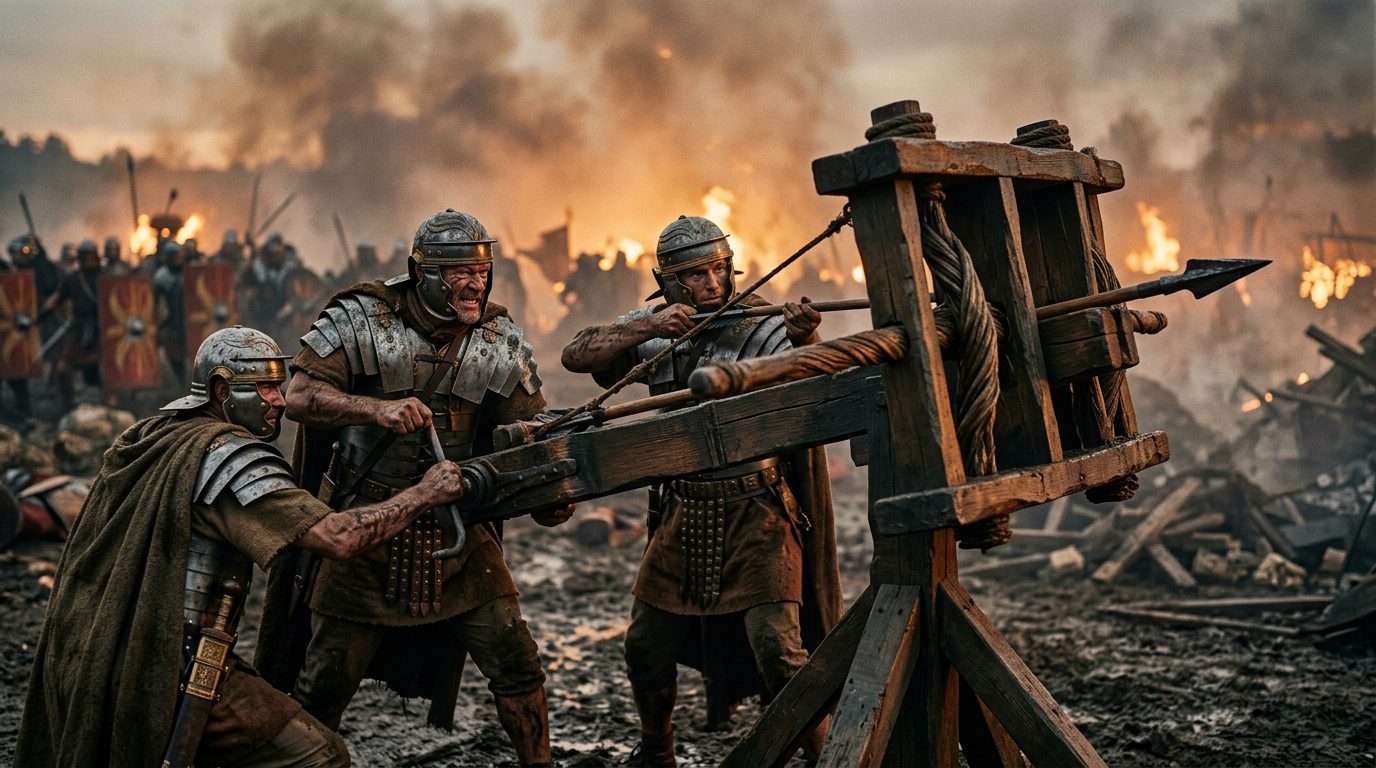
Ballista
The ballista functioned as ancient artillery, using torsion springs made from twisted sinew to launch massive bolts with enough force to penetrate multiple armored soldiers or smash through fortifications. Roman engineers developed sophisticated models capable of firing 3-foot bolts weighing up to 12 pounds over distances exceeding 500 yards with remarkable accuracy. During Julius Caesar’s siege of Massilia in 49 BC, ballistae proved so accurate they could target individual defenders on ramparts. Each Roman legion deployed approximately 60 ballistae of various sizes, from smaller weapons requiring two operators to massive fortress-breakers needing crews of eight.
The weapon’s name derives from the Greek “ballein,” meaning to throw, and its design represented cutting-edge military technology for over 600 years.
5. Mangonel: The Catapult That Launched Psychological Warfare
Mangonel
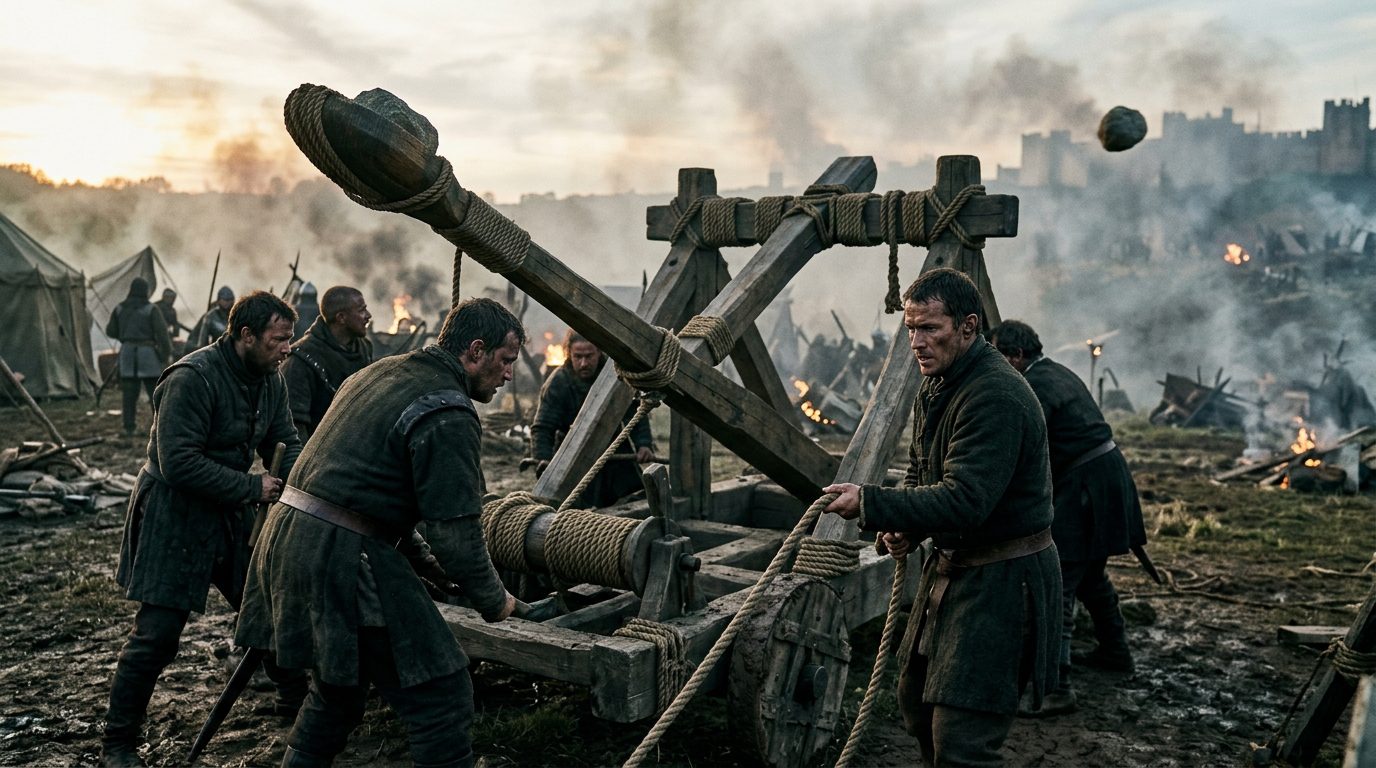
The mangonel emerged during the 6th century AD as a torsion-powered catapult that launched 100-pound stones over 400 feet using twisted rope bundles made from animal sinew, hair, or hemp. Byzantine armies popularized it during Justinian’s campaigns in the 530s, including the successful breach of Naples’ walls in 536 AD.
Medieval engineers valued mangonels for their compact size and speed—crews could assemble one in 2 to 3 days using local materials. Operators adjusted the release angle and torsion tension to switch between high-arc bombardment behind walls and flat shots against gates. During the Third Crusade in 1191, Richard the Lionheart’s forces deployed mangonels nicknamed “Bad Neighbor” and “God’s Stone Thrower” to bombard Acre’s fortifications.
6. Greek Fire: The Ancient Napalm That Burned on Water
Greek Fire
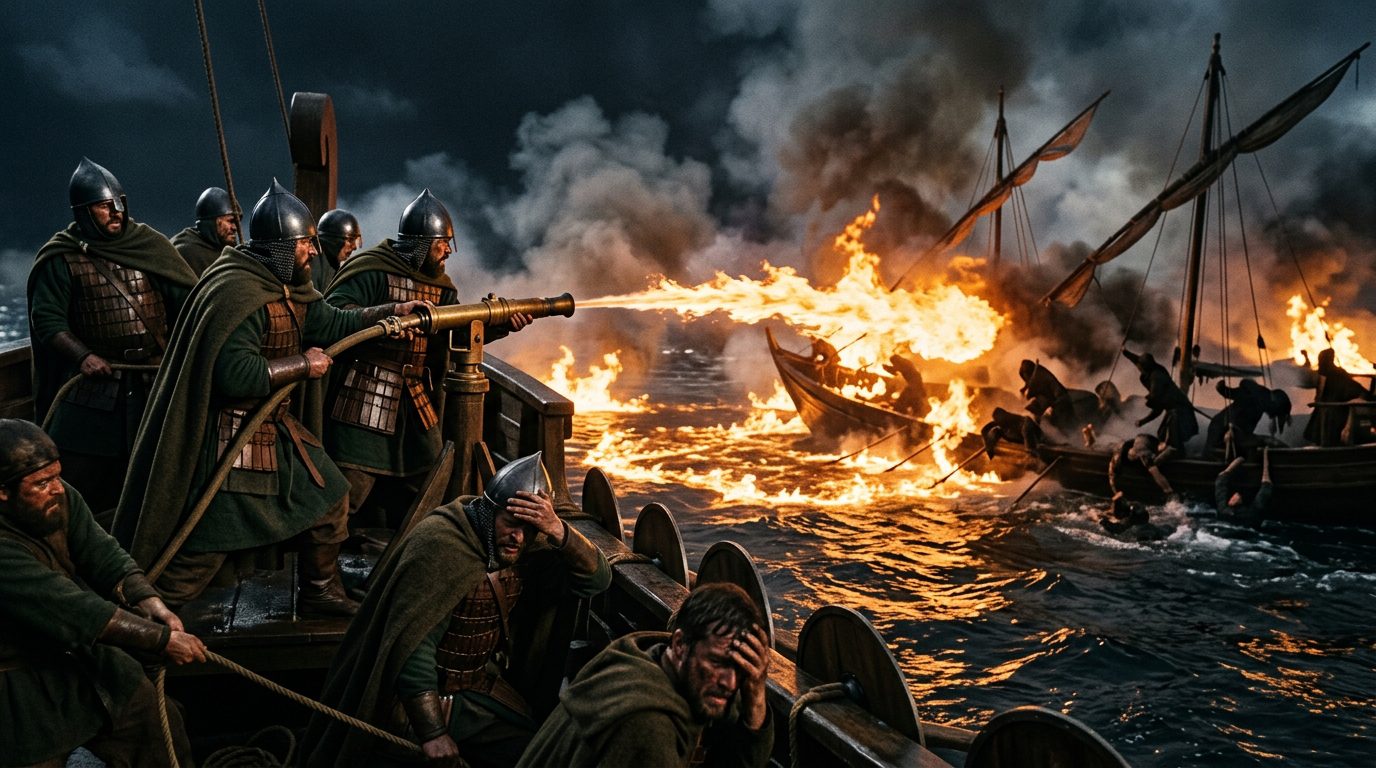
Greek Fire remains one of history’s most closely guarded military secrets—a liquid incendiary weapon developed by the Byzantines around 672 AD that burned on water and couldn’t be extinguished by conventional means. The Byzantine Empire’s survival against Arab naval sieges of Constantinople in 674-678 AD and 717-718 AD depended on Greek Fire deployed from bronze siphons mounted on ships that sprayed the flaming liquid onto enemy vessels. Victims diving into water found the fire continued burning on the surface around them.
Modern analysis suggests the formula combined petroleum, quicklime, sulfur, and possibly saltpeter with pine resin as a thickener. Only imperial family members and select military engineers knew the complete recipe, with execution as the penalty for disclosure—the secret proved so well-kept that historians can only speculate about exact ingredients today.
7. Bombard Cannon: The Gunpowder Monster That Ended the Medieval Age
Bombard Cannon
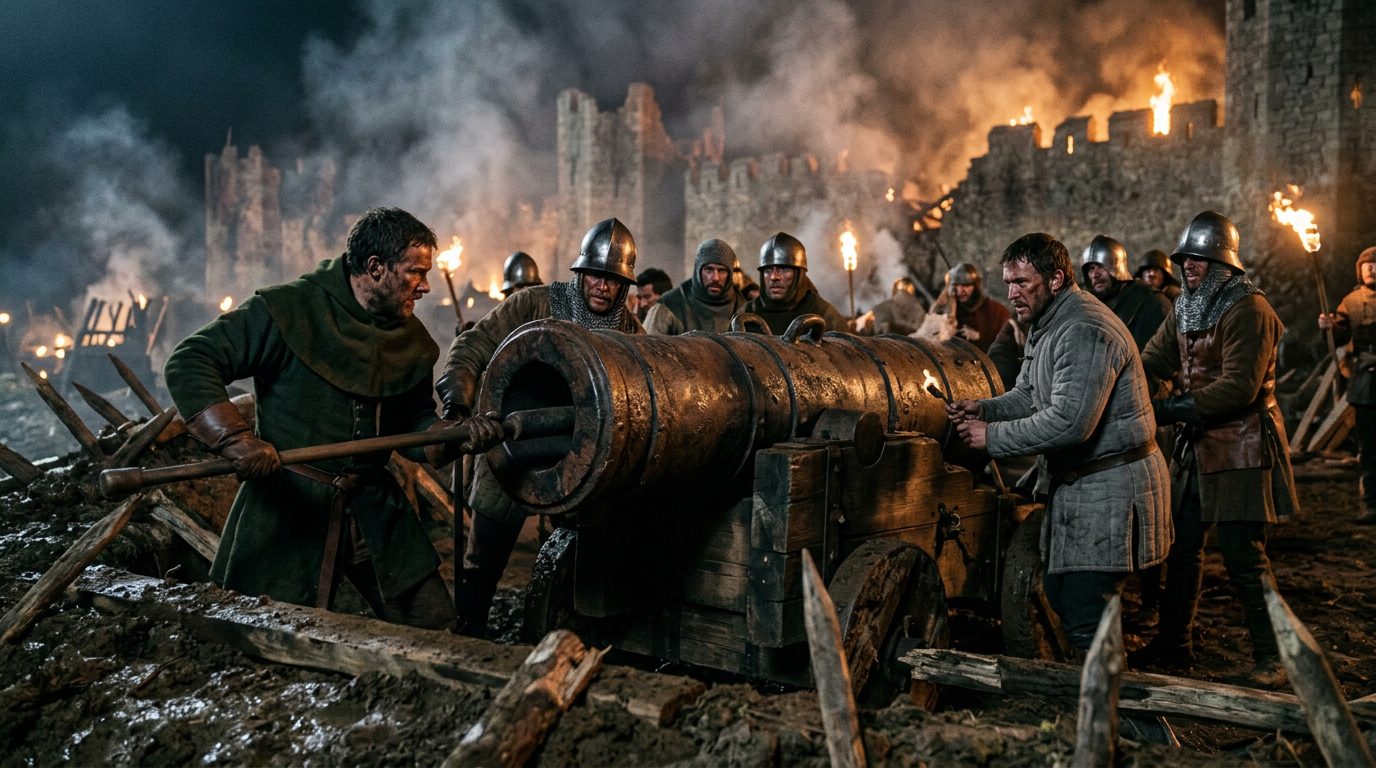
The bombard represented medieval warfare’s death knell—massive gunpowder cannons introduced in the 14th century that could accomplish in hours what traditional siege weapons required weeks to achieve. The famous “Mons Meg,” cast in 1449 and displayed at Edinburgh Castle, weighed 6 tons and fired 330-pound stone balls over 2 miles. At the 1453 Siege of Constantinople, Ottoman sultan Mehmed II deployed “Basilica,” a 27-foot cannon created by Hungarian engineer Orban that required 60 oxen to transport and 200 men to operate. Its 1,200-pound granite balls shattered Constantinople’s Theodosian Walls—fortifications protecting the city for 1,000 years—in just 55 days.
Early bombards faced serious limitations: they fired only 7 to 10 rounds daily, required hours to load and aim, and exploded frequently, killing their own crews.
8. Siege Crossbow: The Sniper Rifle of Medieval Warfare
Siege Crossbow
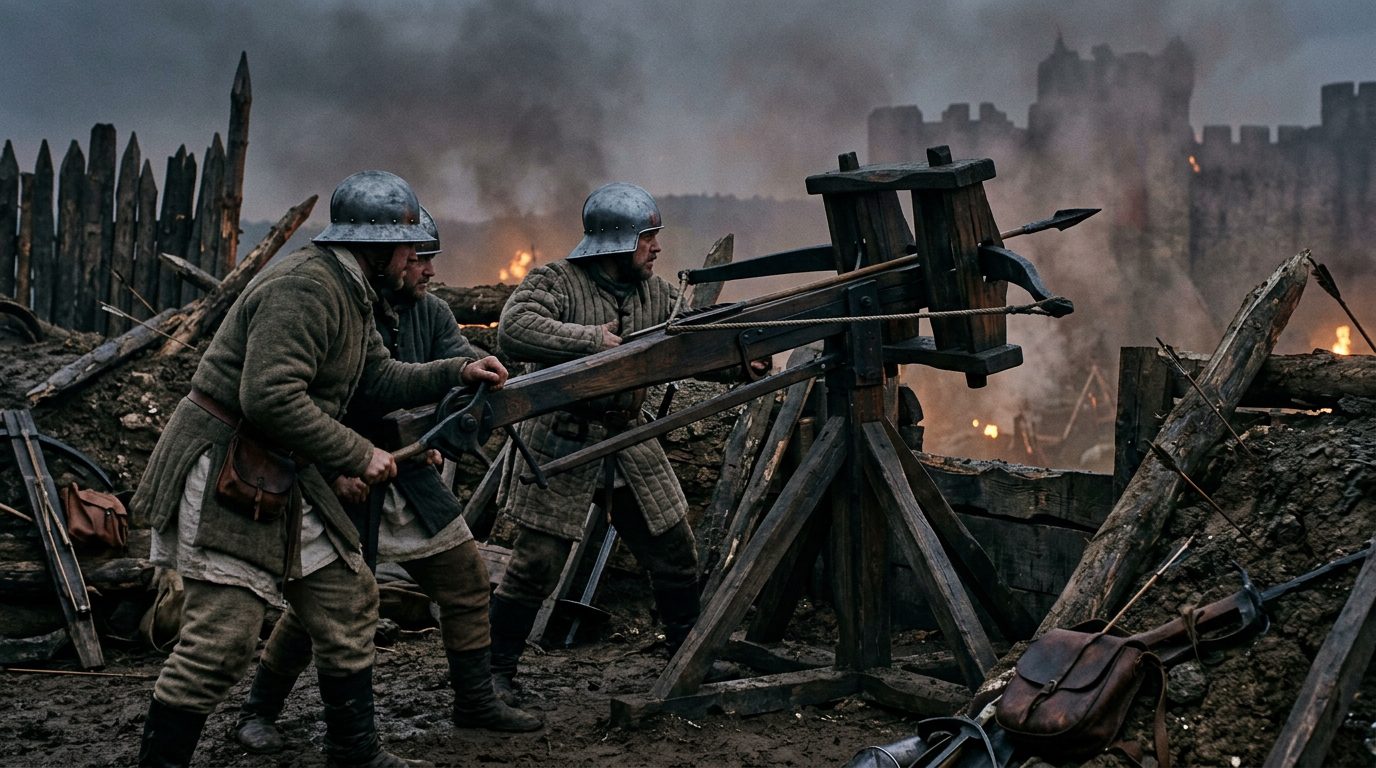
siege crossbows vastly exceeded handheld versions in size and power, using mechanical cranks or windlasses to launch bolts capable of penetrating castle walls and killing armored defenders from 500 yards away. Chinese armies employed massive siege crossbows as early as 341 BC, with the largest models requiring seven-man crews and firing 12-foot bolts weighing up to 20 pounds. Medieval European “tower crossbows” mounted on swiveling stands featured steel prods requiring over 1,000 pounds of draw weight—impossible for human strength alone.
During the 1346 Siege of Calais, English forces deployed siege crossbows that could strike individual defenders with deadly accuracy, forcing French troops to reinforce their ramparts. The weapon’s precision made it invaluable for targeting enemy engineers, artillery crews, and commanders.
9. Mining and Sapping: The Silent Siege Weapon That Collapsed Castles
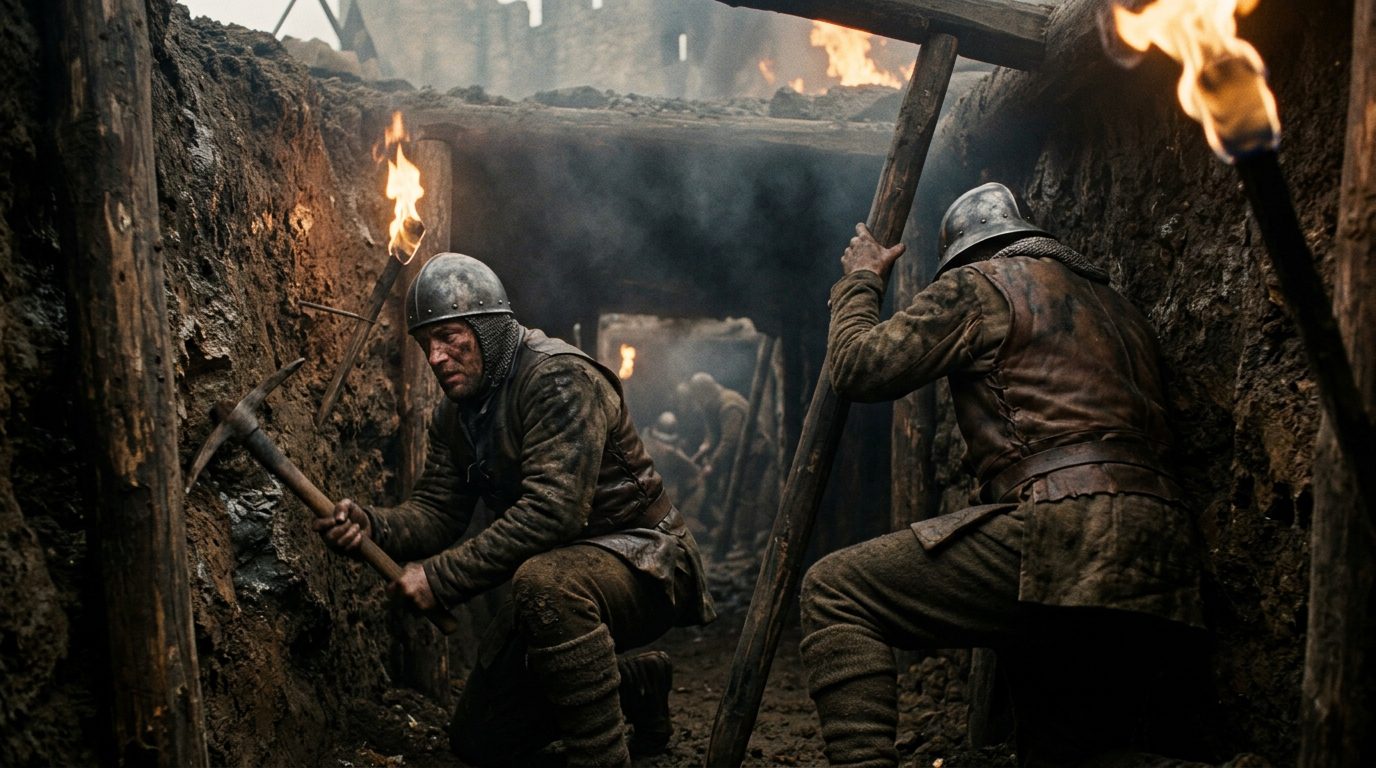
Mining and Sapping
Mining—tunneling beneath fortress walls to collapse them—proved one of siege warfare’s most effective yet dangerous tactics. The technique dates to ancient Assyria, but medieval forces refined it into a science, with the 1215 Siege of Rochester Castle demonstrating mining’s devastating potential. King John’s forces tunneled beneath Rochester’s keep, then filled the mine chamber with pig fat before igniting it to melt supporting timbers. The resulting collapse brought down an entire corner of the keep.
Miners worked in teams, typically digging 6 to 8 hours before relief, excavating tunnels just large enough to crawl through. They installed temporary wooden supports stacked with combustibles including timber, straw, animal fat, and sulfur. When ignited, the supports burned away, causing the wall above to collapse.
10. Petrary: The Stone-Throwing Terror of the Crusades
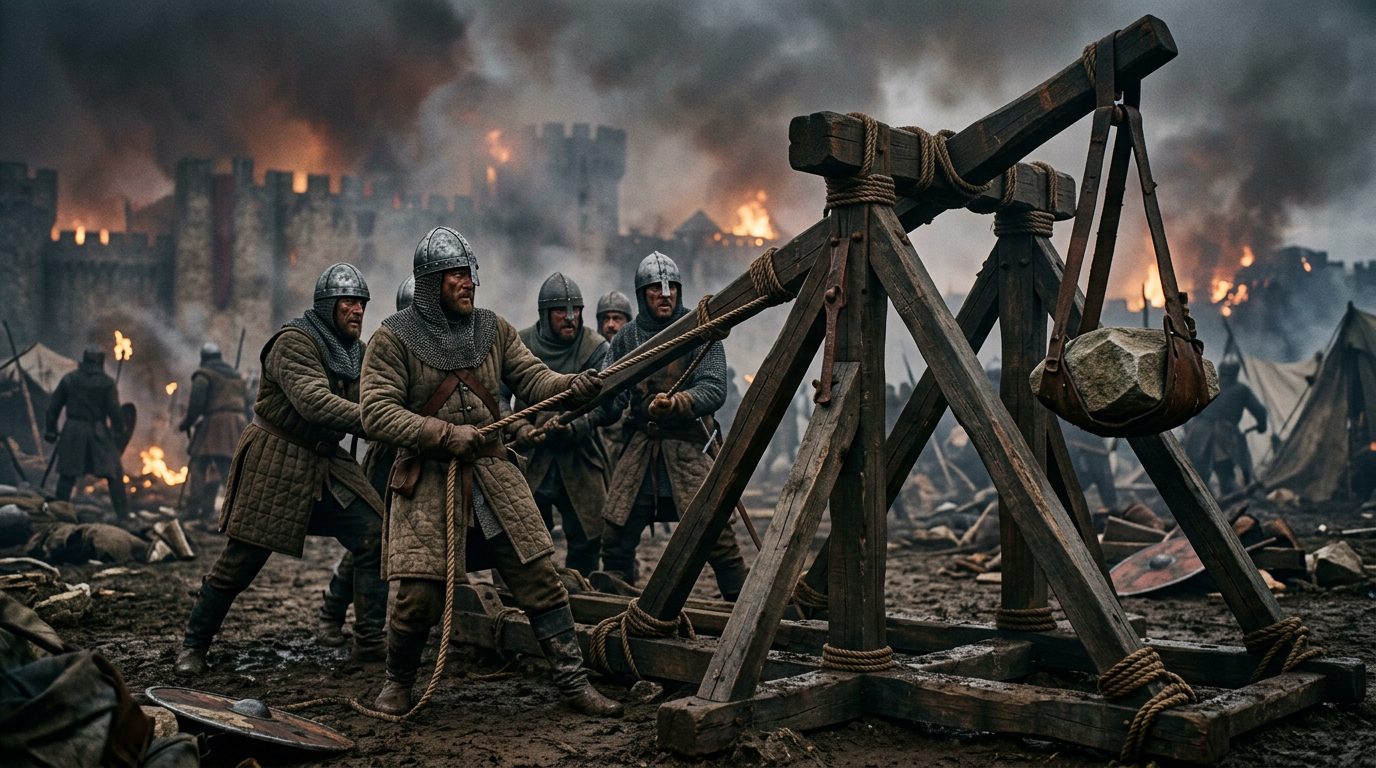
Petrary: The Stone-Throwing Terror of the Crusades
The petrary was a simpler, portable siege weapon using a pivoting arm and counterweight to hurl 50-150 pound stones at fortifications. Arab engineers perfected the design in the 9th-10th centuries, with the name deriving from Latin “petra” meaning stone. During the 1097-1098 Siege of Antioch, both Christian and Muslim forces deployed multiple petraries in counter-battery duels to destroy opposing siege engines.
Petraries offered rapid deployment—skilled crews could build one in under 24 hours using local materials, making them ideal for armies on the move. Saladin’s forces used an estimated 30 petraries during the 1187 Siege of Jerusalem, maintaining constant bombardment that made open movement deadly for defenders. The psychological impact was significant; soldiers faced constant stress knowing death could arrive without warning from 100-pound rocks.
11. Springald: The Medieval Machine Gun That Fired Iron Darts
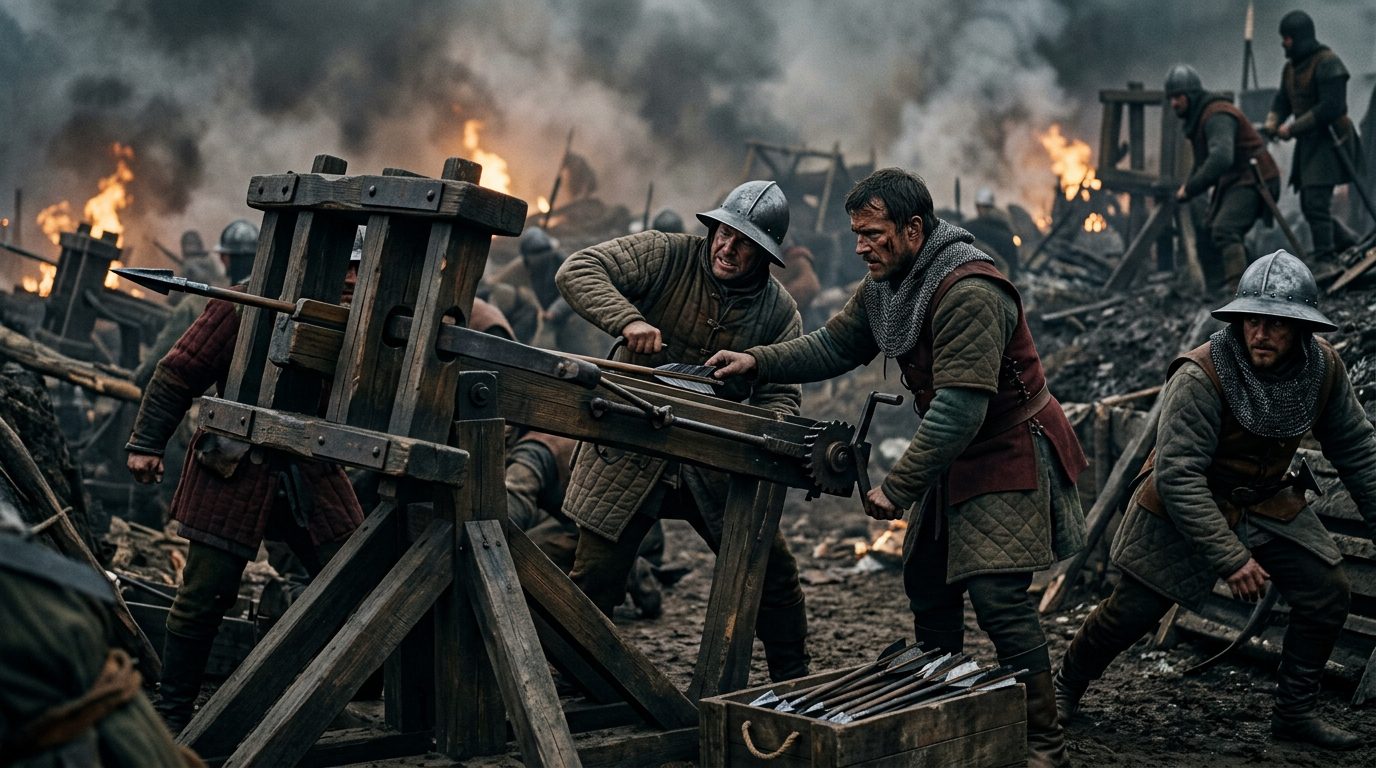
Springald
The springald functioned as a lighter, more versatile version of the ballista, using tension springs to launch iron darts with rapid-fire capability—the closest medieval equivalent to a machine gun. First appearing in European arsenals during the late 12th century, springalds achieved firing rates of 3 to 4 shots per minute, significantly faster than larger artillery, making them invaluable for suppressing enemy crews and clearing battlements.
Edward I’s Welsh campaigns (1277-1283) featured extensive springald deployment, with royal accounts recording expenditures for the weapons, springs, and thousands of iron bolts. Mounted on fixed stands or castle towers and swiveling to track targets, springalds used a windlass mechanism to draw back throwing arms against powerful springs.
12. Chain Shot Artillery: The Wall-Breaker That Evolved From Naval Warfare
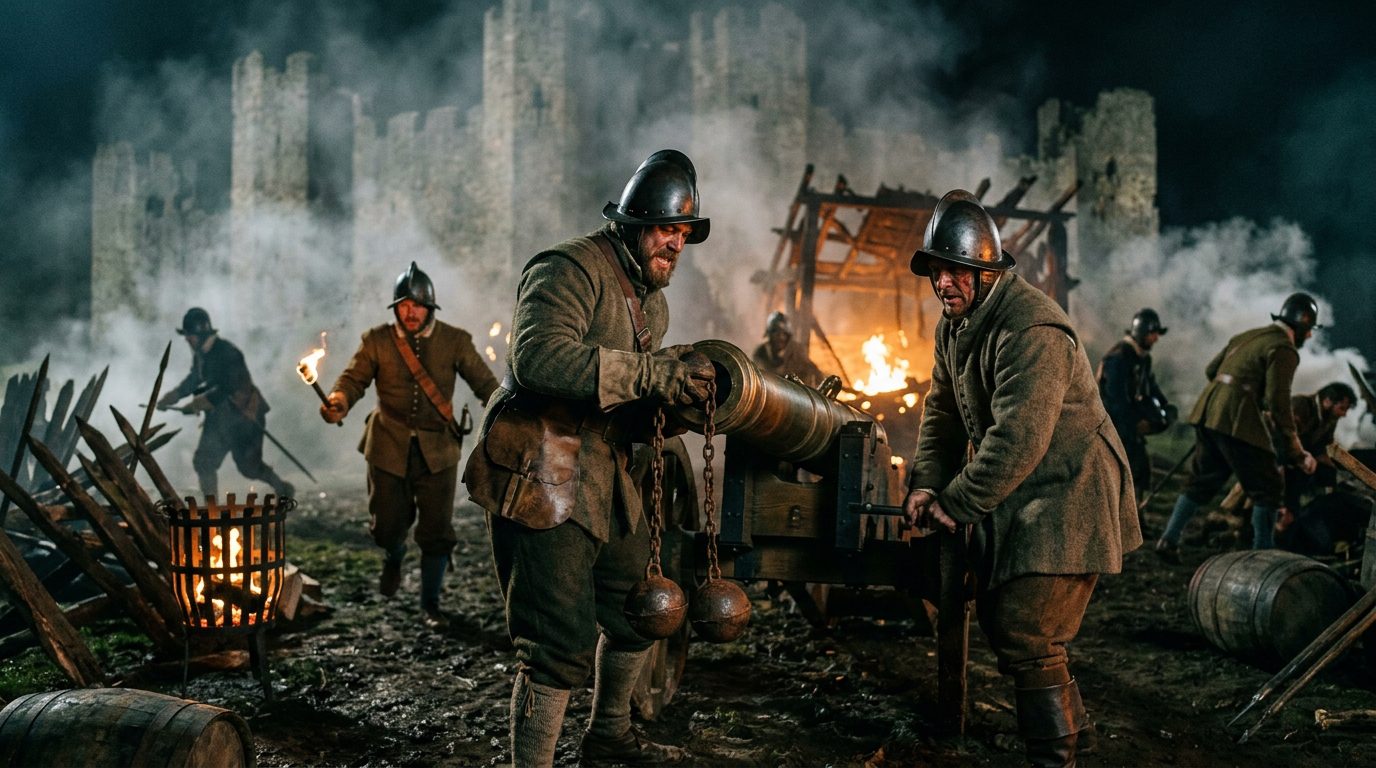
Chain Shot Artillery
Chain shot—two cannon balls connected by chain—originated as anti-ship ammunition but became devastatingly effective against medieval masonry during 15th-century siege warfare. When fired, the connected projectiles rotated in flight, creating a spinning destruction zone that sheared through wooden structures and shattered stone walls by distributing impact across a wider area than solid shot.
Ottoman forces pioneered land-based chain shot during the 1480s, discovering that spinning projectiles proved particularly effective against corner towers and wall junctions. The physics involved both kinetic energy and the chain’s scissoring action—masonry struck by one ball while the chain wrapped around structural elements experienced pulling forces that solid shot couldn’t generate.
13. Siege Hook: The Grappling Terror That Pulled Down Walls
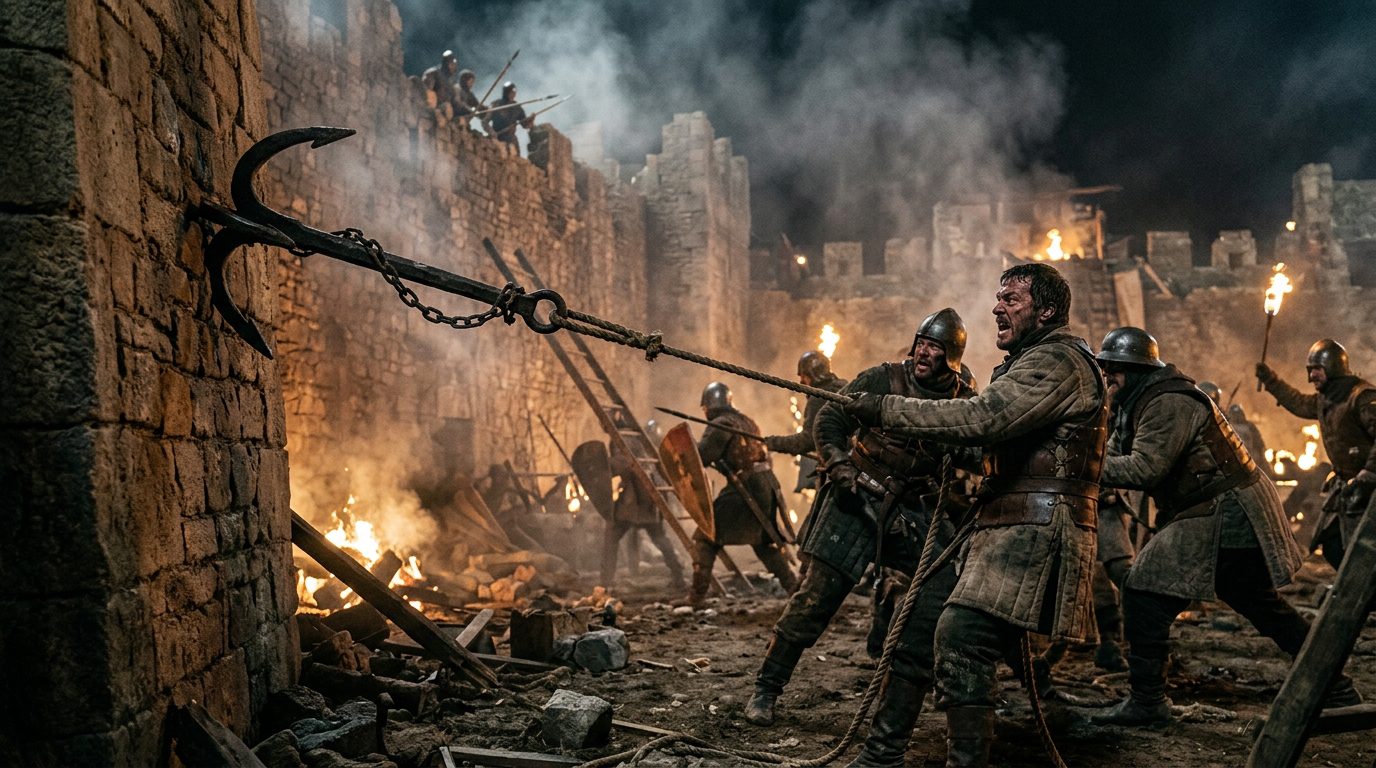
Siege Hook
Siege hooks—massive iron grappling devices attached to ropes or chains—allowed attackers to pull down walls, disable siege engines, or drag defenders from battlements in brutal displays combining engineering with psychological warfare. Roman forces deployed sophisticated siege hooks during the 213-212 BC Siege of Syracuse, where Archimedes designed defensive cranes that grabbed attacking ships’ prows and lifted them vertically before dropping them, sinking multiple vessels. Medieval siege hooks evolved from these ancient designs, typically featuring three or four curved iron claws weighing 40 to 100 pounds, attached to rope cables several hundred feet long. Attackers mounted hooks on long poles, launched them via catapults, or lowered them from siege towers to snag and dismantle defensive structures.
14. Scorpion: The Precision Artillery Rome Used to Hunt Defenders
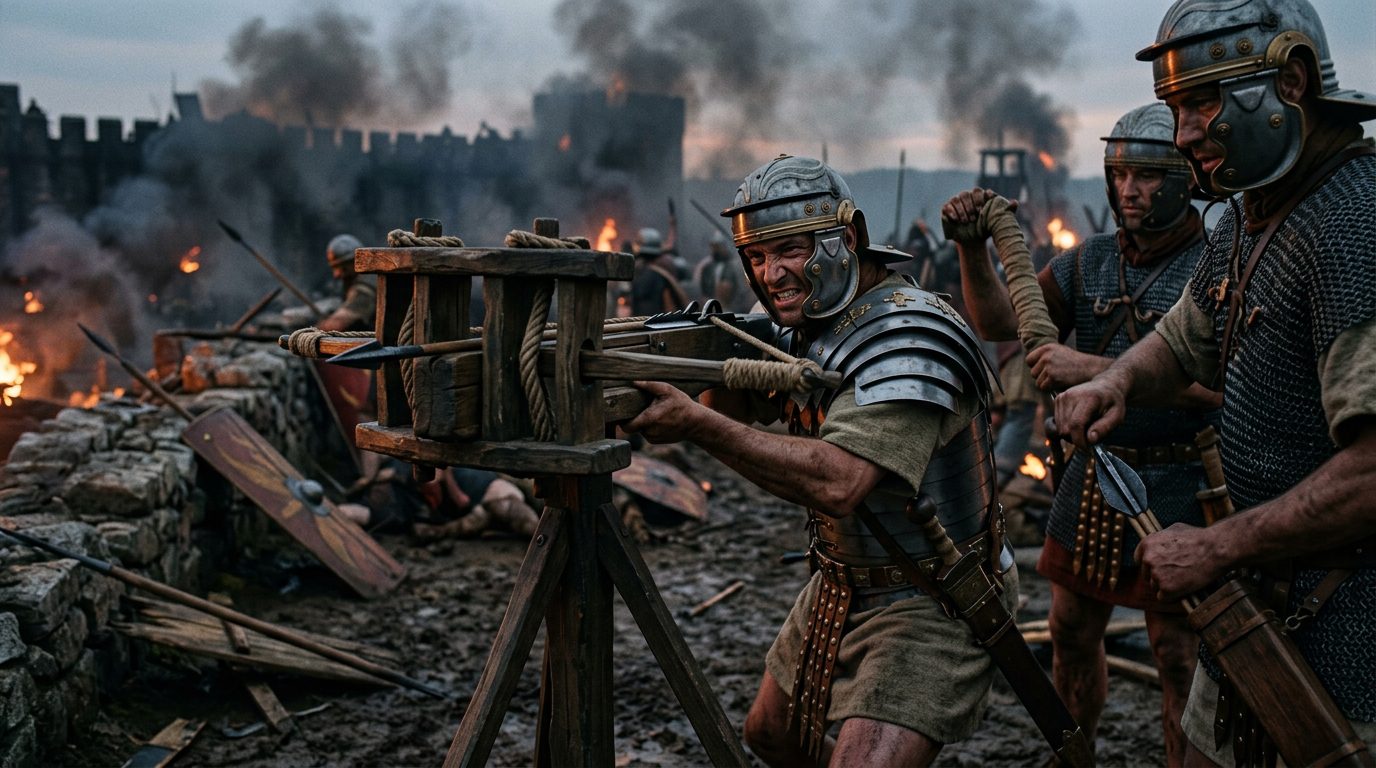
Scorpion
The scorpion represented ancient Rome’s answer to sniper rifles—a compact, highly accurate torsion-powered weapon firing iron-tipped bolts capable of penetrating armor and fortress gates from over 300 yards away. Measuring approximately 6 feet long and weighing around 175 pounds, scorpions operated via a two-man crew, making them far more mobile than larger ballistae. Roman military doctrine deployed one scorpion per century, meaning a full legion fielded roughly 60 of these weapons, creating devastating concentrated firepower during sieges.
Archaeological evidence from the Roman siege of Masada uncovered scorpion bolts still bearing imperial workshop stamps—these 1,900-year-old projectiles measured 10 to 12 inches long with sharp iron points. The weapon utilized torsion springs made from animal sinew twisted to enormous tension, with a bowstring drawn back via a windlass mechanism.
15. Culverin: The Long-Range Cannon That Revolutionized Siege Warfare
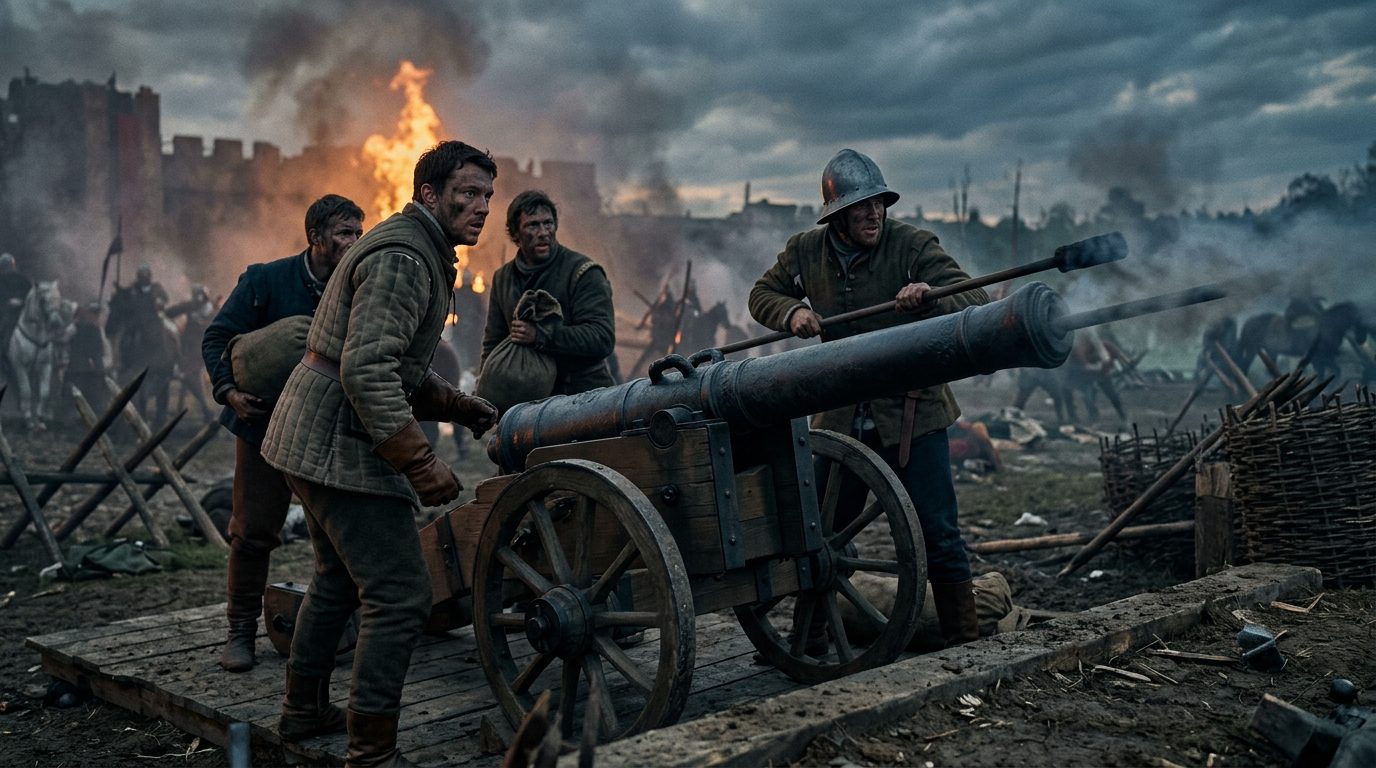
Culverin
The culverin emerged in the 15th century as a lightweight, long-barreled cannon that revolutionized siege warfare by trading massive destructive power for superior range, accuracy, and rate of fire. With barrels 10 to 15 feet long and bore diameters of 4 to 6 inches, culverins fired 15 to 20-pound iron balls over 2,000 yards—far exceeding bombards’ capabilities. The extended barrel allowed more complete gunpowder combustion, producing flatter trajectories for accurate targeting.
French innovations during Charles VIII’s 1494 Italian campaign showcased culverins’ potential. Mobile bronze culverins on wheeled carriages could relocate rapidly and maintain sustained fire. At the 1521 Siege of Belgrade, Ottoman forces used culverins to precisely target defensive positions, gates, and command posts rather than simply battering walls.
Did You Know?
The evolution of siege weapons from simple battering rams to sophisticated gunpowder artillery spans over three millennia of human ingenuity applied to destruction. Each technological leap—from torsion-powered ballistae to counterweight trebuchets to cannon—triggered defensive innovations that temporarily restored balance before attackers developed even more devastating weapons. What makes these engines of war historically significant extends beyond their immediate military impact. The massive bombards that shattered Constantinople’s walls in 1453 didn’t just end the Byzantine Empire; they marked the definitive close of the medieval period itself, forcing complete reimagination of military architecture, tactics, and strategy. The arms race between siege weapons and fortifications drove innovations in mathematics, engineering, metallurgy, and chemistry that found peaceful applications in construction, manufacturing, and science. Many medieval fortress ruins visible across Europe today bear the permanent scars of these weapons—impact craters from trebuchet stones at Château Gaillard, breach points from mining operations at Rochester Castle, and cannon-ball damage at countless others serve as physical reminders of siege warfare’s brutal reality. Perhaps most remarkably, some of these weapons proved so effective that their basic principles remain relevant today—modern artillery still uses the physics that made trebuchets devastating, and contemporary siege tactics incorporate many principles medieval commanders would recognize. The next time you visit a medieval castle, look closely at those thick walls and strategic designs—you’re seeing the physical manifestation of a thousand-year conversation between attackers and defenders, written in stone and iron.