
The Library of Alexandria held 700,000 scrolls when it burned, but it wasn’t alone. Ancient civilizations built architectural marvels dedicated solely to preserving knowledge—and some still stand today.
1. The Library of Ashurbanipal: The World’s First Systematically Organized Collection
The Library of Ashurbanipal
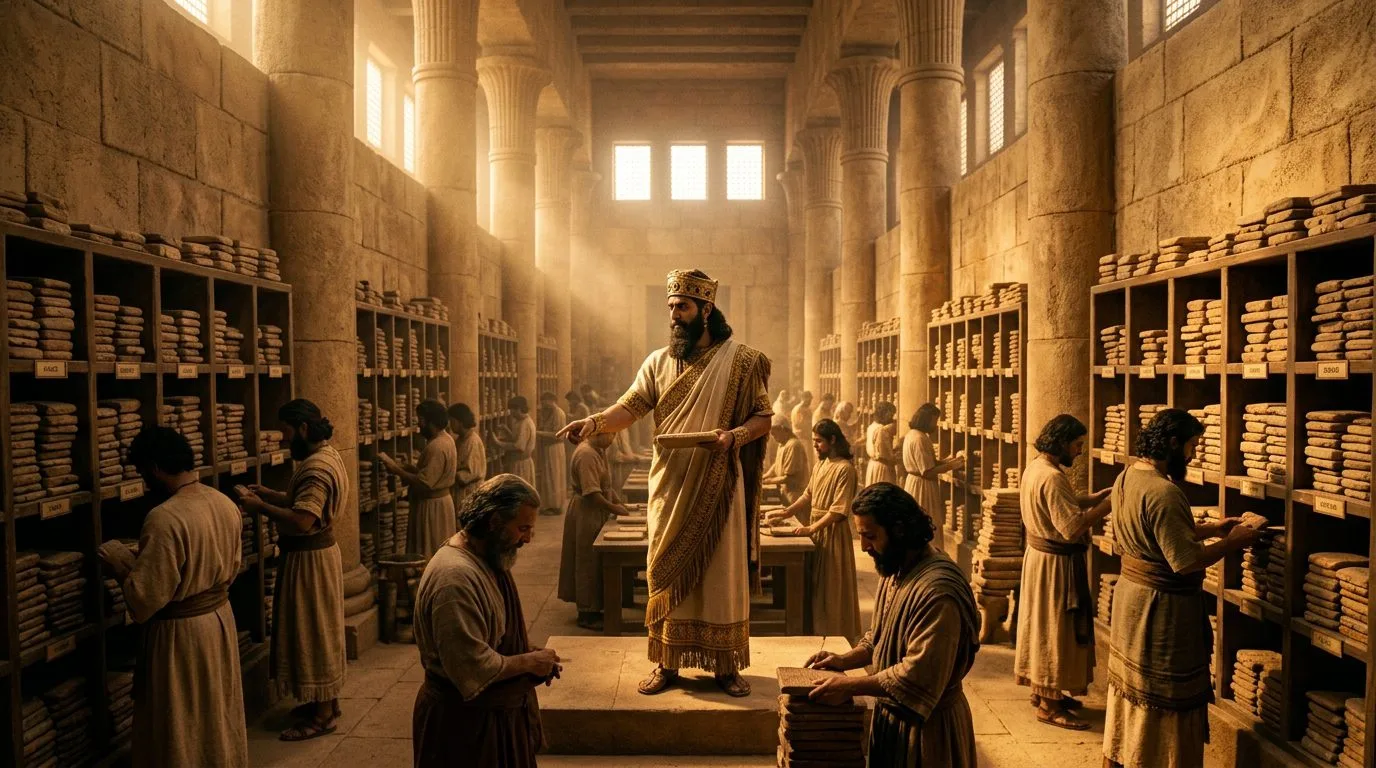
King Ashurbanipal of Assyria created the world’s first systematically organized library in Nineveh around 650 BCE. His collection contained over 30,000 clay tablets arranged by subject and indexed—a revolutionary cataloging system. Scribes copied texts from across Mesopotamia, including the Epic of Gilgamesh, which archaeologists discovered intact in antiquity. Ashurbanipal boasted in his inscriptions that he could read ancient Sumerian and Akkadian, rare skills for royalty. The library survived until Nineveh’s destruction in 612 BCE, when the fire that consumed the palace actually baked the clay tablets, inadvertently preserving them for millennia.
Source: britannica.com
2. The Library of Alexandria: Ancient Egypt’s Half-Million Scroll Powerhouse
The Library of Alexandria
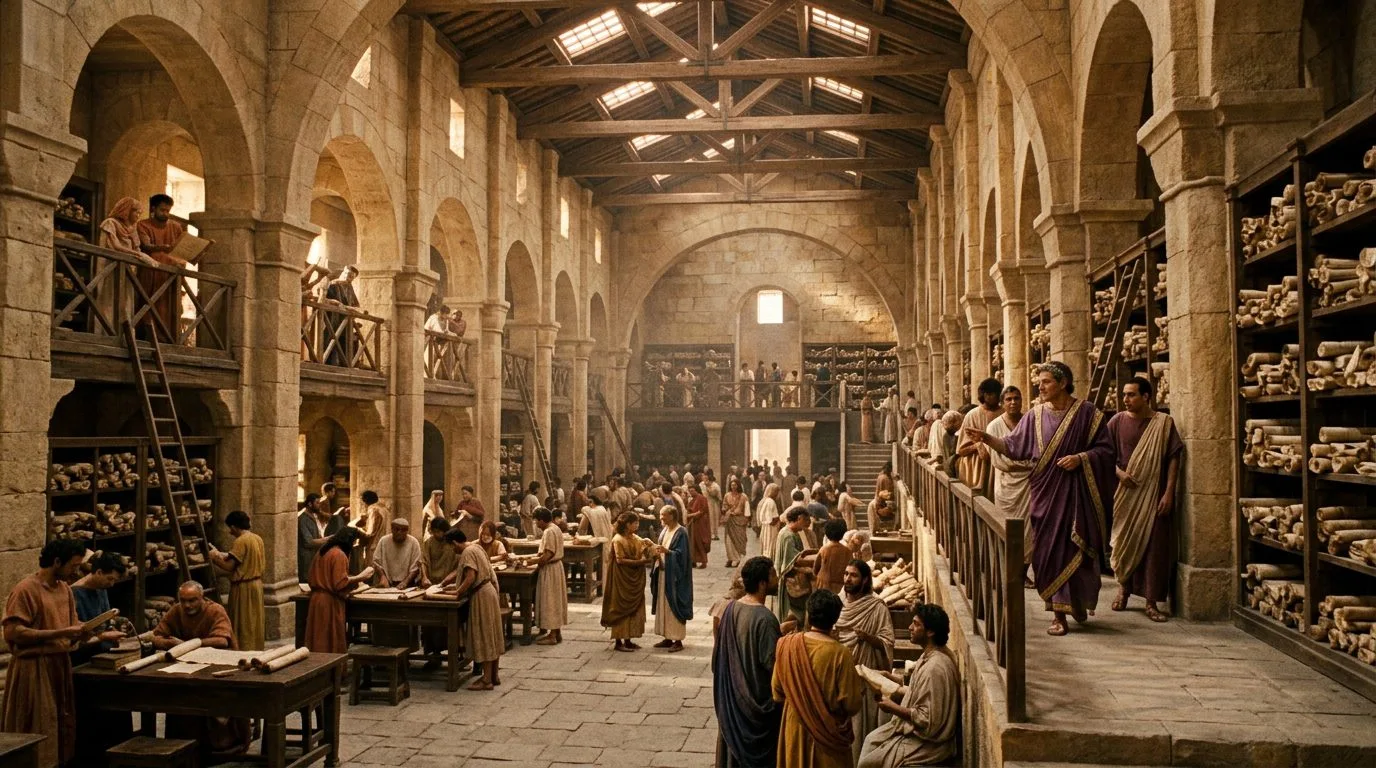
Ptolemy I Soter founded this legendary institution around 295 BCE, transforming Alexandria into the intellectual capital of the ancient world. The library employed over 100 scholars who lived on-site, received tax exemptions, and dedicated their lives to copying and translating texts. Guards at Alexandria’s harbor confiscated every book arriving by ship, copied it, then returned the copy to the owner while keeping the original—a practice called “the ships’ libraries.” At its peak around 40 BCE, the collection held between 400,000 and 700,000 scrolls. The exact date of its destruction remains debated, but most scholars point to multiple fires between 48 BCE and the 7th century CE.
Source: smithsonianmag.com
3. The Library of Pergamum: Rival to Alexandria’s Throne
The Library of Pergamum
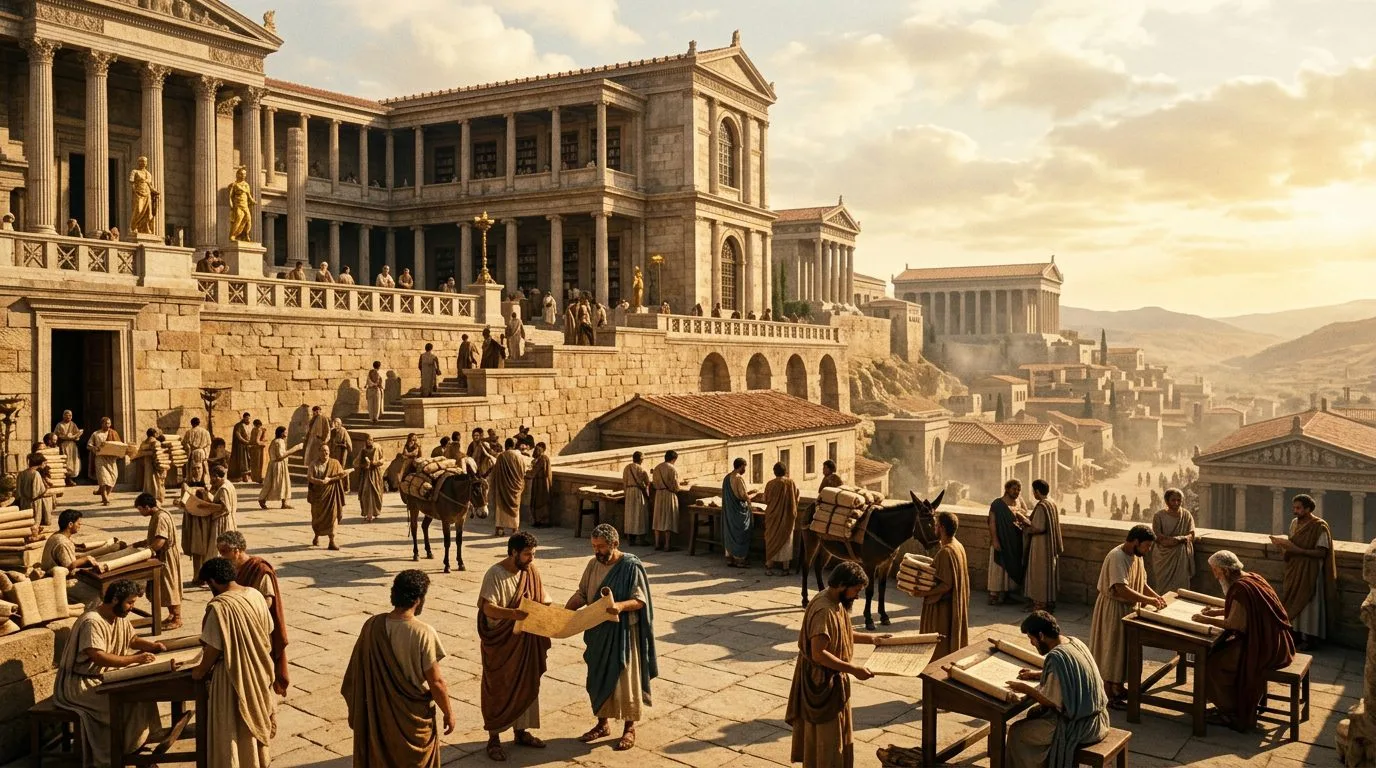
King Eumenes II built this magnificent library in Pergamum around 190 BCE with 200,000 scrolls, making it Alexandria’s only serious competitor. When Egyptian rulers banned papyrus exports to stifle Pergamum’s growth, the city’s scholars invented parchment—treated animal skins that proved more durable than papyrus. The library occupied three rooms of Pergamum’s Athena temple, with storage alcoves built into the walls one meter away to protect manuscripts from moisture. Mark Antony reportedly gifted the entire collection to Cleopatra around 41 BCE as a romantic gesture. The library’s ruins still stand in modern Turkey, overlooking the Aegean Sea.
Source: britannica.com
4. The Imperial Library of Constantinople: Byzantine Empire’s Knowledge Fortress
The Imperial Library of Constantinople
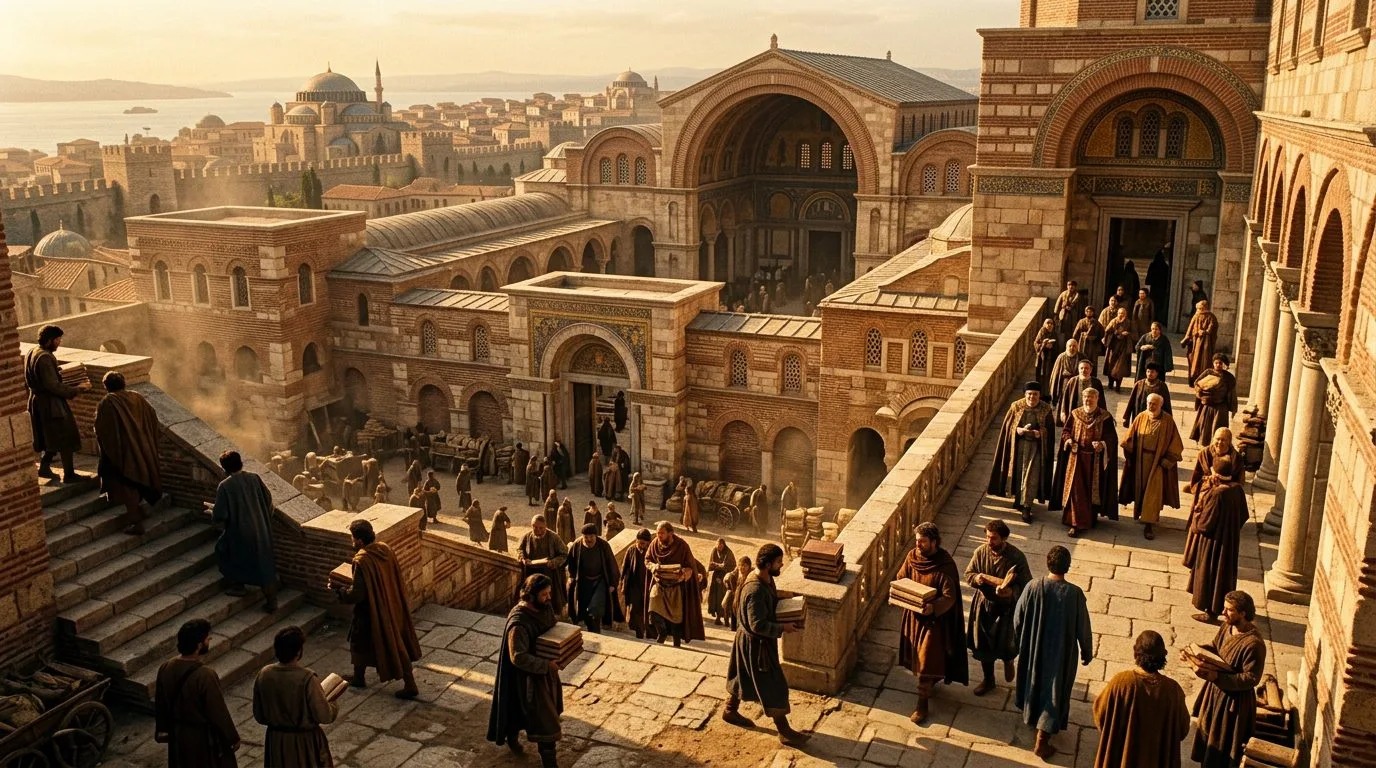
Emperor Constantius II established this library in 357 CE with 120,000 volumes, making it late antiquity’s largest repository of Greek and Roman knowledge. Unlike earlier scroll-based libraries, Constantinople pioneered the codex format—bound books with pages—allowing for easier reference and storage. The library survived for over a millennium, weathering multiple sieges and fires. During the Fourth Crusade in the early 13th century, crusaders burned tens of thousands of irreplaceable manuscripts for warmth. The final destruction came in the mid-15th century when Ottoman forces conquered the city. Scholars estimate that 90% of classical Greek literature disappeared forever when this library fell.
Source: history.com
5. The House of Wisdom: Baghdad’s Translation Movement Central
The House of Wisdom
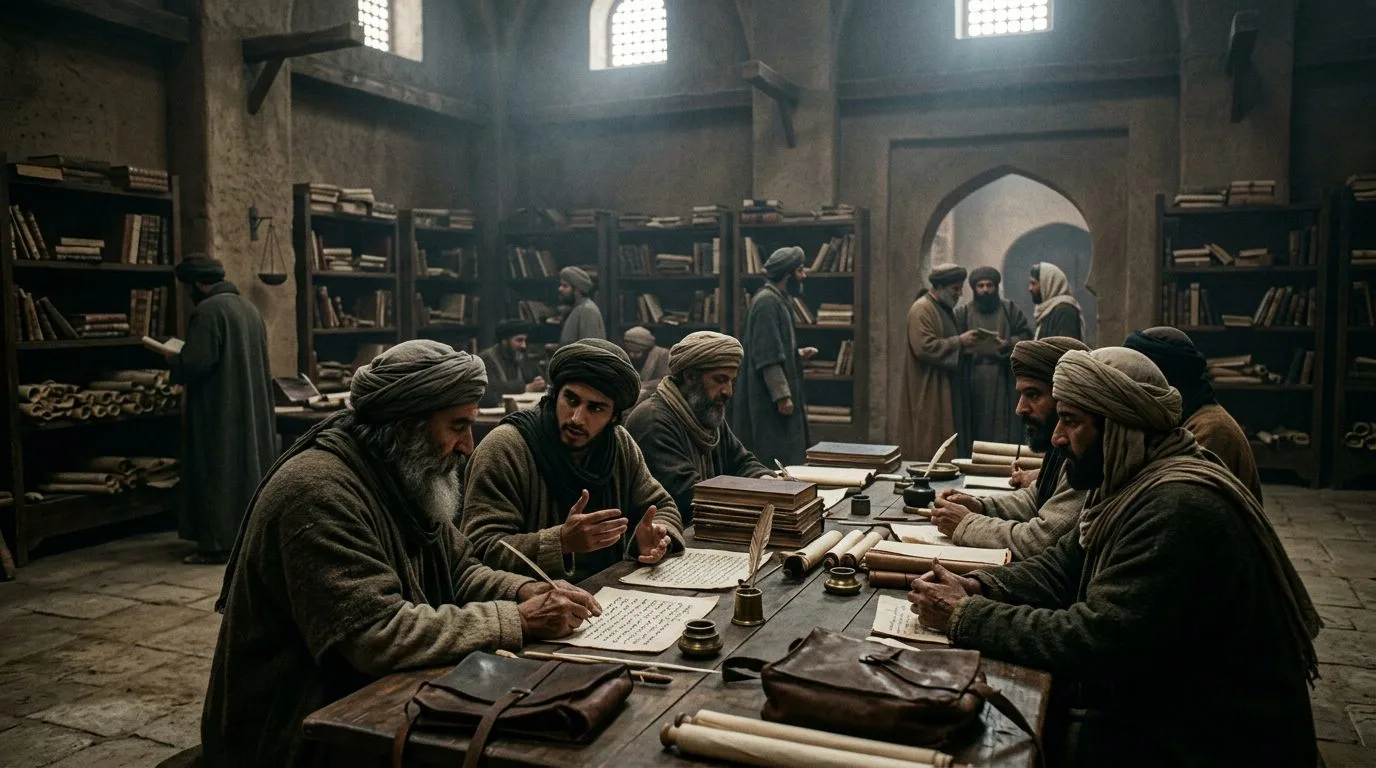
Caliph Harun al-Rashid founded this legendary institution in Baghdad around 790 CE, and his son al-Ma’mun expanded it into the Islamic world’s intellectual heart. The library employed hundreds of translators who rendered Greek, Persian, Sanskrit, and Syriac texts into Arabic—preserving works by Aristotle, Euclid, and Galen that Europe had lost. Scholars received payment based on the weight of books they translated in gold. At its zenith around 850 CE, the House of Wisdom contained approximately 400,000 volumes. Mongol invaders destroyed it in the mid-13th century, allegedly throwing so many books into the Tigris River that its waters ran black with ink for six months.
Source: britannica.com
6. The Library of Trajan: Rome’s Architectural Marvel
The Library of Trajan: Rome’s Architectural Marvel
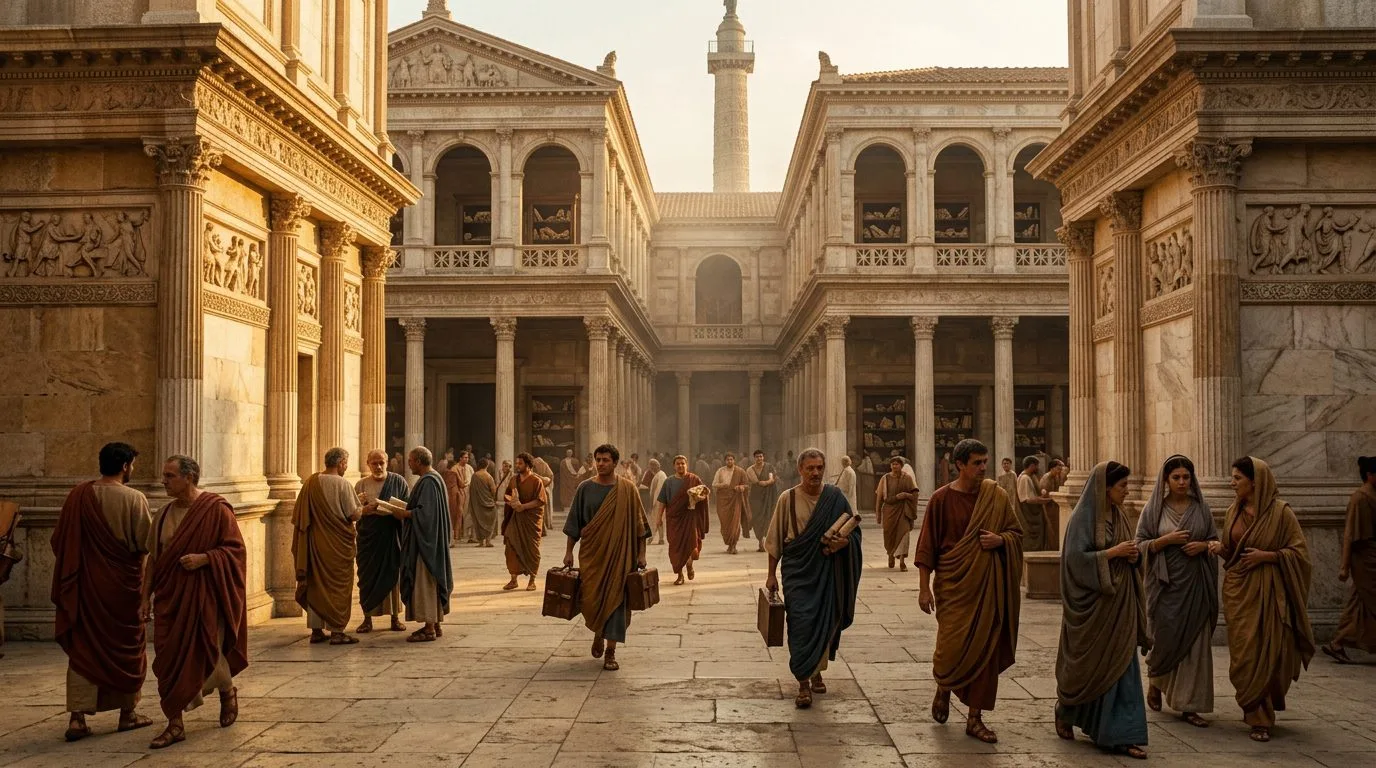
Emperor Trajan dedicated this library in 112 CE as part of his spectacular forum complex in Rome, featuring two identical buildings facing each other—one for Greek texts, one for Latin. Each hall rose three stories high with reading rooms that could accommodate dozens of scholars simultaneously. Marble shelves lined the walls with numbered slots for organizing the estimated 20,000 scrolls. The library flanked Trajan’s Column, allowing readers to consult historical texts while viewing the column’s carved narrative of his Dacian wars. The buildings stood for over 400 years until Rome’s decline. Archaeologists excavated the foundations in the early 20th century, revealing the sophisticated ventilation system that protected manuscripts from moisture.
Source: smithsonianmag.com
7. The Royal Library of Antioch: Seleucid Empire’s Literary Crown Jewel
The Royal Library of Antioch
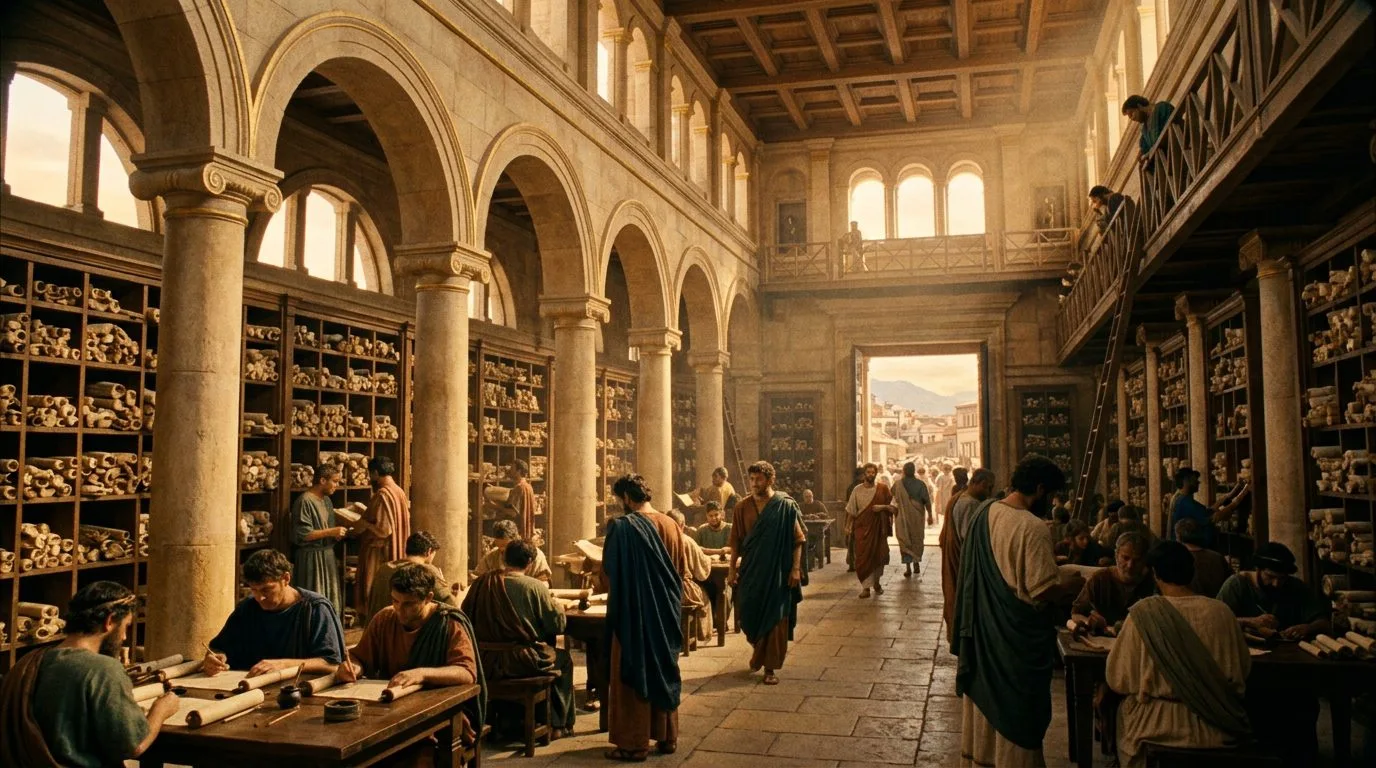
Seleucus I Nicator established this prestigious library around 300 BCE in Antioch, his capital city along the Orontes River. The collection grew to rival Alexandria’s, specializing in philosophy and science, with particular strength in Aristotelian texts. By 200 BCE, the library housed approximately 250,000 scrolls and sponsored a community of resident philosophers. The Roman historian Ammianus Marcellinus praised its “magnificent and columned halls” in his writings from the 4th century CE. An earthquake devastated Antioch in 526 CE, destroying most of the library. Persian invaders in 540 CE finished what the earthquake started, and today only scattered references in ancient texts confirm its former glory.
Source: britannica.com
8. The Nalanda Monastery Library: Ancient India’s Nine-Story Wonder

The Nalanda Monastery Library
Buddhist monks constructed this extraordinary library complex in Bihar, India, around 450 CE, creating the ancient world’s first residential university. The library occupied three massive buildings—Ratnasagara, Ratnodadhi, and Ratnaranjaka—with the tallest rising nine stories and visible for miles. At its peak in 700 CE, Nalanda housed over 9 million manuscripts on palm leaves, covering Buddhist philosophy, medicine, mathematics, and astronomy. Chinese pilgrim Xuanzang studied there in 637 CE, later documenting that 10,000 students and 2,000 teachers lived on campus. Turkish invaders burned the library in the late 12th century; legend claims the manuscripts smoldered for three months. Archaeological excavations beginning in the early 20th century revealed the foundations still precisely aligned.
Source: smithsonianmag.com
9. The Library of Celsus: Ephesus’s Memorial to Knowledge
The Library of Celsus
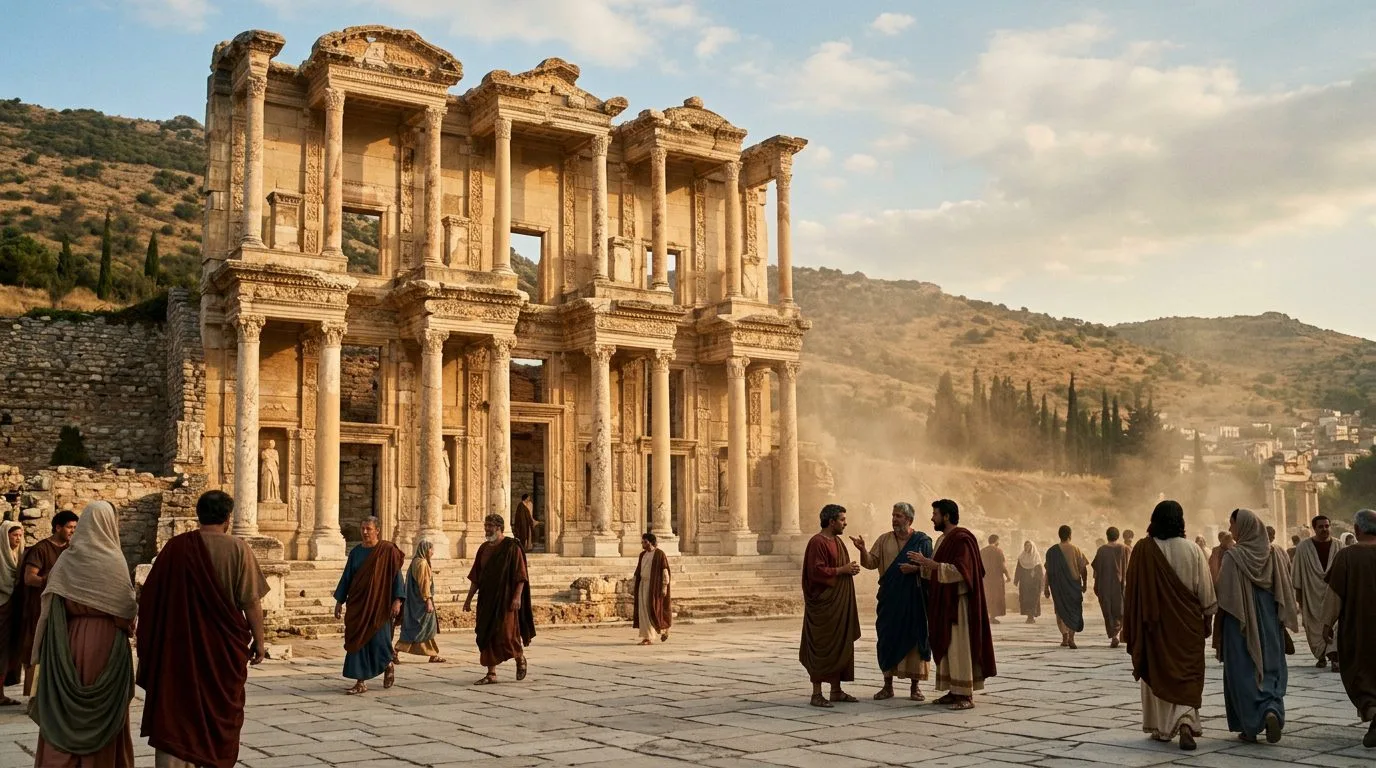
Consul Gaius Julius Aquila built this stunning library in Ephesus around 114 CE as a monument to his father, Celsus Polemeanus, whose sarcophagus lies beneath the reading room. The facade rises 16 meters high with elaborate Corinthian columns and housed 12,000 scrolls in wall niches designed to protect them from humidity and heat. Four statues representing Wisdom, Knowledge, Intelligence, and Valor still stand in the facade’s alcoves. Double walls created an air gap that maintained stable temperatures for preservation—an ingenious ancient climate control system. An earthquake and fire destroyed the library in 262 CE. Austrian archaeologists meticulously reconstructed the facade in the late 20th century, making it Turkey’s most photographed ruin.
Source: history.com
10. The Library of Caesarea Maritima: Early Christianity’s Theological Hub
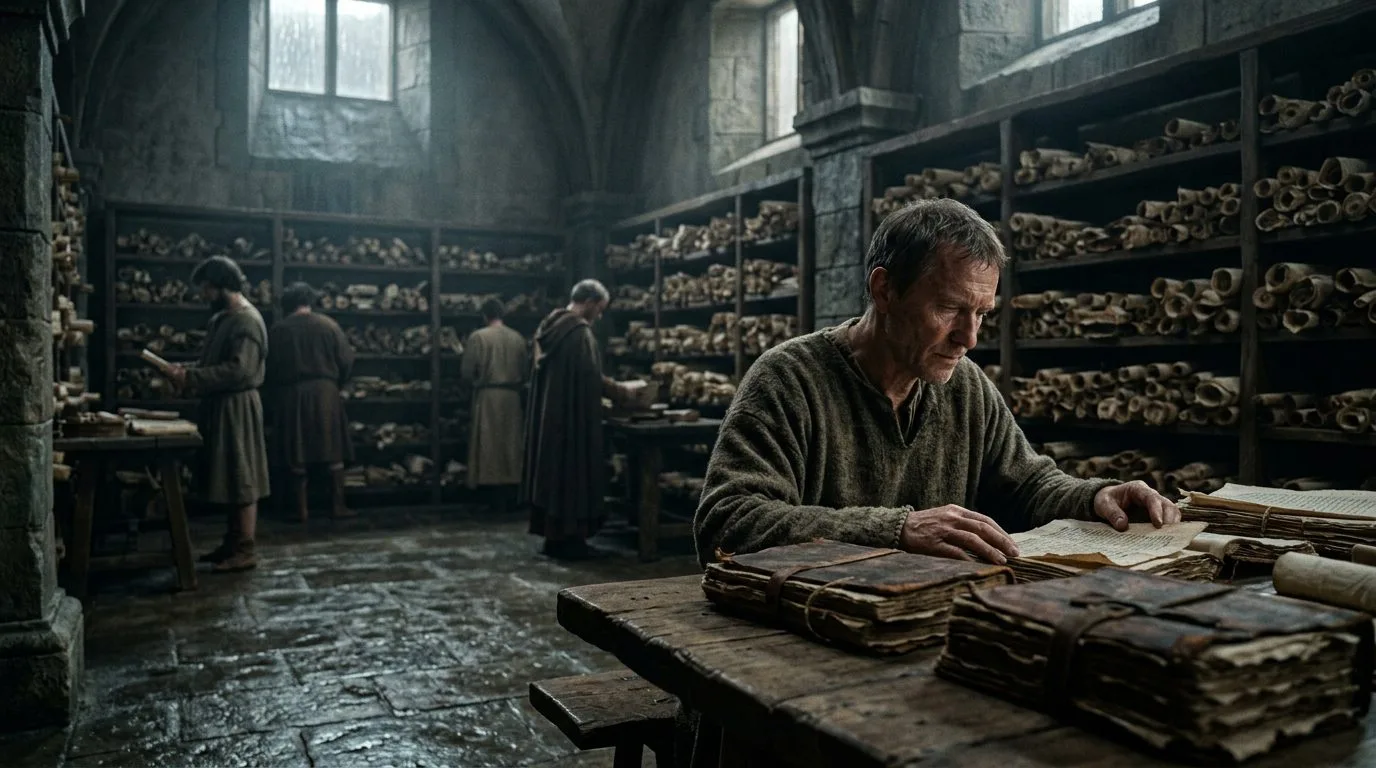
The Library of Caesarea Maritima
Christian scholar Origen founded this library around 230 CE in the coastal city of Caesarea Maritima, establishing Christianity’s first major theological research center. The collection grew to approximately 30,000 volumes, specializing in biblical manuscripts and early Church writings. Eusebius, the “Father of Church History,” served as librarian around 290 CE and used its resources to write his groundbreaking Ecclesiastical History. The library preserved multiple versions of biblical texts, enabling early textual criticism—the Hexapla, Origen’s six-column parallel Bible, filled 15 scrolls alone. Arab armies destroyed the library during their conquest in 640 CE. Only Eusebius’s extensive quotations in his surviving works hint at the theological treasures lost forever.
Source: britannica.com
Did You Know?
These ancient libraries weren’t just book repositories—they were humanity’s insurance policy against intellectual extinction. Every fire, invasion, and earthquake that claimed them erased knowledge we’ll never recover, reminding us that civilization’s memory remains forever fragile.